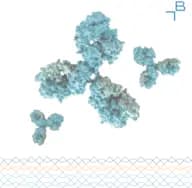
Primary Antibodies
Primary antibodies are immunoglobulins that bind specifically to an antigen of interest, allowing for the detection and quantification of proteins, peptides, or other biomolecules. These antibodies are critical tools in a wide range of applications, including Western blotting, immunohistochemistry, and ELISA. At CymitQuimica, we offer an extensive selection of high-quality primary antibodies that provide specificity and sensitivity for various research needs, including cancer, immunology, and cell biology studies.
Subcategories of "Primary Antibodies"
- Cancer Research Antibodies(3,609 products)
- Cardiovascular Antibodies(2 products)
- Developmental Biology(746 products)
- Epigenetics Antibodies(162 products)
- Immunology Antibodies(2,394 products)
- Metabolism Antibodies(278 products)
- Microbiology Antibodies(736 products)
- Signal Transduction(2,710 products)
- Tags & Cellular Markers(33 products)
Show 1 more subcategories
Found 75081 products of "Primary Antibodies"
Sort by
Purity (%)
0
100
|
0
|
50
|
90
|
95
|
100
ATF2 antibody
<p>The ATF2 antibody is a polyclonal antibody that specifically targets ATF2, a transcription factor involved in cellular processes such as apoptosis and DNA damage response. This antibody has been widely used in research to study the role of ATF2 in various diseases, including cancer and neurodegenerative disorders. It can be used in immunohistochemistry, western blotting, and other experimental techniques to detect and quantify ATF2 protein levels. The ATF2 antibody is also commonly used in combination with other antibodies, such as insulin antibodies or trastuzumab, to investigate complex signaling pathways or protein-protein interactions. With its high specificity and sensitivity, this antibody is an essential tool for researchers studying the function of ATF2 and its potential as a therapeutic target.</p>HP antibody
<p>The HP antibody is a monoclonal antibody known as trastuzumab. It is designed to target specific biomolecules in the body, particularly the epidermal growth factor receptor 2 (HER2). This antibody has been extensively studied for its ability to inhibit the growth of cancer cells that overexpress HER2.</p>FAF1 antibody
<p>FAF1 antibody is a monoclonal antibody that specifically targets Fas-associated factor 1 (FAF1), a protein found in the nucleus. This antibody has been extensively studied in Life Sciences research and has shown promising results in various assays. It has been shown to effectively bind to and immobilize FAF1, leading to the inhibition of its phosphatase activity. This makes FAF1 antibody a valuable tool for studying the role of FAF1 in cellular processes and signaling pathways.</p>CREB antibody
<p>The CREB antibody is a highly specialized tool used in life sciences research. It is designed to specifically target and bind to the cAMP response element-binding protein (CREB), a transcription factor that plays a crucial role in gene expression and cellular signaling. This antibody has been extensively validated for use in various applications, including immunofluorescence, immunohistochemistry, Western blotting, and more.</p>SYK antibody
<p>SYK antibody is a monoclonal antibody that specifically targets the protein SYK (Spleen Tyrosine Kinase). It is derived from human serum and has been widely used in various Life Sciences research applications. The SYK antibody exhibits catalase activity, making it suitable for studies involving reactive oxygen species (ROS) and oxidative stress. Additionally, this antibody has been found to neutralize antiphospholipid antibodies, which are associated with autoimmune disorders. The SYK antibody can also be used to detect and quantify SYK protein levels in samples, providing valuable insights into its role as a signaling molecule and potential therapeutic target. With its high specificity and water-soluble nature, the SYK antibody is an indispensable tool for researchers studying cellular signaling pathways, immune responses, and growth factors.</p>Toll-like receptor 2 antibody (biotin)
<p>Mouse monoclonal Toll-like receptor 2 antibody (biotin)</p>Talin antibody
<p>The Talin antibody is a monoclonal antibody that specifically targets and binds to talin, a protein involved in cell adhesion and migration. This antibody recognizes the alpha-fetoprotein (AFP) and has been extensively used in life sciences research for the immobilization of proteins on surfaces, such as electrodes. The Talin antibody has also shown cytotoxic effects by inducing necrosis factor-related apoptosis-inducing ligand (TRAIL)-mediated cell death. Additionally, it has been reported to modulate cholinergic signaling and interact with binding proteins, such as pomalidomide, which may have implications in protein kinase regulation.</p>Phosphotyrosine antibody
<p>The Phosphotyrosine antibody is a highly specialized monoclonal antibody used in Life Sciences research. It is designed to specifically detect and bind to phosphotyrosine residues, which are important markers of activated signaling pathways. This antibody can be used in various applications such as immunoassays, Western blotting, and immunohistochemistry.</p>CD91 antibody
<p>The CD91 antibody is a polyclonal antibody that is commonly used in life sciences research. It specifically targets the CD91 antigen, which has been implicated in various biological processes and diseases. This antibody has shown potential in studies related to endotoxemia, insulin resistance, and autoimmune disorders.</p>ZNF354A antibody
<p>ZNF354A antibody was raised in mouse using recombinant Human Zinc Finger Protein 354A (Znf354A)</p>SULT1B1 antibody
<p>SULT1B1 antibody was raised using the N terminal of SULT1B1 corresponding to a region with amino acids KRGFITEKVPMLEMTLPGLRTSGIEQLEKNPSPRIVKTHLPTDLLPKSFW</p>CELSR3 antibody
<p>CELSR3 antibody is an acidic antibody that targets the phosphatase activity of CELSR3. It can be used in various research applications, including immunohistochemistry and Western blotting. This antibody specifically recognizes CELSR3, a protein involved in cell adhesion and signaling pathways. It has been shown to inhibit the growth of endothelial cells by neutralizing the activity of endothelial growth factors. Additionally, CELSR3 antibody has neurotrophic properties and can promote the survival and differentiation of neurons. Its colloidal gold conjugate allows for easy detection and visualization of CELSR3 in samples. This antibody is a valuable tool for studying the role of CELSR3 in cellular processes and may have potential therapeutic applications in diseases related to angiogenesis and neuronal development.</p>Troponin T Type 3 antibody
<p>Troponin T Type 3 antibody was raised using a synthetic peptide corresponding to a region with amino acids QLEIDKFEFGEKLKRQKYDIMNVRARVQMLAKFSKKAGTPAKGKVGGRWK</p>ALAS1 antibody
<p>ALAS1 antibody was raised using the N terminal of ALAS1 corresponding to a region with amino acids ETSAGPSVVSVKTDGGDPSGLLKNFQDIMQKQRPERVSHLLQDNLPKSVS</p>PDF antibody
<p>The 6-Fluoro-3-indoxyl-beta-D-galactopyranoside is a powerful antituberculosis drug belonging to the rifamycins class. It is specifically designed to combat tuberculosis infections by targeting active compounds and exhibiting bactericidal activity. This drug inhibits bacterial growth by binding to DNA-dependent RNA polymerase, preventing transcription and replication. Extensive research has shown its high efficacy in human erythrocytes using a patch-clamp technique. The drug undergoes various metabolic transformations, including hydrolysis, oxidation, reduction, or conjugation with glucuronic acid. Additionally, it specifically binds to markers expressed in Mycobacterium tuberculosis strains and inhibits cell growth. With its multifaceted mechanism of action, this drug offers a promising solution for treating tuberculosis infections.</p>UPP1 antibody
<p>UPP1 antibody was raised using the middle region of UPP1 corresponding to a region with amino acids ACGLQAAVVCVTLLNRLEGDQISSPRNVLSEYQQRPQRLVSYFIKKKLSK</p>SLBP antibody
<p>SLBP antibody was raised using a synthetic peptide corresponding to a region with amino acids INYGKNTIAYDRYIKEVPRHLRQPGIHPKTPNKFKKYSRRSWDQQIKLWK</p>GANC antibody
<p>GANC antibody was raised using the middle region of GANC corresponding to a region with amino acids VLGFRKEPSSVTTHSSDGKDQPVAFTYCAKTSILSLEKLSLNIATDWEVR</p>C9ORF43 antibody
<p>C9ORF43 antibody was raised using the middle region of C9Orf43 corresponding to a region with amino acids PEAQAARQKKISFNFSEIMASTGWNSELKLLRILQDTDDEDEEDQSSGAE</p>PCTK1 antibody
<p>PCTK1 antibody was raised in rabbit using the N terminal of PCTK1 as the immunogen</p>CCDC74A antibody
<p>CCDC74A antibody was raised using the middle region of CCDC74A corresponding to a region with amino acids FPKVSTKSLSKKCLSPPVAERAILPALKQTPKNNFAERQKRLQAMQKRRL</p>MUC1 antibody
<p>The 6-Fluoro-3-indoxyl-beta-D-galactopyranoside is a powerful antituberculosis drug that falls under the class of rifamycins. It is highly effective in treating tuberculosis infections and contains active compounds with bactericidal activity. This drug works by binding to DNA-dependent RNA polymerase, inhibiting bacterial growth by preventing transcription and replication. It has been extensively studied using the patch-clamp technique on human erythrocytes, proving its high frequency of human activity. The drug undergoes various metabolic transformations, including hydrolysis by esterases or glucuronidases, oxidation by cytochrome P450 enzymes, reduction by glutathione reductase, or conjugation with glucuronic acid. Additionally, it specifically targets markers expressed at high levels in Mycobacterium tuberculosis strains and inhibits cell growth in culture.</p>LITAF antibody
<p>LITAF antibody was raised in mouse using recombinant human LITAF (1-161aa) purified from E. coli as the immunogen.</p>CD18 antibody
<p>CD18 antibody was raised in hamster using beta-2 integrin (CD18) as the immunogen.</p>FABP2 antibody
<p>FABP2 antibody was raised in Mouse using a purified recombinant fragment of human FABP2 expressed in E. coli as the immunogen.</p>p47 phox antibody
<p>The p47 phox antibody is a primary amino acid that belongs to the class of polyclonal antibodies. It is commonly used in Life Sciences research, particularly in the study of mucopolysaccharidosis type and natriuretic factors. This antibody can be used as a tool to detect and quantify p47 phox protein levels in various biological samples, such as human serum or cell lysates. The p47 phox antibody is available in both polyclonal and monoclonal forms, allowing researchers to choose the most suitable option for their specific experimental needs. Its high specificity and sensitivity make it an ideal choice for studies involving oncostatin M (OSM) signaling pathways, messenger RNA expression analysis, or protein-protein interactions with acidic proteins like casein or inhibitory factors.</p>mTOR antibody
<p>The mTOR antibody is a highly specialized product in the field of Life Sciences. It belongs to the category of antibodies and specifically falls under the classification of anti-idiotypic antibodies. This antibody is designed to target and bind to activated glycoproteins involved in various cellular processes.</p>GBX1 antibody
<p>GBX1 antibody was raised using the middle region of Gbx-1 corresponding to a region with amino acids AKWKRIKAGNVSSRSGEPVRNPKIVVPIPVHVNRFAVRSQHQQMEQGARP</p>Toxoplasma gondii antibody
<p>Toxoplasma gondii antibody was raised in mouse using 30 kDa membrane protein of purified Toxoplasma gondii as the immunogen.</p>CXCL8 antibody
<p>The CXCL8 antibody is a growth factor that plays a crucial role in various biological processes. It is commonly used in life sciences research to study the functions and interactions of chemokines. This polyclonal antibody specifically targets CXCL8 and can be used for various applications such as enzyme-linked immunosorbent assays (ELISA), western blotting, and immunohistochemistry. The CXCL8 antibody has been shown to effectively detect and quantify CXCL8 levels in human serum samples. Additionally, it can be used for studying the effects of interferon-gamma (IFN-γ) on CXCL8 production and the regulation of alpha-fetoprotein expression. With its high specificity and sensitivity, this antibody is an essential tool for researchers in the field of immunology and molecular biology.</p>ARFGAP3 antibody
<p>ARFGAP3 antibody was raised in rabbit using the N terminal of ARFGAP3 as the immunogen</p>Estrogen Receptor alpha antibody (Ser106)
<p>Rabbit polyclonal Estrogen Receptor alpha antibody (Ser106)</p>Ghrelin antibody
<p>The Ghrelin antibody is a powerful tool in the field of Life Sciences. It is an antibody that specifically targets and binds to ghrelin, a peptide hormone involved in various physiological processes such as growth, appetite regulation, and energy balance. This antibody has been widely used in research to study the role of ghrelin in different contexts.</p>DNAL1 antibody
<p>DNAL1 antibody was raised in rabbit using the N terminal of DNAL1 as the immunogen</p>BCL2A1 antibody
<p>BCL2A1 antibody was raised in rabbit using the C terminal of BCL2A1 as the immunogen</p>RDX antibody
The RDX antibody is a monoclonal antibody that targets the epidermal growth factor (EGF) and has been shown to inhibit microvessel density. This antibody is commonly used in bioassays to study the effects of EGF on various cellular processes. It specifically binds to EGF and prevents its interaction with its receptor, thereby blocking downstream signaling pathways involved in cell proliferation, migration, and survival. The RDX antibody has also been found to have cytotoxic effects on certain cancer cells, making it a potential therapeutic option for cancer treatment. Additionally, this antibody has been used in combination with other drugs, such as imatinib, to enhance their efficacy in targeting specific cancer types. With its high specificity and potency, the RDX antibody is a valuable tool for researchers studying EGF-related pathways and exploring new treatment options for various diseases.NANP antibody
<p>NANP antibody was raised using the middle region of NANP corresponding to a region with amino acids VQPGDCVMVGDTLETDIQGGLNAGLKATVWINKNGIVPLKSSPVPHYMVS</p>HSD17B14 antibody
<p>HSD17B14 antibody was raised in Rabbit using Human HSD17B14 as the immunogen</p>UBR1 antibody
UBR1 antibody was raised using the N terminal of UBR1 corresponding to a region with amino acids YKQLQKEYISDDHDRSISITALSVQMFTVPTLARHLIEEQNVISVITETLSIX1 antibody
<p>The SIX1 antibody is a growth factor that has been extensively studied for its role in various biological processes. It is commonly used in research and diagnostic applications. This monoclonal antibody specifically targets the SIX1 protein, which is involved in the regulation of cell proliferation and differentiation.</p>Rat Lymphocyte antibody (FITC)
<p>Rat lymphocyte antibody (FITC) was raised in rabbit using RBC-free rat thymus and spleen cells as the immunogen.</p>EFNA3 antibody
<p>The 6-Fluoro-3-indoxyl-beta-D-galactopyranoside is an antituberculosis drug that falls under the class of rifamycins. It is highly effective in treating tuberculosis infections due to its bactericidal activity. This active compound works by binding to DNA-dependent RNA polymerase, preventing transcription and replication, thus inhibiting bacterial growth. Additionally, it specifically targets markers expressed in Mycobacterium tuberculosis strains and inhibits cell growth. The metabolization process involves hydrolysis by esterases or glucuronidases, oxidation by cytochrome P450 enzymes, reduction by glutathione reductase, or conjugation with glucuronic acid. With its potent properties and targeted action, this drug offers promising results in combating tuberculosis.</p>TIP60 antibody
<p>TIP60 antibody was raised in Mouse using a purified recombinant fragment of human TIP60 expressed in E. coli as the immunogen.</p>NOV antibody
<p>NOV antibody was raised using the C terminal of NOV corresponding to a region with amino acids KTIQAEFQCSPGQIVKKPVMVIGTCTCHTNCPKNNEAFLQELELKTTRGK</p>