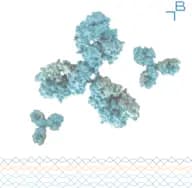
Primary Antibodies
Primary antibodies are immunoglobulins that bind specifically to an antigen of interest, allowing for the detection and quantification of proteins, peptides, or other biomolecules. These antibodies are critical tools in a wide range of applications, including Western blotting, immunohistochemistry, and ELISA. At CymitQuimica, we offer an extensive selection of high-quality primary antibodies that provide specificity and sensitivity for various research needs, including cancer, immunology, and cell biology studies.
Subcategories of "Primary Antibodies"
- Cancer Research Antibodies(3,620 products)
- Cardiovascular Antibodies(2 products)
- Developmental Biology(751 products)
- Epigenetics Antibodies(162 products)
- Immunology Antibodies(2,624 products)
- Metabolism Antibodies(279 products)
- Microbiology Antibodies(736 products)
- Signal Transduction(2,717 products)
- Tags & Cellular Markers(33 products)
Show 1 more subcategories
Found 75324 products of "Primary Antibodies"
Sort by
Purity (%)
0
100
|
0
|
50
|
90
|
95
|
100
MAPK14 antibody
<p>MAPK14 antibody was raised in rabbit using the C terminal of MAPK14 as the immunogen</p>IL1 beta antibody
<p>The IL1 beta antibody is a highly specialized antibody that specifically targets and neutralizes the activity of interleukin-1 beta (IL-1β), a potent pro-inflammatory cytokine. This antibody has been extensively studied and characterized for its ability to inhibit the biological functions of IL-1β, including its role in inflammation, immune response, and cell proliferation.</p>EMR2 antibody
<p>The EMR2 antibody is a histidine-rich monoclonal antibody used in Life Sciences. It belongs to the Polyclonal Antibodies group and is specifically designed to target certain proteins, including growth factors such as hepatocyte growth factor, dopamine, natriuretic factors, and more. This antibody has been extensively tested and proven to be highly effective in various research applications. It can be used for immunohistochemistry, western blotting, flow cytometry, and other experimental techniques. The EMR2 antibody is also suitable for detecting autoantibodies, phosphatases, steroids, and even specific pathogens like Mycoplasma genitalium. With its superior glycosylation properties, this antibody ensures accurate and reliable results in your experiments. Trust the EMR2 antibody to provide you with precise data and valuable insights in your scientific endeavors.</p>Cytokeratin 17 antibody
<p>Cytokeratin 17 antibody was raised in mouse using human cytokeratin 17 as the immunogen.</p>Kv1.1 antibody
<p>The Kv1.1 antibody is a highly specialized monoclonal antibody that targets the Kv1.1 potassium channel subunit. This antibody has been extensively studied and shown to have various effects on different biological processes. It has been found to act as an antiestrogen, inhibiting the activity of estrogen receptors and potentially offering therapeutic benefits in hormone-related conditions.</p>Progesterone Receptor Antibody
The Progesterone Receptor Antibody is a specific antiserum that is used in various applications within the field of Life Sciences. It has been shown to have a high affinity for the progesterone receptor and can be used to study its function and activity. This antibody has been used in research to investigate the role of the progesterone receptor in various cellular processes, such as oxygen therapy, leukemia inhibitory factor signaling, and interleukin-6 production. Additionally, it has been found to induce apoptosis and act as a secretagogue when activated by 17β-estradiol. The Progesterone Receptor Antibody can also be used as an endoplasmic reticulum marker and has been utilized in chromatin immunoprecipitation assays to study its DNA binding activity. With its versatility and specificity, this antibody is an invaluable tool for researchers studying the progesterone receptor and its associated functions.GSK3 alpha antibody
<p>GSK3 alpha antibody was raised in Mouse using a purified recombinant fragment of GSK3 alpha expressed in E. coli as the immunogen.</p>ACTB antibody
<p>The ACTB antibody is a highly specialized monoclonal antibody that offers a range of benefits in the field of life sciences. This antibody is specifically designed to target and neutralize the growth factor known as saponin, which plays a crucial role in various cellular processes. By binding to saponin, this antibody effectively inhibits its activity and prevents its interaction with other molecules.</p>LPL antibody
The LPL antibody is a highly specialized chemical agent used in Life Sciences research. It is a monoclonal antibody that specifically targets and binds to lipoprotein lipase (LPL), a glycoprotein involved in lipid metabolism. This antibody has been extensively studied and proven to be highly effective in various applications.ODC1 antibody
<p>The ODC1 antibody is a monoclonal antibody that specifically targets the polypeptide sequences of ODC1. It has been extensively used in Life Sciences research to study the role of ODC1 in various biological processes. This antibody has shown high affinity and specificity for ODC1 and has been widely used in nuclear and colloidal protein assays. Additionally, it has been used to detect and measure the levels of ODC1 in samples, making it an invaluable tool for researchers working with growth factors, morphogenetic proteins, and erythropoietin. Whether you are studying proteinase activity or investigating the effects of sclerostin on cellular function, the ODC1 antibody is an essential component for your research. Choose this high-quality antibody to ensure accurate and reliable results in your experiments.</p>Vaccinia Virus antibody
<p>The Vaccinia Virus antibody is a monoclonal antibody used in the field of Life Sciences. It specifically targets the Vaccinia virus, which is a member of the poxvirus family. This antibody recognizes a conformational epitope on the surface of the virus and has been shown to have high neutralizing activity.</p>NGAL antibody
<p>The NGAL antibody is a monoclonal antibody used in Life Sciences research. It is commonly used in immunoassays to detect and quantify NGAL (Neutrophil Gelatinase-Associated Lipocalin) levels in human serum. This antibody has high specificity and sensitivity, making it ideal for accurate and reliable measurements. The NGAL antibody can also be used in assays to detect autoantibodies or anti-drug antibodies. It is buffered and stable, ensuring consistent performance in various experimental conditions. Additionally, this antibody can be conjugated with different markers such as carbon quantum dots or colloidal gold for visualization purposes. Whether you are studying kidney diseases, inflammation, or drug development, the NGAL antibody is an essential tool for your research needs.</p>α 1 Antichymotrypsin antibody
Alpha-1 antichymotrypsin antibody was raised in mouse using affinity purified alpha-1 antichymotrypsin as the immunogen.PITPNB antibody
<p>PITPNB antibody was raised using the middle region of PITPNB corresponding to a region with amino acids ADRSQVEPADYKADEDPALFQSVKTKRGPLGPNWKKELANSPDCPQMCAY</p>Cytokeratin 14 antibody
<p>The Cytokeratin 14 antibody is a highly specialized product used in the field of Life Sciences. It is a polyclonal antibody that specifically targets Cytokeratin 14, a protein found in human serum. This antibody is commonly used in research and diagnostic applications to detect the presence of Cytokeratin 14 in various samples.</p>SRC antibody
SRC antibody was raised in Mouse using a purified recombinant fragment of SRC(aa10-193) expressed in E. coli as the immunogen.VTA1 antibody
<p>VTA1 antibody was raised using a synthetic peptide corresponding to a region with amino acids KKQLGDNEAITQEIVGCAHLENYALKMFLYADNEDRAGRFHKNMIKSFYT</p>ACO1 antibody
<p>ACO1 antibody was raised using the N terminal of ACO1 corresponding to a region with amino acids MSNPFAHLAEPLDPVQPGKKFFNLNKLEDSRYGRLPFSIRVLLEAAIRNC</p>GRK6 antibody
The GRK6 antibody is a highly specialized protein that plays a crucial role in regulating cellular processes. It specifically targets alpha-synuclein, a protein associated with neurodegenerative disorders such as Parkinson's disease. By binding to alpha-synuclein, the GRK6 antibody prevents its aggregation and cytotoxic effects, ultimately promoting cell survival.PDIA4 antibody
The 6-Fluoro-3-indoxyl-beta-D-galactopyranoside is a powerful antituberculosis drug that falls under the class of rifamycins. It is known to be the most effective among the rifamycins in treating tuberculosis infections. This drug works by inhibiting bacterial growth through its binding to DNA-dependent RNA polymerase, preventing transcription and replication. Its efficacy has been demonstrated through extensive testing using a patch-clamp technique on human erythrocytes.PPP1R12A antibody
<p>PPP1R12A antibody was raised in rabbit using the C terminal of PPP1R12A as the immunogen</p>BCAS2 antibody
<p>BCAS2 antibody was raised using the middle region of BCAS2 corresponding to a region with amino acids SKLREMESNWVSLVSKNYEIERTIVQLENEIYQIKQQHGEANKENIRQDF</p>PCSK9 antibody
<p>The PCSK9 antibody is a growth factor protein that acts as an inhibitory factor for epidermal growth factor (EGF) and hepatocyte growth factor (HGF). It is a monoclonal antibody that specifically targets and neutralizes PCSK9, a protein involved in the regulation of cholesterol metabolism. By blocking PCSK9, this antibody helps to lower LDL cholesterol levels in the blood, reducing the risk of cardiovascular diseases. The PCSK9 antibody can be used in various research applications such as enzyme-linked immunosorbent assay (ELISA), Western blotting, immunohistochemistry (IHC), and flow cytometry. With its high specificity and affinity, this antibody provides accurate and reliable results for cholesterol-related studies.</p>14-3-3 antibody
<p>The 14-3-3 antibody is a highly specialized antibody used in the field of Life Sciences. It is commonly used in research and diagnostic applications to study various cellular processes. This antibody specifically targets the 14-3-3 isoforms, a group of proteins involved in signal transduction, cell cycle regulation, and apoptosis.</p>STS antibody
STS antibody was raised using a synthetic peptide corresponding to a region with amino acids LLFDISKDPRERNPLTPASEPRFYEILKVMQEAADRHTQTLPEVPDQFSWCCNG1 antibody
<p>CCNG1 antibody was raised in rabbit using the N terminal of CCNG1 as the immunogen</p>HPSE antibody
<p>HPSE antibody was raised in rabbit using the N terminal of HPSE as the immunogen</p>Guinea Pig Serum Albumin antibody (FITC)
<p>Rabbit polyclonal Guinea Pig Serum Albumin antibody (FITC)</p>CST1 antibody
<p>The CST1 antibody is a highly specialized monoclonal antibody used in the field of Life Sciences. This antibody specifically targets and binds to cytotoxic factors, such as epidermal growth factor (EGF), trastuzumab, insulin antibody, alpha-fetoprotein, and other growth factors. The CST1 antibody has a high affinity for these factors due to its unique structure and targeting mechanism.</p>PDE4D antibody
<p>The 6-Fluoro-3-indoxyl-beta-D-galactopyranoside is a powerful antituberculosis drug belonging to the class of rifamycins. It is specifically designed to combat tuberculosis infections by targeting active compounds and exhibiting bactericidal activity. This drug works by binding to DNA-dependent RNA polymerase, preventing transcription and replication, thus inhibiting bacterial growth. Its efficacy has been extensively studied using advanced techniques like transcription-quantitative polymerase chain and patch-clamp technique. Additionally, it undergoes various metabolic transformations such as hydrolysis by esterases or glucuronidases, oxidation by cytochrome P450 enzymes, reduction by glutathione reductase, or conjugation with glucuronic acid. Furthermore, it specifically targets markers expressed in Mycobacterium tuberculosis strains, inhibiting their growth in culture.</p>IRF2BP1 antibody
<p>IRF2BP1 antibody was raised using the middle region of IRF2BP1 corresponding to a region with amino acids LVARNGEAEVSPTAGAEAVSGGGSGTGATPGAPLCCTLCRERLEDTHFVQ</p>BRCA1 antibody
<p>The BRCA1 antibody is a growth factor that has been extensively studied in the field of Life Sciences. It has shown promising results in various experiments, including phorbol-induced differentiation and interferon-mediated signaling pathways. This monoclonal antibody has been used for neutralizing experiments, electrophoresis, and as an electrode in various research studies. The BRCA1 antibody is produced using a state-of-the-art lyophilization method to ensure its stability and efficacy. It is also available as an anticoagulant for specific applications. This antibody is highly specific and can be used to detect autoantibodies or as a tool for studying the expression of BRCA1 protein in different tissues.</p>C6ORF199 antibody
C6ORF199 antibody was raised using the middle region of C6Orf199 corresponding to a region with amino acids IINIKCPDYDLCQRISGQRQHNNTGYIYSRDQWDPEVIENHRKKKKEAQKCEP55 antibody
<p>CEP55 antibody was raised using the N terminal of CEP55 corresponding to a region with amino acids MSSRSTKDLIKSKWGSKPSNSKSETTLEKLKGEIAHLKTSVDEITSGKGK</p>PAI1 antibody (HRP)
PAI1 antibody (HRP) was raised in sheep using Recombinant Plasminogen Activator Inhibitor-1 prepared from bacterial extracts as the immunogen.Myc antibody
<p>The Myc antibody is a growth factor that plays a crucial role in various cellular processes. It is a polymorphic protein that can be targeted by specific antibodies for cytotoxic purposes. The Myc antibody can be used in various research applications, such as immunoblotting, immunohistochemistry, and electrophoresis. Monoclonal antibodies against Myc are highly specific and provide accurate results in detecting the presence of this protein. These antibodies can also be used as inhibitors to study the function of Myc in different biological systems. The Myc antibody targets the c-myc gene, which encodes for a transcription factor involved in cell proliferation and apoptosis. Additionally, this monoclonal antibody has been used as an anti-VEGF therapy due to its ability to bind to VEGF receptors and inhibit angiogenesis. With its high specificity and affinity towards the target antigen, the Myc antibody is an essential tool for researchers studying cellular processes and developing therapeutic strategies against various diseases.</p>C14ORF156 antibody
<p>C14ORF156 antibody was raised using the N terminal Of C14Orf156 corresponding to a region with amino acids PFDKETGFHRGLGWVQFSSEEGLRNALQQENHIIDGVKVQVHTRRPKLPQ</p>RG9MTD3 antibody
<p>RG9MTD3 antibody was raised using a synthetic peptide corresponding to a region with amino acids GEILATGSTAWCSKNVQRKQRHWEKIVAAKKSKRKQEKERRKANRAENPG</p>CD4 antibody
<p>CD4 antibody was raised in rat using cloned murine CTL line V41 as the immunogen.</p>SF3B1 antibody
<p>SF3B1 antibody was raised using the middle region of SF3B1 corresponding to a region with amino acids LLNDIPQSTEQYDPFAEHRPPKIADREDEYKKHRRTMIISPERLDPFADG</p>PLEKHA1 antibody
<p>PLEKHA1 antibody was raised using the N terminal of PLEKHA1 corresponding to a region with amino acids LNKAIKITVPKQSDSQPNSDNLSRHGECGKKQVSYRTDIVGGVPIITPTQ</p>SYK antibody
<p>The SYK antibody is a highly specific antibody used in Life Sciences research. It is available as both polyclonal and monoclonal antibodies. This antibody targets the spleen tyrosine kinase (SYK), a protein involved in various cellular processes.</p>NF kappaB p65 antibody
<p>The NF kappaB p65 antibody is a highly specialized monoclonal antibody used in the field of Life Sciences. It specifically targets the NF kappaB p65 protein, which is a key regulator of gene expression involved in various cellular processes such as growth factor signaling, immune response, and inflammation.</p>C20ORF10 antibody
<p>C20ORF10 antibody was raised using the middle region of C20Orf10 corresponding to a region with amino acids TSLAAMPRKEKHIEPEVPRTSRDDSLNPGVQGRQPLTEGPRVIFIKPYRN</p>Purity:Min. 95%CNP antibody
<p>The CNP antibody is a highly specialized antibody used in the field of Life Sciences. It has a wide range of applications and functions, including the detection and quantification of specific proteins and molecules. This antibody is particularly effective in identifying phalloidin, superoxide, endothelial growth factors, chemokines, growth factors, dopamine, and collagen.</p>