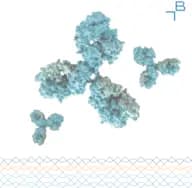
Primary Antibodies
Primary antibodies are immunoglobulins that bind specifically to an antigen of interest, allowing for the detection and quantification of proteins, peptides, or other biomolecules. These antibodies are critical tools in a wide range of applications, including Western blotting, immunohistochemistry, and ELISA. At CymitQuimica, we offer an extensive selection of high-quality primary antibodies that provide specificity and sensitivity for various research needs, including cancer, immunology, and cell biology studies.
Subcategories of "Primary Antibodies"
- Cancer Research Antibodies(3,609 products)
- Cardiovascular Antibodies(2 products)
- Developmental Biology(746 products)
- Epigenetics Antibodies(162 products)
- Immunology Antibodies(2,394 products)
- Metabolism Antibodies(278 products)
- Microbiology Antibodies(736 products)
- Signal Transduction(2,710 products)
- Tags & Cellular Markers(33 products)
Show 1 more subcategories
Found 75081 products of "Primary Antibodies"
Sort by
Purity (%)
0
100
|
0
|
50
|
90
|
95
|
100
Ezrin antibody
<p>The Ezrin antibody is a powerful tool used in the field of Life Sciences for various research purposes. This monoclonal antibody specifically targets and binds to ezrin, a protein that plays a crucial role in cell signaling and membrane organization. By binding to ezrin, this antibody allows researchers to study its function and localization within cells.</p>Caspase 9 antibody
<p>The Caspase 9 antibody is a specific antibody used in pharmaceutical preparations and Life Sciences research. It is commonly used to detect and measure the levels of caspase-9, an enzyme involved in programmed cell death (apoptosis). This antibody recognizes the active form of caspase-9 and can be used for various applications such as Western blotting, immunohistochemistry, and flow cytometry.</p>EIF4G2 antibody
<p>The EIF4G2 antibody is a specific antibody that targets the growth factor EIF4G2. This antibody has been shown to bind to actin filaments and can be used for various applications, including immunohistochemistry and western blotting. Autoantibodies against EIF4G2 have also been detected in certain autoimmune diseases. The monoclonal form of this antibody exhibits cytotoxic activity, making it a valuable tool for research and therapeutic purposes. Additionally, the phosphatase activity of this antibody has been demonstrated in human serum samples. It is important to note that this antibody shows high affinity for serum albumin-binding, allowing for efficient detection and quantification in biological samples. Whether you are conducting experiments in life sciences or need reliable antibodies for your research, the EIF4G2 antibody is an excellent choice.</p>IL13 antibody (biotin)
<p>IL13 antibody (biotin) was raised in rabbit using highly pure recombinant hIL-13 as the immunogen.</p>CTSG antibody
<p>CTSG antibody was raised in rabbit using the C terminal of CTSG as the immunogen</p>QSOX1 antibody
<p>The QSOX1 antibody is a monoclonal antibody that plays a crucial role in neutralizing the growth factor and steroid histidine. It is widely used in Life Sciences for its ability to target and bind to specific antigens, facilitating various research applications. This high-quality antibody is produced through hybridization techniques, ensuring its specificity and efficacy. The QSOX1 antibody has shown promising results in studies related to enzastaurin, dopamine, and natriuretic factors. It can also be utilized for the detection of autoantibodies and antigen-antibody reactions. With its exceptional binding capabilities, this monoclonal antibody is an invaluable tool for researchers in the field of Life Sciences.</p>MCM2 antibody
<p>The MCM2 antibody is a highly specific and sensitive tool used in life sciences research. It is a polyclonal antibody that targets the MCM2 antigen, which plays a crucial role in DNA replication and cell cycle progression. This antibody can be used to detect and measure the levels of MCM2 in various biological samples, including adipose tissue, activated cells, and nuclear extracts.</p>HCII antibody (HRP)
<p>HCII antibody (HRP) was raised in goat using human HCII purified from plasma as the immunogen.</p>CD16 antibody
<p>CD16 antibody was raised in mouse using human polymorphonuclear leukocytes as the immunogen.</p>NPHS2 antibody
<p>The NPHS2 antibody is a highly specialized antibody that exhibits antiangiogenic activity. It belongs to the class of growth factors and is commonly used in the field of Life Sciences. This antibody is available in both polyclonal and monoclonal forms, allowing for versatility in research applications.</p>hnRNP L Antibody
<p>The hnRNP L Antibody is a highly specialized product in the field of Life Sciences. This monoclonal antibody is specifically designed to target and bind to hnRNP L, a protein involved in various cellular processes. It has been extensively tested and validated for its efficacy in research applications.</p>OLFM4 antibody
<p>OLFM4 antibody was raised using the C terminal of OLFM4 corresponding to a region with amino acids EEIFYYYDTNTGKEGKLDIVMHKMQEKVQSINYNPFDQKLYVYNDGYLLN</p>Factor IX antibody (HRP)
<p>Factor IX antibody (HRP) was raised in goat using human Factor IX purified from plasma as the immunogen.</p>CFDP1 antibody
<p>CFDP1 antibody was raised using the middle region of CFDP1 corresponding to a region with amino acids GSGLKRSSGMSSLLGKIGAKKQKMSTLEKSKLDWESFKEEEGIGEELAIH</p>uPAR antibody
<p>The uPAR antibody is a monoclonal antibody that has cytotoxic properties and is used as a medicament in multidrug therapy. It targets the plasminogen activator receptor (uPAR) on the surface of cells, inhibiting its function and preventing the activation of collagen-degrading enzymes such as urokinase plasminogen activator (uPA). This antibody has been shown to be effective in treating various diseases and conditions, including cancer, thrombocytopenia, and alpha-fetoprotein-related disorders. In the field of Life Sciences, uPAR antibodies are widely used for research purposes, such as studying cell signaling pathways and growth factors. Whether you need a polyclonal or monoclonal antibody, our high-quality uPAR antibodies are designed to meet your specific research needs.</p>HDJ1 antibody
<p>The HDJ1 antibody is a highly effective and versatile active agent in the field of Life Sciences. This powerful antibody has been extensively used in the development of medicines and therapies due to its unique properties.</p>SLC11A1 antibody
<p>SLC11A1 antibody was raised using the C terminal of SLC11A1 corresponding to a region with amino acids VLLTRSCAILPTVLVAVFRDLRDLSGLNDLLNVLQSLLLPFAVLPILTFT</p>CD4 antibody (CY5)
<p>CD4 antibody (CY5) was raised in rat using cloned murine CTL line V4 as the immunogen.</p>NARG1 antibody
<p>NARG1 antibody was raised using the middle region of NARG1 corresponding to a region with amino acids PPVFNTLRSLYKDKEKVAIIEELVVGYETSLKSCRLFNPNDDGKEEPPTT</p>MART1 antibody
<p>The MART1 antibody is a monoclonal antibody that specifically targets the expression of E-cadherin. It has been widely used in biochemical and life sciences research for its ability to detect and analyze the presence of this glycoprotein. The MART1 antibody is highly specific and sensitive, making it an ideal tool for studying cellular processes involving E-cadherin. Additionally, it has been shown to be effective in inhibiting the nuclear translocation of activated oncostatin, further highlighting its potential as a valuable research tool. Whether you're conducting experiments or developing therapeutic strategies, the MART1 antibody can provide valuable insights into various biological pathways.</p>CACNB2 antibody
<p>CACNB2 antibody was raised using the middle region of CACNB2 corresponding to a region with amino acids ACEHLADYLEAYWKATHPPSSSLPNPLLSRTLATSSLPLSPTLASNSQGS</p>Calreticulin antibody
<p>Calreticulin antibody was raised in Mouse using synthetic peptide corresponding to aa (EEEDVPGQAKDELC) of human Calreticulin, conjugated to KLH as the immunogen.</p>SLCO6A1 antibody
<p>SLCO6A1 antibody was raised using the N terminal of SLCO6A1 corresponding to a region with amino acids CCNNIRCFMIFYCILLICQGVVFGLIDVSIGDFQKEYQLKTIEKLALEKS</p>RGS16 antibody
<p>The RGS16 antibody is a highly specialized Monoclonal Antibody that plays a crucial role in the field of Life Sciences. It is primarily used to study the functions and interactions of various molecules and proteins within the body. This antibody specifically targets RGS16, which stands for Regulator of G protein Signaling 16.</p>Beta Tubulin 4 antibody
<p>Beta Tubulin 4 antibody was raised using the N terminal of TUBB4 corresponding to a region with amino acids TYHGDSDLQLERINVYYNEATGGNYVPRAVLVDLEPGTMDSVRSGPFGQI</p>CXCL4 antibody
<p>The CXCL4 antibody is a highly effective monoclonal antibody that targets multidrug-resistant bacteria. It contains histidine residues that enhance its binding affinity and specificity. This antibody has been extensively studied for its potential in treating various diseases, including cancer and neurodegenerative disorders.</p>NRCAM antibody
The NRCAM antibody is a growth factor that plays a crucial role in various biological processes. It is commonly used in Life Sciences research for its ability to detect autoantibodies and virus surface antigens. This antibody can be used in a variety of applications, including immunohistochemistry, Western blotting, and ELISA. The NRCAM antibody is available as both polyclonal and monoclonal antibodies, allowing researchers to choose the best option for their specific experiment. With its high specificity and sensitivity, this antibody ensures accurate and reliable results. Additionally, it can be conjugated with colloidal gold or other markers for enhanced detection. Whether you're studying protein expression or investigating immune responses, the NRCAM antibody is an invaluable tool in your research arsenal.SGK1 antibody
<p>The SGK1 antibody is a highly specialized antibody that targets the dopamine-regulated protein kinase SGK1. It is available in both polyclonal and monoclonal forms, making it suitable for a wide range of research applications. This antibody has been extensively tested and validated for its specificity and sensitivity.</p>SLC22A2 antibody
<p>SLC22A2 antibody was raised using a synthetic peptide corresponding to a region with amino acids MPTTVDDVLEHGGEFHFFQKQMFFLLALLSATFAPIYVGIVFLGFTPDHR</p>CD70 antibody
<p>The CD70 antibody is a potent antitumor agent that has been shown to inhibit the growth of tumors by reducing microvessel density and suppressing endothelial cell growth. This monoclonal antibody specifically targets the CD70 receptor, which is overexpressed in various cancer cells. By binding to this receptor, the CD70 antibody exerts cytotoxic effects on tumor cells, leading to their destruction.</p>MMP13 antibody
<p>The MMP13 antibody is a highly specific monoclonal antibody that targets and inhibits the activity of matrix metalloproteinase 13 (MMP13). MMP13 is an enzyme involved in the breakdown of extracellular matrix components, such as collagen, and plays a crucial role in tissue remodeling and wound healing. This antibody binds to MMP13 with high affinity, effectively blocking its enzymatic activity.</p>ANGPTL3 antibody
<p>ANGPTL3 antibody was raised using the N terminal of ANGPTL3 corresponding to a region with amino acids IFQKLNIFDQSFYDLSLQTSEIKEEEKELRRTTYKLQVKNEEVKNMSLEL</p>TNFSF15 antibody
<p>TNFSF15 antibody is a polyclonal antibody that targets TNFSF15, a member of the tumor necrosis factor (TNF) ligand superfamily. It plays a crucial role in immune regulation and inflammation. This antibody can bind to TNFSF15 and inhibit its activity, preventing it from binding to its receptor and initiating downstream signaling pathways. TNFSF15 antibody has been shown to have lysis activity against target cells expressing TNFSF15, making it a potential therapeutic option for conditions associated with TNFSF15 overexpression. Additionally, this antibody can be used in research applications such as western blotting, immunohistochemistry, and flow cytometry to detect and quantify TNFSF15 expression levels. With its high specificity and sensitivity, TNFSF15 antibody is a valuable tool for studying the function of TNFSF15 in various biological processes.</p>HDAC7 antibody
<p>The HDAC7 antibody is a polyclonal antibody that specifically targets and neutralizes the activity of HDAC7, a protein involved in various cellular processes. This antibody has been extensively studied and proven to effectively inhibit the activation of TGF-beta, a growth factor that plays a crucial role in cell proliferation and differentiation. By blocking the activity of HDAC7, this antibody prevents the formation of a protein complex that is essential for TGF-beta signaling. Additionally, the HDAC7 antibody has been shown to have inhibitory effects on the expression of androgen-regulated proteins such as ferritin and mucin. With its potent neutralizing properties, this antibody is widely used in life sciences research as well as in the development of novel therapeutic inhibitors targeting HDAC7.</p>Cyclin N-Terminal Domain Containing 1 antibody
<p>Cyclin N-Terminal Domain Containing 1 antibody was raised using the N terminal of CNTD1 corresponding to a region with amino acids QNEQAVREASGRLGRFREPQIVEFVFLLSEQWCLEKSVSYQAVEILERFM</p>Amylin antibody
<p>Amylin antibody is a polyclonal antibody used in the field of Life Sciences. It specifically targets glucagon, an important hormone involved in regulating blood sugar levels. By binding to and neutralizing glucagon, this antibody helps to control glucose metabolism and maintain stable blood sugar levels.</p>Actin antibody
<p>The Actin antibody is a highly specialized monoclonal antibody that targets actin, a key protein involved in various cellular processes. This antibody has been extensively studied and proven to have neutralizing properties against interferon and fatty acid-induced cytotoxicity. It is widely used in Life Sciences research, particularly in studies related to actin filaments and their role in cell structure and function.</p>HES6 antibody
<p>The HES6 antibody is a highly specialized antibody that targets sirtuins, which are enzymes involved in various cellular processes. This antibody has been extensively studied for its antinociceptive properties, meaning it can reduce pain sensitivity. It specifically targets antibodies against collagen, a major component of connective tissues in the body.</p>CALML3 antibody
<p>CALML3 antibody was raised in rabbit using the middle region of CALML3 as the immunogen</p>