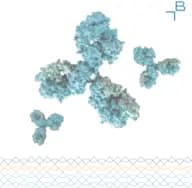
Primary Antibodies
Primary antibodies are immunoglobulins that bind specifically to an antigen of interest, allowing for the detection and quantification of proteins, peptides, or other biomolecules. These antibodies are critical tools in a wide range of applications, including Western blotting, immunohistochemistry, and ELISA. At CymitQuimica, we offer an extensive selection of high-quality primary antibodies that provide specificity and sensitivity for various research needs, including cancer, immunology, and cell biology studies.
Subcategories of "Primary Antibodies"
- Cancer Research Antibodies(3,620 products)
- Cardiovascular Antibodies(2 products)
- Developmental Biology(751 products)
- Epigenetics Antibodies(162 products)
- Immunology Antibodies(2,790 products)
- Metabolism Antibodies(279 products)
- Microbiology Antibodies(736 products)
- Signal Transduction(2,717 products)
- Tags & Cellular Markers(33 products)
Show 1 more subcategories
Found 75326 products of "Primary Antibodies"
Sort by
Purity (%)
0
100
|
0
|
50
|
90
|
95
|
100
GATA3 antibody
<p>GATA3 antibody was raised in Mouse using a purified recombinant fragment of human GATA3 expressed in E. coli as the immunogen.</p>SF1 antibody
<p>SF1 antibody was raised using the C terminal of SF1 corresponding to a region with amino acids MASSTPLPWQQNTTTTTTSAGTGSIPPWQQQQAAAAASPGAPQMQGNPTM</p>Phytase antibody
<p>The 6-Fluoro-3-indoxyl-beta-D-galactopyranoside is a powerful antituberculosis drug that falls under the class of rifamycins. It is specifically designed to combat tuberculosis infections by targeting active compounds and exhibiting bactericidal activity. This drug works by binding to DNA-dependent RNA polymerase, preventing transcription and replication, ultimately inhibiting bacterial growth. Through various metabolic transformations, such as hydrolysis by esterases or glucuronidases, oxidation by cytochrome P450 enzymes, reduction by glutathione reductase, or conjugation with glucuronic acid, this active form of the drug is metabolized in the body. Additionally, 6-Fluoro-3-indoxyl-beta-D-galactopyranoside has been shown to bind to markers expressed in Mycobacterium tuberculosis strains and inhibit cell growth in culture.</p>MAGEA6 antibody
<p>MAGEA6 antibody was raised using the middle region of MAGEA6 corresponding to a region with amino acids APEEKIWEELSVLEVFEGREDSIFGDPKKLLTQYFVQENYLEYRQVPGSD</p>STAT3 antibody
<p>The STAT3 antibody is a polyclonal antibody that is used in Life Sciences research to study the activation and function of the STAT3 protein. This antibody specifically binds to the active form of STAT3, preventing its interaction with other proteins and inhibiting its activity. The STAT3 antibody can be used for various applications, including Western blotting, immunohistochemistry, and immunoprecipitation. It is a valuable tool for researchers studying signal transduction pathways, cell proliferation, apoptosis, and immune responses. Additionally, the STAT3 antibody has been shown to have neutralizing and cytotoxic effects on cancer cells expressing high levels of activated STAT3. With its high specificity and sensitivity, this antibody is an essential tool for any researcher investigating the role of STAT3 in cellular processes.</p>PGK1 antibody
<p>PGK1 antibody was raised using the N terminal of PGK1 corresponding to a region with amino acids PEVEKACANPAAGSVILLENLRFHVEEEGKGKDASGNKVKAEPAKIEAFR</p>AFP antibody
The AFP antibody is a highly sensitive diagnostic reagent used in the field of Life Sciences. This monoclonal antibody is specifically designed to detect and bind to alpha-fetoprotein (AFP), a biomarker often associated with various diseases and conditions. The ultrasensitive detection capabilities of this antibody make it an invaluable tool for researchers and clinicians alike.bRAF antibody
<p>The bRAF antibody is a highly reactive and immobilizing antibody that is used in Life Sciences research. It is capable of neutralizing the binding proteins associated with bRAF, an important protein involved in cell signaling pathways. This antibody can be used for various applications, including Western blotting, immunoprecipitation, and immunofluorescence. The bRAF antibody has been shown to be effective in detecting the presence of bRAF in human serum samples and mesenchymal stem cells. It is available as both polyclonal and monoclonal antibodies, allowing researchers to choose the best option for their specific needs. With its high specificity and affinity, the bRAF antibody provides accurate and reliable results for a wide range of experiments.</p>PGDS antibody
<p>PGDS antibody was raised using the N terminal of PGDS corresponding to a region with amino acids EQADWPEIKSTLPFGKIPILEVDGLTLHQSLAIARYLTKNTDLAGNTEME</p>CD49e antibody (Azide Free)
<p>CD49e antibody (Azide Free) was raised in rat using C57BL/6 x A/J F1 murine mast cell line MC/9 as the immunogen.</p>CDK1 antibody
The CDK1 antibody is a monoclonal antibody used in Life Sciences research. It specifically targets and binds to the cyclin-dependent kinase 1 (CDK1) protein, which plays a crucial role in cell cycle regulation. This antibody is widely used in studies investigating the effects of CDK1 on various cellular processes.DNMT3B antibody
<p>The DNMT3B antibody is a polyclonal antibody that specifically targets the DNMT3B protein. This protein is involved in DNA methylation, a process that plays a crucial role in gene expression and regulation. The DNMT3B antibody can be used in various life science applications, including immunohistochemistry, western blotting, and flow cytometry.</p>KSHV ORF62 antibody
KSHV ORF62 antibody was raised in Mouse using a purified recombinant fragment of human KSHV ORF62 expressed in E. coli as the immunogen.CD20 antibody
The 6-Fluoro-3-indoxyl-beta-D-galactopyranoside is a powerful antituberculosis drug belonging to the class of rifamycins. It is highly effective in treating tuberculosis infections. This active compound exhibits bactericidal activity by inhibiting bacterial growth through its binding to DNA-dependent RNA polymerase, preventing transcription and replication. Its efficacy has been demonstrated through extensive research using the patch-clamp technique on human erythrocytes. The drug undergoes various metabolic transformations, including hydrolysis by esterases or glucuronidases, oxidation by cytochrome P450 enzymes, reduction by glutathione reductase, or conjugation with glucuronic acid. Additionally, it specifically targets markers expressed at high levels in Mycobacterium tuberculosis strains, inhibiting their cell growth in culture.ApoBEC4 antibody
<p>ApoBEC4 antibody was raised using a synthetic peptide corresponding to a region with amino acids VRHLNMPQMSFQETKDLGRLPTGRSVEIVEITEQFASSKEADEKKKKKGK</p>CLPB antibody
<p>CLPB antibody was raised using a synthetic peptide corresponding to a region with amino acids ELIQLVNKELNFWAKRAKQRHNITLLWDREVADVLVDGYNVHYGARSIKH</p>BHMT antibody
<p>BHMT antibody was raised using the C terminal of BHMT corresponding to a region with amino acids KHGSWGSGLDMHTKPWVRARARKEYWENLRIASGRPYNPSMSKPDGWGVT</p>Retinoblastoma antibody
The Retinoblastoma antibody is a highly specialized antibody used in the field of Life Sciences. It belongs to the group of Polyclonal Antibodies and is also available as a monoclonal antibody. This antibody specifically targets and binds to the Retinoblastoma protein, which plays a crucial role in regulating cell division and preventing tumor formation.CD103 antibody (Azide Free)
<p>CD103 antibody was raised in hamster using murine CD103 as the immunogen.</p>NHERF2 antibody
<p>The NHERF2 antibody is a polyclonal antibody that is used for various applications in research and diagnostics. This antibody specifically targets NHERF2, which is a protein involved in several cellular processes. It can be used in polymerase chain reactions (PCR) to detect the presence of NHERF2 mRNA or protein expression. Additionally, this antibody can be used in cyclin D1/CDK4 formation assays to study the interaction between these proteins and their role in cell cycle regulation. The NHERF2 antibody has also been shown to inhibit p21, a cyclin-dependent kinase inhibitor, leading to increased cyclin D2 expression and enhanced cell proliferation. In hybridization experiments, this antibody can be used to visualize the localization of NHERF2 within cells or tissues. Furthermore, it has been demonstrated that the NHERF2 antibody can modulate protein kinases and cyclin-dependent kinase activity, making it a valuable tool for studying signal transduction pathways. In addition</p>MDM2 antibody
The MDM2 antibody is a growth factor that plays a crucial role in regulating cell growth and division. It has been shown to interact with various proteins, including trastuzumab and transferrin, and is involved in multiple signaling pathways.Streptococcus Group A antibody (HRP)
Streptococcus group A antibody (HRP) was raised in rabbit using group A Streptococci as the immunogen.F2 antibody
The F2 antibody is a polyclonal antibody that specifically targets the α subunit of a growth factor. It is a natural ligand that binds to the target molecule and has neutralizing properties. This antibody is widely used in Life Sciences research to study the activation and function of the target molecule. It has been shown to inhibit the activity of a derivative that activates the target molecule, making it an important tool for studying its role in various biological processes. The F2 antibody is derived from a hybridoma cell line and exhibits high specificity and affinity for its target. It can be used in various applications such as immunohistochemistry, Western blotting, and ELISA assays. Researchers also use this monoclonal antibody to study the expression and localization of mRNA-binding proteins and their interactions with other cellular components. Overall, the F2 antibody is a valuable tool for studying the function and regulation of the target molecule in different biological systems.Chk1 antibody
The Chk1 antibody is a powerful inhibitor of the protein Chk1. It has been extensively studied in the field of Life Sciences for its cytotoxic effects and its ability to neutralize specific targets such as androgen, ferritin, mucin, and glycoconjugates. This monoclonal antibody is highly effective in blocking the activity of Chk1, which plays a crucial role in cell cycle regulation and DNA damage response. By inhibiting Chk1, this antibody can prevent the activation of downstream signaling pathways that promote cell survival and proliferation. Whether you're conducting research or developing therapeutic strategies, the Chk1 antibody is an essential tool for studying cellular processes and exploring potential therapeutic interventions. Choose from a wide range of high-quality monoclonal antibodies to suit your specific research needs.SERPINF1 antibody
<p>SERPINF1 antibody was raised in rabbit using the N terminal of SERPINF1 as the immunogen</p>AKAP1 antibody
<p>The AKAP1 antibody is a highly specialized monoclonal antibody that targets and neutralizes the activity of AKAP1, a growth factor involved in various cellular processes. This antibody has been shown to effectively block the binding of AKAP1 to its receptors, preventing downstream signaling events. Additionally, it can also bind to autoantibodies against AKAP1, reducing their detrimental effects on cellular function.</p>IGF1R antibody
The IGF1R antibody is a powerful tool in the field of life sciences. This antibody specifically targets the insulin-like growth factor 1 receptor (IGF1R) and has been widely used in various research applications.Ezrin antibody
<p>The Ezrin antibody is a highly specific and potent tool used in various Life Sciences assays. It is a polyclonal antibody that specifically recognizes and binds to the ezrin protein. This antibody has been extensively validated and is widely used in research laboratories for its reliability and accuracy.</p>FGF2 antibody
<p>FGF2 antibody was raised using a synthetic peptide corresponding to a region with amino acids RLESNNYNTYRSRKYTSWYVALKRTGQYKLGSKTGPGQKAILFLPMSAKS</p>SEC63 antibody
<p>SEC63 antibody was raised using a synthetic peptide corresponding to a region with amino acids WWLYIADRKEQTLISMPYHVCTLKDTEEVELKFPAPGKPGNYQYTVFLRS</p>MSI2 antibody
MSI2 antibody was raised using a synthetic peptide corresponding to a region with amino acids YTMDAFMLGMGMLGYPNFVATYGRGYPGFAPSYGYQFPDYLPVSQDIIFICortactin antibody
The Cortactin antibody is a powerful tool for researchers studying various cellular processes. It specifically targets Cortactin, a protein that plays a crucial role in cell growth and migration. This antibody can be used to investigate the effects of growth factors and tumor necrosis factor-alpha (TNF-α) on Cortactin localization and activity.SOCS3 antibody
The SOCS3 antibody is a highly specialized monoclonal antibody that targets the suppressor of cytokine signaling 3 (SOCS3) protein. This antibody has been extensively studied and has shown great potential in various research applications.Chromogranin A antibody
<p>Chromogranin A antibody was raised in mouse using human pheochromocytoma as the immunogen.</p>TYRO3 antibody
The TYRO3 antibody is a powerful tool in the field of Life Sciences. This monoclonal antibody has been developed to specifically target and neutralize the TYRO3 protein, which plays a crucial role in various cellular processes. By binding to TYRO3, this antibody effectively inhibits its function and can be used for a wide range of applications.CD99 antibody
<p>The CD99 antibody is a cytotoxic monoclonal antibody that specifically targets the human CD99 protein. It can be used in various applications such as blood plasma analysis, polymerase chain reaction (PCR), electrochemical impedance spectroscopy, and flow cytometry analysis. The CD99 antibody has been shown to have high specificity and sensitivity for detecting different protein isoforms. It can also be used in research studies to investigate the role of CD99 in various cellular processes. Additionally, this antibody has potential therapeutic applications, including the development of adeno-associated viral vectors for targeted drug delivery. With its versatility and wide range of applications, the CD99 antibody is an essential tool for researchers in the Life Sciences field.</p>RFPL4B antibody
<p>RFPL4B antibody was raised using the middle region of RFPL4B corresponding to a region with amino acids MTKQHNSRLEQSLHVREELRHFREDVTLDAATASSLLVFSNDLRSAQCKK</p>CD69 antibody
<p>The CD69 antibody is a powerful tool in the field of life sciences. It is a monoclonal antibody that specifically targets CD69, a glycan protein expressed on the surface of activated immune cells. This antibody has neutralizing properties and can block the binding of other molecules to CD69, preventing their activation.</p>proGRP antibody
<p>The proGRP antibody is a highly specialized antibody used in the field of Life Sciences. It is designed to specifically target and immobilize the proGRP protein, which plays a crucial role in various biological processes. This antibody is produced using both monoclonal and polyclonal antibodies, ensuring high specificity and sensitivity.</p>ACTRT1 antibody
<p>ACTRT1 antibody was raised using the middle region of ACTRT1 corresponding to a region with amino acids DTDIQNKLYADIVLSGGTTLLPGLEERLMKEVEQLASKGTPIKITASPDR</p>FAM131C antibody
FAM131C antibody was raised using the middle region of FAM131C corresponding to a region with amino acids RGRVAHLIEWKGWSAQPAGWELSPAEDEHYCCLPDELREARFAAGVAEQFPFKL antibody
<p>The PFKL antibody is an activated antibody that specifically targets the racemase enzyme. It is commonly used in Life Sciences research and assays to study the role of this enzyme in various biological processes. The PFKL antibody is available as both a polyclonal antibody and a monoclonal antibody, providing researchers with options for their specific experimental needs. This antibody can be used for a range of applications, including immunohistochemistry, Western blotting, and ELISA. Its high specificity and sensitivity make it a valuable tool for detecting and quantifying the presence of racemase in samples such as human serum or extracellular fluids. Additionally, the PFKL antibody can be used in combination with other cytotoxic inhibitors or antibodies to study complex signaling pathways or protein interactions. Whether you are conducting basic research or developing new diagnostic tools, the PFKL antibody is an essential component for your experiments.</p>CD104 antibody (Azide Free)
<p>CD104 antibody was raised in rat using tumor-associated antigen TSP-180 immunoaffinity purified from a transplantable BALB/c mouse lung cell carcinoma as the immunogen.</p>SAE1 antibody
<p>The SAE1 antibody is a powerful tool used in the field of Life Sciences. It is a monoclonal antibody that specifically targets the SAE1 protein, which plays a crucial role in various cellular processes. This antibody has been extensively studied and proven to be highly effective in detecting and quantifying SAE1 protein levels.</p>NUP43 antibody
<p>NUP43 antibody was raised using the middle region of NUP43 corresponding to a region with amino acids HQSVISSWLSTDPAKDRIEITSLLPSRSLSVNTLDVLGPCLVCGTDAEAI</p>HES2 antibody
<p>The HES2 antibody is a polyclonal antibody that specifically targets the serum albumin protein. It has cytotoxic properties and is widely used in Life Sciences research. The HES2 antibody has been shown to interact with various proteins, including angptl3, e-cadherin, taxol, β-catenin, and osteopontin. It is commonly used in experiments involving hybridization and activated human serum. This antibody is highly effective in detecting and analyzing specific proteins in biological samples, making it an essential tool for researchers in various fields.</p>PSA antibody
PSA antibody is a hormone peptide that is commonly used in Life Sciences research. It is an essential tool for studying the role of prostate-specific antigen (PSA) in various biological processes. This monoclonal antibody has high affinity and specificity for PSA and can be used for the detection and quantification of PSA in human serum samples. The PSA antibody also has antiviral properties and has been shown to inhibit the activity of interferon, which plays a crucial role in the immune response against viral infections. In addition, this antibody can be immobilized on an electrode surface for use in biosensor applications or as a cytotoxic agent for targeted therapy. Its inhibitory effects on leukemia inhibitory factor make it a promising candidate for the development of novel cancer treatments. With its wide range of applications, the PSA antibody is an invaluable tool for researchers in the field of Life Sciences.GRSF1 antibody
<p>GRSF1 antibody was raised using the N terminal of GRSF1 corresponding to a region with amino acids SCRRTGAACLPFYSAASYPALRASLLPQSLAAAAAVPTRSYSQESKTTYL</p>Neuropilin antibody
The Neuropilin antibody is a monoclonal antibody that targets the neuropilin protein, which plays a crucial role in various cellular processes such as growth factor signaling and collagen formation. This antibody specifically binds to neuropilin and inhibits its interaction with growth factors, including vascular endothelial growth factor-1 receptor (VEGFR-1) and alpha-fetoprotein.KIAA0391 antibody
<p>KIAA0391 antibody was raised in Rabbit using Human KIAA0391 as the immunogen</p>PGP9.5 antibody
<p>The PGP9.5 antibody is a highly specific and sensitive tool used in life sciences research. It is a polyclonal antibody that targets the protein gene product 9.5 (PGP9.5), also known as ubiquitin carboxyl-terminal hydrolase L1 (UCHL1). This antibody recognizes and binds to PGP9.5, allowing for its detection and quantification in various biological samples.</p>VCAM1 antibody
The VCAM1 antibody is a highly effective antibody-drug used in the field of Life Sciences. It belongs to the class of monoclonal antibodies and is specifically designed to target VCAM1, a protein involved in various biological processes. This antibody has been shown to neutralize the activity of VCAM1, preventing its interaction with fibrinogen and other molecules in human serum.PPP1A antibody
<p>PPP1A antibody was raised in Mouse using a purified recombinant fragment of human PPP1A expressed in E. coli as the immunogen.</p>Caldesmon antibody
<p>Caldesmon antibody is a versatile and powerful tool used in the field of Life Sciences. This antibody specifically targets caldesmon, a metal-binding protein involved in various cellular processes. It has been extensively studied and proven to be effective in detecting and quantifying caldesmon levels in biological samples.</p>