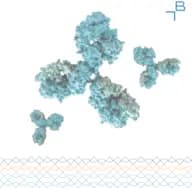
Primary Antibodies
Primary antibodies are immunoglobulins that bind specifically to an antigen of interest, allowing for the detection and quantification of proteins, peptides, or other biomolecules. These antibodies are critical tools in a wide range of applications, including Western blotting, immunohistochemistry, and ELISA. At CymitQuimica, we offer an extensive selection of high-quality primary antibodies that provide specificity and sensitivity for various research needs, including cancer, immunology, and cell biology studies.
Subcategories of "Primary Antibodies"
- Cancer Research Antibodies(3,609 products)
- Cardiovascular Antibodies(2 products)
- Developmental Biology(746 products)
- Epigenetics Antibodies(162 products)
- Immunology Antibodies(2,724 products)
- Metabolism Antibodies(278 products)
- Microbiology Antibodies(736 products)
- Signal Transduction(2,710 products)
- Tags & Cellular Markers(33 products)
Show 1 more subcategories
Found 69953 products of "Primary Antibodies"
Sort by
Purity (%)
0
100
|
0
|
50
|
90
|
95
|
100
Chromogranin A antibody
<p>Chromogranin A antibody was raised in rabbit using recombinant protein encoding human chromogranin A as the immunogen.</p>Purity:Min. 95%Goat anti Rat IgG + IgA + IgM (H + L)
<p>Goat anti-rat IgG/IgA/IgM (H+L) was raised in goat using rat IgG, IgA and IgM whole molecules as the immunogen.</p>Purity:Min. 95%Tryptase antibody
<p>The Tryptase antibody is a cytotoxic agent that belongs to the class of antibodies. It acts as an inhibitor of nuclear tryptase, a glycoprotein that is activated in response to various stimuli. This antibody specifically targets tryptase and inhibits its activity, preventing it from causing damage to cells and tissues. The Tryptase antibody has been extensively studied in the field of Life Sciences and has shown promising results in inhibiting the growth of cancer cells. It has also been used in conjunction with other antibodies, such as anti-CD20 antibodies, to enhance their therapeutic effects. The monoclonal nature of this antibody ensures high specificity and potency against tryptase, making it an ideal choice for research and clinical applications.</p>Purity:Min. 95%Amikacin antibody
<p>The Amikacin antibody is a monoclonal antibody used in Life Sciences. It specifically targets lipoprotein lipase, an enzyme involved in the breakdown of triglycerides. This antibody has been shown to have potential therapeutic benefits in diseases associated with abnormal lipid metabolism, such as amyloid plaque formation and high triglyceride levels. Additionally, the Amikacin antibody has been found to modulate the activity of transforming growth factor-beta 1 (TGF-β1) and interleukin-6 (IL-6), both of which play important roles in immune regulation. With its ability to target specific cell antigens and inhibit lipase activity, this antibody holds promise as a potential treatment for conditions characterized by altered lipid metabolism and immune dysregulation.</p>Anti-GLAST antibody - 1mg/mL
<p>GLAST/ EAAT-1 (Glutamate-Aspartate Transporter/ Excitatory Amino Acid transporter 1) (rodent/human nomenclature) is a sodium-dependent plasma membrane glutamate transporter expressed exclusively by astrocytes in the cerebellum and present at high densities near excitatory synapses. Glutamate transporters regulate glutamate receptors and limit glutamate accumulation to prevent neurotoxicity whilst ensuring accurate synaptic communication. GLAST is the major transporter expressed during development.</p>Color and Shape:PowderCD68 antibody
<p>CD68 antibody was raised in mouse using a synthetic peptide conjugated to KLH as the immunogen</p>Dengue Virus Type 2 NS1 Antigen, Recombinant
<p>Dengue virus is a member of the Flaviviridae family and is responsible for causing dengue fever in humans. It is transmitted to humans primarily via the Aedes aegypti and Aedes albopicto female mosquitoes which acquire the virus while feeding on the blood of an infected person. Although this virus can inflict asymptomatic or mild symptoms in patients, it can lead to severe infectious such as dengue hemorrhagic fever, also known as dengue shock syndrome.<br>The Dengue Virus non-structural protein 1 (NS1) is an important glycoprotein antigen in Dengue viral replication and is secreted from infected host cells as a hexamer. As a secreted hexamer the NS1 protein contains a detergent-sensitive central cavity, hosting around 70 lipid molecules which may allow the NS1 to interact with cell surface glycosaminoglycans and to attach to the cell membranes of the host cells. Once the NS1 is anchored into the surface membrane of infected host cells it appears as a membrane associated homodimer. It is believed that NS1 may interact with complement proteins leading to protection of the Dengue virus from complement-dependent lysis and furthermore may be involved in systemic immunity and contribute to vascular leakage, coagulopathy and thromobocytopenia.The global prevalence of dengue fever is significant and while there are numerous diagnostic tests on the market at present for dengue virus, there are few flavivirus panel assays and no specific dengue virus therapeutics available. Cymit Quimica’s biologics division is leading the field in the development of these target recombinant proteins and monoclonal antibodies. Our range of Dengue virus proteins and antibodies provides global development teams and researchers with access to vital and new raw material to test samples, in the race to diagnose patients earlier and help with vaccine development. We offer dengue virus proteins including envelope and NS1 from serotypes 1-4 and dengue virus monoclonal antibodies, for research and diagnostic purposes.</p>Purity:≥95% On 12.5% By Sds-Page. Single Band Visible At Approximately 50 Kda.Color and Shape:Clear LiquidNeisseria gonorrhoeae antibody
<p>Neisseria gonorrhea antibody was raised in mouse using Neisseria gonorrhea cells as the immunogen.</p>Prealbumin antibody
<p>Prealbumin antibody was raised in goat using purified human prealbumin as the immunogen.</p>Purity:Min. 95%GPBB antibody
<p>The GPBB antibody is a monoclonal antibody that specifically targets the growth factor GPBB (glycogen phosphorylase BB). This antibody has been extensively used in Life Sciences research to study the role of GPBB in various biological processes. It has been shown to inhibit the binding of GPBB to its receptors, thereby blocking downstream signaling pathways involved in cell growth and proliferation.</p>Hepatitis A Virus antibody
<p>Hepatitis A virus antibody was raised in mouse using purified hepatitis A as the immunogen.</p>Benzoylecgonine antibody
<p>Benzoylecgonine antibody was raised in mouse using benzoylecgonine-KLH as the immunogen.</p>Hepatitis B Virus antibody
<p>Hepatitis B virus antibody was raised in mouse using hepatitis B virus as the immunogen.</p>Human Serum Albumin antibody
<p>Human serum albumin antibody was raised in mouse using human serum albumin as the immunogen.</p>Cav1.2 antibody
<p>The Cav1.2 antibody is a serum marker used in Life Sciences research. It specifically targets the topoisomerase Iialpha protein, which is involved in DNA replication and repair. This antibody can be used as a medicament to study the function of this protein in various biological processes. It has been tested on human serum samples and has shown high specificity and sensitivity in detecting the presence of topoisomerase Iialpha. The Cav1.2 antibody is a monoclonal antibody that binds to a specific epitope on the protein, allowing for precise immunohistochemical detection. Its use in research has provided valuable insights into the role of topoisomerase Iialpha in cell growth, differentiation, and response to growth factors such as epidermal growth factor.</p>Apo (a) antibody
<p>Apo (a) antibody was raised in goat using human apolipoprotein (a) as the immunogen.</p>Purity:Min. 95%