Primary Antibodies
Primary antibodies are immunoglobulins that bind specifically to an antigen of interest, allowing for the detection and quantification of proteins, peptides, or other biomolecules. These antibodies are critical tools in a wide range of applications, including Western blotting, immunohistochemistry, and ELISA. At CymitQuimica, we offer an extensive selection of high-quality primary antibodies that provide specificity and sensitivity for various research needs, including cancer, immunology, and cell biology studies.
Subcategories of "Primary Antibodies"
- Cancer Research Antibodies(3,722 products)
- Cardiovascular Antibodies(2 products)
- Developmental Biology(764 products)
- Epigenetics Antibodies(162 products)
- Immunology Antibodies(2,591 products)
- Metabolism Antibodies(291 products)
- Microbiology Antibodies(741 products)
- Signal Transduction(2,771 products)
- Tags & Cellular Markers(34 products)
Show 1 more subcategories
Found 75602 products of "Primary Antibodies"
Sort by
Purity (%)
0
100
|
0
|
50
|
90
|
95
|
100
DPPA5 rabbit pAb
This gene encodes a protein that may function in the control of cell pluripotency and early embryogenesis. Expression of this gene is a specific marker for pluripotent stem cells. Pseudogenes of this gene are located on the short arm of chromosome 10 and the long arm of chromosomes 14 and 19. [provided by RefSeq, Dec 2010],EAR2 rabbit pAb
similarity:Belongs to the nuclear hormone receptor family. NR2 subfamily.,similarity:Contains 1 nuclear receptor DNA-binding domain.,EDG-8 rabbit pAb
The lysosphingolipid sphingosine 1-phosphate (S1P) regulates cell proliferation, apoptosis, motility, and neurite retraction. Its actions may be both intracellular as a second messenger and extracellular as a receptor ligand. S1P and the structurally related lysolipid mediator lysophosphatidic acid (LPA) signal cells through a set of G protein-coupled receptors known as EDG receptors. Some EDG receptors (e.g., EDG1; MIM 601974) are S1P receptors; others (e.g., EDG2; MIM 602282) are LPA receptors.[supplied by OMIM, Mar 2008],CP2F1 rabbit pAb
This gene encodes a member of the cytochrome P450 superfamily of enzymes. The cytochrome P450 proteins are monooxygenases which catalyze many reactions involved in drug metabolism and synthesis of cholesterol, steroids and other lipids. This protein localizes to the endoplasmic reticulum and is known to dehydrogenate 3-methylindole, an endogenous toxin derived from the fermentation of tryptophan, as well as xenobiotic substrates such as naphthalene and ethoxycoumarin. This gene is part of a large cluster of cytochrome P450 genes from the CYP2A, CYP2B and CYP2F subfamilies on chromosome 19q. [provided by RefSeq, Jul 2008],GCSc-γ rabbit pAb
Glutamate-cysteine ligase, also known as gamma-glutamylcysteine synthetase is the first rate-limiting enzyme of glutathione synthesis. The enzyme consists of two subunits, a heavy catalytic subunit and a light regulatory subunit. This locus encodes the catalytic subunit, while the regulatory subunit is derived from a different gene located on chromosome 1p22-p21. Mutations at this locus have been associated with hemolytic anemia due to deficiency of gamma-glutamylcysteine synthetase and susceptibility to myocardial infarction.[provided by RefSeq, Oct 2010],SL9C1 rabbit pAb
SLC9A10 is a member of the sodium-hydrogen exchanger (NHE) family (see SLC9A1, MIM 107310) and is required for male fertility and sperm motility (Wang et al., 2003 [PubMed 14634667]).[supplied by OMIM, Apr 2009],PDE11 rabbit pAb
The 3',5'-cyclic nucleotides cAMP and cGMP function as second messengers in a wide variety of signal transduction pathways. 3',5'-cyclic nucleotide phosphodiesterases (PDEs) catalyze the hydrolysis of cAMP and cGMP to the corresponding 5'-monophosphates and provide a mechanism to downregulate cAMP and cGMP signaling. This gene encodes a member of the PDE protein superfamily. Mutations in this gene are a cause of Cushing disease and adrenocortical hyperplasia. Multiple transcript variants encoding different isoforms have been found for this gene. [provided by RefSeq, Jul 2008],Neu (phospho Tyr877) rabbit pAb
This gene encodes a member of the epidermal growth factor (EGF) receptor family of receptor tyrosine kinases. This protein has no ligand binding domain of its own and therefore cannot bind growth factors. However, it does bind tightly to other ligand-bound EGF receptor family members to form a heterodimer, stabilizing ligand binding and enhancing kinase-mediated activation of downstream signalling pathways, such as those involving mitogen-activated protein kinase and phosphatidylinositol-3 kinase. Allelic variations at amino acid positions 654 and 655 of isoform a (positions 624 and 625 of isoform b) have been reported, with the most common allele, Ile654/Ile655, shown here. Amplification and/or overexpression of this gene has been reported in numerous cancers, including breast and ovarian tumors. Alternative splicing results in several additional transcript variants, some encoding dGastrin rabbit pAb
Gastrin is a hormone whose main function is to stimulate secretion of hydrochloric acid by the gastric mucosa, which results in gastrin formation inhibition. This hormone also acts as a mitogenic factor for gastrointestinal epithelial cells. Gastrin has two biologically active peptide forms, G34 and G17. [provided by RefSeq, Jul 2008],CHSTB rabbit pAb
The protein encoded by this gene belongs to the sulfotransferase 2 family. It is localized to the golgi membrane, and catalyzes the transfer of sulfate to position 4 of the N-acetylgalactosamine (GalNAc) residue of chondroitin. Chondroitin sulfate constitutes the predominant proteoglycan present in cartilage, and is distributed on the surfaces of many cells and extracellular matrices. A chromosomal translocation involving this gene and IgH, t(12;14)(q23;q32), has been reported in a patient with B-cell chronic lymphocytic leukemia. Alternatively spliced transcript variants encoding different isoforms have been found for this gene. [provided by RefSeq, Aug 2011],GAS2 rabbit pAb
The protein encoded by this gene is a caspase-3 substrate that plays a role in regulating microfilament and cell shape changes during apoptosis. It can also modulate cell susceptibility to p53-dependent apoptosis by inhibiting calpain activity. Multiple alternatively spliced variants, encoding the same protein, have been identified. [provided by RefSeq, Jan 2009],PCDG1 rabbit pAb
This gene is a member of the protocadherin gamma gene cluster, one of three related clusters tandemly linked on chromosome five. These gene clusters have an immunoglobulin-like organization, suggesting that a novel mechanism may be involved in their regulation and expression. The gamma gene cluster includes 22 genes divided into 3 subfamilies. Subfamily A contains 12 genes, subfamily B contains 7 genes and 2 pseudogenes, and the more distantly related subfamily C contains 3 genes. The tandem array of 22 large, variable region exons are followed by a constant region, containing 3 exons shared by all genes in the cluster. Each variable region exon encodes the extracellular region, which includes 6 cadherin ectodomains and a transmembrane region. The constant region exons encode the common cytoplasmic region. These neural cadherin-like cell adhesion proteins most likely play a critical role in the establishment and function of specific cell-cell connections in the brain. Alternative splicing has been described for the gamma cluster genes. [provided by RefSeq, Jul 2008],CCRK rabbit pAb
The protein encoded by this gene contains a kinase domain most closely related to the cyclin-dependent protein kinases. The encoded kinase may activate cyclin-dependent kinase 2 and is involved in cell growth. Alternatively spliced transcript variants encoding distinct isoforms have been reported. [provided by RefSeq, Dec 2009],PERM (light chain, Cleaved-Gly278) rabbit pAb
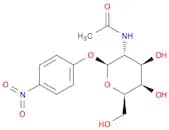
Myeloperoxidase (MPO) is a heme protein synthesized during myeloid differentiation that constitutes the major component of neutrophil azurophilic granules. Produced as a single chain precursor, myeloperoxidase is subsequently cleaved into a light and heavy chain. The mature myeloperoxidase is a tetramer composed of 2 light chains and 2 heavy chains. This enzyme produces hypohalous acids central to the microbicidal activity of neutrophils. [provided by RefSeq, Nov 2014],4-Nitrophenyl 2-acetamido-2-deoxy-β-d-galactopyranoside
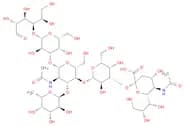
CAS:Formula:C14H18N2O8Purity:98%Color and Shape:SolidMolecular weight:342.3013D-Glucose, O-(N-acetyl-α-neuraminosyl)-(2→3)-O-β-D-galactopyranosyl-(1→4)-O-[6-deoxy-α-L-galactopyranosyl-(1→3)]-O-2-(acetylamino)-2-deoxy-β-D-glucopyranosyl-(1→3)-O-β-D-galactopyranosyl-(1→4)-
CAS:Formula:C43H72N2O33Purity:97%Color and Shape:SolidMolecular weight:1145.0254