Primary Antibodies
Primary antibodies are immunoglobulins that bind specifically to an antigen of interest, allowing for the detection and quantification of proteins, peptides, or other biomolecules. These antibodies are critical tools in a wide range of applications, including Western blotting, immunohistochemistry, and ELISA. At CymitQuimica, we offer an extensive selection of high-quality primary antibodies that provide specificity and sensitivity for various research needs, including cancer, immunology, and cell biology studies.
Subcategories of "Primary Antibodies"
- Cancer Research Antibodies(3,620 products)
- Cardiovascular Antibodies(2 products)
- Developmental Biology(751 products)
- Epigenetics Antibodies(162 products)
- Immunology Antibodies(2,551 products)
- Metabolism Antibodies(279 products)
- Microbiology Antibodies(739 products)
- Signal Transduction(2,717 products)
- Tags & Cellular Markers(33 products)
Show 1 more subcategories
Found 75447 products of "Primary Antibodies"
Sort by
Purity (%)
0
100
|
0
|
50
|
90
|
95
|
100
CITE1 rabbit pAb
This gene encodes a member of the CREB-binding protein/p300-interacting transactivator with Asp/Glu-rich C-terminal domain (CITED) family of proteins. The encoded protein, also known as melanocyte-specific gene 1, may function as a transcriptional coactivator and may play a role in pigmentation of melanocytes. Alternatively spliced transcript variants have been described. [provided by RefSeq, Jan 2009],BAGE2 rabbit pAb
function:Unknown. Candidate gene encoding tumor antigens.,miscellaneous:The ancestral BAGE gene was generated by juxtacentromeric reshuffling of the MLL3 gene. The BAGE family was expanded by juxtacentromeric movement and/or acrocentric exchanges. BAGE family is composed of expressed genes that map to the juxtacentromeric regions of chromosomes 13 and 21 and of unexpressed gene fragments that scattered in the juxtacentromeric regions of several chromosomes, including chromosomes 9, 13, 18 and 21.,similarity:Belongs to the BAGE family.,tissue specificity:Not expressed in normal tissues except in testis. Expressed in 22% of melanomas, in bladder and lung carcinomas.,tissue specificity:Not expressed in normal tissues except in testis. Expressed in melanoma, bladder and lung carcinomas.,Olfactory receptor 5M9 rabbit pAb
olfactory receptor family 5 subfamily M member 9(OR5M9) Homo sapiens Olfactory receptors interact with odorant molecules in the nose, to initiate a neuronal response that triggers the perception of a smell. The olfactory receptor proteins are members of a large family of G-protein-coupled receptors (GPCR) arising from single coding-exon genes. Olfactory receptors share a 7-transmembrane domain structure with many neurotransmitter and hormone receptors and are responsible for the recognition and G protein-mediated transduction of odorant signals. The olfactory receptor gene family is the largest in the genome. The nomenclature assigned to the olfactory receptor genes and proteins for this organism is independent of other organisms. [provided by RefSeq, Jul 2008],MEK Kinase-6 rabbit pAb
This gene encodes a serine/threonine protein kinase that forms a component of protein kinase-mediated signal transduction cascades. The encoded kinase participates in the regulation of vascular endothelial growth factor (VEGF) expression. Alternative splicing results in multiple transcript variants. [provided by RefSeq, Jul 2014],GROα rabbit pAb
This antimicrobial gene encodes a member of the CXC subfamily of chemokines. The encoded protein is a secreted growth factor that signals through the G-protein coupled receptor, CXC receptor 2. This protein plays a role in inflammation and as a chemoattractant for neutrophils. Aberrant expression of this protein is associated with the growth and progression of certain tumors. A naturally occurring processed form of this protein has increased chemotactic activity. Alternate splicing results in coding and non-coding variants of this gene. A pseudogene of this gene is found on chromosome 4. [provided by RefSeq, Sep 2014],Connexin 43 rabbit pAb
This gene is a member of the connexin gene family. The encoded protein is a component of gap junctions, which are composed of arrays of intercellular channels that provide a route for the diffusion of low molecular weight materials from cell to cell. The encoded protein is the major protein of gap junctions in the heart that are thought to have a crucial role in the synchronized contraction of the heart and in embryonic development. A related intronless pseudogene has been mapped to chromosome 5. Mutations in this gene have been associated with oculodentodigital dysplasia, autosomal recessive craniometaphyseal dysplasia and heart malformations. [provided by RefSeq, May 2014],Endophilin B2 rabbit pAb
similarity:Belongs to the endophilin family.,similarity:Contains 1 BAR domain.,similarity:Contains 1 SH3 domain.,subunit:Homodimer, and heterodimer with SH3GLB1.,tissue specificity:Detected in skeletal muscle, adipocyte, brain, lung, colon and mammary gland.,MIB2 rabbit pAb
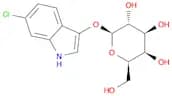
function:E3 ubiquitin-protein ligase that mediates ubiquitination of Delta receptors, which act as ligands of Notch proteins. Positively regulates the Delta-mediated Notch signaling by ubiquitinating the intracellular domain of Delta, leading to endocytosis of Delta receptors.,induction:Down-regulated in many primary skin melanomas. Treatment with a demethylating agent, 5'-aza-2-deoxycytidine, restores expression, suggesting that down-regulation is the result of methylation of the gene.,pathway:Protein modification; protein ubiquitination.,PTM:Ubiquitinated. Possibly via autoubiquitination.,similarity:Contains 1 ZZ-type zinc finger.,similarity:Contains 2 MIB/HERC2 domains.,similarity:Contains 2 RING-type zinc fingers.,similarity:Contains 9 ANK repeats.,subcellular location:Colocalizes with endosomal compartments.,subunit:Interacts with actin monomer.,tissue specificity:Expressed in skeletal muscle, and to a lesser extent in heart, brain and kidney.,β-D-Galactopyranoside, 6-chloro-1H-indol-3-yl
CAS:Formula:C14H16ClNO6Purity:98%Molecular weight:329.7329SIA8B rabbit pAb
The protein encoded by this gene is a type II membrane protein that is thought to catalyze the transfer of sialic acid from CMP-sialic acid to N-linked oligosaccharides and glycoproteins. The encoded protein may be found in the Golgi apparatus and may be involved in the production of polysialic acid, a modulator of the adhesive properties of neural cell adhesion molecule (NCAM1). This protein is a member of glycosyltransferase family 29. [provided by RefSeq, Jul 2008],Prolactin rabbit pAb
This gene encodes the anterior pituitary hormone prolactin. This secreted hormone is a growth regulator for many tissues, including cells of the immune system. It may also play a role in cell survival by suppressing apoptosis, and it is essential for lactation. Alternative splicing results in multiple transcript variants that encode the same protein. [provided by RefSeq, Aug 2011],HSP 75 rabbit pAb
This gene encodes a mitochondrial chaperone protein that is member of the heat shock protein 90 (HSP90) family. The encoded protein has ATPase activity and interacts with tumor necrosis factor type I. This protein may function in regulating cellular stress responses. Alternate splicing results in multiple transcript variants. [provided by RefSeq, Jan 2013],ZFHX4 rabbit pAb
disease:A chromosomal aberration involving [ZFHX4] is found in one patient with ptosis. Translocation t(1;8)(p34.3;q21.12).,function:May play a role in neural and muscle differentiation (By similarity). May be involved in transcriptional regulation.,similarity:Belongs to the krueppel C2H2-type zinc-finger protein family.,similarity:Contains 20 C2H2-type zinc fingers.,similarity:Contains 4 homeobox DNA-binding domains.,tissue specificity:Expressed in brain, skeletal muscle and liver. Very low expression in stomach.,OR2T6 rabbit pAb
olfactory receptor family 2 subfamily T member 6(OR2T6) Homo sapiens Olfactory receptors interact with odorant molecules in the nose, to initiate a neuronal response that triggers the perception of a smell. The olfactory receptor proteins are members of a large family of G-protein-coupled receptors (GPCR) arising from single coding-exon genes. Olfactory receptors share a 7-transmembrane domain structure with many neurotransmitter and hormone receptors and are responsible for the recognition and G protein-mediated transduction of odorant signals. The olfactory receptor gene family is the largest in the genome. The nomenclature assigned to the olfactory receptor genes and proteins for this organism is independent of other organisms. [provided by RefSeq, Jul 2008],NRN1 rabbit pAb
This gene encodes a member of the neuritin family, and is expressed in postmitotic-differentiating neurons of the developmental nervous system and neuronal structures associated with plasticity in the adult. The expression of this gene can be induced by neural activity and neurotrophins. The encoded protein contains a consensus cleavage signal found in glycosylphoshatidylinositol (GPI)-anchored proteins. The encoded protein promotes neurite outgrowth and arborization, suggesting its role in promoting neuritogenesis. Overexpression of the encoded protein may be associated with astrocytoma progression. Alternative splicing results in multiple transcript variants. [provided by RefSeq, Jul 2013],MUC15 rabbit pAb
function:May play a role in the cell adhesion to the extracellular matrix.,PTM:Highly glycosylated (N- and O-linked carbohydrates).,sequence caution:Translated as stop.,tissue specificity:Expressed in spleen, thymus, prostate, testis, ovary, small intestine, colon, peripheral blood leukocyte, bone marrow, lymph node and lung.,