Primary Antibodies
Primary antibodies are immunoglobulins that bind specifically to an antigen of interest, allowing for the detection and quantification of proteins, peptides, or other biomolecules. These antibodies are critical tools in a wide range of applications, including Western blotting, immunohistochemistry, and ELISA. At CymitQuimica, we offer an extensive selection of high-quality primary antibodies that provide specificity and sensitivity for various research needs, including cancer, immunology, and cell biology studies.
Subcategories of "Primary Antibodies"
- Cancer Research Antibodies(3,620 products)
- Cardiovascular Antibodies(2 products)
- Developmental Biology(751 products)
- Epigenetics Antibodies(162 products)
- Immunology Antibodies(2,776 products)
- Metabolism Antibodies(279 products)
- Microbiology Antibodies(736 products)
- Signal Transduction(2,717 products)
- Tags & Cellular Markers(33 products)
Show 1 more subcategories
Found 75326 products of "Primary Antibodies"
Sort by
Purity (%)
0
100
|
0
|
50
|
90
|
95
|
100
MDM2 (Phospho-Tyr394) Antibody
This gene encodes a nuclear-localized E3 ubiquitin ligase. The encoded protein can promote tumor formation by targeting tumor suppressor proteins, such as p53, for proteasomal degradation. This gene is itself transcriptionally-regulated by p53. Overexpression or amplification of this locus is detected in a variety of different cancers. There is a pseudogene for this gene on chromosome 2. Alternative splicing results in a multitude of transcript variants, many of which may be expressed only in tumor cells. [provided by RefSeq, Jun 2013],CD101 rabbit pAb
function:Plays a role as inhibitor of T-cells proliferation induced by CD3. Inhibits expression of IL2RA on activated T-cells and secretion of IL2. Inhibits tyrosine kinases that are required for IL2 production and cellular proliferation. Inhibits phospholipase C-gamma-1/PLCG1 phosphorylation and subsequent CD3-induced changes in intracellular free calcium. Prevents nuclear translocation of nuclear factor of activated T-cell to the nucleus. Plays a role in the inhibition of T-cell proliferation via IL10 secretion by cutaneous dendritic cells. May be a marker of CD4(+) CD56(+) leukemic tumor cells.,PTM:N-glycosylated.,similarity:Contains 7 Ig-like C2-type (immunoglobulin-like) domains.,tissue specificity:Expressed in lung, thymus and small intestine. Detected in cutaneous dendritic cells, activated T-cells, monocytes and granulocytes as well as with epithelial cells with dendritic morphology. Expressed in some leukemic cells, the CD4(+) CD56(+) blastic tumor cells, as well as in Langerhans cells from LCH (Langerhans cell histiocytosis) patients.,Crk-L rabbit pAb
This gene encodes a protein kinase containing SH2 and SH3 (src homology) domains which has been shown to activate the RAS and JUN kinase signaling pathways and transform fibroblasts in a RAS-dependent fashion. It is a substrate of the BCR-ABL tyrosine kinase, plays a role in fibroblast transformation by BCR-ABL, and may be oncogenic.[provided by RefSeq, Jan 2009],TGFβ RIII (phospho Thr842) rabbit pAb
This locus encodes the transforming growth factor (TGF)-beta type III receptor. The encoded receptor is a membrane proteoglycan that often functions as a co-receptor with other TGF-beta receptor superfamily members. Ectodomain shedding produces soluble TGFBR3, which may inhibit TGFB signaling. Decreased expression of this receptor has been observed in various cancers. Alternatively spliced transcript variants encoding different isoforms have been identified for this gene.[provided by RefSeq, Sep 2010],ADAM9 rabbit pAb
This gene encodes a member of the ADAM (a disintegrin and metalloprotease domain) family. Members of this family are membrane-anchored proteins structurally related to snake venom disintegrins, and have been implicated in a variety of biological processes involving cell-cell and cell-matrix interactions, including fertilization, muscle development, and neurogenesis. The protein encoded by this gene interacts with SH3 domain-containing proteins, binds mitotic arrest deficient 2 beta protein, and is also involved in TPA-induced ectodomain shedding of membrane-anchored heparin-binding EGF-like growth factor. Several alternatively spliced transcript variants have been identified for this gene. [provided by RefSeq, Jul 2010],PHKB rabbit pAb
Phosphorylase kinase is a polymer of 16 subunits, four each of alpha, beta, gamma and delta. The alpha subunit includes the skeletal muscle and hepatic isoforms, encoded by two different genes. The beta subunit is the same in both the muscle and hepatic isoforms, encoded by this gene, which is a member of the phosphorylase b kinase regulatory subunit family. The gamma subunit also includes the skeletal muscle and hepatic isoforms, encoded by two different genes. The delta subunit is a calmodulin and can be encoded by three different genes. The gamma subunits contain the active site of the enzyme, whereas the alpha and beta subunits have regulatory functions controlled by phosphorylation. The delta subunit mediates the dependence of the enzyme on calcium concentration. Mutations in this gene cause glycogen storage disease type 9B, also known as phosphorylase kinase deficiencyKu-80 rabbit pAb
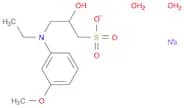
The protein encoded by this gene is the 80-kilodalton subunit of the Ku heterodimer protein which is also known as ATP-dependant DNA helicase II or DNA repair protein XRCC5. Ku is the DNA-binding component of the DNA-dependent protein kinase, and it functions together with the DNA ligase IV-XRCC4 complex in the repair of DNA double-strand break by non-homologous end joining and the completion of V(D)J recombination events. This gene functionally complements Chinese hamster xrs-6, a mutant defective in DNA double-strand break repair and in ability to undergo V(D)J recombination. A rare microsatellite polymorphism in this gene is associated with cancer in patients of varying radiosensitivity. [provided by RefSeq, Jul 2008],3-(N-Ethyl-3-methoxyanilino)-2-hydroxy-1-propanesulfonic acid sodium salt
CAS:Formula:C12H18NNaO5SPurity:98%Color and Shape:SolidMolecular weight:311.3298Fibulin-2 rabbit pAb
This gene encodes an extracellular matrix protein, which belongs to the fibulin family. This protein binds various extracellular ligands and calcium. It may play a role during organ development, in particular, during the differentiation of heart, skeletal and neuronal structures. Alternatively spliced transcript variants encoding different isoforms have been identified. [provided by RefSeq, Jul 2008],VGLU2 rabbit pAb
developmental stage:Expressed in fetal brain.,function:Mediates the uptake of glutamate into synaptic vesicles at presynaptic nerve terminals of excitatory neural cells. May also mediate the transport of inorganic phosphate.,similarity:Belongs to the major facilitator superfamily. Sodium/anion cotransporter family. VGLUT subfamily.,tissue specificity:Predominantly expressed in adult brain. Expressed in amygdala, caudate nucleus, cerebral cortex, frontal lobe, hippocampus, medulla, occipital lobe, puteman, spinal cord, substantia nigra, subthalamic nucleus, temporal lobe and thalamus.,SPY4 rabbit pAb
This gene encodes a member of a family of cysteine- and proline-rich proteins. The encoded protein is an inhibitor of the receptor-transduced mitogen-activated protein kinase (MAPK) signaling pathway. Activity of this protein impairs the formation of active GTP-RAS. Nucleotide variation in this gene has been associated with hypogonadotropic hypogonadism 17 with or without anosmia. Alternative splicing results in a multiple transcript variants. [provided by RefSeq, Jun 2014],p16 rabbit pAb
alternative products:Isoform 1 and isoform 4 arise due to the use of two alternative first exons joined to a common exon 2 at the same acceptor site but in different reading frames, resulting in two completely different isoforms,disease:Defects in CDKN2A are a cause of Li-Fraumeni syndrome (LFS) [MIM:151623]. LFS is a highly penetrant familial cancer phenotype usually associated with inherited mutations in TP53.,disease:Defects in CDKN2A are involved in tumor formation in a wide range of tissues.,disease:Defects in CDKN2A are the cause of cutaneous malignant melanoma 2 (CMM2) [MIM:155601]. Inheritance is autosomal dominant. Malignant melanoma is a malignant neoplasm of melanocytes, arising de novo or from a preexisting benign nevus, which occurs most often in the skin but also may involve other sites.,disease:Defects in CDKN2A are the cause of familial atypical multiple mole melanoma-pancreatic carcinoma syndrome (FAMMMPC) [MIM:606719].,disease:Defects in CDKN2A are the cause of melanoma-astrocytoma syndrome [MIM:155755]. The melanoma-astrocytoma syndrome is characterized by a dual predisposition to melanoma and neural system tumors, commonly astrocytoma.,function:Acts as a negative regulator of the proliferation of normal cells by interacting strongly with CDK4 and CDK6. This inhibits their ability to interact with cyclins D and to phosphorylate the retinoblastoma protein.,function:Capable of inducing cell cycle arrest in G1 and G2 phases. Acts as a tumor suppressor. Binds to MDM2 and blocks its nucleocytoplasmic shuttling by sequestering it in the nucleolus. This inhibits the oncogenic action of MDM2 by blocking MDM2-induced degradation of p53 and enhancing p53-dependent transactivation and apoptosis. Also induces G2 arrest and apoptosis in a p53-independent manner by preventing the activation of cyclin B1/CDC2 complexes. Binds to BCL6 and down-regulates BCL6-induced transcriptional repression. Binds to E2F1 and MYC and blocks their transcriptional activator activity but has no effect on MYC transcriptional repression. Binds to TOP1/TOPOI and stimulates its activity. This complex binds to rRNA gene promoters and may play a role in rRNA transcription and/or maturation. Interacts with NPM1/B23 and promotes its polyubiquitination and degradation, thus inhibiting rRNA processing. Interacts with UBE2I/UBC9 and enhances sumoylation of a number of its binding partners including MDM2 and E2F1. Binds to HUWE1 and represses its ubiquitin ligase activity. May play a role in controlling cell proliferation and apoptosis during mammary gland development.,online information:Database of CDKN2A germline and somatic variants,online information:P16INK4a entry,polymorphism:Genetic variations in CDKN2A may underlie susceptibility to uveal melanoma [MIM:155720]. Uveal melanoma is the most common type of ocular malignant tumor, consisting of overgrowth of uveal melanocytes and often preceded by a uveal nevus.,similarity:Belongs to the CDKN2 cyclin-dependent kinase inhibitor family.,similarity:Contains 4 ANK repeats.,subunit:Does not interact with cyclins, CDC2, CDK2, CDK4, CDK5 or CDK6. Binds to BCL6, E2F1, HUWE1, MDM2, MYC, NPM1/B23, TOP1/TOPOI and UBE2I/UBC9. Interacts with TBRG1. Interacts with CDKN2AIP and E4F1.,subunit:Heterodimer with CDK4 or CDK6. Isoform 3 does not bind to CDK4.,tissue specificity:Widely expressed but not detected in brain or skeletal muscle. Isoform 3 is pancreas-specific.,PLSL rabbit pAb
Plastins are a family of actin-binding proteins that are conserved throughout eukaryote evolution and expressed in most tissues of higher eukaryotes. In humans, two ubiquitous plastin isoforms (L and T) have been identified. Plastin 1 (otherwise known as Fimbrin) is a third distinct plastin isoform which is specifically expressed at high levels in the small intestine. The L isoform is expressed only in hemopoietic cell lineages, while the T isoform has been found in all other normal cells of solid tissues that have replicative potential (fibroblasts, endothelial cells, epithelial cells, melanocytes, etc.). However, L-plastin has been found in many types of malignant human cells of non-hemopoietic origin suggesting that its expression is induced accompanying tumorigenesis in solid tissues. [provided by RefSeq, Jul 2008],Cleaved-Cathepsin A 32k (R326) rabbit pAb
This gene encodes a member of the peptidase S10 family of serine carboxypeptidases. Alternative splicing results in multiple transcript variants, at least one of which encodes a preproprotein that is proteolytically processed to generate two chains that comprise the heterodimeric active enzyme. This enzyme possesses deamidase, esterase and carboxypeptidase activities and acts as a scaffold in the lysosomal multienzyme complex. Mutations in this gene are associated with galactosialidosis. [provided by RefSeq, Nov 2015],EGF Receptor (phospho-Tyr845) rabbit pAb
The protein encoded by this gene is a transmembrane glycoprotein that is a member of the protein kinase superfamily. This protein is a receptor for members of the epidermal growth factor family. EGFR is a cell surface protein that binds to epidermal growth factor. Binding of the protein to a ligand induces receptor dimerization and tyrosine autophosphorylation and leads to cell proliferation. Mutations in this gene are associated with lung cancer. [provided by RefSeq, Jun 2016],TNKS1 rabbit pAb
catalytic activity:NAD(+) + (ADP-D-ribosyl)(n)-acceptor = nicotinamide + (ADP-D-ribosyl)(n+1)-acceptor.,function:May regulate vesicle trafficking and modulate the subcellular distribution of SLC2A4/GLUT4-vesicles. Has PARP activity and can modify TERF1, and thereby contribute to the regulation of telomere length.,PTM:ADP-ribosylated (-auto).,PTM:Phosphorylated on serine residues by MAPK kinases upon insulin stimulation.,similarity:Contains 1 PARP catalytic domain.,similarity:Contains 1 SAM (sterile alpha motif) domain.,similarity:Contains 15 ANK repeats.,subcellular location:Associated with the Golgi and with juxtanuclear SLC2A4/GLUT4-vesicles. A minor proportion is also found at nuclear pore complexes and around the pericentriolar matrix of mitotic centromeres. During interphase, a small fraction of TNKS is found in the nucleus, associated with TERF1.,subunit:Oligomerizes and associates with TNKS2. Interacts with the cytoplasmic domain of LNPEP/Otase in SLC2A4/GLUT4-vesicles. Binds to the N-terminus of telomeric TERF1 via the ANK repeats. Found in a complex with POT1; TERF1 and TINF2.,tissue specificity:Ubiquitous; highest levels in testis.,Histone H3 (Tri Methyl Lys18) rabbit pAb
Histones are basic nuclear proteins that are responsible for the nucleosome structure of the chromosomal fiber in eukaryotes. This structure consists of approximately 146 bp of DNA wrapped around a nucleosome, an octamer composed of pairs of each of the four core histones (H2A, H2B, H3, and H4). The chromatin fiber is further compacted through the interaction of a linker histone, H1, with the DNA between the nucleosomes to form higher order chromatin structures. This gene is intronless and encodes a replication-dependent histone that is a member of the histone H3 family. Transcripts from this gene lack polyA tails; instead, they contain a palindromic termination element. This gene is found in the large histone gene cluster on chromosome 6p22-p21.3. [provided by RefSeq, Aug 2015],KCNKG rabbit pAb
potassium two pore domain channel subfamily K member 16(KCNK16) Homo sapiens The protein encoded by this gene belongs to the family of potassium channel proteins containing two pore-forming P domains. This channel is an open rectifier which primarily passes outward current under physiological K+ concentrations. This gene is expressed predominantly in the pancreas and is activated at alkaline pH. Several alternatively spliced transcript variants encoding different isoforms have been identified for this gene. [provided by RefSeq, Sep 2008],