Primary Antibodies
Primary antibodies are immunoglobulins that bind specifically to an antigen of interest, allowing for the detection and quantification of proteins, peptides, or other biomolecules. These antibodies are critical tools in a wide range of applications, including Western blotting, immunohistochemistry, and ELISA. At CymitQuimica, we offer an extensive selection of high-quality primary antibodies that provide specificity and sensitivity for various research needs, including cancer, immunology, and cell biology studies.
Subcategories of "Primary Antibodies"
- Cancer Research Antibodies(3,620 products)
- Cardiovascular Antibodies(2 products)
- Developmental Biology(751 products)
- Epigenetics Antibodies(162 products)
- Immunology Antibodies(2,624 products)
- Metabolism Antibodies(279 products)
- Microbiology Antibodies(736 products)
- Signal Transduction(2,717 products)
- Tags & Cellular Markers(33 products)
Show 1 more subcategories
Found 75324 products of "Primary Antibodies"
Sort by
Purity (%)
0
100
|
0
|
50
|
90
|
95
|
100
CD88 rabbit pAb
function:Receptor for the chemotactic and inflammatory peptide anaphylatoxin C5a. This receptor stimulates chemotaxis, granule enzyme release and superoxide anion production.,PTM:Sulfation plays a critical role in the association of the receptor with C5a, but no significant role in the ability of the receptor to transduce a signal and mobilize calcium in response to a small peptide agonist.,similarity:Belongs to the G-protein coupled receptor 1 family.,TRAF3 rabbit pAb
TNF receptor associated factor 3(TRAF3) Homo sapiens The protein encoded by this gene is a member of the TNF receptor associated factor (TRAF) protein family. TRAF proteins associate with, and mediate the signal transduction from, members of the TNF receptor (TNFR) superfamily. This protein participates in the signal transduction of CD40, a TNFR family member important for the activation of the immune response. This protein is found to be a critical component of the lymphotoxin-beta receptor (LTbetaR) signaling complex, which induces NF-kappaB activation and cell death initiated by LTbeta ligation. Epstein-Barr virus encoded latent infection membrane protein-1 (LMP1) can interact with this and several other members of the TRAF family, which may be essential for the oncogenic effects of LMP1. Several alternatively spliced transcript variants encoding three distinct isoforms have been reported. [provided by RefSeq, Dec 2010],O14AG rabbit pAb
Olfactory receptors interact with odorant molecules in the nose, to initiate a neuronal response that triggers the perception of a smell. The olfactory receptor proteins are members of a large family of G-protein-coupled receptors (GPCR) arising from single coding-exon genes. Olfactory receptors share a 7-transmembrane domain structure with many neurotransmitter and hormone receptors and are responsible for the recognition and G protein-mediated transduction of odorant signals. The olfactory receptor gene family is the largest in the genome. The nomenclature assigned to the olfactory receptor genes and proteins for this organism is independent of other organisms. [provided by RefSeq, Jul 2008],CMTM6 rabbit pAb
This gene belongs to the chemokine-like factor gene superfamily, a novel family that is similar to the chemokine and transmembrane 4 superfamilies. This gene is one of several chemokine-like factor genes located in a cluster on chromosome 3. This gene is widely expressed in many tissues, but the exact function of the encoded protein is unknown. [provided by RefSeq, Jul 2008],LIMK-2 (phospho Ser283) rabbit pAb
There are approximately 40 known eukaryotic LIM proteins, so named for the LIM domains they contain. LIM domains are highly conserved cysteine-rich structures containing 2 zinc fingers. Although zinc fingers usually function by binding to DNA or RNA, the LIM motif probably mediates protein-protein interactions. LIM kinase-1 and LIM kinase-2 belong to a small subfamily with a unique combination of 2 N-terminal LIM motifs and a C-terminal protein kinase domain. The protein encoded by this gene is phosphorylated and activated by ROCK, a downstream effector of Rho, and the encoded protein, in turn, phosphorylates cofilin, inhibiting its actin-depolymerizing activity. It is thought that this pathway contributes to Rho-induced reorganization of the actin cytoskeleton. At least three transcript variants encoding different isoforms have been found for this gene. [provided by RefSeq, Jul 2008],Bcl-6 rabbit pAb
The protein encoded by this gene is a zinc finger transcription factor and contains an N-terminal POZ domain. This protein acts as a sequence-specific repressor of transcription, and has been shown to modulate the transcription of STAT-dependent IL-4 responses of B cells. This protein can interact with a variety of POZ-containing proteins that function as transcription corepressors. This gene is found to be frequently translocated and hypermutated in diffuse large-cell lymphoma (DLCL), and may be involved in the pathogenesis of DLCL. Alternatively spliced transcript variants encoding different protein isoforms have been found for this gene. [provided by RefSeq, Aug 2015],Ribosomal Protein L17 rabbit pAb
Ribosomes, the organelles that catalyze protein synthesis, consist of a small 40S subunit and a large 60S subunit. Together these subunits are composed of 4 RNA species and approximately 80 structurally distinct proteins. This gene encodes a ribosomal protein that is a component of the 60S subunit. The protein belongs to the L22P family of ribosomal proteins. It is located in the cytoplasm. This gene has been referred to as rpL23 because the encoded protein shares amino acid identity with ribosomal protein L23 from Halobacterium marismortui; however, its official symbol is RPL17. As is typical for genes encoding ribosomal proteins, there are multiple processed pseudogenes of this gene dispersed through the genome. Alternative splicing results in multiple transcript variants. Read-through transcription also exists between this gene and the neighboring downstream C18orf32 (chromosome 18 open reading fUBP49 rabbit pAb
catalytic activity:Ubiquitin C-terminal thioester + H(2)O = ubiquitin + a thiol.,similarity:Belongs to the peptidase C19 family.,similarity:Contains 1 UBP-type zinc finger.,ARHGAP12 rabbit pAb
This gene encodes a member of a large family of proteins that activate Rho-type guanosine triphosphate (GTP) metabolizing enzymes. The encoded protein may be involved in suppressing tumor formation by regulating cell invasion and adhesion. Alternatively spliced transcript variants encoding multiple isoforms have been observed for this gene. [provided by RefSeq, Jul 2012],K1C28 rabbit pAb
This gene encodes a member of the type I (acidic) keratin family, which belongs to the superfamily of intermediate filament (IF) proteins. Keratins are heteropolymeric structural proteins which form the intermediate filament. These filaments, along with actin microfilaments and microtubules, compose the cytoskeleton of epithelial cells. The type I keratin genes are clustered in a region of chromosome 17q12-q21. [provided by RefSeq, Jul 2009],EPS8 rabbit pAb
This gene encodes a member of the EPS8 family. This protein contains one PH domain and one SH3 domain. It functions as part of the EGFR pathway, though its exact role has not been determined. Highly similar proteins in other organisms are involved in the transduction of signals from Ras to Rac and growth factor-mediated actin remodeling. Alternate transcriptional splice variants of this gene have been observed but have not been thoroughly characterized. [provided by RefSeq, Jul 2008],KCNQ4 rabbit pAb
The protein encoded by this gene forms a potassium channel that is thought to play a critical role in the regulation of neuronal excitability, particularly in sensory cells of the cochlea. The current generated by this channel is inhibited by M1 muscarinic acetylcholine receptors and activated by retigabine, a novel anti-convulsant drug. The encoded protein can form a homomultimeric potassium channel or possibly a heteromultimeric channel in association with the protein encoded by the KCNQ3 gene. Defects in this gene are a cause of nonsyndromic sensorineural deafness type 2 (DFNA2), an autosomal dominant form of progressive hearing loss. Two transcript variants encoding different isoforms have been found for this gene. [provided by RefSeq, Jul 2008],Meis1 rabbit pAb
Homeobox genes, of which the most well-characterized category is represented by the HOX genes, play a crucial role in normal development. In addition, several homeoproteins are involved in neoplasia. This gene encodes a homeobox protein belonging to the TALE ('three amino acid loop extension') family of homeodomain-containing proteins. [provided by RefSeq, Jul 2008],MPDZ rabbit pAb
The protein encoded by this gene has multiple PDZ domains, which are hallmarks of protein-protein interactions. The encoded protein is known to interact with the HTR2C receptor and may cause it to clump at the cell surface. Multiple transcript variants encoding different isoforms have been found for this gene. [provided by RefSeq, Aug 2015],IL-22 rabbit pAb
function:Cytokine that contributes to the inflammatory response in vivo.,similarity:Belongs to the IL-10 family.,Cdc34 rabbit pAb
The protein encoded by this gene is a member of the ubiquitin-conjugating enzyme family. Ubiquitin-conjugating enzyme catalyzes the covalent attachment of ubiquitin to other proteins. This protein is a part of the large multiprotein complex, which is required for ubiquitin-mediated degradation of cell cycle G1 regulators, and for the initiation of DNA replication. [provided by RefSeq, Jul 2008],IPP-2 (phospho Ser120/S121) rabbit pAb
Protein phosphatase-1 (PP1) is one of the main eukaryotic serine/threonine phosphatases. The protein encoded by this gene binds to the catalytic subunit of PP1, strongly inhibiting its activity. Ten related pseudogenes have been found throughout the human genome. Several splice variants encoding different isoforms have been found for this gene. [provided by RefSeq, Oct 2015],GTPBA rabbit pAb
Small G proteins, such as GTPBP10, act as molecular switches that play crucial roles in the regulation of fundamental cellular processes such as protein synthesis, nuclear transport, membrane trafficking, and signal transduction (Hirano et al., 2006 [PubMed 17054726]).[supplied by OMIM, Mar 2008],TA2R rabbit pAb
thromboxane A2 receptor(TBXA2R) Homo sapiens This gene encodes a member of the G protein-coupled receptor family. The protein interacts with thromboxane A2 to induce platelet aggregation and regulate hemostasis. A mutation in this gene results in a bleeding disorder. Multiple transcript variants encoding different isoforms have been found for this gene. [provided by RefSeq, Oct 2009],LAT (phospho-Tyr171) rabbit pAb
The protein encoded by this gene is phosphorylated by ZAP-70/Syk protein tyrosine kinases following activation of the T-cell antigen receptor (TCR) signal transduction pathway. This transmembrane protein localizes to lipid rafts and acts as a docking site for SH2 domain-containing proteins. Upon phosphorylation, this protein recruits multiple adaptor proteins and downstream signaling molecules into multimolecular signaling complexes located near the site of TCR engagement. Alternative splicing results in multiple transcript variants encoding different isoforms. [provided by RefSeq, Jul 2008],2A5E rabbit pAb
The protein encoded by this gene belongs to the phosphatase 2A regulatory subunit B family. Protein phosphatase 2A is one of the four major Ser/Thr phosphatases, and it is implicated in the negative control of cell growth and division. It consists of a common heteromeric core enzyme, which is composed of a catalytic subunit and a constant regulatory subunit, that associates with a variety of regulatory subunits. The B regulatory subunit might modulate substrate selectivity and catalytic activity. This gene encodes an epsilon isoform of the regulatory subunit B56 subfamily. Multiple transcript variants encoding several different isoforms have been found for this gene. [provided by RefSeq, Aug 2013],Claudin-5 rabbit pAb
This gene encodes a member of the claudin family. Claudins are integral membrane proteins and components of tight junction strands. Tight junction strands serve as a physical barrier to prevent solutes and water from passing freely through the paracellular space between epithelial or endothelial cell sheets. Mutations in this gene have been found in patients with velocardiofacial syndrome. Alternatively spliced transcript variants encoding the same protein have been found for this gene. [provided by RefSeq, Aug 2008],Olfactory receptor 6S1 rabbit pAb
olfactory receptor family 6 subfamily S member 1(OR6S1) Homo sapiens Olfactory receptors interact with odorant molecules in the nose, to initiate a neuronal response that triggers the perception of a smell. The olfactory receptor proteins are members of a large family of G-protein-coupled receptors (GPCR) arising from single coding-exon genes. Olfactory receptors share a 7-transmembrane domain structure with many neurotransmitter and hormone receptors and are responsible for the recognition and G protein-mediated transduction of odorant signals. The olfactory receptor gene family is the largest in the genome. The nomenclature assigned to the olfactory receptor genes and proteins for this organism is independent of other organisms. [provided by RefSeq, Jul 2008],TAF I p48 rabbit pAb
This gene encodes a subunit of the RNA polymerase I complex, Selectivity Factor I (SLI). The encoded protein is a TATA box-binding protein-associated factor that plays a role in the assembly of the RNA polymerase I preinitiation complex. Alternate splicing results in multiple transcript variants encoding multiple isoforms.[provided by RefSeq, Jan 2011],DGK-δ rabbit pAb
This gene encodes a cytoplasmic enzyme that phosphorylates diacylglycerol to produce phosphatidic acid. Diacylglycerol and phosphatidic acid are two lipids that act as second messengers in signaling cascades. Their cellular concentrations are regulated by the encoded protein, and so it is thought to play an important role in cellular signal transduction. Alternative splicing results in two transcript variants encoding different isoforms. [provided by RefSeq, Jul 2008],DGAT2 rabbit pAb
This gene encodes one of two enzymes which catalyzes the final reaction in the synthesis of triglycerides in which diacylglycerol is covalently bound to long chain fatty acyl-CoAs. The encoded protein catalyzes this reaction at low concentrations of magnesium chloride while the other enzyme has high activity at high concentrations of magnesium chloride. Multiple transcript variants encoding different isoforms have been found for this gene. [provided by RefSeq, Dec 2011],c-Myc (Acetyl Lys148) rabbit pAb
disease:A chromosomal aberration involving MYC may be a cause of a form of B-cell chronic lymphocytic leukemia. Translocation t(8;12)(q24;q22) with BTG1.,disease:Overexpression of MYC is implicated in the etiology of a variety of hematopoietic tumors.,function:Participates in the regulation of gene transcription. Binds DNA both in a non-specific manner and also specifically to recognizes the core sequence 5'-CAC[GA]TG-3'. Seems to activate the transcription of growth-related genes.,online information:Myc entry,PTM:Phosphorylated by PRKDC.,similarity:Contains 1 basic helix-loop-helix (bHLH) domain.,subunit:Efficient DNA binding requires dimerization with another bHLH protein. Binds DNA as a heterodimer with MAX. Interacts with TAF1C and SPAG9. Interacts with PARP10. Interacts with KDM5A and KDM5B.,TALL-1 rabbit pAb
The protein encoded by this gene is a cytokine that belongs to the tumor necrosis factor (TNF) ligand family. This cytokine is a ligand for receptors TNFRSF13B/TACI, TNFRSF17/BCMA, and TNFRSF13C/BAFFR. This cytokine is expressed in B cell lineage cells, and acts as a potent B cell activator. It has been also shown to play an important role in the proliferation and differentiation of B cells. Alternatively spliced transcript variants encoding distinct isoforms have been identified. [provided by RefSeq, Mar 2011],Olfactory receptor 51I1 rabbit pAb
Olfactory receptors interact with odorant molecules in the nose, to initiate a neuronal response that triggers the perception of a smell. The olfactory receptor proteins are members of a large family of G-protein-coupled receptors (GPCR) arising from single coding-exon genes. Olfactory receptors share a 7-transmembrane domain structure with many neurotransmitter and hormone receptors and are responsible for the recognition and G protein-mediated transduction of odorant signals. The olfactory receptor gene family is the largest in the genome. The nomenclature assigned to the olfactory receptor genes and proteins for this organism is independent of other organisms. [provided by RefSeq, Jul 2008],Amylase rabbit pAb
Amylases are secreted proteins that hydrolyze 1,4-alpha-glucoside bonds in oligosaccharides and polysaccharides, and thus catalyze the first step in digestion of dietary starch and glycogen. The human genome has a cluster of several amylase genes that are expressed at high levels in either salivary gland or pancreas. This gene encodes an amylase isoenzyme produced by the salivary gland. Alternative splicing results in multiple transcript variants encoding the same protein. [provided by RefSeq, Jul 2008],CO5 rabbit pAb
This gene encodes a component of the complement system, a part of the innate immune system that plays an important role in inflammation, host homeostasis, and host defense against pathogens. The encoded preproprotein is proteolytically processed to generate multiple protein products, including the C5 alpha chain, C5 beta chain, C5a anaphylatoxin and C5b. The C5 protein is comprised of the C5 alpha and beta chains, which are linked by a disulfide bridge. Cleavage of the alpha chain by a convertase enzyme results in the formation of the C5a anaphylatoxin, which possesses potent spasmogenic and chemotactic activity, and the C5b macromolecular cleavage product, a subunit of the membrane attack complex (MAC). Mutations in this gene cause complement component 5 deficiency, a disease characterized by recurrent bacterial infections. Alternative splicing results in multiple transcript variants. [provided by RefSeq,V1RL5 rabbit pAb
function:Putative pheromone receptor.,miscellaneous:The chimpanzee and orangutan orthologous proteins do not exist, their genes are pseudogenes.,online information:No one nose - Issue 61 of August 2005,polymorphism:There is an allele VN1R5*2 with a truncating mutation in position 46. It was found with a frequency of about 32%.,similarity:Belongs to the G-protein coupled receptor 1 family.,GP-39 rabbit pAb
Chitinases catalyze the hydrolysis of chitin, which is an abundant glycopolymer found in insect exoskeletons and fungal cell walls. The glycoside hydrolase 18 family of chitinases includes eight human family members. This gene encodes a glycoprotein member of the glycosyl hydrolase 18 family. The protein lacks chitinase activity and is secreted by activated macrophages, chondrocytes, neutrophils and synovial cells. The protein is thought to play a role in the process of inflammation and tissue remodeling. [provided by RefSeq, Sep 2009],PRX III rabbit pAb
This gene encodes a mitochondrial protein with antioxidant function. The protein is similar to the C22 subunit of Salmonella typhimurium alkylhydroperoxide reductase, and it can rescue bacterial resistance to alkylhydroperoxide in E. coli that lack the C22 subunit. The human and mouse genes are highly conserved, and they map to the regions syntenic between mouse and human chromosomes. Sequence comparisons with recently cloned mammalian homologs suggest that these genes consist of a family that is responsible for the regulation of cellular proliferation, differentiation and antioxidant functions. This family member can protect cells from oxidative stress, and it can promote cell survival in prostate cancer. Alternative splicing of this gene results in multiple transcript variants. Related pseudogenes have been identified on chromosomes 1, 3, 13 and 22. [provided by RefSeq, Oct 2014],RBL2 (Phospho Ser952) rabbit pAb
function:Key regulator of entry into cell division. Directly involved in heterochromatin formation by maintaining overall chromatin structure and, in particular, that of constitutive heterochromatin by stabilizing histone methylation. Recruits and targets histone methyltransferases SUV420H1 and SUV420H2, leading to epigenetic transcriptional repression. Controls histone H4 'Lys-20' trimethylation. Probably acts as a transcription repressor by recruiting chromatin-modifying enzymes to promoters. Potent inhibitor of E2F-mediated trans-activation, associates preferentially with E2F5. Binds to cyclins A and E. Binds to and may be involved in the transforming capacity of the adenovirus E1A protein. May act as a tumor suppressor.,miscellaneous:G0-restricted expression.,PTM:During G0 and early G1 phase of the cell cycle, phosphorylated on Ser-639 and on 5 sites within the domain B. Phosphorylation on Ser-672 in G1 leads to its ubiquitin-dependent proteolysis.,similarity:Belongs to the retinoblastoma protein (RB) family.,subunit:Interacts with AATF. Interacts with SUV420H1 and SUV420H2 (By similarity). Component of the DREAM complex (also named LINC complex) at least composed of E2F4, E2F5, LIN9, LIN37, LIN52, LIN54, MYBL1, MYBL2, RBL1, RBL2, RBBP4, TFDP1 and TFDP2. The complex exists in quiescent cells where it represses cell cycle-dependent genes. It dissociates in S phase when LIN9, LIN37, LIN52 and LIN54 form a subcomplex that binds to MYBL2. Interacts with RINT1.,RNF37 rabbit pAb
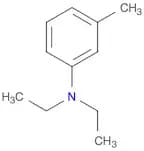
This gene encodes a U-box domain containing protein. The encoded protein interacts with E2 enzymes and may play a role in the ubiquitination pathway. Alternate splicing results in multiple transcript variants. [provided by RefSeq, Jun 2012],N,N-Diethyl-3-methylaniline
CAS:Formula:C11H17NPurity:98%Color and Shape:LiquidMolecular weight:163.2594