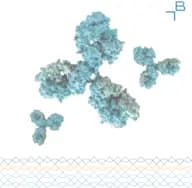
Primary Antibodies
Primary antibodies are immunoglobulins that bind specifically to an antigen of interest, allowing for the detection and quantification of proteins, peptides, or other biomolecules. These antibodies are critical tools in a wide range of applications, including Western blotting, immunohistochemistry, and ELISA. At CymitQuimica, we offer an extensive selection of high-quality primary antibodies that provide specificity and sensitivity for various research needs, including cancer, immunology, and cell biology studies.
Subcategories of "Primary Antibodies"
- Cancer Research Antibodies(3,620 products)
- Cardiovascular Antibodies(2 products)
- Developmental Biology(751 products)
- Epigenetics Antibodies(162 products)
- Immunology Antibodies(2,776 products)
- Metabolism Antibodies(279 products)
- Microbiology Antibodies(736 products)
- Signal Transduction(2,717 products)
- Tags & Cellular Markers(33 products)
Show 1 more subcategories
Found 75326 products of "Primary Antibodies"
Sort by
Purity (%)
0
100
|
0
|
50
|
90
|
95
|
100
FN3KRP antibody
<p>FN3KRP antibody was raised using the N terminal of FN3KRP corresponding to a region with amino acids MDPGDPAGDPAAGERHRMGRDPLLLLQALQTLWSTRERKQLREEAWRGFA</p>SKP2 antibody
The SKP2 antibody is a monoclonal antibody that specifically targets and inhibits the activity of SKP2 (S-phase kinase-associated protein 2). SKP2 is a nuclear protein that plays a crucial role in regulating cell cycle progression by promoting the degradation of key cell cycle inhibitors. By blocking the function of SKP2, this antibody helps to prevent uncontrolled cell growth and proliferation.β Tubulin antibody
The beta Tubulin antibody is a highly specific monoclonal antibody that targets the beta-tubulin protein. This protein plays a crucial role in cell division and is essential for the formation of microtubules, which are involved in various cellular processes such as intracellular transport and cell shape maintenance.KCNA3 antibody
The KCNA3 antibody is a specific antibody that targets the KCNA3 protein. This protein plays a crucial role in various cellular processes, including cell signaling and ion channel regulation. The KCNA3 antibody is widely used in life sciences research to study the function of this protein and its involvement in different diseases.OSBPL3 antibody
<p>OSBPL3 antibody was raised using the N terminal of OSBPL3 corresponding to a region with amino acids MMSDEKNLGVSQKLVSPSRSTSSCSSKQGSRQDSWEVVEGLRGEMNYTQE</p>AhR antibody
<p>The AhR antibody is a monoclonal antibody that specifically targets and neutralizes the aryl hydrocarbon receptor (AhR). This protein complex plays a crucial role in various biological processes, including cell growth and differentiation. By inhibiting the activation of AhR, this antibody prevents the downstream signaling events that are triggered by its activation.</p>GRAP antibody
GRAP antibody was raised using the middle region of GRAP corresponding to a region with amino acids KRQIFLRDEEPLLKSPGACFAQAQFDFSAQDPSQLSFRRGDIIEVLERPDACY1 antibody
The ACY1 antibody is a potent colony-stimulating factor that is derived from pluripotent stem cells. It is widely used in the field of Life Sciences for various applications. The ACY1 antibody has been shown to have a high affinity for collagen and can be used in antigen-antibody reactions. It is commonly used in research studies to detect the presence of specific proteins or molecules in samples. The ACY1 antibody is produced using a monoclonal antibody technique, ensuring high specificity and consistency. This mouse monoclonal antibody has shown neutralizing properties against parathyroid hormone-related peptide and can effectively inhibit its activity. Additionally, the ACY1 antibody can bind to membrane collagen and cell antibodies, making it a valuable tool for studying cellular processes and interactions.cRAF antibody
<p>The cRAF antibody is a fatty acid-based medicament that is widely used in the Life Sciences field. It belongs to the category of antibodies, specifically Polyclonal Antibodies. This antibody is highly effective against activated cRAF, which is a key enzyme involved in various cellular processes. The cRAF antibody has been shown to neutralize the activity of cRAF by binding to its active site and preventing its interaction with downstream signaling molecules. Additionally, this antibody has demonstrated excellent specificity, as it does not cross-react with other proteins such as glial fibrillary acidic protein or EGF-like glycoprotein. Its neutralizing properties make it an ideal tool for studying the role of cRAF in different cell types and physiological conditions.</p>ACTR3B antibody
<p>ACTR3B antibody was raised using a synthetic peptide corresponding to a region with amino acids DHYFLMTEPPLNTPENREYLAEIMFESFNVPGLYIAVQAVLALAASWTSR</p>GPR34 antibody
The GPR34 antibody is a powerful tool in the field of Life Sciences and is widely used in research and diagnostic applications. This polyclonal antibody specifically targets GPR34, an antigen that plays a crucial role in various cellular processes. When activated, GPR34 triggers a cascade of events that regulate tyrosine phosphorylation and intracellular signaling pathways.FR alpha antibody
<p>The FR alpha antibody is a monoclonal antibody that specifically targets the FR alpha protein. This protein plays a crucial role in various biological processes, including fibrinogen binding, chemokine signaling, and E-cadherin-mediated cell adhesion. The FR alpha antibody is widely used in life sciences research to study the function and regulation of this protein.</p>MSI1 antibody
<p>The 6-Fluoro-3-indoxyl-beta-D-galactopyranoside is a powerful antituberculosis drug that falls under the class of rifamycins. It is highly effective in treating tuberculosis infections and contains active compounds that exhibit bactericidal activity. This drug works by inhibiting bacterial growth through binding to DNA-dependent RNA polymerase, preventing transcription and replication. Its efficacy has been demonstrated using advanced techniques such as the patch-clamp technique on human erythrocytes. The drug undergoes various metabolic transformations, including hydrolysis by esterases or glucuronidases, oxidation by cytochrome P450 enzymes, reduction by glutathione reductase, or conjugation with glucuronic acid. Additionally, it specifically targets markers expressed at high levels in Mycobacterium tuberculosis strains, inhibiting their growth in culture.</p>FGF18 antibody
FGF18 antibody is a polyclonal antibody that targets fibroblast growth factor 18 (FGF18). FGF18 is involved in various biological processes, including hepatocyte growth, tissue repair, and development. This antibody has been shown to have high specificity and affinity for FGF18, making it a valuable tool in life sciences research.NEUROG3 antibody
<p>The NEUROG3 antibody is a highly specialized cytotoxic agent that targets dinitrophenyl (DNP) antigens. It is a monoclonal antibody that has been extensively studied in the field of Life Sciences. This antibody has shown strong binding affinity to DNP antigens, leading to the lysis of cells expressing these antigens. The NEUROG3 antibody can be used in various research applications, including immunohistochemistry, flow cytometry, and Western blotting. Its unique glycosylation pattern ensures optimal binding and specificity. Additionally, this antibody has been shown to inhibit endothelial growth and interfere with β-catenin signaling pathways. With its potent cytotoxic properties and broad range of applications, the NEUROG3 antibody is a valuable tool for researchers in the field of enteroendocrine biology and beyond.</p>NOL5A antibody
NOL5A antibody was raised using a synthetic peptide corresponding to a region with amino acids EERLSFYETGEIPRKNLDVMKEAMVQAEEAAAEITRKLEKQEKKRLKKKKTLR7 antibody
<p>The TLR7 antibody is a powerful tool in the field of life sciences. This antibody specifically targets Toll-like receptor 7 (TLR7), which plays a crucial role in the immune response to viral infections. The TLR7 antibody is designed to bind to TLR7 and block its activity, preventing the activation of downstream signaling pathways.</p>CPA1 antibody
<p>The CPA1 antibody is a monoclonal antibody that specifically targets the CPA1 enzyme. This antibody has been extensively studied for its protease activity and its potential applications in the field of life sciences. It has been shown to effectively inhibit the activity of CPA1, which plays a crucial role in various physiological processes.</p>TTC6 antibody
<p>TTC6 antibody was raised using the C terminal of TTC6 corresponding to a region with amino acids MKDYQDAITLNPKYSLAYFNAGNIYFHHRQFSQASDYFSKALKFDPENEY</p>JAml antibody
<p>The JAml antibody is a highly effective medicament that consists of monoclonal antibodies. These antibodies are specifically designed to target and bind to nuclear proteins, making them ideal for various biochemical applications. The JAml antibody has been extensively tested and proven to be highly specific and sensitive in detecting the presence of helicobacter in samples. It can also be used to study the activation of various cellular pathways, as it binds to an amide group found in activated proteins. Additionally, the JAml antibody has shown promising results in regulating e-cadherin expression, a glycoprotein involved in cell adhesion. With its colloidal microsphere formulation, this antibody is easy to use and delivers accurate results. Whether you're conducting research or working in the field of life sciences, the JAml antibody is an indispensable tool for your laboratory.</p>DDB2 antibody
<p>DDB2 antibody was raised in mouse using recombinant Human Damage-Specific Dna Binding Protein 2, 48Kda (Ddb2)</p>FABP1 antibody
<p>FABP1 antibody was raised using the N terminal of FABP1 corresponding to a region with amino acids MSFSGKYQLQSQENFEAFMKAIGLPEELIQKGKDIKGVSEIVQNGKHFKF</p>Estrogen Receptor beta antibody (Ser105)
<p>Rabbit polyclonal Estrogen Receptor beta antibody (Ser105)</p>ApoBEC3D antibody
<p>ApoBEC3D antibody was raised using a synthetic peptide corresponding to a region with amino acids SYTWLCYEVKIKRGRSNLLWDTGVFRGPVLPKRQSNHRQEVYFRFENHAE</p>Catalase antibody
<p>The Catalase antibody is a powerful tool used in various research applications. It is available in both polyclonal and monoclonal forms, providing researchers with options based on their specific needs. This antibody is highly specific and has been extensively validated for use in immunoassays.</p>ATM antibody
The 6-Fluoro-3-indoxyl-beta-D-galactopyranoside is a powerful antituberculosis drug that falls under the class of rifamycins. It is specifically designed to combat tuberculosis infections by targeting the active compounds responsible for bactericidal activity. This drug works by binding to DNA-dependent RNA polymerase, preventing transcription and replication, ultimately inhibiting bacterial growth. Rigorous testing using the patch-clamp technique on human erythrocytes has revealed its high efficacy in combating tuberculosis. Additionally, it undergoes various metabolic transformations, including hydrolysis by esterases or glucuronidases, oxidation by cytochrome P450 enzymes, reduction by glutathione reductase, or conjugation with glucuronic acid. Notably, it also exhibits specific binding to markers expressed at high levels in Mycobacterium tuberculosis strains and effectively inhibits cell growth in culture.HGS antibody
<p>HGS antibody is a polyclonal antibody that specifically targets endosomes. This antibody is used in various applications, including immunological research and therapeutic purposes. It has been shown to have an inhibiting effect on the antigen-presenting function of endosomes, making it a valuable tool for studying immunomodulation. Additionally, HGS antibody has demonstrated antinociceptive properties, suggesting its potential use in pain management. With its wide range of applications and proven effectiveness, HGS antibody is a crucial component in the field of Life Sciences.</p>OLIG2 antibody
The OLIG2 antibody is a monoclonal antibody that specifically targets the TGF-beta protein. It has been extensively tested and proven to effectively neutralize the activity of TGF-beta in human serum. This antibody is widely used in Life Sciences research for various applications, including immunohistochemistry, western blotting, and flow cytometry.RPA2 antibody
<p>The 6-Fluoro-3-indoxyl-beta-D-galactopyranoside is a powerful antituberculosis drug belonging to the class of rifamycins. With its bactericidal activity, it effectively treats tuberculosis infections by inhibiting bacterial growth through binding to DNA-dependent RNA polymerase. This prevents transcription and replication, leading to the elimination of the infection. The active compounds in this drug have been extensively studied using advanced techniques like patch-clamp and transcription-quantitative polymerase chain. Metabolized through various transformations, including hydrolysis, oxidation, reduction, and conjugation, it specifically targets Mycobacterium tuberculosis strains and inhibits their growth. Experience the potent action of 6-Fluoro-3-indoxyl-beta-D-galactopyranoside for effective tuberculosis treatment.</p>PEX26 antibody
<p>PEX26 antibody was raised using the N terminal of PEX26 corresponding to a region with amino acids MKSDSSTSAAPLRGLGGPLRSSEPVRAVPARAPAVDLLEEAADLLVVHLD</p>RBM38 antibody
<p>RBM38 antibody was raised using the middle region of RBM38 corresponding to a region with amino acids QYPYAASPATAASFVGYSYPAAVPQALSAAAPAGTTFVQYQAPQLQPDRM</p>GIRK1 antibody
The GIRK1 antibody is a polyclonal antibody used in the field of Life Sciences. It specifically targets the GIRK1 protein, which plays a crucial role in various biological processes. This antibody can be used for research purposes to study the function and regulation of GIRK1.