Primary Antibodies
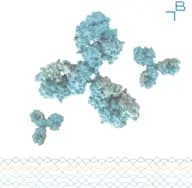
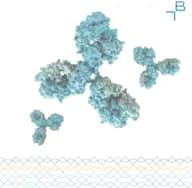
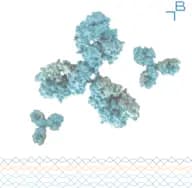
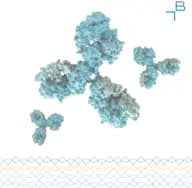
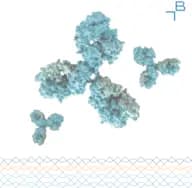
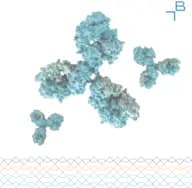
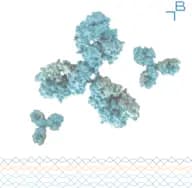
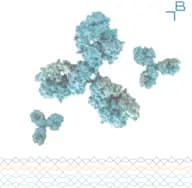
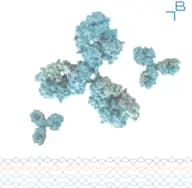
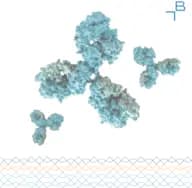
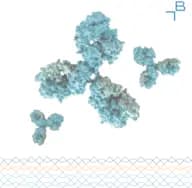
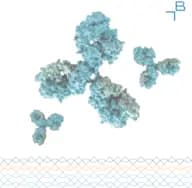
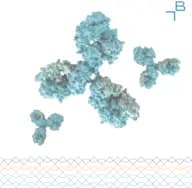
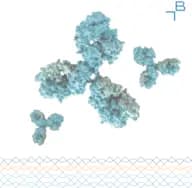
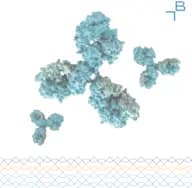
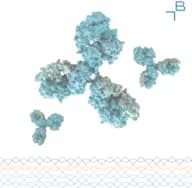
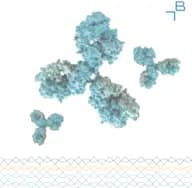
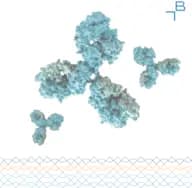
Primary antibodies are immunoglobulins that bind specifically to an antigen of interest, allowing for the detection and quantification of proteins, peptides, or other biomolecules. These antibodies are critical tools in a wide range of applications, including Western blotting, immunohistochemistry, and ELISA. At CymitQuimica, we offer an extensive selection of high-quality primary antibodies that provide specificity and sensitivity for various research needs, including cancer, immunology, and cell biology studies.
Subcategories of "Primary Antibodies"
- Cancer Research Antibodies(3,609 products)
- Cardiovascular Antibodies(2 products)
- Developmental Biology(746 products)
- Epigenetics Antibodies(162 products)
- Immunology Antibodies(2,394 products)
- Metabolism Antibodies(278 products)
- Microbiology Antibodies(736 products)
- Signal Transduction(2,710 products)
- Tags & Cellular Markers(33 products)
Show 1 more subcategories
Found 75081 products of "Primary Antibodies"
Sort by
Purity (%)
0
100
|
0
|
50
|
90
|
95
|
100
Cytokeratin 10 antibody
<p>Cytokeratin 10 antibody is a monoclonal antibody that specifically targets and binds to cytokeratin 10, a protein found in epithelial cells. This antibody is commonly used in life sciences research to study the expression and localization of cytokeratin 10 in various tissues and cell types. Cytokeratin 10 plays a crucial role in maintaining the structural integrity of epithelial cells and is involved in cell adhesion, migration, and differentiation processes. By targeting cytokeratin 10, this antibody enables researchers to gain valuable insights into the cellular mechanisms underlying tissue development, wound healing, and diseases such as cancer. With its high specificity and sensitivity, the cytokeratin 10 antibody is an essential tool for scientists investigating the complex functions of epithelial cells in both normal and pathological conditions.</p>VEGFD antibody
<p>The VEGFD antibody is a powerful tool in the field of Life Sciences. It acts as an inhibitor against TGF-β1 and chemokine, making it an essential component in various research studies. This monoclonal antibody has shown inhibitory properties against protein kinase, insulin, and natriuretic factors. Its unique design allows for precise targeting and binding to specific molecules, ensuring accurate results in immunoassays. With its ability to neutralize interferon activity, the VEGFD antibody opens up new possibilities for studying neurotrophic factors and their role in different biological processes. Researchers can rely on this high-quality antibody to enhance their experiments and gain valuable insights into cellular mechanisms.</p>TPD52L3 antibody
<p>TPD52L3 antibody was raised using the middle region of TPD52L3 corresponding to a region with amino acids GLRQNLSKSWLDVQVSNTYVKQKTSAALSTMGTLICRKLGGVKKSATLRS</p>SLC25A25 antibody
<p>SLC25A25 antibody was raised using a synthetic peptide corresponding to a region with amino acids AVGLRRLGLHRTEGELQKIVQAGDKDLDGQLDFEEFVHYLQDHEKKLRLV</p>Purity:Min. 95%MARCKS antibody
<p>MARCKS antibody was raised in rabbit using the C terminal of MARCKS as the immunogen</p>SPRR3 antibody
<p>SPRR3 antibody was raised using the middle region of SPRR3 corresponding to a region with amino acids DQGFIKFPEPGAIKVPEQGYTKVPVPGYTKLPEPCPSTVTPGPAQQKTKQ</p>MAGEA4 antibody
<p>MAGEA4 antibody was raised using the C terminal of MAGEA4 corresponding to a region with amino acids ENYLEYRQVPGSNPARYEFLWGPRALAETSYVKVLEHVVRVNARVRIAYP</p>SND1/P100 antibody
<p>SND1/P100 antibody was raised in Mouse using a purified recombinant fragment of SND1 (aa361-485) expressed in E. coli as the immunogen.</p>Cox2 antibody
<p>The Cox2 antibody is a growth factor that targets a specific cell antigen known as endothelial growth. It belongs to the category of polyclonal antibodies and is widely used in the field of Life Sciences. This antibody has been shown to have interactions with various proteins, including fibrinogen, lipoprotein lipase, and amyloid plaque. Additionally, it can inhibit the activity of lipase and phosphatase enzymes. The Cox2 antibody is available in both polyclonal and monoclonal forms, making it suitable for different research purposes. It is often used to detect autoantibodies or as a tool for studying triglyceride lipase activity. With its versatile applications, this antibody is an essential tool for researchers in various fields.</p>CCL11 antibody
<p>The 6-Fluoro-3-indoxyl-beta-D-galactopyranoside is a powerful antituberculosis drug that falls under the category of rifamycins. It is highly effective in treating tuberculosis infections due to its bactericidal activity. This compound works by binding to DNA-dependent RNA polymerase, which inhibits bacterial growth and prevents transcription and replication. Its potency has been demonstrated through extensive research using the patch-clamp technique on human erythrocytes. The active form of this drug undergoes various metabolic transformations, including hydrolysis by esterases or glucuronidases, oxidation by cytochrome P450 enzymes, reduction by glutathione reductase, or conjugation with glucuronic acid. Additionally, it specifically targets markers expressed at high levels in Mycobacterium tuberculosis strains and inhibits their growth in culture.</p>CCL13 antibody
<p>CCL13 antibody was raised in rabbit using the middle region of CCL13 as the immunogen</p>Proteasome 20S alpha 3 antibody
<p>Affinity purified Rabbit polyclonal Proteasome 20S alpha 3 antibody</p>ATP6V1G2 antibody
<p>ATP6V1G2 antibody was raised in rabbit using the middle region of ATP6V1G2 as the immunogen</p>Purity:Min. 95%ACT1 antibody
<p>The ACT1 antibody is a polyclonal antibody that specifically targets CD33, a cell surface protein. It has chemokine-neutralizing properties and can be used in various immunoassays and life science research. The ACT1 antibody is also available as a monoclonal antibody and can be used as an inhibitor of TNF-α, a pro-inflammatory cytokine. Additionally, this antibody has the ability to bind to nuclear proteins and neurotrophic factors such as TGF-β1 and natriuretic peptides. With its wide range of applications, the ACT1 antibody is an essential tool for researchers in the field of Life Sciences.</p>PHF5A antibody
<p>The PHF5A antibody is a polyclonal antibody that has inhibiting properties. It is used as an anti-proliferative agent in the field of medicine. This antibody can bind to specific proteins and biomarkers, making it a valuable detection reagent in life sciences research. The PHF5A antibody has been shown to inhibit the activity of certain proteins, such as adeno-associated virus (AAV) and polypeptide, which are involved in cell proliferation. This makes it a promising tool for studying the mechanisms of cell growth and development. Additionally, this antibody can be used to detect autoantibodies and inhibitors that may be present in biological samples. With its wide range of applications, the PHF5A antibody is an essential tool for researchers in various fields.</p>Histone H2B antibody
<p>The Histone H2B antibody is an essential tool in the field of Life Sciences. It is an antigen that specifically recognizes and binds to activated histone H2B, a peptidyl-prolyl isomerase involved in various cellular processes. This antibody has been extensively used in research studies to investigate the role of histone modifications and chromatin structure in gene expression, DNA replication, and repair.</p>Frizzled 5 antibody
<p>The Frizzled 5 antibody is a highly specialized antibody that can be used in various life science research applications. It is available in both polyclonal and monoclonal forms, providing researchers with flexibility in their experiments.</p>Nanog antibody
<p>Nanog antibody was raised in Mouse using a purified recombinant fragment of Nanog (aa20-166) expressed in E. coli as the immunogen.</p>Adrenomedullin antibody
<p>The Adrenomedullin antibody is a highly specialized product in the field of Life Sciences. It is a monoclonal antibody that specifically targets adrenomedullin, a peptide hormone involved in various physiological processes. This antibody has been extensively tested and validated for its specificity and sensitivity in detecting adrenomedullin in human serum samples.</p>Purity:Min. 95%Claudin 7 antibody
<p>The Claudin 7 antibody is a powerful tool in the field of life sciences. This antibody specifically targets and binds to Claudin 7, an important protein involved in endothelial growth and activation. It can be used in various applications such as immunohistochemistry and polymerase chain reaction (PCR) to study the expression and localization of Claudin 7 in different tissues and cell types.</p>C17ORF71 antibody
<p>C17ORF71 antibody was raised using the middle region of C17Orf71 corresponding to a region with amino acids HCVHKFHSLPKSGEKPEADRNPPVLYHNSRARSTGACNCGRKQAPRDDPF</p>PSMA4 antibody
<p>The PSMA4 antibody is a highly specialized antibody used in Life Sciences research. It is colloidal in nature and specifically targets VEGF, c-myc, and other growth factors. This polyclonal antibody has been extensively tested and validated for its efficacy in various applications, including electrophoresis and immunohistochemistry.</p>ANKRD13D antibody
<p>ANKRD13D antibody was raised using the middle region of ANKRD13D corresponding to a region with amino acids ARPPPQATVYEEQLQLERALQESLQLSTEPRGPGSPPRTPPAPGPPSFEE</p>G3BP1 antibody
<p>The G3BP1 antibody is a highly specialized monoclonal antibody that targets and binds to the G3BP1 protein. This protein is involved in various cellular processes, including stress response, RNA metabolism, and cell proliferation. The G3BP1 antibody can be used for research purposes in the field of life sciences, particularly in studies related to insulin signaling, autoimmune diseases such as antiphospholipid syndrome, and cytotoxicity assays.</p>