Primary Antibodies
Primary antibodies are immunoglobulins that bind specifically to an antigen of interest, allowing for the detection and quantification of proteins, peptides, or other biomolecules. These antibodies are critical tools in a wide range of applications, including Western blotting, immunohistochemistry, and ELISA. At CymitQuimica, we offer an extensive selection of high-quality primary antibodies that provide specificity and sensitivity for various research needs, including cancer, immunology, and cell biology studies.
Subcategories of "Primary Antibodies"
- Cancer Research Antibodies(3,722 products)
- Cardiovascular Antibodies(2 products)
- Developmental Biology(764 products)
- Epigenetics Antibodies(162 products)
- Immunology Antibodies(2,591 products)
- Metabolism Antibodies(291 products)
- Microbiology Antibodies(741 products)
- Signal Transduction(2,771 products)
- Tags & Cellular Markers(34 products)
Show 1 more subcategories
Found 75621 products of "Primary Antibodies"
Sort by
Purity (%)
0
100
|
0
|
50
|
90
|
95
|
100
Cdc42EP2 rabbit pAb
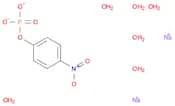
CDC42, a small Rho GTPase, regulates the formation of F-actin-containing structures through its interaction with the downstream effector proteins. The protein encoded by this gene is a member of the Borg family of CDC42 effector proteins. Borg family proteins contain a CRIB (Cdc42/Rac interactive-binding) domain. They bind to, and negatively regulate the function of CDC42. Coexpression of this protein with CDC42 suggested a role of this protein in actin filament assembly and cell shape control. [provided by RefSeq, Aug 2011],Phosphoric acid, mono(4-nitrophenyl) ester, sodium salt, hydrate(1:2:6)OTHER CA INDEX NAMES:Phosphoric acid, mono(4-nitrophenyl) ester, disodium salt, hexahydrate
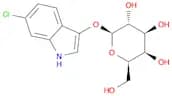
CAS:Formula:C6H16NNa2O12PPurity:97%Color and Shape:SolidMolecular weight:371.1440β-D-Galactopyranoside, 6-chloro-1H-indol-3-yl
CAS:Formula:C14H16ClNO6Purity:98%Molecular weight:329.7329SNAPC 19 rabbit pAb
This gene encodes a subunit of the small nuclear RNA (snRNA)-activating protein complex that plays a role in the transcription of snRNA genes. This complex binds to the promoters of snRNA genes transcribed by either RNA polymerase II or III and recruits other regulatory factors to activate snRNA gene transcription. The encoded protein may play a role in stabilizing this complex. A pseudogene of this gene has been identified on chromosome 6. [provided by RefSeq, Jul 2016],GRASP rabbit pAb
This gene encodes a protein that functions as a molecular scaffold, linking receptors, including group 1 metabotropic glutamate receptors, to neuronal proteins. The encoded protein contains conserved domains, including a leucine zipper sequence, PDZ domain and a C-terminal PDZ-binding motif. Alternately spliced transcript variants have been observed for this gene.[provided by RefSeq, Dec 2012],SRY (Acetyl Lys136) rabbit pAb
disease:Defects in SRY are a cause of gonadal dysgenesis XY female type (GDXY) [MIM:306100]; also known as 'XY females' or Swyer syndrome. Patients are found to have a 46,XY karyotype. They suffer rapid and early degeneration of their gonads, which are present in the adult as 'streak gonads', consisting mainly of fibrous tissue and variable amounts of ovarian stroma. As a result these patients do not develop secondary sexual characteristics at puberty. The external genitalia in these subjects are completely female, and Muellerian structures are normal. In contrast, subjects with 46,XY partial gonadal dysgenesis have ambiguous genitalia, a mix of Muellerian and Wolffian structures, and dysgenic gonads.,disease:Defects in SRY are a cause of true hermaphroditism [MIM:235600]. A true hermaphrodite must have both mature ovarian and mature testicular tissue with histologic evidence of follicles and tubules, respectively. It is a genetically heterogeneous condition. The genotype of most affected individuals is 46,XX, but many have 46,XY or a mosaic of 46,XX/46,XY. True hermaphroditism can be caused also by chromosomal translocation.,disease:Defects in SRY are found in Turner syndrome, a disease characterized by gonadal dysgenesis with short stature, "streak gonads", variable abnormalities such as webbing of the neck, cubitus valgus, cardiac defects, low posterior hair line. The phenotype is female. Turner syndrome has its basis in a 45,X chromosomal aberration.,function:Transcriptional regulator which control a genetic switch in male development. It is necessary and sufficient for initiating male sex determination by directing the development of supporting cell precursors (pre-Sertoli cells) as Sertoli rather than granulosa cells (By similarity). In male adult brain involved in the maintenance of motor functions of dopaminergic neurons (By similarity). Involved in different aspects of gene regulation including promoter activation or repression (By similarity). Facilitates DNA bending. SRY HMG box recognizes DNA by partial intercalation in the minor groove. Also involved in pre-mRNA splicing. Binds to the DNA consensus sequence 5'-[AT]AACAA[AT]-3'.,miscellaneous:DNA binding and bending properties of the HMG domains of human and mouse SRY differ form each other. Human SRY shows more extensive minor groove contacts with DNA and a lower specificity of sequence recognition than mouse SRY.,online information:SRY entry,online information:The tenuous nature of sex - Issue 80 of March 2007,PTM:Phosphorylated on serine residues by PKA. Phosphorylation by PKA enhances its DNA-binding activity and stimulates transcription repression. Acetylation of Lys-136 contributes to its nuclear localization and enhances its interaction with KPNB1. Deacetylated by HDAC3. Poly-ADP-ribosylated by PARP1. ADP-ribosylation reduces its DNA-binding activity.,similarity:Belongs to the SRY family.,similarity:Contains 1 HMG box DNA-binding domain.,subcellular location:Colocalizes with SOX6 in speckles. Colocalizes with CAML in the nucleus. Colocalizes in the nucleus with ZNF208 isoform KRAB-O and tyrosine hydroxylase (TH).,subunit:Interacts with CALM, EP300, HDAC3, KPNB1, ZNF208 isoform KRAB-O, PARP1, SLC9A3R2 and WT1. The interaction with EP300 modulates its DNA-binding activity. The interaction with KPNB1 is sensitive to dissociation by Ran in the GTP-bound form (By similarity). Interaction with PARP1 impaired its DNA-binding activity.,BMP-2 rabbit pAb
This gene encodes a secreted ligand of the TGF-beta (transforming growth factor-beta) superfamily of proteins. Ligands of this family bind various TGF-beta receptors leading to recruitment and activation of SMAD family transcription factors that regulate gene expression. The encoded preproprotein is proteolytically processed to generate each subunit of the disulfide-linked homodimer, which plays a role in bone and cartilage development. Duplication of a regulatory region downstream of this gene causes a form of brachydactyly characterized by a malformed index finger and second toe in human patients. [provided by RefSeq, Jul 2016],TPPC4 rabbit pAb
function:May play a role in vesicular transport from endoplasmic reticulum to Golgi.,similarity:Belongs to the TRAPP small subunits family. TRAPPC4 subfamily.,subunit:Part of the multisubunit TRAPP (transport protein particle) complex. Interacts with SDC2.,IGFL1 rabbit pAb
IGF like family member 1(IGFL1) Homo sapiens The protein encoded by this gene is a member of the insulin-like growth factor family of signaling molecules. The encoded protein is synthesized as a precursor protein and is proteolytically cleaved to form a secreted mature peptide. The mature peptide binds to a receptor, which in mouse was found on the cell surface of T cells. Increased expression of this gene may be linked to psoriasis. [provided by RefSeq, Aug 2016],Neuromedin-U rabbit pAb
This gene encodes a member of the neuromedin family of neuropeptides. The encoded protein is a precursor that is proteolytically processed to generate a biologically active neuropeptide that plays a role in pain, stress, immune-mediated inflammatory diseases and feeding regulation. Increased expression of this gene was observed in renal, pancreatic and lung cancers. Alternative splicing results in multiple transcript variants encoding different isoforms. Some of these isoforms may undergo similar processing to generate the mature peptide. [provided by RefSeq, Jul 2015],LFTY1 rabbit pAb
This gene encodes a secreted ligand of the TGF-beta (transforming growth factor-beta) superfamily of proteins. Ligands of this family bind various TGF-beta receptors leading to recruitment and activation of SMAD family transcription factors that regulate gene expression. The encoded preproprotein is proteolytically processed to generate the mature protein, which plays a role in left-right asymmetry determination of organ systems during development. This gene is closely linked to both a related family member and a related pseudogene. [provided by RefSeq, Aug 2016],RB40L rabbit pAb
This gene encodes a member of the Rab40 subfamily of Rab small GTP-binding proteins that contains a C-terminal suppressors of cytokine signaling box. Disruptions in this gene are associated with Duchenne muscular dystrophy. [provided by RefSeq, Apr 2010],ZFY26 rabbit pAb
This gene encodes a protein which contains a FYVE zinc finger binding domain. The presence of this domain is thought to target these proteins to membrane lipids through interaction with phospholipids in the membrane. Mutations in this gene are associated with autosomal recessive spastic paraplegia-15. [provided by RefSeq, Oct 2008],NSUN2 rabbit pAb
This gene encodes a methyltransferase that catalyzes the methylation of cytosine to 5-methylcytosine (m5C) at position 34 of intron-containing tRNA(Leu)(CAA) precursors. This modification is necessary to stabilize the anticodon-codon pairing and correctly translate the mRNA. Alternatively spliced transcript variants encoding different isoforms have been noted for this gene.[provided by RefSeq, Mar 2011],Cyclin B1 (1A5) Mouse mAb
Cyclin B1 is a regulatory protein involved in mitosis. The gene product complexes with p34 (Cdk1) to form the maturation-promoting factor (MPF). Two alternative transcripts have been found, a constitutively expressed transcript and a cell cycle-regulated transcript that is expressed predominantly during G2/M phase of the cell cycle.MYO3B rabbit pAb
This gene encodes one of the class III myosins. Myosins are ATPases, activated by actin, that move along actin filaments in the cell. This class of myosins are characterized by an amino-terminal kinase domain and shown to be present in photoreceptors. Alternative splicing results in multiple transcript variants encoding different isoforms. [provided by RefSeq, Mar 2014],