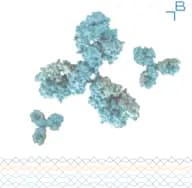
Primary Antibodies
Primary antibodies are immunoglobulins that bind specifically to an antigen of interest, allowing for the detection and quantification of proteins, peptides, or other biomolecules. These antibodies are critical tools in a wide range of applications, including Western blotting, immunohistochemistry, and ELISA. At CymitQuimica, we offer an extensive selection of high-quality primary antibodies that provide specificity and sensitivity for various research needs, including cancer, immunology, and cell biology studies.
Subcategories of "Primary Antibodies"
- Cancer Research Antibodies(3,620 products)
- Cardiovascular Antibodies(2 products)
- Developmental Biology(751 products)
- Epigenetics Antibodies(162 products)
- Immunology Antibodies(2,494 products)
- Metabolism Antibodies(279 products)
- Microbiology Antibodies(736 products)
- Signal Transduction(2,717 products)
- Tags & Cellular Markers(33 products)
Show 1 more subcategories
Found 75302 products of "Primary Antibodies"
Sort by
Purity (%)
0
100
|
0
|
50
|
90
|
95
|
100
TSSK2 antibody
<p>TSSK2 antibody was raised using the middle region of TSSK2 corresponding to a region with amino acids RMLQPDVSQRLHIDEILSHSWLQPPKPKATSSASFKREGEGKYRAECKLD</p>SPARCL1 antibody
<p>The 6-Fluoro-3-indoxyl-beta-D-galactopyranoside is a powerful antituberculosis drug that falls under the class of rifamycins. It is highly effective in treating tuberculosis infections, thanks to its bactericidal activity. This compound works by inhibiting bacterial growth through binding to DNA-dependent RNA polymerase, preventing transcription and replication. Its potency has been demonstrated through a patch-clamp technique on human erythrocytes. The active form of this drug undergoes various metabolic transformations, including hydrolysis by esterases or glucuronidases, oxidation by cytochrome P450 enzymes, reduction by glutathione reductase, or conjugation with glucuronic acid. Additionally, it specifically targets markers expressed in Mycobacterium tuberculosis strains and inhibits their cell growth in culture.</p>ETFB antibody
<p>ETFB antibody was raised using the C terminal of ETFB corresponding to a region with amino acids TADLRLNEPRYATLPNIMKAKKKKIEVIKPGDLGVDLTSKLSVISVEDPP</p>WASF3 antibody
<p>WASF3 antibody was raised using the N terminal of WASF3 corresponding to a region with amino acids NMKKAFKSSTVQDQQVVSKNSIPNPVADIYNQSDKPPPLNILTPYRDDKK</p>TOE1 antibody
<p>TOE1 antibody was raised using a synthetic peptide corresponding to a region with amino acids VVDVQSNNFKEMWPSLLLAIKTANFVAVDTELSGLGDRKSLLNQCIEERY</p>Myeloperoxidase antibody
<p>Myeloperoxidase antibody was raised in mouse using human myeloperoxidase as the immunogen.</p>UROD antibody
<p>The UROD antibody is a highly specialized monoclonal antibody that has neutralizing properties against annexin A2. This antibody is colloidal in nature and is used in Life Sciences research to study the role of annexin A2 in various cellular processes. It has been shown to inhibit the activity of glucagon, a hormone involved in glucose metabolism. The UROD antibody specifically targets the amino-terminal region of annexin A2, which is activated under certain conditions. This monoclonal antibody can be used in experiments to investigate the function of annexin A2 and its potential as a therapeutic target for various diseases, including cardiomyocyte dysfunction and natriuretic factor regulation. Additionally, polyclonal antibodies targeting annexin A2 are also available for research purposes.</p>RBP4 antibody
<p>The RBP4 antibody is a highly specialized antibody that can be used for various applications. It is available in both polyclonal and monoclonal forms, allowing for flexibility in experimental design. This antibody specifically targets retinol-binding protein 4 (RBP4), which plays a crucial role in the transport of retinol (vitamin A) in human serum.</p>PTPN2 antibody
<p>The PTPN2 antibody is a highly specialized antibody used in the field of Life Sciences. It is available as both a monoclonal and polyclonal antibody. This antibody specifically targets and binds to the PTPN2 protein, which plays a crucial role in various biological processes.</p>Tetanus toxin antibody
<p>Tetanus toxin antibody is a monoclonal antibody that acts as an inhibitor of the tetanus toxin. It belongs to the class of antibodies known as neutralizing antibodies, which are active agents in the field of life sciences. This monoclonal antibody specifically targets and neutralizes the effects of tetanus toxin by binding to it and preventing it from causing harm. Additionally, this antibody has been shown to have potential therapeutic applications in other areas, such as inhibiting the activity of epidermal growth factor (EGF) and atypical hemolytic autoantibodies. With its versatility and efficacy, this monoclonal antibody offers promising possibilities for medical research and treatment options.</p>Purity:>92% By Gel Electrophoresis And Gel ScanningCip1 antibody
<p>Cip1 antibody was raised in rabbit using residues 139-164 of the p21 protein as the immunogen.</p>Purity:Min. 95%RB1 antibody
<p>The RB1 antibody is a hydrophilic polyclonal antibody that specifically targets the retinoblastoma protein (RB1). This antibody is widely used in life sciences research to study the methylation of RB1 and its role in various cellular processes. RB1 is a tumor suppressor protein that regulates cell cycle progression and inhibits cell growth. Methylation of RB1 can affect its function, leading to abnormal cell proliferation and the development of diseases such as retinoblastoma and hepatocellular carcinoma. The RB1 antibody allows researchers to detect and analyze the methylation status of RB1, providing valuable insights into its role in disease development and potential therapeutic interventions. With its high specificity and sensitivity, this antibody is an essential tool for studying methyltransferase activity and understanding the molecular mechanisms underlying various biological processes.</p>