Vitamins
Vitamins are organic compounds required in small amounts for essential physiological functions and overall health. They play crucial roles in metabolism, immune function, and cellular maintenance. In this category, you will find a diverse range of vitamins, including water-soluble and fat-soluble types, necessary for research in nutrition, biochemistry, and health sciences. At CymitQuimica, we offer high-quality vitamins to support your research and development efforts, ensuring the accuracy and effectiveness of your studies on vitamin functions and deficiencies.
Found 1122 products of "Vitamins"
Sort by
Purity (%)
0
100
|
0
|
50
|
90
|
95
|
100
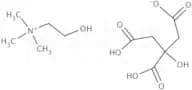
Choline dihydrogen citrate
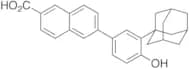
CAS:Formula:C11H21NO8Color and Shape:White to almost white powder or crystalsMolecular weight:295.29O-Desmethyl Adapalene
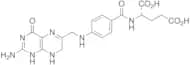
CAS:Controlled Product<p>Applications An intermediate in the preparation of Adapalene derivatives.<br>References Zinner, R., et al.: Mol. Cancer Ther., 8, 521 (2009), Virtanen, M., et al.: Exper. Dermatol., 19, 674 (2010),<br></p>Formula:C27H26O3Color and Shape:NeatMolecular weight:398.49Dihydro Folic Acid
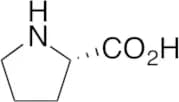
CAS:<p>Stability Hygroscoipic, Light and Air Sensitive<br>Applications Dihydrofolic Acid is an intermediate in mammalian conversion of dietary folic acid to tetrahydrofolate by dihydrofolate reductase (DHFR). Folic acid (FA) and Dihydrofolic acid (FAH2) are substrates of dihydrofolate reductase(s) which reduce them to tetrahydrofolate (THF).<br>References Andres, J., et al.: Bioorg. Chem., 24, 10 (1996), Benkovic, S., et al.: Science, 301, 1196 (2003), ,,,,Williams, D; J Mol Biol 2003, 329, 389,,,Krahn, J., et al.: Biochemistry, 46, 14878 (2007),<br></p>Formula:C19H21N7O6Color and Shape:Light Beige To GreyMolecular weight:443.41L-Proline
CAS:<p>Applications L-Proline is an amino acid and precursor (with vitamin C) for collagen, the building block of the structure of tendons, ligaments, arteries, veins and muscles. It is important in wound healing.<br>References Bondarenko, L.B., et al.: Int. J. Peptides., 2, 1687 (2012); Rimer, T., et al.: Biomacromolecules, 13, 2110 (2012);<br></p>Formula:C5H9NO2Color and Shape:NeatMolecular weight:115.13D-α-Tocopherol Quinone
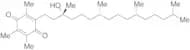
CAS:Controlled Product<p>Stability Light Sensitive<br>Applications D-α-Tocopherol Quinone is an vitamin E derivative that exhibits antioxidant properties. D-α-Tocopherol Quinone has been shown to partially restore the activity of NADH dehydrogenase and used to investigate the electron transport system in rat hepatocyte and human erythrocyte.<br>References Sun, I. L., et al.: Proc. Natl. Acad. Sci. USA 89, 11126 (1992); Hosomi, A., et al.: FEBS Lett. 409, 105 (1997)<br></p>Formula:C29H50O3Color and Shape:NeatMolecular weight:446.71Perhydrofarnesyl Acetone
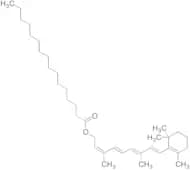
CAS:Controlled Product<p>Applications Perhydrofarnesyl Acetone is used as a flavor and fragrance agent, it is often used in jasmine compositions.<br>References Toda, H. et al.: Dev. Food Sci., 17, 181 (1988); Maggi, F. et al.: Food Chem., 113, 216 (2009); Maggi, F. et al.: Chem. Biodiv., 8, 2057 (2011);<br></p>Formula:C18H36OColor and Shape:ColourlessMolecular weight:268.4813-cis-Vitamin A Palmitate
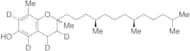
CAS:Formula:C36H60O2Color and Shape:Colourless To YellowMolecular weight:524.8604(2RS,4R,8R)-δ-Tocopherol-d4 (Mixture of Diastereomers)
CAS:Controlled Product<p>Applications Labelled δ-Tocopherol. One of the naturally occurring forms of Vitamin E. Isolated from soybean oil.<br>References Emerson, et al.: Science, 83, 421 (1936), Bieri, J.G., et al.: J. Nutr., 104, 850 (1974), Jiang, Q., et al.: Am. J. Clin. Nutr., 74, 714 (2001),<br></p>Formula:C27H42D4O2Color and Shape:NeatMolecular weight:406.68all-trans-Anhydro Retinol (90%)
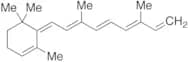
CAS:<p>Stability Light Sensitive, Temperature Sensitive<br>Applications A metabolite of vitamin A (Retinol) (R252000).<br>References Allo, S., et al.: J. Biol. Chem., 266, 22003 (1991), Brancolini, C., et al.: J. Cell Biol., 139, 759 (1997), Bubb, M., et al.: J. Biol .Chem., 269, 14869 (1994),<br></p>Formula:C20H28Purity:90%Color and Shape:Yellow-OrangeMolecular weight:268.44Tachysterol (>90%)
CAS:<p>Stability Light Sensitive, Temperature Sensitive<br>Applications Bioactive, synthetic vitamin D3 analog; exhibits antiproliferative effect on keratinocytes. Antipsoriatic.<br> Not a dangerous good if item is equal to or less than 1g/ml and there is less than 100g/ml in the package<br>References Matsunaga, T., et al.: J. Dermatol., 17, 135 (1990), Gerritsen, M.J.P., et al.: Br. J. Dermatol., 131, 57 (1994),<br></p>Formula:C28H44OPurity:>90%Color and Shape:NeatMolecular weight:396.65all-trans-Retinal
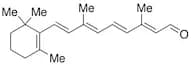
CAS:Controlled Product<p>Stability Hygroscopic<br>Applications Corotenoid component of the visual pigments. All-trans retinal is converted to retinoic acid in vivo by the action of retinal dehydrogenase.<br>References Ball, et al.: Biochem. J., 42, 516 (1948), O’Brien, D.F., et al.: Science, 218, 961 (1982),<br></p>Formula:C20H28OColor and Shape:Yellow To Dark OrangeMolecular weight:284.44β-Tocopherol (Racemic Mixture)
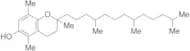
CAS:Controlled Product<p>Stability Hygroscopic<br>Applications β-Tocopherol (Racemic Mixture) is one of the naturally occurring forms of Vitamin E. Is biologically less active than α-Tocopherol. This is the racemic mixture of all stereoisomers.<br> Not a dangerous good if item is equal to or less than 1g/ml and there is less than 100g/ml in the package<br>References Bianchi, G., et al.: Eur. J. Lipid Sci. Technology, 105, 229 (2003), Sakouhi, F., et al.: Food Chem., 108, 833 (2008),<br></p>Formula:C28H48O2Color and Shape:Colourless To BeigeMolecular weight:416.68Lumiflavin
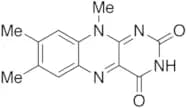
CAS:Controlled Product<p>Applications Lumiflavin is a toxic photolysis product of vitamin B2 (R415000).<br>References Zhao, X. et al.: Chemosphere, 63, 1116 (2006); Litke, S.V. et al.: Khim. Fiz., 10, 48 (1991); Ye, W. et al.: Guang. Yaox. Xueb., 12, 175 (1996);<br></p>Formula:C13H12N4O2Color and Shape:Dark YellowMolecular weight:256.2625-Hydroxy Vitamin D3 3-Sulfate Sodium Salt (90%)
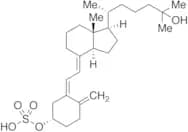
CAS:Controlled Product<p>Stability Light Sensitive, Temperature Sensitive<br>Applications 25-Hydroxyvitamin D3 3-Sulfate is a metabolite of 24,25-Dihydroxyvitamin D3 and 25-Hydroxyvitamin D3 (C125700).<br>References Higashi, T. et al.: Steroids, 65, 281 (2000); Higashi, T. et al.: Ann. Clin. Biochem., 36, 43 (1999);<br></p>Formula:C27H43NaO5SPurity:90%Color and Shape:NeatMolecular weight:502.68α-Tocopherol Acetate
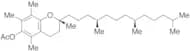
CAS:<p>Applications α-Tocopherol acetate is the most bioactive of the naturally occurring forms of Vitamin E. Richest sources are green vegetables, grains, and oils, particularly palm, safflower and sunflower oils.<br>References Bianchi, G., et al.: Eur. J. Lipid Sci. Technology, 105, 229 (2003), Sakouhi, F., et al.: Food Chem., 108, 833 (2008),<br></p>Formula:C31H52O3Color and Shape:Off-WhiteMolecular weight:472.74α-Tocopherol
CAS:<p>Stability Light Sensitive<br>Applications α-Tocopherol is the most bioactive of the naturally occurring forms of Vitamin E. Richest sources are green vegetables, grains, and oils, particularly palm, safflower and sunflower oils.<br>References Bianchi, G., et al.: Eur. J. Lipid Sci. Technology, 105, 229 (2003), Sakouhi, F., et al.: Food Chem., 108, 833 (2008),<br></p>Formula:C29H50O2Color and Shape:NeatMolecular weight:430.71