Glycerophospholipids / Phospholipids
Glycerophospholipids, also known as phospholipids, are essential components of cell membranes, providing structural integrity and participating in cellular signaling. These lipids consist of a glycerol backbone, two fatty acid chains, and a phosphate-containing group. Phospholipids are involved in various biological processes, including membrane dynamics, signal transduction, and lipid metabolism. At CymitQuimica, we offer a comprehensive selection of high-quality glycerophospholipids and phospholipids to support your research and industrial applications.
Found 381 products of "Glycerophospholipids / Phospholipids"
Sort by
Purity (%)
0
100
|
0
|
50
|
90
|
95
|
100
3-O-Hexadecyl-sn-glycero-1-phosphocholine
CAS:<p>Please enquire for more information about 3-O-Hexadecyl-sn-glycero-1-phosphocholine including the price, delivery time and more detailed product information at the technical inquiry form on this page</p>Formula:C24H52NO6PPurity:Min. 95%Color and Shape:PowderMolecular weight:481.65 g/mol1-O-Hexadecyl-2-O-methyl-sn-glycero-3-phosphocholine
CAS:<p>1-O-Hexadecyl-2-O-methyl-sn-glycero-3-phosphocholine (HPC) is a phospholipid that is synthesized from the essential fatty acid linoleic acid. It has been shown to have an inhibitory effect on leukemia cells, which may be due to its ability to induce apoptosis by inducing the death of tumor cells and inhibiting protein synthesis. HPC also interacts synergistically with other agents such as phorbol esters, which can lead to increased cell death. This drug has been shown to have immunomodulatory effects in fibrosarcoma cells, where it inhibits tumor growth and induces apoptotic cell death. HPC binds to specific antigens and modulates immune responses through the inhibition of diacylglycerol production.</p>Formula:C25H54NO6PPurity:Min. 95%Color and Shape:PowderMolecular weight:495.68 g/mol1,2-Dipalmitoyl-sn-glycero-3-phospho-N,N-dimethylethanolamine
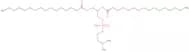
CAS:<p>1,2-Dipalmitoyl-sn-glycero-3-phospho-N,N-dimethylethanolamine is a liquid crystalline molecule that is used in the synthesis of lipids. It has two hydrophilic heads and one hydrophobic tail, which allows it to be soluble in water. 1,2-Dipalmitoyl-sn-glycero-3-phospho-N,N-dimethylethanolamine can form bilayers with other molecules due to its transition properties. The transition occurs at temperatures between 43°C and 45°C. This transition is linearly dependent on the temperature increase. When heated to 50°C, this molecule undergoes a second phase transition from a liquid crystalline state to a thermotropic liquid crystalline state. The calorimetry data for this molecule shows that there are no enthalpic or entropic contributions to the entropy change during the phase</p>Formula:C39H78NO8PPurity:Min. 95%Molecular weight:720.03 g/mol1,2-Di-O-hexadecyl-sn-glycero-3-phospho-N-methylethanolamine
CAS:<p>Please enquire for more information about 1,2-Di-O-hexadecyl-sn-glycero-3-phospho-N-methylethanolamine including the price, delivery time and more detailed product information at the technical inquiry form on this page</p>Formula:C38H80NO6PPurity:Min. 95%Molecular weight:678 g/molCannflavin A
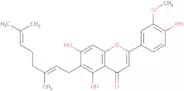
CAS:<p>A prenylflavonoid found in Cannabis sativa</p>Formula:C26H28O6Purity:Min. 95 Area-%Color and Shape:PowderMolecular weight:436.5 g/molTetradecylphosphocholine
CAS:<p>Tetradecylphosphocholine (TDPC) is a phospholipid that is found in the cell membrane of all eukaryotic cells. TDPC has been shown to be an immunomodulator and can be used as a substitute for cationic liposomes in the delivery of anti-cancer drugs. TDPC also has been shown to have low toxicity and can be used to treat inflammatory diseases. TDPC's main role is to transport molecules through the cell membrane, which makes it a good candidate for delivering therapeutic agents across biological membranes. TDPC has been shown to bind ATP, which may explain its ability to deliver therapeutic agents into cells. The binding of ATP also helps regulate the function of several proteins involved in immune regulation, including multidrug-resistance protein and ABC transporter proteins.</p>Formula:C19H42NO4PPurity:Min. 98 Area-%Color and Shape:PowderMolecular weight:379.52 g/mol1,2-Dipalmitoyl-sn-glycero-3-phosphoserine
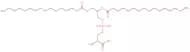
CAS:<p>1,2-Dipalmitoyl-sn-glycero-3-phosphoserine is a phospholipid that is found in chloroplasts. It has been shown to be an inhibitor of drug transporter proteins and can prevent the transport of drugs into cells. Dipalmitoyl-sn-glycero-3-phosphoserine binds calcium and inhibits the kinetics of the enzyme protein kinase C by binding to its catalytic domain. This phospholipid also functions as a fluorescence probe for basic proteins and cyclic lipopeptides. It has been shown to have pluripotent cell properties, which means it can differentiate into many different types of cells. Dipalmitoyl-sn-glycero-3-phosphoserine has a phase transition temperature of 65°C, which means it melts at this temperature.</p>Formula:C38H74NO10PPurity:Min. 95%Molecular weight:736 g/molPalmitoyldocosahexaenoyl phosphatidylcholine
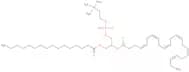
CAS:<p>Palmitoyldocosahexaenoyl phosphatidylcholine (PC-S) is a fatty acid with six double bonds. It has been shown to induce osteogenic genes in human macrophages and can be used as a potential therapeutic agent for the treatment of bone diseases. PC-S also has anti-inflammatory properties, which is due to its ability to inhibit secretory phospholipase A2 (sPLA2). PC-S is structurally similar to the polyunsaturated fatty acid linoleic acid and has been found to have reactive properties. PC-S may be used as an adjuvant therapy for cancer and other diseases, such as Alzheimer's disease. Clinical studies are currently being conducted.</p>Formula:C46H80NO8PPurity:Min. 95%Color and Shape:PowderMolecular weight:806.1 g/mol1,2-Di-O-tetradecyl-sn-glycerol
CAS:<p>1,2-Di-O-tetradecyl-sn-glycerol is a sialic acid that has been found to have immunosorbent properties. The compound is a potent inhibitor of protein synthesis in mammalian cells and has been shown to have cytotoxic effects on tumor cells. It can be used for the detection of glycoproteins on the surface of cells by immunofluorescent staining. The chemical structure of 1,2-di-O-tetradecyl-sn-glycerol is similar to diacylglycerols and phorbol esters, which are known to activate protein kinase C (PKC) and induce cellular responses.</p>Purity:Min. 95%1,2-Di-O-hexadecyl-sn-glycero-3-phospho-N,N-dimethylethanolamine
CAS:<p>Please enquire for more information about 1,2-Di-O-hexadecyl-sn-glycero-3-phospho-N,N-dimethylethanolamine including the price, delivery time and more detailed product information at the technical inquiry form on this page</p>Formula:C39H82NO6PPurity:Min. 95%Color and Shape:PowderMolecular weight:692.05 g/mol1-O-Octadecyl-3-O-trityl-rac-glycerol
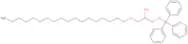
CAS:<p>1-O-Octadecyl-3-O-trityl-rac-glycerol is a hydrogenation catalyst that can be used in the asymmetric hydrogenation of olefins. It is prepared by the reaction of 1,1,1,3,5,5,5-octadecafluorohexane with racemic glycerol using catalytic amounts of palladium chloride and triphenylphosphine. The catalyst has been shown to be effective for the reduction of alkenes to alkanes.</p>Formula:C40H58O3Purity:Min. 95%Color and Shape:PowderMolecular weight:586.89 g/mol1-O-Hexadecylglycol
CAS:<p>1-O-Hexadecylglycol is a glycol ether that has been used as a test compound for antibacterial efficacy. It is a synthetic derivative of the aliphatic diamine tetraacetic acid, and it is highly biologically active. 1-O-Hexadecylglycol inhibits bacterial growth by binding to fatty acids in the cell membrane and blocking the synthesis of unsaturated fatty acids, which are required for bacterial growth. 1-O-Hexadecylglycol has also been shown to be effective against cancer cells in vitro. In vivo studies have been inconclusive, but this chemical may have potential as an anticancer agent.</p>Purity:Min. 95%1,2-Dipalmitoyl ethylene glycol
CAS:<p>1,2-Dipalmitoyl ethylene glycol is a polylactic glycol ester that has been used as a pharmaceutical preparation for the treatment of burns. It is used as a substrate film for the manufacture of tablets and other pharmaceutical preparations. 1,2-Dipalmitoyl ethylene glycol is an ester compound with two fatty acids attached to a glycol moiety. It reversibly expands when heated and can be used in some formulations as a thickener or plasticizer. The genotoxic potential of 1,2-dipalmitoyl ethylene glycol has not been studied extensively, but it has shown no evidence of carcinogenicity in animal studies.</p>Formula:C34H66O4Purity:Min. 95%Molecular weight:538.89 g/mol1,2-Dihexanoyl-sn-glycero-3-phosphocholine
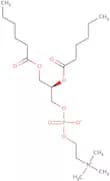
CAS:<p>1,2-Dihexanoyl-sn-glycero-3-phosphocholine is an active substance that has been shown to bind to the cyclic lipopeptide of human rhinovirus. It has been shown to have a protonation dependence on pH and a binding affinity for the acyl chain. 1,2-Dihexanoyl-sn-glycero-3-phosphocholine was found to be the most effective phospholipid in inhibiting the production of ATP by human cells. This may be due to its ability to inhibit fatty acid synthesis.</p>Formula:C20H40NO8PPurity:Min. 95%Molecular weight:453.51 g/molCholesteryl-phosphorylcholine
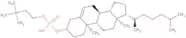
CAS:<p>Cholesteryl-phosphorylcholine is a pharmaceutical that inhibits the absorption of cholesterol in the intestines. It is also used as a medicine to lower plasma cholesterol levels and as an anti-inflammatory agent. Cholesteryl-phosphorylcholine binds to bile acids and reduces the reabsorption of cholesterol in the intestines, thereby lowering plasma cholesterol levels. This drug also has anti-inflammatory effects by inhibiting the production of substances that cause inflammation, such as prostaglandins.</p>Purity:Min. 95 Area-%1,2-Dierucoyl-sn-glycero-3-phosphoethanolamine
CAS:<p>Please enquire for more information about 1,2-Dierucoyl-sn-glycero-3-phosphoethanolamine including the price, delivery time and more detailed product information at the technical inquiry form on this page</p>Formula:C49H94NO8PPurity:Min. 95%Color and Shape:PowderMolecular weight:856.2 g/mol1,2-Dioleoyl-sn-glycero-3-phosphocholine
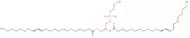
CAS:<p>1,2-Dioleoyl-sn-glycero-3-phosphocholine is a phospholipid that has been shown to have antimicrobial activity. It has been observed to inhibit the growth of bacteria by disrupting cell membrane systems and inhibiting protein synthesis. 1,2-Dioleoyl-sn-glycero-3-phosphocholine is able to permeate membranes and enter cells, where it interacts with the cell nuclei and inhibits DNA synthesis. This compound is also found in biological studies as a growth factor for neutrophils and as a model system for studying the mechanism of action of antimicrobial peptides. The phase transition temperature of this compound is low, making it useful for studies in chemical biology.</p>Formula:C44H84NO8PPurity:Min. 95%Color and Shape:PowderMolecular weight:786.11 g/mol1,2-Dioleoyl-sn-glycero-3-phosphoethanolamine
CAS:<p>1,2-Dioleoyl-sn-glycero-3-phosphoethanolamine (DOPE) is a synthetic lipid that has been extensively studied for its ability to form liposomes and other lipid bilayers. DOPE is used as a model system for studying the phase transition temperature of phospholipid membranes. DOPE has also been shown to be effective in the transfection of cells with plasmids and other DNA molecules. DOPE is cationic, which allows it to interact with anionic membrane proteins and facilitate their insertion into the membrane. This facilitates the formation of multilamellar vesicles, which are necessary for vesicle budding and fusion.</p>Formula:C41H78NO8PPurity:Min. 95%Color and Shape:PowderMolecular weight:744.03 g/mol1,2-O-Dihexadecyl-sn-glycero-3-phosphocholine
CAS:<p>1,2-O-Dihexadecyl-sn-glycero-3-phosphocholine is a phosphoglyceride that is used in structural biology. It has been shown to form an inclusion complex with the antibiotic erythromycin. This complex was found to be stable at physiological pH and temperature, while the antibiotic alone was not. 1,2-O-Dihexadecyl-sn-glycero-3-phosphocholine also can be used as a surfactant with sodium dodecyl sulfate (SDS) to form micelles and vesicles. The micelles can be used as a model system for studying the interaction of amphiphilic molecules in solution. The chemical stability of 1,2-O-Dihexadecyl-sn-glycero-3-phosphocholine makes it suitable for use as a model system for studying fatty acid ester linkages and cyclic lipopept</p>Formula:C40H84NO6PPurity:Min. 95%Color and Shape:SolidMolecular weight:706.07 g/mol1,2-Dimyristoyl-rac-glycero-3-phosphoethanolamine
CAS:<p>1,2-Dimyristoyl-rac-glycero-3-phosphoethanolamine is an analogue of phosphatidylcholine that has been used in the study of membrane protein function. It has been shown to inhibit the growth of bacteria and fungi by binding to their membranes. The antimicrobial activity may be due to its ability to chelate metal ions or alter the membrane integrity. Dimyristoyl-rac-glycero-3-phosphoethanolamine has also been used as a diagnostic probe for proteins and as a fluorescent probe for DNA.</p>Formula:C33H66NO8PPurity:Min. 95%Color and Shape:PowderMolecular weight:635.85 g/mol