Nucleosides
Nucleosides are fundamental building blocks of nucleic acids, composed of a nitrogenous base attached to a sugar molecule. In this section, you can find a wide variety of nucleosides essential for research in molecular biology, biochemistry, and pharmacology. These compounds play crucial roles in the synthesis of DNA and RNA, and are also vital in various metabolic processes. Nucleosides are used in studying genetic material, developing antiviral and anticancer therapies, and understanding cellular mechanisms. At CymitQuimica, we provide high-quality nucleosides to support your research and development needs, ensuring purity and reliability for your experimental applications.
Found 3567 products of "Nucleosides"
Sort by
Purity (%)
0
100
|
0
|
50
|
90
|
95
|
100
Queuosine
CAS:<p>Queuosine is a modified nucleoside found in the tRNA of both eukaryotic and prokaryotic organisms. It is primarily sourced from the gut microbiota and obtained through dietary intake, as humans lack the biosynthetic machinery to produce it endogenously. Queuosine plays a crucial role in cellular processes by contributing to the accuracy of protein synthesis, impacting cellular growth and maintenance. Its importance extends to understanding the molecular mechanisms underpinning various physiological processes and the potential for dysregulation in diseases. Ongoing research is exploring queuosine's implications in cellular metabolism, including its role in cancer biology and neurobiology. Understanding the pathways and effects of queuosine incorporation into tRNA may provide insights into novel therapeutic avenues for targeting metabolic disorders and diseases associated with translational fidelity.</p>Formula:C17H23N5O7Purity:Min. 95 Area-%Color and Shape:PowderMolecular weight:409.39 g/molAdenosine 5'-diphosphate bis(cyclohexylammonium) salt
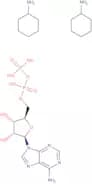
CAS:<p>Adenosine 5'-diphosphate bis(cyclohexylammonium) salt is a novel antiviral agent that has been shown to be an activator of the adenylate cyclase enzyme. It also inhibits DNA and RNA synthesis in viruses, which prevents viral replication. Adenosine 5'-diphosphate bis(cyclohexylammonium) salt is active against cancer cells and has been shown to inhibit tumor growth and prolong survival in animal models. This compound can be synthesized by reacting the monophosphate with phosphoramidites or deoxyribonucleosides.</p>Formula:C10H15N5O10P2·2C6H13NPurity:Min. 98 Area-%Color and Shape:PowderMolecular weight:625.55 g/mol2'-O-tert-Butyldimethylsilyl-5'-O-DMT-pseudouridine 3'-CE phosphoramidite
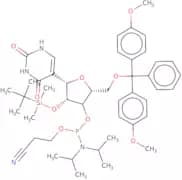
CAS:<p>2'-O-tert-Butyldimethylsilyl-5'-O-DMT-pseudouridine 3'-CE phosphoramidite is a novel, high quality, high purity, and deoxyribonucleoside. It is a phosphoramidite that is used in the synthesis of oligodeoxyribonucleotides and has antiviral, anticancer, and anti-inflammatory activities. 2'-O-tert-Butyldimethylsilyl-5'-O-DMT-pseudouridine 3'-CE phosphoramidite inhibits the replication of DNA by inhibiting the synthesis of RNA from DNA. This deoxynucleoside also activates nucleases to degrade proteins that are involved in cancer cell proliferation.</p>Formula:C45H61N4O9PSiPurity:Min. 95%Color and Shape:PowderMolecular weight:861.05 g/mol8-Chloro-2'-deoxyadenosine
CAS:<p>8-Chloro-2'-deoxyadenosine is a nucleoside analogue and a disinfectant that inhibits the synthesis of DNA. It has been used to control active viruses and to induce apoptotic cell death in cancer cells. 8-Chloro-2'-deoxyadenosine binds to viral RNA and DNA, preventing viral replication by inhibiting the activity of reverse transcriptase, which is an enzyme that copies the virus's genetic information from RNA into DNA. This drug has also been shown to be effective for the treatment of HIV infection. 8-Chloro-2'-deoxyadenosine disrupts DNA synthesis and cellular metabolism by blocking transcription and protein synthesis.</p>Formula:C10H12ClN5O3Purity:Min. 95%Color and Shape:PowderMolecular weight:285.69 g/mol2'-Deoxyxanthosine
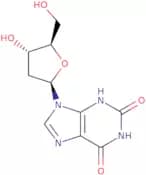
CAS:Controlled Product<p>2'-Deoxyxanthosine is a chemical compound with biochemical properties that can be used as a pharmaceutical drug. It is a nucleoside analogue that interferes with DNA synthesis. 2'-Deoxyxanthosine inhibits the enzyme ribonucleotide reductase, which converts ribonucleotides to deoxyribonucleotides, and prevents the formation of DNA in cells. This drug is also known to have anti-tumor effects, including angiogenesis inhibition and cytostatic activity. The reaction mechanism of 2'-deoxyxanthosine involves nitrous acid, which reacts with the 2' hydroxyl group of xanthosine to form the nitroso intermediate and then reacts with oxygen to produce nitrite and hydrogen peroxide. The final step in this process is the cleavage of xanthosine by nitrite into xanthine and oxalate. This drug has been shown to be reactive at neutral pH conditions</p>Formula:C10H12N4O5Purity:Min. 95%Color and Shape:White Off-White PowderMolecular weight:268.23 g/mol2'-Deoxyinosine-5'-monophosphate disodium salt
CAS:<p>2'-Deoxyinosine-5'-monophosphate disodium salt is a synthetic nucleoside, phosphoramidite, and diphosphate that is used in the synthesis of DNA. It has been shown to have antiviral effects against HIV and herpes simplex virus type 2 (HSV-2). This drug also has anticancer activity and is an activator of novel nucleosides.</p>Formula:C10H11N4Na2O7PPurity:Min. 98 Area-%Color and Shape:White PowderMolecular weight:376.17 g/mol2'-Deoxy-a-guanosine
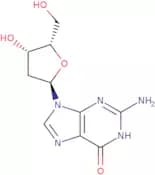
CAS:<p>2'-Deoxy-a-guanosine is a nucleoside that is modified by the substitution of its ribose sugar with deoxyribose. It is used in anticancer and antiviral research. This chemical has been shown to inhibit DNA synthesis and RNA polymerase activity. 2'-Deoxy-a-guanosine has also been shown to have an anti-inflammatory effect, which may be due to its inhibition of prostaglandin synthesis.</p>Formula:C10H13N5O4Purity:Min. 95%Color and Shape:PowderMolecular weight:267.25 g/mol4-[(1Z)-2-(4-Chlorophenyl)vinyl]pyridine
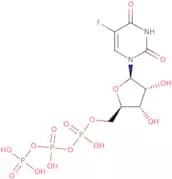
CAS:<p>4-[(1Z)-2-(4-Chlorophenyl)vinyl]pyridine is a modified nucleoside that is used in anticancer drugs. It has shown antiviral and antitumor effects. 4-[(1Z)-2-(4-Chlorophenyl)vinyl]pyridine is synthesized by condensing 4-chlorobenzaldehyde and 2,3-dichloropyridine. The nucleoside has been modified to be phosphorylated at the 5′ position and contains a ribonucleotide moiety and a deoxyribonucleotide moiety. This product is of high purity and quality, with an activator group at the 5′ position.</p>Formula:C13H10ClNPurity:Min. 95%Molecular weight:215.68 g/mol5-Fluorouridine-5'-triphosphate sodium salt
CAS:<p>5-Fluorouridine-5'-triphosphate sodium salt is an analog of uridine that has been used in the treatment of metastatic colorectal cancer. It is a prodrug that is metabolized to 5-fluorouracil, its active form. 5-Fluorouridine-5'-triphosphate sodium salt inhibits the synthesis of thymidylate, one of the precursors to DNA, and blocks the production of nucleotides. This results in cell lysis and death by apoptosis. The drug also inhibits epidermal growth factor receptor (EGFR), which may contribute to its antitumor effects.</p>Formula:C9H14N2O15P3FPurity:Min. 95%Molecular weight:502.13 g/mol2'-Deoxy-2'-fluoro-2'-C-methylcytidine
CAS:<p>2'-Deoxy-2'-fluoro-2'-C-methylcytidine is a nucleoside analog with modifications on both the sugar and the nucleobase. It is a derivative of cytidine, with fluorine attached to the 2' carbon of the sugar (deoxyribose) and a methyl group at the 2' carbon of the sugar as well. These modifications provide the compound with unique properties, such as potnetial increased resistance to enzymatic degradation, which can make it useful in antiviral and anticancer applications.</p>Formula:C10H14FN3O4Purity:Min. 95%Color and Shape:PowderMolecular weight:259.23 g/molN3-Methylthymidine
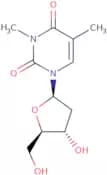
CAS:<p>N3-Methylthymidine is a metalloprotease inhibitor that has been shown to inhibit the activity of epidermal growth factor (EGF). N3-Methylthymidine is also an effective inhibitor of HIV infection. The inhibitory effect on HIV infection is due to the competitive inhibition of viral protease and subsequent degradation of viral proteins. N3-Methylthymidine inhibits the synthesis and release of infectious herpes simplex virus particles. This drug also inhibits the growth of human tumor cells in culture by inhibiting cell proliferation, most likely due to its ability to inhibit EGF. An analytical method for determining the concentration of this drug in plasma using chemical ligation has been developed.</p>Formula:C11H16N2O5Purity:Min. 95%Color and Shape:White PowderMolecular weight:256.26 g/mol5-(Isopentenylaminomethyl)uridine
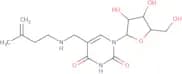
CAS:<p>5-(Isopentenylaminomethyl)uridine is a modified uridine nucleoside that is used in biochemical research. It is the precursor to 5-amino-2'-deoxyuridine, which is converted to 5-iodo-2'-deoxyuridine. This modified uridine nucleoside can be used as a linker molecule for DNA and RNA ligation reactions and for analysis of biological samples. 5-(Isopentenylaminomethyl)uridine has been shown to inhibit the expression of genes in eukaryotes and prokaryotes. It also has been shown to inhibit the ribosome by binding to the peptidyl transferase center (PTC).</p>Formula:C15H23N3O6Purity:Min. 95%Molecular weight:341.36 g/mol7-Methyl-6-thioguanosine inner salt
CAS:<p>7-Methyl-6-thioguanosine inner salt is a compound that inhibits the activity of creatine kinase and phosphatase, which are enzymes involved in energy metabolism. It also binds to actin filaments and prevents their depolymerization. The binding mechanism of 7-methyl-6-thioguanosine inner salt is believed to be due to its ability to form disulfide bonds with cysteine residues on the surface of the enzyme. This inhibition has been shown to reduce the ATP production in mammalian cells and has been used as a model system for studying cellular processes.</p>Formula:C11H15N5O4SPurity:Min. 95 Area-%Color and Shape:White PowderMolecular weight:313.33 g/mol5'-O-DMT-N2-isobutyryl-2'-O-methylguanosine 3'-CE phosphoramidite
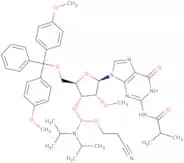
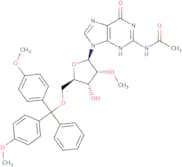
CAS:<p>5'-O-DMT-N2-isobutyryl-2'-O-methylguanosine 3'-CE phosphoramidite is a labile, thermally sensitive chemical compound. It is used as a building block for the synthesis of oligonucleotides.</p>Formula:C45H56N7O9PPurity:Min. 98 Area-%Color and Shape:White PowderMolecular weight:869.96 g/molN2-Acetyl-5'-O-DMT-2'-O-methyl guanosine
CAS:<p>2'-O-Me protected nucleoside</p>Formula:C34H35N5O8Molecular weight:641.67 g/mol2'-Deoxy-N2-phenoxyacetylguanosine
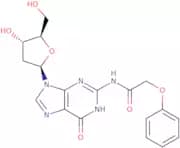
CAS:<p>2'-deoxy-N2-phenoxyacetylguanosine is a synthetic nucleoside that is used as a substrate in experiments to study the properties of guanine. The compound can be synthesized by the reaction of 2'-deoxy-N2-phenoxyacetaldehyde with guanine. The synthesis starts with the condensation of 2'-deoxyribose and N2-phenoxyacetaldehyde, followed by the oxidation of the resulting anhydride to give aldehyde, which reacts with guanine to form a Schiff base. This then undergoes hydrolysis to yield 2'-deoxy-N2-phenoxyacetylguanosine.</p>Formula:C18H19N5O6Purity:Min. 95%Molecular weight:401.38 g/molN¹-Methylpseudouridine-5'-triphosphate sodium,100 mM aqueous solution
<p>N¹-methylpseudouridine-5'-triphosphate sodium, 100 mM aqueous solution (NMP) is an activator of deoxyribonucleosides that is synthesized in the laboratory. It has antiviral and anticancer activity and can be used to treat influenza A virus. NMP has been shown to inhibit the growth of cancer cells by inhibiting DNA synthesis and inducing apoptosis.</p>Formula:C10H17N2O15P3•xNaPurity:Min. 95%Molecular weight:498.17 g/mol2'-Deoxy-5'-O-DMT-uridine 3'-CE phosphoramidite
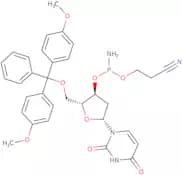
CAS:<p>2'-Deoxy-5'-O-DMT-uridine 3'-CE phosphoramidite is an antibiotic that inhibits bacterial growth by binding to DNA, preventing transcription and replication. It has been shown to have antibacterial activity against a wide variety of bacteria, including staphylococcus, tuberculosis and vibrio cholerae. 2'-Deoxy-5'-O-DMT-uridine 3'-CE phosphoramidite is a chemotaxis regulator in the biosynthetic pathway of certain bacteria. These bacteria use this compound as a precursor for the production of other antibiotics. This antibiotic binds to the regulatory site on bacterial chemotaxis and inhibits the response to attractants such as sugars or amino acids.</p>Formula:C39H47N4O8PPurity:Min. 98 Area-%Color and Shape:White Off-White PowderMolecular weight:730.81 g/molAdenosine 5'-diphosphate disodium salt
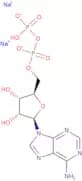
CAS:<p>Adenosine 5'-diphosphate disodium salt is a sodium salt of adenosine 5'-diphosphate. It is found in the extract of plants such as salvianolic acid and rhizoma gastrodiae, as well as in dinucleotide phosphate. This product has been shown to have cardioprotective effects against ischemia reperfusion injury in animal models. It also has congestive heart failure activity, which may be due to its ability to relax vascular smooth muscle and increase the diameter of lymphatic vessels. Adenosine 5'-diphosphate disodium salt has been shown to inhibit the binding of serotonin (5-hydroxytryptamine) to 5-HT2 receptors, which are present in heart tissue.</p>Formula:C10H13N5Na2O10P2Purity:Min. 95 Area-%Color and Shape:White PowderMolecular weight:471.16 g/molN6-Cyclopentyladenosine
CAS:<p>N6-Cyclopentyladenosine is a nucleoside analog that binds to the kappa-opioid receptor. The physiological effects of this drug are mediated through its interaction with the kappa-opioid receptor, which is found in the central nervous system and mediates many of the effects of morphine. N6-Cyclopentyladenosine has been shown to increase blood flow and heart rate in humans. This drug also inhibits tetrazolium dye uptake by papillary muscle cells, suggesting that it may have cardiotonic effects. N6-Cyclopentyladenosine has been used as an analytical probe for adenosine, which is metabolized by cyclic AMP and cyclic GMP phosphodiesterases into adenosine 3',5'-cyclic monophosphate (cAMP).</p>Formula:C15H21N5O4Purity:Min. 95%Color and Shape:PowderMolecular weight:335.36 g/mol




![4-[(1Z)-2-(4-Chlorophenyl)vinyl]pyridine](/_next/image/?url=https%3A%2Fstatic.cymitquimica.com%2Fproducts%2F3D%2Fthumb-webp%2FNC65881.webp&w=3840&q=75)