Nucleosides
Nucleosides are fundamental building blocks of nucleic acids, composed of a nitrogenous base attached to a sugar molecule. In this section, you can find a wide variety of nucleosides essential for research in molecular biology, biochemistry, and pharmacology. These compounds play crucial roles in the synthesis of DNA and RNA, and are also vital in various metabolic processes. Nucleosides are used in studying genetic material, developing antiviral and anticancer therapies, and understanding cellular mechanisms. At CymitQuimica, we provide high-quality nucleosides to support your research and development needs, ensuring purity and reliability for your experimental applications.
Found 3567 products of "Nucleosides"
Sort by
Purity (%)
0
100
|
0
|
50
|
90
|
95
|
100
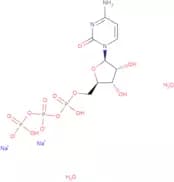
Cytidine 5'-triphosphate disodium dihydrate
CAS:<p>Cytidine 5'-triphosphate (CTP) disodium dihydrate prevents the action of aspartate carbamoyltransferase, an enzyme involved in pyrimidine biosynthesis. CTP serves as a molecule of high energy and acts as a coenzyme in glycerophospholipid biosynthesis and protein glycosylation.</p>Formula:C9H16N3O14P3•(H2O)2•Na2Purity:Min. 95%Color and Shape:PowderMolecular weight:565.17 g/molN4-Etheno 2'-deoxycytidine
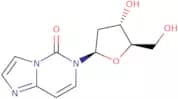
CAS:<p>N4-Etheno 2'-deoxycytidine is an aromatic hydrocarbon that has been shown to be a potent inhibitor of DNA synthesis. It binds covalently with the N4 position of deoxycytidine in DNA, thereby inhibiting transcription and replication. This drug has been shown to be a potent inhibitor of DNA synthesis in human cells when it is added to the culture medium, but it does not inhibit protein synthesis. N4-Etheno 2'-deoxycytidine can also react with hydrogen bonds in cellular proteins and nucleosides that are involved in DNA repair mechanisms. This drug is reactive and may cause oxidative damage to cellular components, which may lead to carcinogenesis.</p>Formula:C11H13N3O4Purity:Min. 95%Color and Shape:White PowderMolecular weight:251.24 g/molPolyguanylic acid potassium
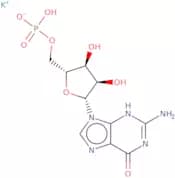
CAS:<p>Polyguanylic acid potassium salt is a guanosine analog that is used as a probe for studying the interaction of cellular and target tissue. It has been found to be taken up by cells, with high affinity constants, and to be immobilized on cell surfaces. Polyguanylic acid potassium salt can also be used as an anticancer agent against epidermoid carcinoma cells with high affinity constants. The compound interacts with DNA and inhibits the growth of the tumor cells by interfering with the uptake of nucleic acids.</p>Formula:(C10H14N5O8P)x•KxPurity:Min. 95%Color and Shape:Powder2'-Phosphoadenosine 5'-phosphosulfate tetralithium salt (mixture with 3'-isomer)
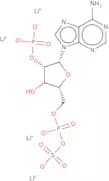
CAS:<p>2'-Phosphoadenosine 5'-phosphosulfate tetralithium salt (mixture with 3'-isomer) is a novel, modified nucleoside. It has antiviral properties and can be used for the treatment of cancer. 2'-Phosphoadenosine 5'-phosphosulfate tetralithium salt (mixture with 3'-isomer) inhibits viral replication by inhibiting the synthesis of viral DNA and RNA. This compound also inhibits cancer cell proliferation by inhibiting deoxyribonucleic acid (DNA) and ribonucleic acid (RNA) synthesis.</p>Formula:C10H11N5O13P2S·4LiPurity:Min. 95%Color and Shape:SolidMolecular weight:531 g/molCyclic inosine diphosphate ribose
CAS:<p>Cyclic inosine diphosphate ribose is a synthetic, fluorescent compound that can be used as a probe for assays. It has been synthesized by the solid-phase synthesis of a specific antibody and is bioconjugated with an oligo(ethylene glycol) moiety. Cyclic inosine diphosphate ribose can be used to measure lymphocyte activation, which is important for the study of autoimmune diseases and cancer. Cyclic inosine diphosphate ribose has also been shown to bind to the ryanodine receptor, which causes an increase in intracellular calcium concentration.</p>Formula:C15H20N4O14P2Purity:Min. 95%Molecular weight:542.29 g/mol(E)-2'-Deoxy-2'-(fluoromethylene)cytidine
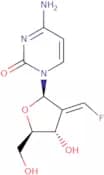
CAS:<p>(E)-2'-Deoxy-2'-(fluoromethylene)cytidine is a cytostatic compound that inhibits DNA synthesis in tumor cells. It has been shown to be more potent than tezacitabine and hl-60 cells, as well as being less toxic than benzimidazole compounds. This analog of cytosine has been shown to have potent antitumor activity against carcinoma cell lines and myeloid leukemia cell lines. The oral prodrug form of this drug has been shown to be an effective treatment for myeloid leukemia in mice.</p>Formula:C10H12FN3O4Purity:Min. 95%Molecular weight:257.22 g/molMyristoyl coenzyme A
CAS:<p>Myristoyl coenzyme A is a potential drug that inhibits the binding of human pathogens to protein. It also has been shown to have potential as an inhibitor for reactions involving myristoylation, which is a process where proteins are modified with myristic acid. Myristoyl coenzyme A was synthesized using titration calorimetry and in vitro assays. The compound has been shown to have the ability to inhibit polymerase chain reaction (PCR) and reduce the growth of bacteria in vitro. Myristoyl coenzyme A may be useful in treating metabolic disorders and infectious diseases such as AIDS, tuberculosis, and malaria.</p>Formula:C35H62N7O17P3S·H2OPurity:Min. 90%Color and Shape:White PowderMolecular weight:995.91 g/molNicotinic acid adenine dinucleotide sodium
CAS:<p>Nicotinic acid adenine dinucleotide sodium (NAAD) is a novel anticancer and antiviral agent. NAAD is an analog of nicotinamide adenine dinucleotide (NAD) that has been modified to include a sodium ion. This modification inhibits the synthesis of DNA and RNA, which are required for cell division and replication. It has been shown to inhibit the growth of cancer cells in vitro and in vivo. In addition, NAAD suppresses viral replication by inhibiting protein synthesis in cells infected with HIV-1 or influenza virus. NAAD has also been shown to be a potent inhibitor of ribonucleoside reductase, which converts ribonucleosides into deoxyribonucleosides. This inhibition prevents the conversion of diphosphate nucleotides into monophosphate nucleotides, which are necessary for DNA synthesis.</p>Formula:C21H26N6O15P2•NaPurity:Min. 95%Molecular weight:687.4 g/mol5-Formylamino-4-imidazolecarboxamide ribonucleotide
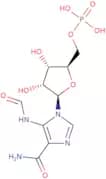
CAS:<p>5-Formylamino-4-imidazolecarboxamide ribonucleotide is a nucleoside that is synthesized from 5-aminoimidazole ribonucleotide. It has antiviral and anticancer properties and is used as a precursor for the synthesis of other nucleosides. 5-Formylamino-4-imidazolecarboxamide ribonucleotide can be used in the preparation of oligodeoxyribonucleotides, which are involved in DNA replication, transcription, and translation. This compound also has been shown to inhibit the growth of cells with HIV or cancerous cells.</p>Formula:C10H15N4O9PPurity:(Elemental Analysis) Min. 85%Molecular weight:366.22 g/molN6-Hydroxymethyladenosine
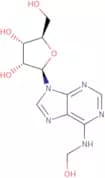
CAS:<p>Please enquire for more information about N6-Hydroxymethyladenosine including the price, delivery time and more detailed product information at the technical inquiry form on this page</p>Formula:C11H15N5O5Purity:Min. 95%Color and Shape:PowderMolecular weight:297.27 g/molLevovirin
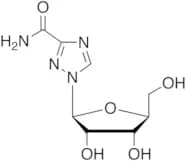
CAS:Controlled Product<p>Applications Levovirin is a monocyclic L-nucleosides with type 1 cytokine-inducing activity. Levovirin is the L-enantiomer of Ribavirin (R414475) with similar immunomodulatory activity but does not have direct antiviral activity or hemolytic anemia.<br>References Ramasamy, K.S. et al.: J. Med. Chem., 43, 1019 (2000); Fang, C. et al.: J. Appl. Toxicol., 23, 453 (2003):<br></p>Formula:C8H12N4O5Color and Shape:NeatMolecular weight:244.20N-Succinyl-5-aminoimidazole-4-carboxamide ribose 5'-phosphate
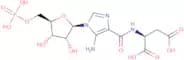
CAS:<p>N-Succinyl-5-aminoimidazole-4-carboxamide ribose 5'-phosphate is a synthetase that is involved in the biosynthesis of purines and pyrimidines. It catalyzes the ATP-dependent formation of N-succinyl5'-aminoimidazole-4-carboxamide ribose 5'-phosphate from succinyl CoA and aspartic acid. This enzyme has been studied in wild type strains of bacteria, such as Escherichia coli, but not in humans or other organisms. N-Succinyl5'-aminoimidazole-4-carboxamide ribose 5'-phosphate has been shown to be an inhibitor of antimicrobial agents such as penicillin G, erythromycin, and tetracycline. The mechanism for this inhibition is unclear, but it may involve hydrogen bonding interactions or structural changes that prevent binding</p>Formula:C13H19N4O12PPurity:Min. 95 Area-%Color and Shape:White Off-White PowderMolecular weight:454.28 g/mol5'-Tosyl-2'-deoxycytidine
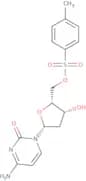
CAS:<p>5'-Tosyl-2'-deoxycytidine is a nucleoside with anticancer activity and is a novel derivative of cytidine. It has been shown to inhibit the proliferation of human cancer cells in culture. 5'-Tosyl-2'-deoxycytidine is also an antiviral agent that inhibits the synthesis of viral DNA by inhibiting the enzyme RNA polymerase. This product is synthetic, water soluble, and stable at pH 2.0 to 10.5, making it suitable for use in pharmaceutical formulations. The purity of this product is high and its chemical structure has been modified from cytidine to increase its stability against degradation by intracellular phosphatases.</p>Formula:C16H19N3O5SPurity:Min. 95%Molecular weight:365.41 g/mol2',3'-Dideoxycytidine 5'-monophosphate
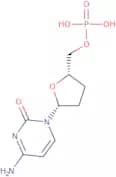
CAS:<p>Dideoxycytidine 5'-monophosphate (DDCMP) is a molecule that inhibits HIV infection by inhibiting the synthesis of DNA. It binds to the dna template strand, preventing the addition of new nucleotides and thus blocking the progression of HIV infection. DDCMP has been shown to be potent in vitro and in vivo in clinical studies. In cell culture, DDCMP has been shown to inhibit DNA duplexes, leading to a decrease in lymphocytic leukemia cells activated by T-cell receptor stimulation. Structural biology studies have revealed that DDCMP inhibits HIV-1 reverse transcriptase through binding at the M2 subunit of the enzyme's active site.</p>Formula:C9H14N3O6PPurity:Min. 95%Color and Shape:PowderMolecular weight:291.2 g/mol5'-o-(Dimethoxytrityl)-5-methyl-2'-o-methyluridine
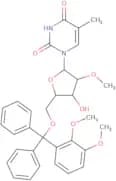
CAS:<p>5'-O-(Dimethoxytrityl)-5-methyl-2'-O-methyluridine is a DNA building block that is used as a monophosphate and can be converted to diphosphate or modified with various protecting groups. This compound has been shown to have antiviral and anticancer properties, as well as being a novel nucleoside analog. 5'-O-(Dimethoxytrityl)-5-methyl-2'-O-methyluridine has the CAS number of 115173-73-4.</p>Formula:C32H34N2O8Purity:Min. 95%Molecular weight:574.6 g/molent-idoxuridine
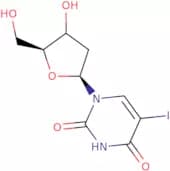
CAS:<p>Ent-idoxuridine is a cytosolic DNA synthesis inhibitor that blocks the conversion of deoxycytidine to deoxyadenosine by inhibiting the enzyme deoxycytidine kinase. It is also an enantiomer of idoxuridine, which has the same mechanism of action. Ent-idoxuridine is not active against herpes simplex virus type 1 (HSV-1) or type 2 (HSV-2). In contrast to idoxuridine, ent-idoxuridine is resistant to exonucleases and has been shown to be effective in treating immunodeficiency caused by HIV.</p>Formula:C9H11IN2O5Purity:Min. 95%Molecular weight:354.1 g/mol8-Methylthioadenosine
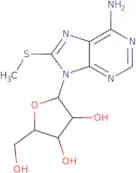
CAS:<p>8-Methylthioadenosine is a synthetic analogue of adenosine that has been used as a biochemical stimulator. It has been shown to inhibit uptake of fatty acids and phospholipids into cells, which may be due to the inhibition of cellular ATPase. 8-Methylthioadenosine can also be used as a precursor for other molecules, such as methylation of DNA or RNA. 8-Methylthioadenosine is synthesized from linolenic acid and phosphate in a reaction catalyzed by molecular oxygen. The synthesis is stimulated by light and heat and inhibited by cyanide. Magnetic resonance spectroscopy (NMR) was used to confirm that the molecule had the correct structure.</p>Purity:Min. 95%3',5'-O-[Tetrakis(1-methylethyl)-1,3-disiloxanediyl]-guanosine
CAS:<p>3',5'-O-[Tetrakis(1-methylethyl)-1,3-disiloxanediyl]-guanosine is a nucleoside phosphoramidite that is synthesized by the reaction of 3',5'-O-[Tetrakis(trimethylsiloxy)silyl]guanosine with tetrakis(1-methylethyl) siloxane. It is a novel monophosphate analogue of guanosine and has antiviral, anticancer and activator properties. 3',5'-O-[Tetrakis(1-methylethyl)-1,3-disiloxanediyl]-guanosine is not toxic to cells and can be used in the treatment of cancer.</p>Formula:C22H39N5O6Si2Purity:Min. 95%Molecular weight:525.75 g/mol4'-Hydroxymethyl-4,5',8-trimethylpsoralen (hmt)
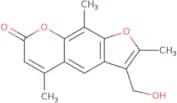
CAS:<p>4'-Hydroxymethyl-4,5',8-trimethylpsoralen (HMT) is an analog of psoralen that has been shown to have potent anti-tumor activity. HMT acts as an inhibitor of human tumor kinase and has been shown to induce apoptosis in cancer cells. This drug has also been found to enhance the effects of other cancer treatments, such as nintedanib. HMT has demonstrated potential for the treatment of diabetes by acting as an inhibitor of glucose uptake and metabolism in Chinese hamster ovary cells. Additionally, HMT has been found to have inhibitory effects on enzymes such as apomorphine, glimepiride, and vanillin. Overall, HMT holds great promise for the development of novel cancer therapies and diabetes treatments.</p>Formula:C15H14O4Purity:Min. 95%Molecular weight:258.27 g/mol5-(Furan-2-yl)-2'-deoxyuridine
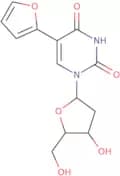
CAS:<p>5-(Furan-2-yl)-2'-deoxyuridine is a novel anticancer drug that is an analog of thymine. 5-(Furan-2-yl)-2'-deoxyuridine inhibits DNA synthesis by inhibiting the formation of deoxythymidylate from uracil and 5-fluorouracil, which in turn prevents the incorporation of thymine into DNA. The drug has been shown to be active against human leukemia cells in culture and to inhibit viral replication in vitro. The drug also blocks RNA synthesis by inhibiting ribonucleotide reductase, preventing the production of nucleosides from nucleotides. 5-(Furan-2-yl)-2'-deoxyuridine has been modified to improve its solubility and stability. This compound is stable for up to 3 months when stored at 4 degrees Celsius and can be used as a starting material for other chemical compounds.</p>Formula:C13H14N2O6Purity:Min. 95%Molecular weight:294.26 g/mol





![3',5'-O-[Tetrakis(1-methylethyl)-1,3-disiloxanediyl]-guanosine](/_next/image/?url=https%3A%2Fstatic.cymitquimica.com%2Fproducts%2F3D%2Fthumb-webp%2FNT16564.webp&w=3840&q=75)