Nucleosides
Nucleosides are fundamental building blocks of nucleic acids, composed of a nitrogenous base attached to a sugar molecule. In this section, you can find a wide variety of nucleosides essential for research in molecular biology, biochemistry, and pharmacology. These compounds play crucial roles in the synthesis of DNA and RNA, and are also vital in various metabolic processes. Nucleosides are used in studying genetic material, developing antiviral and anticancer therapies, and understanding cellular mechanisms. At CymitQuimica, we provide high-quality nucleosides to support your research and development needs, ensuring purity and reliability for your experimental applications.
Found 3567 products of "Nucleosides"
Sort by
Purity (%)
0
100
|
0
|
50
|
90
|
95
|
100
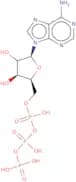
2'-Bromo-2'-deoxyadenosine-5'-[(β,γ)-imido]triphosphate triethylammonium salt - 10mM aqueous solution
CAS:<p>2'-Bromo-2'-deoxyadenosine-5'-[(beta,gamma)-imido]triphosphate triethylammonium salt (IDP) is a synthetic analog of adenosine that has been used as a bioreactor in tissue culture. IDP binds to the mineralocorticoid receptor and activates it, leading to increased levels of fatty acid synthesis in the blood sample. This drug has shown efficacy in treating cancer and inhibiting tumor growth in animal studies. IDP also has potential for use as an environmental pollutant due to its ability to be activated by wastewater treatment processes.</p>Formula:C10H16N6O11P3BrPurity:Min. 95%Molecular weight:569.09 g/mol7-Deaza-2'-C-methylguanosine
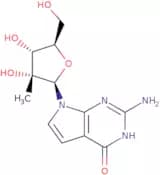
CAS:<p>7-Deaza-2'-C-methylguanosine is a nucleoside that is obtained from the synthesis of 7-deazaguanosine. It has antiviral activity and has been shown to be an activator for DNA synthesis. This compound is used as a monophosphate, diphosphate, or phosphoramidite in the synthesis of oligonucleotides. 7-Deaza-2'-C-methylguanosine has been shown to have anticancer properties, which may be due to its ability to inhibit ribonucleotide reductase and thus inhibit DNA synthesis.</p>Formula:C12H16N4O5Purity:Min. 95%Molecular weight:296.29 g/mol5'-O-DMT-N4-benzoyl-5-methyl-(2'-O-4'-C-methylene)-cytidine 3'-CE phosphoramidite
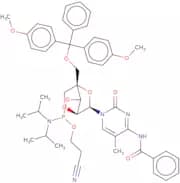
<p>5'-O-DMT-N4-benzoyl-5-methyl-(2'-O-4'-C-methylene)-cytidine 3'-CE phosphoramidite is a novel nucleoside analogue that has antiviral, anticancer and antimalarial activity. It is also used as a building block for the synthesis of oligonucleotides and in the modification of DNA, RNA and proteins. 5'-O-DMT-N4-benzoyl-5-methyl-(2'-O-4'-C-methylene)-cytidine 3'-CE phosphoramidite is an analogue of cytidine, which can be incorporated into DNA by means of enzymatic reactions. In addition to its antiviral, anticancer and antimalarial properties, it has been shown to have antiinflammatory effects. This drug is synthesized by chemical modification of cytosine, with 2′-, 4′-, or 6′ -</p>Purity:Min. 95%3',5'-Di-O-acetyl-N4-acetyl-2'-deoxycytidine
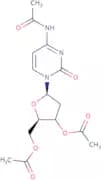
<p>3',5'-Di-O-acetyl-N4-acetyl-2'-deoxycytidine is a synthetic nucleoside. It is an activator of the immune system and has antiviral activities. 3',5'-Di-O-acetyl-N4-acetyl-2'-deoxycytidine is also a potent inhibitor of DNA and RNA polymerases, thereby preventing the synthesis of these nucleic acids. This drug has been shown to inhibit tumor cell growth in cultures of human cancer cells and has been used as a potential anticancer agent in clinical trials. The drug's activity as an immunomodulator is due to its ability to bind to lymphocytes, which leads to the production of cytokines that stimulate the immune system. 3',5'-Di-O-acetyl-N4-acetyl-2'-deoxycytidine also inhibits HIV replication by binding to viral reverse transcriptase and preventing it from copying the viral genome</p>Formula:C15H19N3O7Purity:Min. 95%Molecular weight:353.33 g/mol8-(2-Deoxy-b-D-ribofuranosyl)-imidazo[1,2-a]-1,3,5-triazine-2,4(3H,8H)-dione
CAS:<p>8-(2-Deoxy-b-D-ribofuranosyl)-imidazo[1,2-a]-1,3,5-triazine-2,4(3H,8H)-dione is a monophosphate nucleotide analog that inhibits viral DNA polymerases. It is a novel and high quality nucleoside phosphoramidite. 8-(2-Deoxy-b-D-ribofuranosyl)-imidazo[1,2-a]-1,3,5-triazine-2,4(3H,8H)-dione is synthesized from 2'-deoxyribonucleosides and modified ribonucleosides. The CAS number for the compound is 35763855 2.</p>Formula:C10H12N4O5Purity:Min. 95%Molecular weight:268.23 g/mol5'-Iodo-2',3'-dideoxycytidine
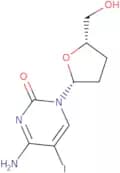
<p>5'-Iodo-2',3'-dideoxycytidine is a nucleoside analog that is used as an antiviral agent and an anticancer drug. It inhibits the synthesis of DNA by inhibiting the enzyme DNA polymerase, which is necessary for DNA replication. This compound also has a high quality and purity, as it is synthesized in a controlled environment. 5'-Iodo-2',3'-dideoxycytidine has shown to be effective against leukemia cells in culture and has been shown to inhibit the growth of cancer cells in animal models.<br>5'-Iodo-2',3'-dideoxycytidine has shown to be effective against leukemia cells in culture and has been shown to inhibit the growth of cancer cells in animal models.</p>Formula:C9H12N3O3IPurity:Min. 95%Molecular weight:337.11 g/mol5'-O-tert-Butyldimethylsilyl-2'-deoxy-5-iodouridine
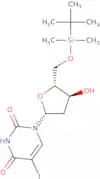
CAS:<p>5'-O-tert-Butyldimethylsilyl-2'-deoxy-5-iodouridine is an antiviral agent that acts by inhibiting DNA polymerase, preventing the production of viral DNA. It has a high purity and is modified with tert-butyldimethylsilyl groups so it can be used in phosphoramidite synthesis. It also has a CAS number of 134218-81-8 and is synthesized using monophosphate, phosphoramidites, or nucleosides as starting materials.</p>Formula:C15H25IN2O5SiPurity:Min. 95%Color and Shape:PowderMolecular weight:468.37 g/mol2'-Deoxy-2'-fluorocytidine-5'-monophosphate
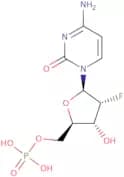
CAS:<p>2'-Deoxy-2'-fluorocytidine-5'-monophosphate (2F-dFMP) is a synthetic nucleoside that is used in the treatment of cancer and as an antiviral agent. 2F-dFMP inhibits DNA synthesis by inhibiting DNA polymerase, which is needed for replication of the cell's genetic material. It also has anti-HIV activity and can be used to treat HIV infection. 2F-dFMP is phosphorylated to 2'-deoxy-2'-fluorocytidine 5'-triphosphate (2F-dCTP), which then competes with natural nucleotides for incorporation into DNA and RNA. This drug binds to the enzyme thymidylate synthase, preventing the formation of thymine monophosphate from erythronic acid.</p>Formula:C9H13FN3O7PPurity:Min. 95%Molecular weight:325.19 g/molXanthosine-5'-monophosphate ammonium salt
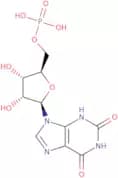
CAS:<p>Xanthosine-5'-monophosphate ammonium salt is a monophosphate compound that is formed by the reaction of xanthosine and ammonium hydroxide. It has been shown to have an optimum concentration of 1 mM in dextran sulfate solutions and to be active against a range of bacteria at this concentration. The antimicrobial activity of xanthosine-5'-monophosphate ammonium salt is due to its inhibition of energy metabolism and synthesis, which leads to cell death. Xanthosine-5'-monophosphate ammonium salt also inhibits the production of tetracycline resistance in leukemic mice and k562 cells, which may be due to its ability to form a complex enzyme with tetracycline synthetase.</p>Purity:Min. 95%L-Adenosine 5'-triphosphate sodium salt
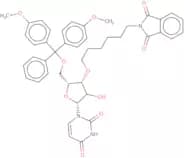
CAS:<p>L-Adenosine 5'-triphosphate sodium salt is a monophosphate, diphosphate, and triphosphate analog of adenosine that is used as an antiviral agent. L-Adenosine 5'-triphosphate sodium salt is a synthetic nucleoside that is modified at the ribose sugar to form a phosphoramidite. This modification increases the stability of the molecule and prevents hydrolysis by ribonucleases. L-Adenosine 5'-triphosphate sodium salt is also known as Ado-5'-P or ATPγS.</p>Formula:C10H12N5O13P3Na4Purity:Min. 95%Molecular weight:595.11 g/mol5'-O-DMT-3'-O-hexylphthalimidouridine
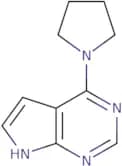
<p>5'-O-DMT-3'-O-hexylphthalimidouridine is an antiviral and anticancer agent that is a nucleoside analog. It inhibits viral replication by preventing the production of RNA, which is necessary for the synthesis of DNA. It also prevents the proliferation of cancer cells and induces apoptosis by inhibiting DNA synthesis. 5'-O-DMT-3'-O-hexylphthalimidouridine is a monophosphate that has been modified to form a phosphoramidite. The synthesized product was purified to high purity and quality with a novel structure.</p>Formula:C44H45N3O10Purity:Min. 95%Molecular weight:775.86 g/mol6-Pyrrolidino-7-deazapurine
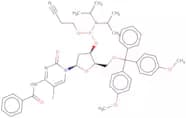
CAS:<p>6-Pyrrolidino-7-deazapurine is a monophosphate nucleoside, which is a synthetic nucleotide. It has been shown to activate DNA synthesis and inhibit the growth of tumor cells. 6-Pyrrolidino-7-deazapurine has also been shown to be active against viruses, such as herpes, by inhibiting their replication. This product is stable at room temperature for up to one year and can be stored at -20°C for up to three years. The purity of this product is >98% with no detectable impurities.</p>Formula:C10H12N4Purity:Min. 95%Molecular weight:188.23 g/molN4-Benzoyl-2'-deoxy-5'-O-DMT-5-iodocytidine 3'-CE phosphoramidite
<p>N4-Benzoyl-2'-deoxy-5'-O-DMT-5-iodocytidine 3'-CE phosphoramidite is an activator that is used in the synthesis of DNA, RNA, and other nucleic acids. It has antiviral, anticancer, and antimicrobial activities. N4-Benzoyl-2'-deoxy-5'-O-DMT-5-iodocytidine 3'-CE phosphoramidite is a novel compound that has been modified to improve its activity as an activator. This activator is provided at high purity and is suitable for research purposes.</p>Formula:C46H51IN5O8PPurity:Min. 95%Color and Shape:PowderMolecular weight:959.83 g/molGuanosine 5'-triphosphate
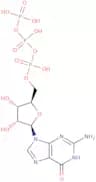
CAS:<p>Guanosine 5'-triphosphate (GTP) is a nucleotide that is involved in many cellular processes including transcription, protein synthesis, and intracellular signaling. GTP binds to the enzyme guanine nucleotide-binding proteins and regulates the activity of certain enzymes. One such enzyme is adenylyl cyclase, which converts ATP into cAMP. GTP also activates other enzymes that are involved in signal transduction pathways, such as phospholipase C-β1 and phospholipase D. The antimicrobial agents can inhibit these enzymes, thereby preventing bacterial growth and replication.</p>Formula:C10H16N5O14P3Purity:Min. 95%Molecular weight:523.18 g/molGuanosine-5'-monophosphate triethylammonium salt
CAS:<p>Guanosine-5'-monophosphate triethylammonium salt is a synthetic nucleoside that is an activator of DNA. It is used in antiviral and anticancer treatments, as well as in the synthesis of deoxyribonucleosides. This product has been shown to have high purity and high quality.</p>Formula:C10H14N5O8P•C6H15NPurity:Min. 95%Molecular weight:464.41 g/mol3’-Deoxy- 3'- methylguanosine
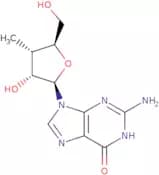
CAS:<p>3’-Deoxy-3'-methylguanosine is a nucleoside that is used in the synthesis of DNA. 3’-Deoxy-3'-methylguanosine is a monophosphate that can be obtained from the phosphoramidites, which are intermediates in the chemical synthesis of nucleotides. 3’-Deoxy-3'-methylguanosine is an activator for DNA polymerases and has been shown to have antiviral, anticancer, and antifungal properties. It has also been shown to be cytotoxic against leukemia cells. 3’-Deoxy-3'-methylguanosine is a novel nucleoside with modified properties.</p>Formula:C11H15N5O4Purity:Min. 95%Molecular weight:281.27 g/mol2',3',5-Tri-O-acetyl-2-chloroadenosine
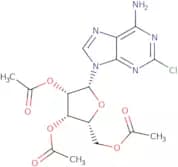
CAS:<p>2',3',5-Tri-O-acetyl-2-chloroadenosine is a modified nucleoside that has been shown to be a potent activator of the transcriptional activator protein 2 (AP2) and AP1. The ribonucleosides are synthesized by phosphoramidite chemistry and are prepared as monophosphate or diphosphate derivatives. 2',3',5-Tri-O-acetyl-2-chloroadenosine also has antiviral activity against herpes simplex virus type 1 (HSV1). This drug is highly purified and can be used in high quality applications, such as anticancer and antiviral treatments.</p>Formula:C16H18ClN5O7Purity:Min. 95%Molecular weight:427.8 g/molN6-Benzoyl-5'-O-DMT-2'-O-(2-methoxyethyl)adenosine 3'-O succinate TEA salt
<p>N6-Benzoyl-5'-O-DMT-2'-O-(2-methoxyethyl)adenosine 3'-O succinate TEA salt is a modified nucleotide that has been shown to have anticancer and antiviral activity. N6-Benzoyl-5'-O-DMT-2'-O-(2-methoxyethyl)adenosine 3'-O succinate TEA salt inhibits the synthesis of viral DNA and also inhibits the production of DNA in tumor cells. This compound is a phosphoramidite, which is an activated ester of a nucleoside with a phosphate group. The active form of this drug is adenosine triphosphate (ATP), which acts as an activator for DNA synthesis, leading to the production of deoxyribonucleosides and monophosphate, which are necessary for DNA replication.</p>Purity:Min. 95%2-Chloro-6-(2'-deoxy-b-D-ribofuranosyl)-3,5-diaminopyrazine
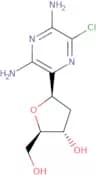
CAS:<p>2-Chloro-6-(2'-deoxy-b-D-ribofuranosyl)-3,5-diaminopyrazine is a modified nucleoside that can be used to synthesize DNA and RNA. It is an activator that activates the phosphoramidite coupling reaction of the synthesis of DNA. 2-Chloro-6-(2'-deoxy-b-D-ribofuranosyl)-3,5-diaminopyrazine has been shown to have anticancer and antiviral activities in vitro, but no in vivo data are currently available. It also has high purity and high quality.</p>Formula:C9H13ClN4O3Purity:Min. 95%Color and Shape:White to off-white solid.Molecular weight:260.68 g/molAdenosine HCl
CAS:<p>Adenosine is a nucleoside that is found in all cells. It plays an important role in the formation of ATP and as a neurotransmitter. Adenosine also acts on a receptor to promote vasodilation, improve cardiac contractility, and increase cardiac output. Adenosine has been found to be effective in preventing congestive heart failure in rats with myocardial infarction. In humans, adenosine has been shown to have beneficial effects on metabolic disorders such as diabetes mellitus and diabetic neuropathy. Adenosine HCl is an acid salt of adenosine that can be used for the treatment of coronary artery disease.</p>Formula:C10H13N5O4·HClPurity:Min. 95%Molecular weight:303.7 g/mol
![2'-Bromo-2'-deoxyadenosine-5'-[(β,γ)-imido]triphosphate triethylammonium salt - 10mM aqueous solut…](/_next/image/?url=https%3A%2Fstatic.cymitquimica.com%2Fproducts%2F3D%2Fthumb-webp%2FNB166259.webp&w=3840&q=75)

![8-(2-Deoxy-b-D-ribofuranosyl)-imidazo[1,2-a]-1,3,5-triazine-2,4(3H,8H)-dione](/_next/image/?url=https%3A%2Fstatic.cymitquimica.com%2Fproducts%2F3D%2Fthumb-webp%2FND145594.webp&w=3840&q=75)