Nucleosides
Nucleosides are fundamental building blocks of nucleic acids, composed of a nitrogenous base attached to a sugar molecule. In this section, you can find a wide variety of nucleosides essential for research in molecular biology, biochemistry, and pharmacology. These compounds play crucial roles in the synthesis of DNA and RNA, and are also vital in various metabolic processes. Nucleosides are used in studying genetic material, developing antiviral and anticancer therapies, and understanding cellular mechanisms. At CymitQuimica, we provide high-quality nucleosides to support your research and development needs, ensuring purity and reliability for your experimental applications.
Found 3567 products of "Nucleosides"
Sort by
Purity (%)
0
100
|
0
|
50
|
90
|
95
|
100
o-Topolin riboside-5'-monophosphate sodium salt
CAS:<p>O-topolin riboside-5'-monophosphate sodium salt is a phosphoramidite that has antiviral, anticancer and activator properties. It is synthesized from o-topolin riboside, which is a novel modified nucleoside. O-topolin riboside-5'-monophosphate sodium salt binds to the DNA strand and inhibits RNA synthesis. This prevents the production of proteins vital for cell division.</p>Formula:C17H18N5Na2O8P·H2OPurity:Min. 95%Molecular weight:515.32 g/molN4-Acetyl-2'-deoxy-5'-O-DMT-5-methylcytidine
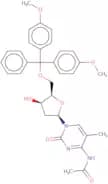
<p>N4-Acetyl-2'-deoxy-5'-O-DMT-5-methylcytidine is a nucleoside analog that is used as an antiviral, anticancer, and antiretroviral agent. It is a potent inhibitor of HIV replication in vitro and in vivo. N4-Acetyl-2'-deoxy-5'-O-DMT-5-methylcytidine inhibits the activity of viral reverse transcriptase and DNA polymerase by binding to their RNA template strand. The drug shows efficacy against leukemia cells in vitro and against murine leukemia L1210 cells in vivo. Treatment with N4-acetyl-2'-deoxy-5'-O-DMT cytidine has been shown to reduce the size of tumors in mice with fibrosarcoma, melanoma, or glioma xenografts. N4 acetyl 2’ deoxy 5’ O DMT cytidine is also</p>Formula:C33H35N3O7Purity:Min. 95%Molecular weight:585.65 g/mol3’-O-(2-Methoxyethyl)adenosine
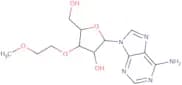
CAS:<p>3’-O-(2-Methoxyethyl)adenosine is a nucleoside, a kind of building block for DNA. It is an antiviral agent that inhibits viral replication by preventing the incorporation of viral nucleic acid into host DNA. 3’-O-(2-Methoxyethyl)adenosine also has anticancer properties, which makes it useful as a chemotherapeutic agent. 3’-O-(2-Methoxyethyl)adenosine is synthesized from adenosine monophosphate in two steps: first, the methoxy group is attached to the 2’ position of the ribose sugar by phosphoramidite chemistry; second, the 5' hydroxyl group is oxidized to form the phosphate ester.</p>Formula:C13H19N5O5Purity:Min. 95%Molecular weight:325.32 g/molN-(2'-Deoxy- 2', 2'- difluorocytidine 5'-P- phenyl phosphate) L- alanine benzyl ester
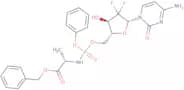
CAS:<p>N-(2'-Deoxy- 2', 2'- difluorocytidine 5'-P- phenyl phosphate) L- alanine benzyl ester, also known as Acelarin, is primarily used in cancer treatment, including leukemia and solid tumors.</p>Formula:C25H27F2N4O8PPurity:Min. 98 Area-%Color and Shape:PowderMolecular weight:580.47 g/mol3'-O-Acetyl-5'-O-DMT-2'-O-methyuridine
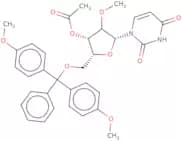
<p>3'-O-Acetyl-5'-O-DMT-2'-O-methyuridine is a novel nucleoside analogue with anticancer activity. 3'-O-Acetyl-5'-O-DMT-2'-O-methyuridine is a modified deoxyribonucleoside monophosphate, which is activated by phosphorylation to the corresponding diphosphate form and then converted to an antiviral agent. 3'-O-Acetyl-5'-O-DMT-2'-O-methyuridine has been shown to have antiviral activity against herpes simplex virus type 1 (HSV1) and Epstein Barr virus (EBV). This compound also inhibits the proliferation of human cancer cells in vitro and in vivo.</p>Formula:C33H34N2O9Purity:Min. 95%Molecular weight:602.63 g/molL-Inosine
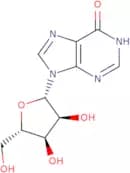
CAS:<p>L-Inosine is a purine nucleoside that is found in plants and animals. It is an intermediate in the pentose phosphate pathway and can be synthesized from the amino acid L-lysine. L-Inosine has been shown to inhibit the growth of trichomonas vaginalis and giardia, but not uninfected human erythrocytes. The mechanism of action of L-Inosine is not well understood, but it may have a role in transporting adenosine into cells. The oral bioavailability of L-Inosine is low due to its rapid conversion to l-adenosine by nonsaturable enzymes. L-Inosine does not appear to be a substrate for transport across mammalian cells, but it does act as a competitive inhibitor for glucose transport.</p>Formula:C10H12N4O5Purity:Min. 95%Color and Shape:Off-White SolidMolecular weight:268.23 g/mol1-(2'-Deoxy-2'-chloro-b-L-arabinofuranosyl)-thymine
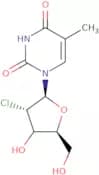
<p>1-(2'-Deoxy-2'-chloro-b-L-arabinofuranosyl)-thymine is a synthetic nucleoside that acts as an activator of DNA synthesis and inhibits viral replication. It is used in the treatment of cancer and antiviral therapy. 1-(2'-Deoxy-2'-chloro-b-L-arabinofuranosyl)-thymine is also used as a building block for the modification of other nucleosides, including deoxyribonucleosides, ribonucleosides, and nucleotides. The drug is available in high purity at a low cost.</p>Formula:C10H13ClN2O5Purity:Min. 95%Molecular weight:276.67 g/mol2-Iodo-2',3'-O-isopropylideneadenosine
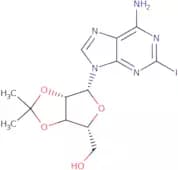
CAS:<p>2-Iodo-2',3'-O-isopropylideneadenosine is a phosphoramidite nucleoside that is used for the synthesis of oligonucleotide DNA. It has antiviral and anticancer properties, as well as a novel chemical structure. 2-Iodo-2',3'-O-isopropylideneadenosine has been synthesized in high purity and quality. It is also available in CAS No. 141018-25-9.</p>Formula:C13H16IN5O4Purity:Min. 95%Color and Shape:White to off-white solid.Molecular weight:433.21 g/mol5-Methyl-2',3'-stannyluridine
<p>5-Methyl-2',3'-stannyluridine is a nucleoside analog that is a potent inhibitor of viral replication and can be used for the treatment of HIV. It has been shown to inhibit the activity of RNA polymerase, thereby preventing transcription and replication. 5-Methyl-2',3'-stannyluridine also inhibits DNA synthesis by inhibiting the activity of DNA polymerase. This drug also acts as an antitumor agent and has been shown to inhibit tumor growth in animal models. The high purity of this drug makes it suitable for use in pharmaceutical applications.<br>5-Methyl-2',3'-stannyluridine is a modified nucleoside that has been modified with a stannyl group at the 2' position on the sugar moiety and an allyl group at the 3' position on the sugar moiety. The phosphoramidites are synthesized from 5-methyl-2',3'-stannyl</p>Purity:Min. 95%Stavudine 5'-monophosphate sodium salt - 10 mM aqueous solution
<p>Stavudine is a nucleoside analog that is phosphorylated by cellular enzymes to the corresponding monophosphate. Stavudine is an activator of DNA synthesis and has been shown to be effective against cancer cells in vitro. It is also active against HIV-1, which has been shown in vitro to inhibit the production of viral DNA and RNA. Stavudine's antiviral activity may be due to its ability to inhibit the synthesis of viral DNA, RNA, or both. This drug can also be used as a nucleotide precursor for oligonucleotide synthesis.</p>Formula:C10H13N2O7P·xNaPurity:Min. 95%Molecular weight:304.19 g/mol3',5'-O-(Di-tert-butylsilanediyl)uridine
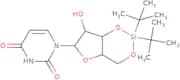
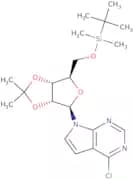
CAS:<p>3',5'-O-(Di-tert-butylsilanediyl)uridine is a novel antiviral agent that is synthesized from uridine and has been shown to be effective against herpes simplex virus. This compound was also shown in vitro to inhibit the replication of human immunodeficiency virus type 1 (HIV-1). 3',5'-O-(Di-tert-butylsilanediyl)uridine binds to single stranded DNA, preventing the synthesis of DNA by the viral enzyme reverse transcriptase. It also inhibits the production of viral proteins by binding to viral RNA polymerase. This drug may also have anticancer activity due to its ability to inhibit ribonucleotide reductase, an enzyme required for DNA synthesis.</p>Purity:Min. 95%6-Chloro-7-deaza-9-(5'-O-tert-butyldimethylsilyl-2',3'-O-isopropylidene-b-D-ribofuranosyl)purine
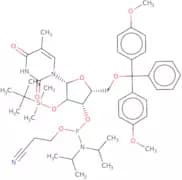
CAS:<p>6-Chloro-7-deaza-9-(5'-O-tert-butyldimethylsilyl-2',3'-O-isopropylidene-b-D-ribofuranosyl)purine is a modified nucleoside that is used as an antiviral agent. It acts by inhibiting viral DNA polymerase to prevent the synthesis of viral DNA, which prevents virus replication and the spread of infection. 6CDAZP has been shown to be effective against Ebola and influenza viruses.</p>Formula:C20H30ClN3O4SiPurity:Min. 95%Color and Shape:Colourless to pale yellow oil.Molecular weight:440.02 g/mol2'-O-tert-Butyldimethylsilyl-5'-O-DMT-5-methyluridine 3'-CE phosphoramidite
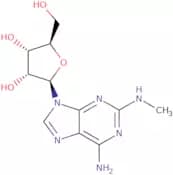
CAS:<p>2'-O-tert-Butyldimethylsilyl-5'-O-DMT-5-methyluridine 3'-CE phosphoramidite is a novel DNA synthesis building block that contains a 5'-dimethoxytrityl group. This compound is an activator, which means it helps in the initiation of DNA synthesis. It is used to synthesize oligonucleotides with 5'-terminal deoxyribonucleoside monophosphates and 5'-terminal diphosphates. The 2'-O-tert-butyldimethylsilyl-5'-O-DMT-5-methyluridine 3'-ce phosphoramidite is an anticancer agent, antiviral agent, and an antifungal agent.</p>Formula:C46H63N4O9PSiPurity:Min. 95%Molecular weight:875.07 g/mol2-Methylaminoadenosine
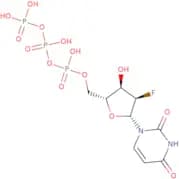
CAS:<p>2-Methylaminoadenosine is a nucleoside that is the product of the action of adenosine deaminase on 2-aminoadenosine. It is used in diagnostic assays to differentiate between n6-methyladenosine and deoxyadenosine in DNA, RNA, or serum samples. It has been shown to have an interaction with fatty acids and their derivatives and sequences in tissues. In addition, it has been shown to have specificities for cardiac tissue and a flow rate that is constant.</p>Formula:C11H16N6O4Purity:Min. 95%Molecular weight:296.28 g/mol2'-Deoxy-2'-fluorouridine-5'-triphosphate sodium salt - 100mM aqueous solution
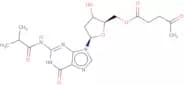
CAS:<p>2'-Deoxy-2'-fluorouridine-5'-triphosphate sodium salt is an antibacterial agent with a potent antibacterial activity. It has been shown to be active against Gram-positive bacteria, including Staphylococcus aureus and Enterococcus faecalis. It also inhibits the synthesis of uronic acid and butyric acid, which are components of the bacterial cell wall. In addition, 2'-deoxy-2'-fluorouridine-5'-triphosphate sodium salt is able to inhibit nucleotidylyltransferase, which is an enzyme involved in the biosynthesis of fatty acids in bacteria.</p>Formula:C9H14FN2O14P3·NaPurity:Min. 95%Molecular weight:509.12 g/mol2'-Deoxy-N2-isobutyryl-5'-O-levulinoylguanosine
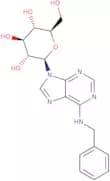
<p>2'-Deoxy-N2-isobutyryl-5'-O-levulinoylguanosine is a novel antiviral drug that has been shown to be active against influenza, herpes, and HIV. It belongs to the class of deoxyribonucleosides and is ribonucleotide analogs. 2'-Deoxy-N2-isobutyryl-5'-O-levulinoylguanosine inhibits viral replication by interacting with viral DNA polymerase, preventing the extension of viral DNA chains by blocking the incorporation of nucleotides into the growing strand. The enzyme activity of 2'-deoxy-N2-isobutyrylguanosine is activated by phosphoramidites in vitro.</p>Formula:C19H25N5O7Purity:Min. 95%Molecular weight:435.43 g/mol6-Benzylamino-9-(a-D-glucopyranosyl)purine
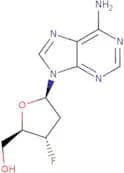
CAS:<p>6-Benzylamino-9-(a-D-glucopyranosyl)purine is a novel nucleoside phosphoramidite that has been synthesized as an intermediate for anticancer therapy. It is a monophosphate, which has antiviral and antifungal activity. 6-Benzylamino-9-(a-D-glucopyranosyl)purine is a synthetic nucleoside with a novel structure, which inhibits the synthesis of DNA and RNA. This drug also has ribonucleotide reductase inhibitory activities.</p>Formula:C18H21N5O5Purity:Min. 95%Molecular weight:387.4 g/mol2',3'-Dideoxy-3'-fluoroadenosine
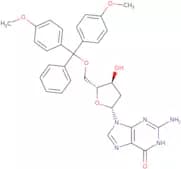
CAS:<p>2',3'-Dideoxy-3'-fluoroadenosine (ddFdA) is an antiviral drug that has been shown to be effective against HIV and other viruses. It is a synthetic nucleoside analogue of the natural purine adenosine. ddFdA inhibits the synthesis of viral RNA and DNA by competitively inhibiting the enzyme ribonucleotide reductase, thereby blocking DNA synthesis. The drug has shown significant activity in humans with immunodeficiency, but also has toxic effects on lymphocytes. ddFdA is synthesised from 2',3'-dideoxyadenosine (ddAdo), which is produced by the action of adenosinase on adenosine. In humans, ddFdA is converted to dideoxyadenosine triphosphate (ddATP), which inhibits cellular proliferation.</p>Formula:C10H12FN5O2Purity:Min. 95%Molecular weight:253.23 g/mol2'-Deoxy-5'-O-DMT-guanosine
CAS:<p>2'-Deoxy-5'-O-DMT-guanosine is a purine nucleoside that is converted to 2'-deoxy-5'-O-DMT-adenosine by the enzyme deoxyadenosyltransferase. This conversion is necessary for the synthesis of adenosylcobalamin, which is essential for the methylation of homocysteine to methionine. 2'-Deoxy-5'-O-DMT-guanosine has been shown to have cancer chemopreventive effects in vitro and in vivo. It also has been shown to enhance dna hybridization and hydrophobic interactions with cancerous cells, which may be due to its ability to inhibit gene expression.</p>Formula:C31H31N5O6Purity:Min. 95%Molecular weight:569.61 g/mol(5'S)-2'-Deoxy-8,5'-cycloadenosine
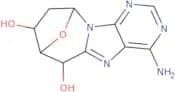
CAS:<p>(5'S)-2'-Deoxy-8,5'-cycloadenosine is a nucleoside analog that blocks the synthesis of DNA. It is a glycosylated nucleoside that contains an 8-carbon fatty acid chain linked to the 5’ carbon of the sugar ring. This compound is formed from the reaction of (5'S)-2'-deoxyadenosine and dicyclohexylcarbodiimide. The biological properties of this drug are not well understood, but it has been shown to be reactive with physiological levels and able to induce neuronal death in an experimental model. The mechanism for this effect is unknown, but may involve intramolecular hydrogen bonding or hydrolysis by esterases. A molecular docking analysis was performed to study the binding affinity between (5'S)-2'-deoxy-8,5'-cycloadenosine and human mda-mb-231 breast cancer cells. This analysis showed that wild</p>Formula:C10H11N5O3Purity:Min. 95%Molecular weight:249.23 g/mol