Nucleosides
Nucleosides are fundamental building blocks of nucleic acids, composed of a nitrogenous base attached to a sugar molecule. In this section, you can find a wide variety of nucleosides essential for research in molecular biology, biochemistry, and pharmacology. These compounds play crucial roles in the synthesis of DNA and RNA, and are also vital in various metabolic processes. Nucleosides are used in studying genetic material, developing antiviral and anticancer therapies, and understanding cellular mechanisms. At CymitQuimica, we provide high-quality nucleosides to support your research and development needs, ensuring purity and reliability for your experimental applications.
Found 3567 products of "Nucleosides"
Sort by
Purity (%)
0
100
|
0
|
50
|
90
|
95
|
100
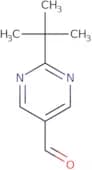
2-tert-Butylpyrimidine-5-carbaldehyde
CAS:<p>2-tert-Butylpyrimidine-5-carbaldehyde (2BP) is a potent, selective inhibitor of DNA polymerase that is expressed in the tibia during bone development. 2BP has been shown to inhibit platelet-derived growth factor (PDGF)-induced angiogenesis in mouse calvaria and animal research models. This compound also inhibits the proliferation of basic fibroblasts and cancer cells in vitro.</p>Formula:C9H12N2OPurity:Min. 95%Molecular weight:164.2 g/mol6-Methyl-thio-guanosine
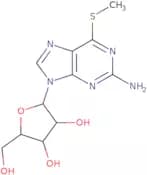
CAS:<p>6-Methyl-thio-guanosine is a guanine analog that has been used for the treatment of asthma. It was found to be effective in reducing the number of neutrophils and responsiveness of these cells to stimuli. 6-Methyl-thio-guanosine is able to reduce the number of neutrophils in the airway and decrease the amount of sputum produced by patients with chronic obstructive pulmonary disease. 6-Methyl-thio-guanosine also prevents the release of mediators from these cells, which are important in inflammation. This drug has been shown to have an effect on bronchial epithelial cells, slowing their growth and increasing their ability to resist damage.<br>6-Methyl-thio-guanosine can be administered by inhalation or orally, through microlenses or expansion devices, or by suctioning bronchial secretions. Treatment may also involve injection directly into lung tissue using a bron</p>Formula:C11H15N5O4SPurity:Min. 95%Molecular weight:313.33 g/mol3'-Deoxy-3',4'-didehydro-CTP
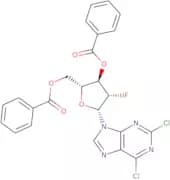
CAS:<p>3'-Deoxy-3',4'-didehydro-CTP is a nucleoside analog. It is a novel, high quality, high purity and synthetic compound with antiviral and anticancer activities. 3'-Deoxy-3',4'-didehydro-CTP inhibits the synthesis of DNA by specifically inhibiting the activity of DNA polymerase. The IC50 value for this compound is 12.5 μM against herpes simplex virus type 1 (HSV-1) in vitro.</p>Formula:C9H14N3O13P3Purity:Min. 95%Molecular weight:465.14 g/mol2,6-Dichloro-9-(3',5'-di-O-benzoyl-2'-deoxy-2'-fluoro-b-D-arabinofuranosyl)purine
CAS:<p>2,6-Dichloro-9-(3',5'-di-O-benzoyl-2'-deoxy-2'-fluoro-b-D-arabinofuranosyl)purine is a nucleoside analog that is a potent activator of the immune system. It is a novel synthetic compound with high purity and high quality. This compound has antiviral effects against HIV and other viruses. It also has anticancer properties, which are thought to be due to its ability to inhibit DNA synthesis in tumor cells.</p>Formula:C24H17CI2FN4O5Purity:Min. 95%Molecular weight:531.33 g/mol5-Bromouridine-5'-monophosphate
CAS:<p>5-Bromouridine-5'-monophosphate is a nucleoside analog of uridine. It is an antiviral and antineoplastic agent that inhibits the synthesis of DNA by inhibiting the enzyme ribonucleotide reductase. This enzyme catalyzes the conversion of ribonucleosides to diphosphates, which are precursors for DNA and RNA synthesis. 5-Bromouridine-5'-monophosphate has been shown to be effective against some cancer cells in vitro and in vivo, but has not been tested on humans.</p>Formula:C9H12BrN2O9PPurity:Min. 95%Molecular weight:403.08 g/mol4-(4-Chlorophenyl)pyrimidine-2-thiol
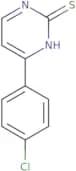
CAS:<p>4-(4-Chlorophenyl)pyrimidine-2-thiol is an anti-cancer drug that is used in the treatment of ovarian cancer. It has been shown to be effective against cancer cells by interfering with the DNA replication process. 4-(4-Chlorophenyl)pyrimidine-2-thiol binds at the active site of topoisomerase II, which is involved in the process of transcription and replication. This drug also has been shown to induce apoptosis in fibroblast cells by inhibiting DNA synthesis and protein synthesis. 4-(4-Chlorophenyl)pyrimidine-2-thiol has a molecular weight of 181.24 g/mol and is soluble in water, methanol, and ethanol. The colorimetric assay for this compound has a detection limit of 1 µg/mL.</p>Purity:Min. 95%2'-Methyl-adenosine-(Bz)-succinyl-CPG; 500 Å (RNA)
<p>2'-Methyl-adenosine-(Bz)-succinyl-CPG; 500 Å (RNA) is a synthetic nucleotide that has antiviral and anticancer properties. It is a novel nucleotide with the phosphate group at the 2' position of the ribose sugar, which can be phosphorylated to form monophosphate or diphosphate. This product is highly purified and has been shown to have antiviral activity against HIV and anticancer activities in vitro.</p>Purity:Min. 95%dNaM
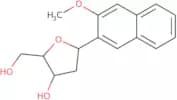
CAS:<p>dNaM is a metabolite of DNA that has been shown to be a potential biomarker for metabolic disorders and autoimmune diseases. dNaM levels are elevated in the blood of pregnant women, which may serve as a marker for preeclampsia. Elevated levels have also been observed in patients with type 2 diabetes, obesity, and cancer. Methylation plays an important role in dNaM metabolism. The enzyme DNA methyltransferase (DNMT) catalyzes the transfer of methyl groups from S-adenosyl methionine to cytosine residues on the DNA molecule. DNMT activity is increased by high body mass index (BMI), low vitamin B12 levels, and HIV infection. This enzyme is also inhibited by valproic acid and deprenyl, which may affect dNaM methylation status.</p>Formula:C16H18O4Purity:Min. 95%Molecular weight:274.31 g/mol5'-Tosyl-2'-deoxyadenosine
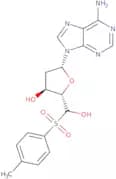
CAS:<p>5'-Tosyl-2'-deoxyadenosine is a synthetic, novel nucleoside that has antiviral and anticancer activity. It is an activator of DNA synthesis and inhibits protein synthesis by blocking the enzyme ribonucleotide reductase. 5'-Tosyl-2'-deoxyadenosine is not active against Mycobacterium tuberculosis or Mycobacterium avium complex due to the lack of phosphoramidite incorporation into DNA. 5'-Tosyl-2'-deoxyadenosine is a high purity, high quality product that can be used as an antiviral agent or anticancer drug.</p>Purity:Min. 95%L-Thymidine-5'-monophosphate sodium salt
<p>L-Thymidine-5'-monophosphate sodium salt is a synthetic nucleoside that is used as an antiviral agent. L-Thymidine-5'-monophosphate sodium salt has been shown to have high antiviral activity in vitro against human herpesvirus type 1, and in vivo against foot-and-mouth disease virus. The drug also inhibits the synthesis of DNA and RNA by inhibiting the enzyme ribonucleotide reductase. L-Thymidine-5'-monophosphate sodium salt acts as a phosphate donor for the phosphoramidite method of oligonucleotide synthesis. This novel nucleoside can be used in anticancer therapy due to its ability to inhibit DNA synthesis.</p>Purity:Min. 95%6-(Benzylamino)-3-methyl-1,2,3,4-tetrahydropyrimidine-2,4-dione
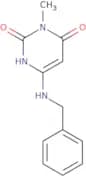
CAS:<p>6-(Benzylamino)-3-methyl-1,2,3,4-tetrahydropyrimidine-2,4-dione (BMPT) is a synthetic cytokinin that belongs to the group of 6-benzylaminopurines. BMPT is an inhibitor of cytokinin receptor kinases, as it is a benzyl uracil derivative. BMPT can be used as a building block for the synthesis of other compounds and has been used as an inhibitor of cell growth in various organisms.</p>Formula:C12H13N3O2Purity:Min. 95%Molecular weight:231.25 g/mol2',3'-Dithiouridine
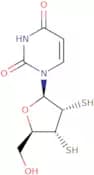
CAS:<p>2',3'-Dithiouridine is a triamide that is synthesized from uridine and chloroacetic acid. The dimeric form of this compound has been shown to be the most stable and yields are high. 2',3'-Dithiouridine can be prepared by the reaction of uridine with chloroacetyl chloride in DMSO at room temperature. The disulfide linkage between the two thiouridines is stereospecifically oriented in a cis conformation. The synthesis of 2',3'-dithiouridine from uridine and chloroacetic acid is achieved by an efficient procedure that gives high yields. This synthetic pathway also produces a crystalline, cyclic, sodium salt form of 2',3',4'-trihydroxypentane-1,5-dione that has not been previously reported.</p>Formula:C9H12N2O4S2Purity:Min. 95%Molecular weight:276.33 g/mol5'-O-Acetyllamivudine
CAS:<p>5'-O-Acetyllamivudine is an antiviral agent that has been shown to have antiretroviral activity against HIV-1 and influenza A virus. It is a nucleoside analog that inhibits the synthesis of viral DNA by competitively inhibiting the enzyme DNA polymerase. 5'-O-Acetyllamivudine is also used as an anticancer drug, which may be due to its ability to inhibit DNA replication in tumor cells.</p>Formula:C10H13N3O4SPurity:Min. 95%Molecular weight:271.29 g/mol2'-Cytidylic acid
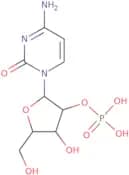
CAS:<p>2'-Cytidylic acid is a nucleoside monophosphate that plays an important role in various biological processes. It has been used in the development of heparin and enoxaparin, which are anticoagulants used to prevent blood clots. 2'-Cytidylic acid has also been found in chitin, xyloglucan, and psyllium, where it acts as a signaling molecule involved in apoptosis and cell differentiation. This compound has been shown to modulate the activity of kinases and ion channels, including potassium channels. However, excessive intake of 2'-Cytidylic acid can cause bleeding due to its anticoagulant properties. Additionally, there is some evidence suggesting that this compound may have anti-cancer effects through its ability to inhibit cell growth and induce apoptosis. Heparin sodium containing 2'-Cytidylic acid is widely used in clinical practice for its anticoagulant properties.</p>Formula:C9H14N3O8PPurity:Min. 95%Molecular weight:323.2 g/molBiotin-5-deoxycytidine-5'-triphosphate, lithium salt - 1 mM aqueous solution
<p>Biotin-5-deoxycytidine-5'-triphosphate, lithium salt - 1 mM aqueous solution is a modified nucleoside with antiviral activity. It is a phosphoramidite that can be used for the synthesis of DNA, RNA and other nucleic acids. Biotin-5-deoxycytidine-5'-triphosphate, lithium salt - 1 mM aqueous solution is an active ingredient in many research laboratories.</p>Formula:C22H35N6O15P3SPurity:Min. 95%Molecular weight:748.53 g/molCytidine 3',5'-bisphosphate sodium
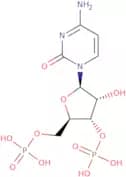
CAS:<p>Cytidine 3',5'-bisphosphate sodium is a phospholipid that is found in the cell membrane of gram-positive bacteria. Cytidine 3',5'-bisphosphate sodium has been shown to be produced by the enzyme phosphatidylcholine synthase, which converts phosphatidylethanolamine and cytidine 5'-monophosphate into phosphatidylcholine and cytidine 3',5'-bisphosphate. The presence of this compound in the cell membrane may be an indication of long-term survival and growth under laboratory conditions. It is also present in the ribosomal RNA of type strain organisms.</p>Formula:C9H15N3O11P2•NaxPurity:Min. 95%Molecular weight:403.18 g/molNonadecanoyl coenzyme A
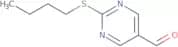
CAS:<p>Nonadecanoyl coenzyme A is a fatty acid that is produced by the bovine liver and has been shown to have anabolic effects. Nonadecanoyl CoA is involved in the synthesis of various lipids, such as phospholipids, cholesterol, and glycolipids. It also plays a role in biosynthesis of fatty acids and in regulating ATP production. Nonadecanoyl CoA is synthesized from acetate by the enzyme acetyl-CoA carboxylase (ACC). ACC catalyzes the conversion of acetyl-CoA to malonyl-CoA, which can then be used for fatty acid synthesis. Nonadecanoyl CoA has been found to play an important role in regulating mitochondrial function through its ability to activate long-chain acyl-CoAs desaturase (LCAD). LCAD converts long-chain acyl-CoAs into their corresponding dicarboxylic acids.</p>Formula:C40H72N7O17P3SPurity:Min. 95%Molecular weight:1,048.02 g/mol2-(Butylthio)pyrimidine-5-carbaldehyde
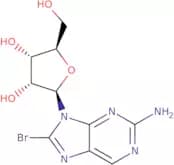
CAS:<p>2-(Butylthio)pyrimidine-5-carbaldehyde (BTPCA) is a neutralizing agent that inhibits the proliferation of cancer cells by binding to their cell membranes. It binds to the membrane and blocks the cyclic AMP receptor, thereby inhibiting the growth of cells. BTPCA has been shown to be effective in killing CD4+ T cells and may have therapeutic potential for autoimmune diseases. BTPCA also has diagnostic potential, as it can be used to detect epidermal growth factor receptors on cell membranes.</p>Formula:C9H12N2OSPurity:Min. 95%Molecular weight:196.27 g/mol2-Amino-8-bromo-9-(b-D-ribofuranosyl)purine
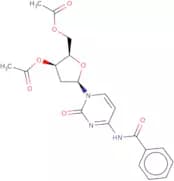
CAS:<p>2-Amino-8-bromo-9-(b-D-ribofuranosyl)purine is a modified nucleoside that inhibits viral DNA and RNA synthesis. It has antiviral properties against influenza, herpes simplex virus type 1, hepatitis B virus, and human immunodeficiency virus type 1. 2-Amino-8-bromo-9-(b-D-ribofuranosyl)purine has been shown to be effective in the treatment of cancers such as leukemia, lymphoma, and breast cancer. This drug is a novel nucleoside analogue that is used for cancer chemotherapy. 2-Amino 8 bromo 9 (b D ribofuranosyl) purine is not active against bacteria or fungi.</p>Formula:C10H12BrN5O4Purity:Min. 95%Molecular weight:346.14 g/mol3',5'-Di-O-acetyl-N4-benzoyl-2'-deoxycytidine
<p>3',5'-Di-O-acetyl-N4-benzoyl-2'-deoxycytidine is a novel, phosphoramidite monophosphate nucleoside. It is synthesized by reacting deoxydinucleosides with 3',5'-di-O-acetyl-N4-benzoyl-2'-deoxycytidine in the presence of a coupling agent. The product has been shown to be an excellent activator for DNA polymerases and may have antiviral effects. The chemical name of this compound is 2',3'-dideoxyadenosine 5' -triphosphate N4 -(beta, beta, beta, beta,-triethoxypropionyl) benzoyl ester.</p>Formula:C20H21N3O7Purity:Min. 95%Molecular weight:415.41 g/mol