Nucleosides
Nucleosides are fundamental building blocks of nucleic acids, composed of a nitrogenous base attached to a sugar molecule. In this section, you can find a wide variety of nucleosides essential for research in molecular biology, biochemistry, and pharmacology. These compounds play crucial roles in the synthesis of DNA and RNA, and are also vital in various metabolic processes. Nucleosides are used in studying genetic material, developing antiviral and anticancer therapies, and understanding cellular mechanisms. At CymitQuimica, we provide high-quality nucleosides to support your research and development needs, ensuring purity and reliability for your experimental applications.
Found 3567 products of "Nucleosides"
Sort by
Purity (%)
0
100
|
0
|
50
|
90
|
95
|
100
5-Bromo-2'-deoxyuridine 5'-diphosphate sodium salt - 10mM aqueous solution
<p>5-Bromo-2'-deoxyuridine 5'-diphosphate sodium salt - 10mM aqueous solution is a monophosphate nucleoside and an antiviral agent that inhibits viral DNA synthesis by inhibiting the activity of ribonucleotide reductase. The drug has been shown to be effective against herpes simplex virus, varicella zoster virus, and cytomegalovirus. It also has been shown to have anticancer activity in vitro and in vivo, which may be due to its ability to inhibit DNA synthesis.</p>Formula:C9H13N2O11P2BPurity:Min. 95%Molecular weight:397.96 g/mol4-Amino-3-benzyl-1H-pyrazolo[3,4-d]pyrimidine 1-b-D-ribofuranosyl 5'-triphosphate
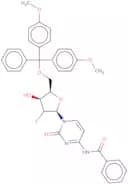
CAS:<p>4-Amino-3-benzyl-1H-pyrazolo[3,4-d]pyrimidine 1bDribofuranosyl 5'-triphosphate is a novel nucleoside analog that has been shown to have antiviral and anticancer activities. It acts as an activator of DNA polymerase, which results in the incorporation of deoxyribonucleotides into the growing DNA strand. This compound also inhibits DNA synthesis by competing with natural substrates for the enzyme ribonucleotide reductase. 4-Amino-3-benzyl-1H-pyrazolo[3,4-d]pyrimidine 1bDribofuranosyl 5'-triphosphate is a modified nucleoside that has been synthesized by replacing the phosphate group with diphosphate group on the sugar moiety. The chemical name for this compound is 4-(2'-deoxy-β</p>Formula:C17H22N5O13P3Purity:Min. 95%Molecular weight:597.3 g/molN4-Benzoyl-1-(2'-deoxy-5'-O-DMT-2'-fluoro-b-D-arabinofuranosyl)cytosine
<p>N4-Benzoyl-1-(2'-deoxy-5'-O-DMT-2'-fluoro-b-D-arabinofuranosyl)cytosine is an antiviral compound that inhibits the synthesis of viral RNA. This nucleoside analog is a monophosphate and diphosphate inhibitor of ribonucleotide reductase, which is required for DNA and RNA synthesis. N4-Benzoylcytosine has also been shown to be cytotoxic against tumor cells in vitro and in vivo, making it a potential anticancer drug. It was synthesized as part of a novel series of compounds that have been shown to inhibit the growth of bacterial cultures, including Mycobacterium tuberculosis.</p>Formula:C37H34FN3O7Purity:Min. 95%Molecular weight:651.7 g/mol2'-Deoxy-2'-fluoro-5-methylcytidine 5'-monophosphate
<p>2'-Deoxy-2'-fluoro-5-methylcytidine 5'-monophosphate is a synthetic nucleoside analog with antiviral and anticancer activity. It is an analogue of cytidine, which is a component of DNA and RNA. 2'-Deoxy-2'-fluoro-5-methylcytidine 5'-monophosphate inhibits the synthesis of DNA by inhibiting the enzyme DNA polymerase in virus replication, which blocks the synthesis of viral proteins. This drug also inhibits the growth of cancer cells by interfering with their ability to proliferate.</p>Purity:Min. 95%2'-Deoxy-2'-fluoro-2-methoxy-b-D-arabinoadenosine
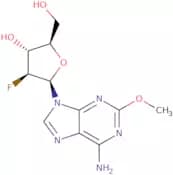
CAS:<p>2'-Deoxy-2'-fluoro-2-methoxy-b-D-arabinoadenosine (FMA) is an antiviral nucleoside that has been shown to inhibit the growth of human T lymphocytes, human hepatoma cells and mouse lymphoma L5178Y cells. It also inhibits the replication of HIV in vitro and has been shown to be effective against other viruses such as herpes simplex virus type 1 and 2, cytomegalovirus, Epstein Barr virus, varicella zoster virus and vaccinia. FMA is a phosphoramidite compound that can be used in DNA synthesis. It is also a monophosphate analog of arabinoadenosine that can be used as an activator of deoxyribonucleosides. This novel compound can be modified to synthesize diphosphates or phosphoramidites.</p>Formula:C11H14FN5O4Purity:Min. 95%Molecular weight:299.26 g/mol5'-O-DMT-N2-Dimethylformamid-2'-deoxy-2'-fluoroguanosine
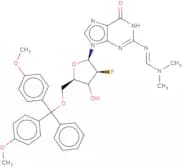
<p>5'-O-DMT-N2-Dimethylformamid-2'-deoxy-2'-fluoroguanosine is a novel nucleotide analog with antiviral and anticancer properties. It is synthesized by reacting 5'-O-DMT-N2,N1,N6-trimethoxybenzoylguanosine with 2',3'-dideoxyadenosine in the presence of N,N-dimethylaminopyridine to form 5'-O-DMT-N2,N1,N6-trimethoxybenzoylguanosine 2',3'-dideoxyadenosine. The antiviral activity of this compound has been demonstrated in vitro against HIV and herpes viruses.<br>5'-O-DMT-N2,N1,N6 -trimethoxybenzoylguanosine 2',3' -dideoxyadenosine also</p>Formula:C34H35FN6O6Purity:Min. 95%Molecular weight:642.68 g/mol2-Deoxy-3,5-di-O-toluoyl-a-D-ribofuranosyl cyanide
<p>2-Deoxy-3,5-di-O-toluoyl-a-D-ribofuranosyl cyanide is a novel anticancer agent that has been shown to have potent antiviral and antiproliferative properties. It is a phosphoramidite monophosphate with a CAS number of 313214-62-0. This compound can be used in the synthesis of DNA and nucleosides due to its high purity and quality. 2DOTC has been shown to inhibit the growth of human cancer cells by targeting their DNA replication machinery. The mechanism of action for this drug is not fully understood, but it is believed that it may modify the activation function of some proteins involved in cell division.</p>Purity:Min. 95%2'-O-tert-Butyldimethylsilyl-5'-O-trityluridine
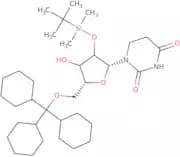
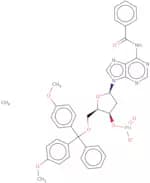
CAS:<p>2'-O-tert-Butyldimethylsilyl-5'-O-trityluridine is a synthetic nucleoside that is used in the synthesis of DNA, RNA and other nucleosides. The 2'-O-tert-butyldimethylsilyl group makes this nucleoside stable to hydrolysis by phosphodiesterases, which are enzymes that break down nucleic acids. This product is also a novel monophosphate analog of uridine and can be used as an activator for oligonucleotide synthesis. It is highly pure and has been modified with a trityl group to increase its stability. The CAS number for this product is 117136-35-3.</p>Formula:C34H40N2O6SiPurity:Min. 95%Molecular weight:600.78 g/molN6-Benzoyl-2'-deoxy-5-O-DMT-adenosine 3'-phosphonate triethylammonium salt
CAS:<p>N6-Benzoyl-2'-deoxy-5-O-DMT-adenosine 3'-phosphonate triethylammonium salt is a potent antiviral agent that has been shown to inhibit the replication of DNA. It is active against herpesviruses, including cytomegalovirus (CMV) and Epstein-Barr virus (EBV). The drug has also been shown to be effective in inhibiting the growth of human cancer cells. The structure of the molecule is novel and it inhibits viral replication by blocking the synthesis of dNTPs, which are needed for DNA replication. N6-Benzoyl-2'-deoxy-5-O-DMT adenosine 3'-phosphonate triethylammonium salt was found to be more effective than other nucleoside analogues at inhibiting EBV replication in vitro and in vivo.</p>Formula:C38H35N5O8P·C6H16NPurity:Min. 95%Molecular weight:822.89 g/mol2'-Deoxy-a-uridine
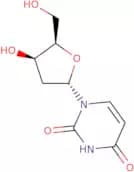
CAS:<p>2'-Deoxy-a-uridine is a nucleoside that is used in the synthesis of DNA. It is one of the building blocks for the synthesis of RNA. 2'-Deoxy-a-uridine is an activator, which can phosphoramidate DNA and activate it to form new strands. This product can also be used as an antiviral agent and antineoplastic agent due to its inhibition of viral replication and cancer cell proliferation. It has been shown to bind to double-stranded DNA by intercalation, thereby preventing the strand from uncoiling and exposing a single strand for further binding by other agents. This product can also inhibit cell growth by inhibiting protein synthesis. 2'-Deoxy-a-uridine has been shown to have anticancer properties, including cytotoxic effects on leukemia cells in culture, as well as inducing apoptosis in tumor cells with low levels of p53 expression.<br>2'-Deoxy-a-uridine</p>Formula:C9H12N2O5Purity:Min. 95%Color and Shape:Off-white solid.Molecular weight:228.21 g/mol2'-Deoxy-5'-O-DMT-5-iodouridine 3'-CE phosphoramidite
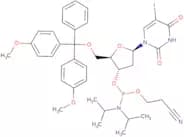
CAS:<p>2'-Deoxy-5'-O-DMT-5-iodouridine 3'-CE phosphoramidite is a synthetic nucleoside that has shown anticancer and antiviral properties. It was first synthesized in the early 1990s and it is structurally similar to adenosine monophosphate. The synthesis of this compound starts with 5-iodo-2'-deoxyuridine, which reacts with the 5'-O-dimethoxytrityl group to form 2'-deoxy-5'-O-DMT-5-iodouridine 3'-CE phosphoramidite. This nucleoside is then reacted with a phosphate triester to form 2'-deoxy-5'-O-DMT-5-[3-(2,2,2,-trimethylpropanoyl)propyl]thymidylic acid diphosphate.</p>Formula:C39H46IN4O8PPurity:Min. 95%Color and Shape:White To Off-White SolidMolecular weight:856.7 g/mol5-Chloro-5'-deoxy-5'-iodo-2',3'-O-isopropylideneuridine
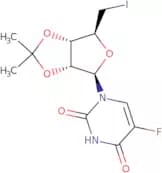
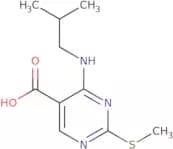
CAS:<p>5-Chloro-5'-deoxy-5'-iodo-2',3'-O-isopropylideneuridine is a synthetic nucleoside analogue. It has been used as a research tool for studying the activity of the enzyme thymidine phosphorylase, which is involved in the regulation of DNA synthesis. 5-Chloro-5'-deoxy-5'-iodo-2',3'-O-isopropylideneuridine was synthesized by condensing 1,6-dichlorobenzene with 2,3,4,6-tetraiodopyrimidine in the presence of potassium carbonate and zinc chloride. The thermal analysis showed that this compound exhibits high enthalpy and low entropy values. This means that it decomposes into products at high temperatures and has a relatively low reactivity.</p>Formula:C12H14ClIN2O5Purity:Min. 95%Molecular weight:428.61 g/mol4-(Isobutylamino)-2-(Methylthio)Pyrimidine-5-Carboxylic Acid
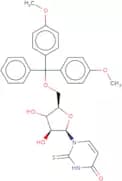
CAS:<p>4-(Isobutylamino)-2-(Methylthio)Pyrimidine-5-Carboxylic Acid is a nucleoside analogue that inhibits viral replication by acting as an antiviral agent. It blocks the enzymatic activity of DNA polymerases, including reverse transcriptase, and prevents the synthesis of new viral DNA. 4-(Isobutylamino)-2-(Methylthio)Pyrimidine-5-Carboxylic Acid is also an activator for HIV integrase, which is an enzyme that integrates HIV DNA into the host genome. This compound has been shown to be effective against HIV and herpes viruses in vitro.</p>Formula:C10H15N3O2SPurity:Min. 95%Molecular weight:241.31 g/mol5'-O-DMT-2-thiouridine
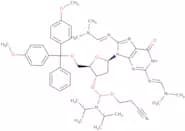
<p>5'-O-DMT-2-thiouridine is a synthetic nucleoside that can be used as an antiviral and anticancer drug. It is the first novel nucleoside with a ribonucleoside moiety, which was synthesized by modifying uridine with 2,4,6-trimethoxybenzoyl chloride. The synthesis of 5'-O-DMT-2-thiouridine has been patented in China (CN101115587B) and the United States (US8483384).</p>Formula:C30H30N2O7SPurity:Min. 95%Molecular weight:562.63 g/mol2'-Deoxy-N2,N8-di-DMF-5'-O-DMT-guanosine 3'-CE phosphoramidite
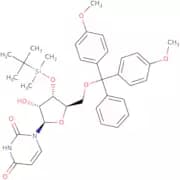
CAS:<p>2'-Deoxy-N2,N8-di-DMF-5'-O-DMT-guanosine 3'-CE phosphoramidite is a novel nucleoside that has shown anticancer activity. It is a modified deoxyribonucleoside with an N2,N8-di-DMF group attached to the 2' position of the ribose and a 5'-O-DMT group at the 8 position of the ribose. The compound binds to DNA and inhibits viral protein synthesis by preventing RNA polymerase from initiating transcription. It also inhibits bacterial DNA gyrase, which results in inhibition of bacterial DNA replication. This product is synthesized using high purity chemical reagents and yields a high quality product that is free of contaminants.</p>Formula:C46H59N10O7PPurity:Min. 95%Molecular weight:895.02 g/mol3'-O-tert-Butyldimethylsilyl-5'-O-DMT-uridine
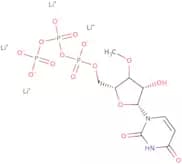
CAS:<p>3'-O-tert-Butyldimethylsilyl-5'-O-DMT-uridine is a nucleoside that is modified with a tert-butyldimethylsilyl group at the 3' position. It is used as an activator for synthesizing oligonucleotides, ribonucleosides, and phosphoramidites. 3'-O-tert-Butyldimethylsilyl-5'-O-DMT-uridine has antiviral and anticancer properties. This product can be used in research applications such as the synthesis of novel DNA and RNA molecules, as well as for diagnostic purposes such as detecting viral infections.</p>Formula:C36H44N2O8SiPurity:Min. 95%Molecular weight:660.83 g/mol3'-O-Methyluridine-5'-triphosphate lithium salt - 100 mM in water
CAS:<p>3'-O-Methyluridine-5'-triphosphate lithium salt is a nucleoside that inhibits viral replication and tumor growth. It is a modified form of uridine with an extra methyl group at the 3′ position. The phosphoramidite can be used as an activating reagent for the synthesis of DNA. 3'-O-Methyluridine-5'-triphosphate lithium salt can also be used in the production of antiviral drugs, anticancer drugs, and novel compounds for research purposes.</p>Formula:C10H13N2O15P3Li4Purity:Min. 98 Area-%Color and Shape:Clear LiquidMolecular weight:521.9 g/mol8-(4-Chlorophenylthio)guanosine 3',5'-cyclic monophosphate sodium salt
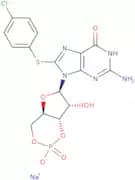
CAS:<p>8-(4-Chlorophenylthio)guanosine 3',5'-cyclic monophosphate sodium salt (8CPTcGMP) is a fluorescent compound that is used to study the localization of proteins in living cells. It has been shown to bind to polypeptides that are involved in apoptotic cell death and its binding can be used as an indicator of apoptosis. 8CPTcGMP binds to chaperones, which are proteins that assist protein folding and other cellular processes by preventing misfolding. Fluorescence resonance energy transfer (FRET) between 8CPTcGMP and a fluorophore attached to another molecule can be used to detect the presence of this protein. The genetic code for 8CPTcGMP is ACACTCA.</p>Formula:C16H14ClN5O7PS·NaPurity:Min. 95%Molecular weight:509.79 g/molCholesteryl-TEG Phosphoramidite
CAS:<p>Cholesteryl-TEG Phosphoramidite is a phosphoramidite that is used in the synthesis of DNA. It is also known as cholesterol-1,2,3,4,5-pentaethyleneglutamate phosphoramidite. Cholesteryl-TEG Phosphoramidite has been shown to have antiviral and anticancer activity. The novel properties of this compound make it an interesting candidate for further study. This chemical is synthesized by reacting cholesteryl chloride with triethylene glycol monophosphate. It is also a modified nucleoside that contains a deoxyribonucleoside and an activated ribonucleoside.</p>Formula:C70H106N3O11PPurity:Min. 95%Molecular weight:1,196.6 g/molN6-Benzoyl-2'-deoxy-5'-O-DMT-adenosine 3'-succinyl CPG 1400 Å
<p>N6-Benzoyl-2'-deoxy-5'-O-DMT-adenosine 3'-succinyl CPG 1400 Å is a nucleoside that has antiviral activity. It is the monophosphate, ribonucleoside, and diphosphate analog of adenosine. The novel analog N6-benzoyl-2'-deoxy-5'-O-DMT-adenosine 3'-succinyl CPG 1400 Å has been shown to be an effective anticancer drug and also to activate gene expression in cultured cells. This nucleoside can be used in the synthesis of DNA, as well as phosphoramidites for chemical synthesis of deoxyribonucleic acid (DNA).</p>Purity:Min. 95%Color and Shape:Powder

![4-Amino-3-benzyl-1H-pyrazolo[3,4-d]pyrimidine 1-b-D-ribofuranosyl 5'-triphosphate](/_next/image/?url=https%3A%2Fstatic.cymitquimica.com%2Fproducts%2F3D%2Fthumb-webp%2FNA16508.webp&w=3840&q=75)