Nucleosides
Nucleosides are fundamental building blocks of nucleic acids, composed of a nitrogenous base attached to a sugar molecule. In this section, you can find a wide variety of nucleosides essential for research in molecular biology, biochemistry, and pharmacology. These compounds play crucial roles in the synthesis of DNA and RNA, and are also vital in various metabolic processes. Nucleosides are used in studying genetic material, developing antiviral and anticancer therapies, and understanding cellular mechanisms. At CymitQuimica, we provide high-quality nucleosides to support your research and development needs, ensuring purity and reliability for your experimental applications.
Found 3568 products of "Nucleosides"
Sort by
Purity (%)
0
100
|
0
|
50
|
90
|
95
|
100
5-O-DMT-thymidine 3'-H phosphonate triethylammonium
<p>5-O-DMT-thymidine 3'-H phosphonate triethylammonium is a novel nucleoside analogue with anticancer activity. The monophosphate form of 5-O-DMT-thymidine 3'-H phosphonate triethylammonium is an activator of DNA, RNA, and protein synthesis in vitro. 5-O-DMT-thymidine 3'-H phosphonate triethylammonium has been shown to be active against herpes simplex virus type 1 and 2 and HIV type 1 in vitro.</p>Formula:C37H48N3O9PPurity:Min. 97 Area-%Color and Shape:White/Off-White SolidMolecular weight:709.77 g/molBiotinTEG Phosphoramidite
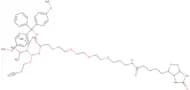
CAS:<p>BiotinTEG Phosphoramidite is a medicinal compound that acts as an inhibitor of cancer cell growth. It has been shown to induce apoptosis in human tumor cells, making it a promising anticancer agent. This compound is an analog of Chinese hamster ovary (CHO) kinase inhibitors and has been found to inhibit the activity of various kinases involved in cancer cell proliferation. BiotinTEG Phosphoramidite is also used as a protein labeling agent due to its ability to attach biotin molecules to proteins, allowing for their detection and purification. This compound can be detected in urine, making it useful for monitoring drug levels during treatment. Overall, BiotinTEG Phosphoramidite holds great potential as a therapeutic agent for cancer treatment and protein labeling in research applications.</p>Formula:C52H76N5O11PSPurity:Min. 95%Molecular weight:1,010.2 g/mol1-(β-D-2-Deoxyribofuranosyl)-3-nitropyrrole
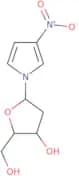
CAS:<p>1-(β-D-2-Deoxyribofuranosyl)-3-nitropyrrole is a nitrofuranose analog that is used in the synthesis of nucleic acids. It has been shown to be effective as a template for DNA sequencing and as a probe for magnetic resonance spectroscopy. 1-(β-D-2-Deoxyribofuranosyl)-3-nitropyrrole inhibits the polymerase chain reaction by binding to the primer and causing misincorporation at mismatched sites, leading to reduced amplification of the target sequence. This compound also has antiviral properties and can prevent the replication of HIV and other viruses by destabilizing their dna duplexes.</p>Formula:C9H12N2O5Purity:Min. 95%Molecular weight:228.2 g/mol2'-Methyl-guanosine-(iBu)-succinyl-CPG; 500 Å (RNA)
<p>2'-Methyl-guanosine-(iBu)-succinyl-CPG is a modified nucleoside with antiviral and anticancer properties. It is synthesized by the condensation of 2'-methyl-guanosine and succinic anhydride in the presence of tetrazole. The compound is a phosphoramidite, which is used as a building block for DNA synthesis.</p>Purity:Min. 95%2'-O-Methyluridine-5'-triphosphate lithium salt - 100mM aqueous solution
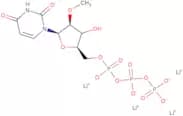
CAS:<p>2'-O-Methyluridine-5'-triphosphate lithium salt is a modified ribonucleoside which is used as an activator for nucleic acid synthesis. It has antiviral properties and can be used to inhibit the replication of DNA and RNA viruses. 2'-O-Methyluridine-5'-triphosphate lithium salt inhibits the viral polymerase, preventing the transcription of viral genetic material. This product is also considered novel because it is not found in nature and has not been previously described in the literature.</p>Formula:C10H17N3O15P3·xLiPurity:Min. 95%Molecular weight:512.17 g/mol7-Chloro-5-methyl-[1,2,4]triazolo[1,5-a]pyrimidine
CAS:<p>7-Chloro-5-methyl-[1,2,4]triazolo[1,5-a]pyrimidine is a palladium catalyst that catalyzes the cross-coupling reaction of aryl bromides and organoboronic acids with good efficiency. This method is an efficient and general procedure for the synthesis of various substituted pyrimidines. The cross-coupling reaction can be achieved in high yields without the need for purification of intermediates.</p>Formula:C6H5ClN4Purity:Min. 95%Molecular weight:168.58 g/mol2',3'-O-Isopropylidene-adenosine-5-N-methylcarbamide
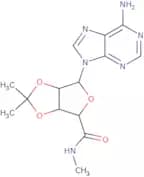
CAS:<p>2',3'-O-Isopropylidene-adenosine-5-N-methylcarbamide is an activator that has anticancer and antiviral properties. It is a synthetic nucleoside, which is a modified form of the natural nucleosides adenosine and cytidine. 2',3'-O-Isopropylidene-adenosine-5-N-methylcarbamide inhibits the replication of DNA by binding to the deoxyribonucleoside triphosphate (dNTP) in DNA synthesis. The drug also inhibits viral RNA transcription by blocking the action of diphosphate reductase, an enzyme required for the conversion of ribonucleosides to ribonucleotides. 2',3'-O-Isopropylidene-adenosine-5-N-methylcarbamide has shown antiproliferative effects on human cancer cells in vitro and may be effective against leukemia and lymph</p>Formula:C14H18N6O4Purity:Min. 95%Molecular weight:334.33 g/molP1,P5-Di(adenosine-5')pentaphosphate trilithium
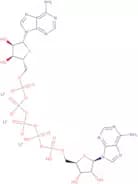
CAS:<p>P1,P5-Di(adenosine-5')pentaphosphate trilithium salt is a diphosphate nucleoside that has antiviral and anticancer activities. It also inhibits DNA synthesis by competitively inhibiting the incorporation of dATP into DNA. This product is an activator of phosphoramidite chemistry. P1,P5-Di(adenosine-5')pentaphosphate trilithium salt is a novel monophosphate nucleoside with modified phosphorus linkages in the sugar backbone and a high purity of > 98%.</p>Formula:C20H26N10O22P5Li3Purity:Min. 95%Color and Shape:PowderMolecular weight:934.17 g/molP3-(1-(2-Nitrophenyl)ethyl) adenosine 5'-triphosphate disodium salt
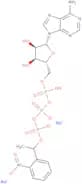
CAS:<p>P3-(1-(2-Nitrophenyl)ethyl) adenosine 5'-triphosphate disodium salt (P3-ANP-Na2) is an anticancer drug that belongs to the group of nucleosides. It is a phosphoramidate prodrug that is converted to adenosine 5'-triphosphate (ATP) by intracellular esterases. This prodrug has been shown to inhibit the growth of various types of cancer cells in vitro and in vivo, including leukemia and breast cancer cells. P3-ANP-Na2 binds to DNA by intercalation, inhibiting DNA synthesis and transcription. It also inhibits protein synthesis by inhibiting ribonucleotide reductase and deoxyribonucleotide reductase, which are enzymes responsible for synthesizing DNA precursors from RNA precursors.</p>Formula:C18H21N6Na2O15P3Purity:Min. 95%Color and Shape:PowderMolecular weight:700.29 g/mol2',5'-Dideoxy-8,5'-cycloadenosine
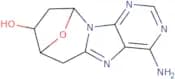
CAS:<p>2',5'-Dideoxy-8,5'-cycloadenosine is an anticancer nucleoside. It is a modified deoxyribonucleoside that contains a 2'-deoxyribose sugar with a ribose sugar at the 5' position. This product has been shown to be active against DNA and RNA viruses in the lab. It also has antiviral properties and can inhibit the synthesis of DNA, RNA, or both. The chemical structure of this product is novel and has not been found in nature.</p>Formula:C10H11N5O2Purity:Min. 95%Molecular weight:233.23 g/mol5'-Deoxy-5-fluoro-N-[(3-methylbutoxy)carbonyl]cytidine
CAS:<p>5'-Deoxy-5-fluoro-N-[(3-methylbutoxy)carbonyl]cytidine is a novel nucleoside phosphoramidite. It is synthesized by the reaction of 5'-deoxy-5-fluoro cytidine with 3-methylbutanol in the presence of an activator (e.g., tetrazole). The methyl group on the 3′ position of cytidine has been shown to improve antiviral activity, as well as DNA and RNA synthesis. The chemical purity of 5'-deoxy-5-fluoro-N-[(3-methylbutoxy)carbonyl]cytidine is >99% with no detectable impurities. This product is a white powder that is soluble in water and organic solvents.</p>Formula:C15H22FN3O6Purity:Min. 95%Molecular weight:359.35 g/mol5'-O-DMT-2,2'-anhydrouridine
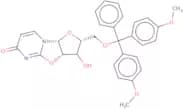
CAS:<p>5'-O-DMT-2,2'-anhydrouridine is a nucleoside that is an activator of RNA polymerase. This compound is novel and can be used for the synthesis of modified oligonucleotides and DNA. 5'-O-DMT-2,2'-anhydrouridine has anticancer properties and can be used in the treatment of cancer. 5'-O-DMT-2,2'-anhydrouridine has been shown to inhibit the growth of cancer cells by binding to DNA and inhibiting the production of RNA.</p>Formula:C30H28N2O7Purity:Min. 95%Molecular weight:528.55 g/molBiotin-16-uridine-5'-triphosphate, lithium salt - 1 mM aqueous solution
CAS:<p>Biotin-16-uridine-5'-triphosphate, lithium salt - 1 mM aqueous solution is a synthetic nucleotide that contains the natural nucleoside uridine and the modified nucleoside 5-biotin. It is an activator of DNA polymerase. Biotin-16-uridine-5'-triphosphate, lithium salt - 1 mM aqueous solution has antiviral properties as it inhibits HIV reverse transcriptase and human cytomegalovirus (HCMV) DNA polymerase. It also inhibits human telomerase activity by preventing telomeric DNA synthesis. The high purity of this product allows for its use in many different research applications.</p>Formula:C32H52N7O19P3S·xLiPurity:Min. 95%Molecular weight:963.78 g/mol3'-Azido-3'-deoxy-5-fluorocytidine
CAS:<p>3'-Azido-3'-deoxy-5-fluorocytidine is an activator with novel antiviral and anticancer properties. It is a high quality, modified nucleoside that can be used to synthesize deoxyribonucleosides and ribonucleosides. 3'-Azido-3'-deoxy-5-fluorocytidine has been shown to inhibit the growth of cancer cells in vitro and in vivo.</p>Purity:Min. 95%TFA-aa-dC
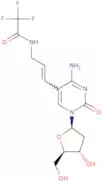
CAS:<p>TFA-aa-dC is a novel anti-cancer drug that has been shown to have both antiviral and anticancer activities. It is a modified phosphoramidite of 2'-deoxyadenosine 5'-triphosphate with a 3'-amino group (TFA-aa-dC) and an acetyl group at the 2' position. TFA-aa-dC blocks viral replication by inhibiting the activity of viral DNA polymerase, which is required for DNA synthesis. The compound also inhibits cell growth by blocking RNA synthesis and protein production, leading to cell death. TFA-aa-dC has shown efficacy in preclinical studies against cervical cancer and leukemia cells.</p>Formula:C14H17F3N4O5Purity:Min. 95%Molecular weight:378.3 g/molN4-Acetyl-5'-O-DMT-cytidine 3'-succinyl CPG 1000 Å (RNA)
<p>N4-Acetyl-5'-O-DMT-cytidine 3'-succinyl CPG 1000 Å (RNA) is a novel, high quality, high purity, synthetic nucleoside analogue. It has antiviral and anticancer properties.</p>Purity:Min. 95%2-Amino-2'-deoxy-N2,N6-bis(diisobutylaminomethylidene)-5'-O-DMT-adenosine 3'-CE phosphoramidite
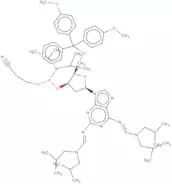
CAS:<p>2-Amino-2'-deoxy-N2,N6-bis(diisobutylaminomethylidene)-5'-O-DMT-adenosine 3'-CE phosphoramidite is a phosphoramidite that is used for the synthesis of nucleosides and nucleotides. The 2-Amino-2'-deoxy-N2,N6-bis(diisobutylaminomethylidene)-5'-O-DMT-adenosine 3'-CE phosphoramidite can be used in the synthesis of DNA, RNA, and other nucleic acids. It also has antiviral and anticancer properties.</p>Formula:C58H83N10O6PPurity:Min. 95%Molecular weight:1,047.32 g/mol3'-O-Azidomethyl 2'-deoxycytidine 5'-O-triphosphate sodium salt
<p>3'-O-Azidomethyl 2'-deoxycytidine 5'-O-triphosphate sodium salt is a modified nucleoside that inhibits the synthesis of DNA. It has been shown to be an effective antiviral agent and can be used to treat cancer. 3'-O-Azidomethyl 2'-deoxycytidine 5'-O-triphosphate sodium salt is synthesized by reacting cytidine monophosphate with sodium azide in the presence of a triphosphorylating reagent. <br>3'-O-Azidomethyl 2'-deoxycytidine 5'-O-triphosphate sodium salt also inhibits DNA polymerase, which prevents the synthesis of RNA and proteins. The phosphoramidites are commercially available, high quality, and have a purity greater than 99%. This product is not currently approved by the FDA for use in humans or animals.</p>Formula:C10H17N6O13P3·xNaPurity:Min. 95%Molecular weight:522.2 g/mol2’,3’-Bis-O-tert-butyldimethylsilyl-2-thiouridine
CAS:<p>2’,3’-Bis-O-tert-butyldimethylsilyl-2-thiouridine is a modified nucleoside composed of 2-thiouracil (2-thiopyrimidine), a modified uracil where the oxygen at the 2-position is replaced by sulfur. Possible applications as its use as an intermediate in the chemical synthesis of RNA oligonucleotides.</p>Formula:C21H40N2O5SSi2Purity:Min. 95%Color and Shape:PowderMolecular weight:488.79 g/mol6-Methylthioinosine-5’-triphosphate sodium salt - 10 mM aqueous solution
CAS:<p>6-Methylthioinosine-5’-triphosphate sodium salt - 10 mM aqueous solution is a synthetic, modified ribonucleoside that is an activator of the antiviral response. It has been shown to inhibit the replication of both DNA and RNA viruses in vitro. 6-Methylthioinosine-5’-triphosphate sodium salt - 10 mM aqueous solution is also used as a precursor in the synthesis of phosphoramidites. The CAS number for this product is 51464-82-5.</p>Formula:C11H17N4O13P3SPurity:Min. 95%Molecular weight:538.26 g/mol



![7-Chloro-5-methyl-[1,2,4]triazolo[1,5-a]pyrimidine](/_next/image/?url=https%3A%2Fstatic.cymitquimica.com%2Fproducts%2F3D%2Fthumb-webp%2FNC44309.webp&w=3840&q=75)
![5'-Deoxy-5-fluoro-N-[(3-methylbutoxy)carbonyl]cytidine](/_next/image/?url=https%3A%2Fstatic.cymitquimica.com%2Fproducts%2F3D%2Fthumb-webp%2FND16527.webp&w=3840&q=75)