Nucleosides
Found 3570 products of "Nucleosides"
3’,5’-Di-O-Benzoyl-2'-deoxy-2',2'-difluoro-5-methyluridine
CAS:A gemcitabine analogue
Formula:C24H20F2N2O7Purity:Min. 95%Color and Shape:PowderMolecular weight:486.42 g/molRef: 3D-ND01187
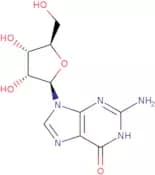
Discontinued productGuanosine hydrate
CAS:Blocks glutamatergic activity; neuroprotective
Formula:C10H13N5O5·xH2OPurity:Min. 98 Area-%Color and Shape:PowderMolecular weight:283.24 g/mol2'-Deoxy-5-propynyluridine
CAS:2'-Deoxy-5-propynyluridine is a nucleoside that is naturally synthesized in the body. It is an intermediate in the synthesis of pyrimidine nucleotides and has been shown to be useful for the treatment of cardiac arrhythmias. 2'-Deoxy-5-propynyluridine has also been found to have a stabilizing effect on RNA, enhancing its biological relevance. This compound can be used as a fluorescent probe and can be used to study transcriptional regulation mechanisms.
Formula:C12H14N2O5Purity:Min. 95%Color and Shape:PowderMolecular weight:266.26 g/molRef: 3D-ND02838
Discontinued productN6-Benzoyl-5'-O-trityl-adenosine
N6-Benzoyl-5'-O-trityl-adenosine is a novel nucleoside, which has been synthesized to be a phosphoramidite. It is an anticancer drug that inhibits the growth of tumor cells by competitively inhibiting the synthesis of DNA and RNA. In addition, N6-Benzoyl-5'-O-trityl-adenosine has antiviral properties, which may be due to its ability to inhibit viral DNA polymerase. This compound also shows high purity and quality.
Formula:C36H31N5O5Purity:Min. 95%Molecular weight:613.66 g/mol2'-Deoxycytidine
CAS:2'-Deoxycytidine is a deoxyribonucleotide that is used in the synthesis of DNA. It has been shown to have potent antitumor activity against solid tumours and may be useful for the treatment of leukemic mice. This compound has been shown to inhibit the kinase activity of IL-2 receptor and Toll-like receptor, which are proteins that regulate the immune response. 2'-Deoxycytidine also inhibits DNA polymerase activity and thermal expansion, which may make it a good candidate as an anticancer drug.
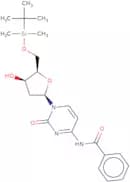
Formula:C9H13N3O4Purity:Min. 99 Area-%Color and Shape:PowderMolecular weight:227.22 g/molN4-Benzoyl-5'-O-tert-butyldimethylsilyl-2'-deoxycytidine
CAS:N4-Benzoyl-5'-O-tert-butyldimethylsilyl-2'-deoxycytidine is a nucleoside monophosphate with antiviral and anticancer activity. It is used as an activator for the synthesis of oligodeoxynucleotides and may be used in the treatment of herpes zoster, AIDS, or cancer. N4-Benzoyl-5'-O-tert-butyldimethylsilyl-2'-deoxycytidine has a novel structure that is modified from natural nucleosides and has been shown to have high purity.
Purity:Min. 97.0 Area-%Color and Shape:PowderMolecular weight:445.60 g/molRef: 3D-NB08718
Discontinued product2-Amino-6-chloro-9-(2’-O-propargyl-b-D-ribofuranosyl)purine
CAS:2-Amino-6-chloro-9-(2'O-propargyl-bDribofuranosyl)purine is a modified nucleoside that has antiviral and anticancer properties. It has been shown to inhibit DNA synthesis in the presence of deoxyribonucleosides, diphosphate, and Nucleosides. The compound was also found to inhibit the replication of herpes simplex virus type 1 (HSV-1) by interfering with viral DNA polymerase and causing chain termination. 2-Amino-6-chloro-9-(2'O-propargyl-bDribofuranosyl)purine is a novel compound that can be used as a high quality pharmaceutical ingredient for cancer treatments.
Purity:Min. 95%N6-Benzoyl-2'-O-methyladenosine
CAS:N6-Benzoyl-2'-O-methyladenosine is a novel nucleoside that has been synthesized by chemical modification of adenosine. It is an activator of the ribonucleotide reductase enzyme and is currently being studied as an anticancer and antiviral agent. N6-Benzoyl-2'-O-methyladenosine has shown antitumor activity against human breast cancer cells in vitro and in vivo, inhibiting tumor growth. It also inhibits the replication of herpes simplex virus type 1 (HSV1) and type 2 (HSV2).
Formula:C18H19N5O5Molecular weight:385.37 g/mol6-Amino-1-(2',3',5'-tri-O-benzoyl-b-D-ribofuranosyl)-4-methoxy-1H-pyrazolo[3,4-d]pyrimidine
6-Amino-1-(2',3',5'-tri-O-benzoyl-b-D-ribofuranosyl)-4-methoxy-1H-pyrazolo[3,4-d]pyrimidine is a deoxyribonucleoside with antiviral activity. It was synthesized by the reaction of 2,3,5'-triacetylpyrazolo[3,4-d]pyrimidinium triflate and bromoacetaldehyde diethyl acetal. The compound has been shown to be an activator of DNA and to inhibit cancer cell growth in vitro. 6ABA is a novel nucleoside that can be used as a base for further modification.
Purity:Min. 95%N6-Benzoyl-3'-O-benzyl-5'-O-DMT-adenosine
CAS:N6-Benzoyl-3'-O-benzyl-5'-O-DMT-adenosine is a modified nucleoside that is synthesized by the phosphoramidite method. It has antiviral activity and can be used as an anticancer drug. N6-Benzoyl-3'-O-benzyl-5'-O-DMT-adenosine has been shown to inhibit the growth of cancer cells in vitro. The compound also inhibits DNA replication, RNA synthesis, and protein synthesis.
Formula:C45H41N5O7Purity:Min. 95%Molecular weight:763.84 g/mol3'-O-Acetyl-5'-O-DMT-2'-O-methyl-5-naphthyl-b-methylaminocarbonyl-uridine
CAS:3'-O-Acetyl-5'-O-DMT-2'-O-methyl-5-naphthyl-b-methylaminocarbonyl-uridine is a modified nucleoside that has antiviral and anticancer activity. 3'-O-Acetyl-5'-O-DMT-2'-O-methyl-5-naphthyl-b -methylaminocarbonyluridine is synthesized by the direct condensation of 5-(3',4',5',6'-tetraacetyl)aminoimidazole with 2-(dimethylamino)ethanol in the presence of sodium acetate. The product is then purified by high performance liquid chromatography (HPLC). This compound has been shown to inhibit HIV replication and induce apoptosis in cancer cells.
Purity:Min. 95%Cytidine 5'-triphosphate disodium salt
CAS:Please enquire for more information about Cytidine 5'-triphosphate disodium salt including the price, delivery time and more detailed product information at the technical inquiry form on this page
Formula:C9H14N3Na2O14P3Purity:Min. 97 Area-%Molecular weight:527.12 g/mol4-Amino-7-(β-D-ribofuranosyl)-7H-pyrrolo[2.3-d]pyrimidine-5-carboxylic acid
CAS:4-Amino-7-(β-D-ribofuranosyl)-7H-pyrrolo[2.3-d]pyrimidine-5-carboxylic acid (4AP) is a bioactive molecule that is used for the prophylaxis and/or treatment of viruses, such as influenza virus. It is also found in plants and is an intermediate metabolite in lysine conjugation reactions. 4AP may be used to inhibit viral infections by blocking viral protein synthesis at the ribosome level, inhibiting viral RNA polymerase, or by interfering with the assembly of virion components. 4AP has been shown to have antihypertensive properties and may have other therapeutic effects on diabetes and obesity.
Formula:C12H14N4O6Purity:Min. 95%Color and Shape:PowderMolecular weight:310.26 g/mol5’-O-DMT-2’-O-methoxyethyl-5-methyluridine
5’-O-DMT-2’-O-methoxyethyl-5-methyluridine is a novel nucleoside analog with anticancer activity. It is a monophosphate of 5'-O-DMT-2'-O-methoxyethyluridine, which has been shown to inhibit the growth of tumor cells by phosphorylation and activation of DNA polymerase β. 5’-O-DMT-2’-O-methoxyethyluridine also inhibits replication of influenza virus in vitro, and has antiviral properties against herpes simplex virus type 1 (HSV1).
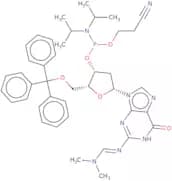
Purity:Min. 95%2'-Deoxy-N2-DMF-5'-O-tritylguanosine 3'-CE phosphoramidite
2'-Deoxy-N2-DMF-5'-O-tritylguanosine 3'-CE phosphoramidite is a novel phosphoramidite nucleoside of the antiviral agent N2-DMF-5'-O-tritylguanosine, which has been modified to contain a deoxyribonucleoside at the 5' position. The phosphoramidite nucleotide is synthesized by reacting 2'-deoxyadenosine with DMF and 2,4,6-trichlorobenzoyl chloride in an organic solvent such as dichloromethane. It is then purified by recrystallization or chromatography to remove impurities such as DMF, 2,4,6-trichlorobenzoyl chloride, and other non-reacted compounds. This product can be used in the synthesis of oligonucleotides for use in DNA sequencing.
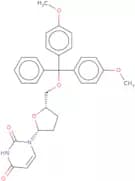
Formula:C41H49N8O5PPurity:Min. 95%Molecular weight:764.87 g/mol2',3'-Dideoxy-5'-O-DMT-uridine
CAS:2',3'-Dideoxy-5'-O-DMT-uridine is a nucleoside for use in research applications
Formula:C30H30N4O6Purity:Min. 95%Color and Shape:White To Off-White SolidMolecular weight:514.58 g/molRef: 3D-ND08411
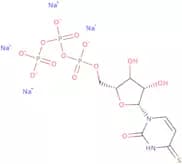
Discontinued product4-Thiouridine-5'-triphosphate sodium salt - aqueous solution
CAS:4-Thiouridine-5'-triphosphate sodium salt - aqueous solution (4TUTP) is an analog of uridine and can be used as a template for the synthesis of single-stranded DNA. 4TUTP has been shown to have a high affinity for dsDNA, allowing it to form a ternary complex with DNA polymerase and single-stranded DNA template. 4TUTP can also be used to prepare samples for profiling experiments or other molecular studies. It is reactive, so should be handled with caution in order to avoid unwanted crosslinking. 4TUTP may also be used in chloroplast research.Formula:C9H15N2O14P3S·xNaPurity:Min. 95 Area-%Color and Shape:Clear LiquidMolecular weight:500.20 g/molRef: 3D-NT34810
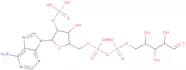
Discontinued productAdenosine-5'-O-diphosphoribose phosphate
CAS:Potential metabolite of NADP+
Formula:C15H24N5O17P3Purity:Min. 95 Area-%Color and Shape:PowderMolecular weight:639.3 g/molRef: 3D-NA63573
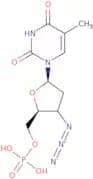
Discontinued product3'-Azido-3'-deoxythymidine-5'-monophosphate lithium salt - 100 mM aqueous solution
CAS:3'-Azido-3'-deoxythymidine-5'-monophosphate lithium salt - 100 mM aqueous solution is an azidothymidine (AZT) analog that inhibits HIV replication. AZT is a nucleoside reverse transcriptase inhibitor that blocks the progression of HIV by preventing the virus from duplicating its DNA. This product has been shown to be effective in treating AIDS and related diseases, as well as other infectious diseases such as hepatitis B and C. 3'-Azido-3'-deoxythymidine-5'-monophosphate lithium salt - 100 mM aqueous solution is often used in combination with other drugs to increase their efficacy. It has also been shown to be an effective chemotherapeutic agent against cancer cells.
Formula:C10H14N5O7P·xLiPurity:Min. 95%Molecular weight:347.22 g/molN6-Benzoyl-3'-O-tert-butyldimethylsilyl-2'-O-(2-methoxyethyl)adenosine
N6-Benzoyl-3'-O-tert-butyldimethylsilyl-2'-O-(2-methoxyethyl)adenosine is a modified nucleoside with antiviral activity. This compound is synthesized by a modified method that avoids the use of phosphoramidites, which are usually used to synthesize nucleosides. N6-Benzoyl-3'-O-tert-butyldimethylsilyl-2'-O-(2-methoxyethyl)adenosine is an activator of viral RNA polymerase and has been shown to be active against HIV and herpes simplex virus type 1.
Purity:Min. 95%






![6-Amino-1-(2',3',5'-tri-O-benzoyl-b-D-ribofuranosyl)-4-methoxy-1H-pyrazolo[3,4-d]pyrimidine](/_next/image/?url=https%3A%2Fstatic.cymitquimica.com%2Fproducts%2F3D%2Fthumb-webp%2FNA162942.webp&w=3840&q=75)



![4-Amino-7-(β-D-ribofuranosyl)-7H-pyrrolo[2.3-d]pyrimidine-5-carboxylic acid](/_next/image/?url=https%3A%2Fstatic.cymitquimica.com%2Fproducts%2F3D%2Fthumb-webp%2FNA145085.webp&w=3840&q=75)