Nucleosides
Found 3569 products of "Nucleosides"
1-(2’-Deoxy-2’-fluoro-arabinofuranosyl)-5-hydroxymethyluracil
CAS:1-(2’-Deoxy-2’-fluoro-arabinofuranosyl)-5-hydroxymethyluracil (also abbreviated as FMAU-OH) is a modified nucleoside analog. It consists of a fluorinated sugar moiety (2’-deoxy-2’-fluoro-arabinofuranose) attached to a uracil base with a hydroxymethyl (-CH₂OH) group at the 5-position. The 2’-fluoro substitution and arabinose sugar configuration can enhance its stability and affect its incorporation into DNA or RNA. It has the potential to be used as an inhibitor of viral polymerases and can be used in research.
Formula:C10H13FN2O6Purity:Min. 95%Color and Shape:PowderMolecular weight:276.22 g/mol8-Methylthioguanosine
CAS:8-Methylthioguanosine is a purine nucleoside that is synthesized from guanosine by the enzyme nucleoside phosphorylase. 8-Methylthioguanosine is used in the treatment of leukemia cells and has been shown to have homogeneity, with a single peak on paper chromatography. It is also an inhibitor of purine nucleotide phosphorylase, which prevents the conversion of guanosine to inosine monophosphate and leads to depletion of intracellular ATP levels. This drug binds tightly to the active site of purine nucleotide phosphorylase and inhibits its activity. 8-Methylthioguanosine may be used as a radiosensitizer for cancer therapy and can be administered intravenously or orally.
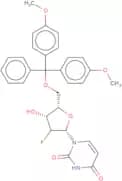
Purity:Min. 95%2'-Deoxy-5'-O-DMT-2'-fluoro-L-uridine
2'-Deoxy-5'-O-DMT-2'-fluoro-L-uridine is a nucleoside with anticancer and antiviral properties. It is used in the production of oligonucleotides, which are short chains of nucleic acids that can be synthesized in vitro to serve as probes for specific DNA or RNA sequences. 2'-Deoxy-5'-O-DMT-2'-fluoro-L-uridine is also a substrate for phosphoramidite synthesis, which converts it into 2'-deoxy-5'-O-(4,4',4''-(1,3,2-triazole)-tris(o-tolyl))uronium tetrafluoroborate (TOTU). This product has been shown to inhibit the activity of HIV reverse transcriptase and prevent the infection of cells by HIV.
Formula:C30H29FN2O7Purity:Min. 95%Molecular weight:548.57 g/mol5'-Amino-5'-deoxy-2'-O-methyluridine
5'-Amino-5'-deoxy-2'-O-methyluridine is a novel nucleoside analog with antiviral and anticancer properties. 5'-Amino-5'-deoxy-2'-O-methyluridine is an activator of the immune system, which may be due to its ability to inhibit DNA synthesis by inhibiting ribonucleotide reductase and DNA polymerase. This drug has shown activity against a variety of human tumor cell lines in vitro and in vivo. 5'-Amino-5'-deoxy-2'-O-methyluridine also inhibits the growth of several bacterial strains, including methicillin resistant Staphylococcus aureus (MRSA) and Mycobacterium avium complex.
Purity:Min. 95%2'-Deoxycytidine 3'-O-L-valinyl ester
CAS:2'-Deoxycytidine 3'-O-L-valinyl ester is a replication inhibitor that is used in biochemical research. It binds to the NS3 protease of the hepatitis C virus, preventing it from cleaving the polyprotein into functional proteins. This molecule also inhibits autophagy and may be a potential therapeutic agent for cancer.
Formula:C14H22N4O5Purity:Min. 95%Molecular weight:326.35 g/mol2'-Deoxy-2'-fluoro-5-methylcytidine
CAS:2'-Deoxy-2'-fluoro-5-methylcytidine is a nucleoside analog that is a modified version of cytidine, where the sugar (deoxyribose) has a fluoro modification at the 2' carbon and a methyl group is attached at the 5' position of the cytosine base. This modification confers unique properties that can be useful in research and drug development.
Formula:C10H14FN3O4Purity:Min. 95%Color and Shape:Off-White PowderMolecular weight:259.23 g/molRef: 3D-ND71638
Discontinued product3'-Azido-3'-deoxythymidine-b-D-glucuronide sodium salt
CAS:3'-Azido-3'-deoxythymidine-b-D-glucuronide sodium salt is an antiviral and anticancer agent that inhibits the synthesis of DNA, RNA, and protein. It has shown to be effective against a variety of viruses including HIV-1, herpes simplex virus type 1, influenza A virus, vaccinia virus, and vesicular stomatitis virus. 3'-Azido-3'-deoxythymidine-b-D-glucuronide sodium salt also inhibits the growth of cancer cells in vitro. This drug is a modified nucleoside with a phosphoramidite backbone and a 3'-azido group at one end. The other end contains a beta D glucuronic acid moiety. The modifications allow for the inhibition of DNA synthesis by blocking the incorporation of deoxyribonucleotides into DNA chains.
Formula:C16H20N5NaO10Purity:Min. 95%Color and Shape:PowderMolecular weight:465.35 g/molRef: 3D-NA06316
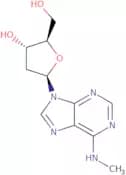
Discontinued product2'-Deoxy-N6-methyladenosine
CAS:2'-Deoxy-N6-methyladenosine (2DMA) is a nucleoside that has been found to inhibit the phosphorylation of p2y receptors in rat kidney cells. 2DMA inhibits the production of collagen, which may have a matrix effect on cells. Studies have shown that 2DMA can be used as a sample preparation reagent for nuclear DNA. It has also been shown to be effective at inhibiting transcription and replication of human mitochondrial DNA.
Formula:C11H15N5O3Purity:Min. 95%Color and Shape:White PowderMolecular weight:265.27 g/mol7-Methyl-6-thioguanosine inner salt
CAS:7-Methyl-6-thioguanosine inner salt is a compound that inhibits the activity of creatine kinase and phosphatase, which are enzymes involved in energy metabolism. It also binds to actin filaments and prevents their depolymerization. The binding mechanism of 7-methyl-6-thioguanosine inner salt is believed to be due to its ability to form disulfide bonds with cysteine residues on the surface of the enzyme. This inhibition has been shown to reduce the ATP production in mammalian cells and has been used as a model system for studying cellular processes.
Formula:C11H15N5O4SPurity:Min. 95 Area-%Color and Shape:White PowderMolecular weight:313.33 g/mol5-(Aminomethyl)-2-thiouridine
CAS:5-(Aminomethyl)-2-thiouridine is a bifunctional molecule that can be used in chromatography and as a precursor for the epigenetic modifications of DNA. 5-(Aminomethyl)-2-thiouridine has been shown to have an effect on the methyltransferase pathway, which is involved in the epigenome. This molecule has also been shown to affect the growth rate of bacteria in vitro.
Formula:C10H15N3O5SPurity:Min. 95%Molecular weight:289.31 g/mol4-[(1Z)-2-(4-Chlorophenyl)vinyl]pyridine
CAS:4-[(1Z)-2-(4-Chlorophenyl)vinyl]pyridine is a modified nucleoside that is used in anticancer drugs. It has shown antiviral and antitumor effects. 4-[(1Z)-2-(4-Chlorophenyl)vinyl]pyridine is synthesized by condensing 4-chlorobenzaldehyde and 2,3-dichloropyridine. The nucleoside has been modified to be phosphorylated at the 5′ position and contains a ribonucleotide moiety and a deoxyribonucleotide moiety. This product is of high purity and quality, with an activator group at the 5′ position.
Formula:C13H10ClNPurity:Min. 95%Molecular weight:215.68 g/molRef: 3D-NC65881
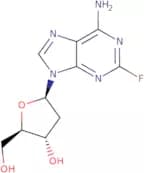
Discontinued product2'-Deoxy-2-fluoroadenosine
CAS:2'-Deoxy-2-fluoroadenosine is an adenosine member and an organofluorine compound
Formula:C10H12FN5O3Purity:Min. 98 Area-%Color and Shape:White PowderMolecular weight:269.23 g/molPolyinosinic acid tripotassium salt
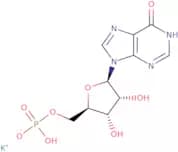
CAS:Polyinosinic acid is a single stranded RNA analog which is combined with polycytidylic acid (poly C) to form a stable duplex structure known as Polyinosinic acid-polycytidylic acid (Poly I:C). PolyI:C stimulates the secretion of pro-inflammatory cytokines and type I interferon through its interaction with endosomal Toll-like receptor 3 (TLR-3) and the cytoplasmic receptors melanoma differentiation-associated gene 5 (MDA-5) and retinoic acid-inducible gene I (RIG-I). This immunostimulant activity makes Poly I:C a useful vaccine adjuvant and is used in vaccine formulations. Poly I:C and its stabilized analogs (e.g., poly-ICLC) are also being actively researched for their dual role in oncology: directly targeting tumors and acting as immune potentiators. For example Poly I:C can induce apoptosis in tumor cells and stimulate immunogenic cell death and is therefore being explored alongside chemotherapy, radiotherapy, and checkpoint inhibitors, helping to overcome resistance mechanisms and strengthen treatment outcomes. We can supply PolyI:C to all stages of your project - from R&D and preclinical phases right up to GMP commercial manufacture. Contact our team for custom Poly I:C products.
For more on poly I:C read out blog 'Poly I:C: A Vaccine Adjuvant With Oncological Potential.'Purity:Min. 95%Ref: 3D-TP65775
Discontinued productCyclic inosine diphosphate ribose
CAS:Cyclic inosine diphosphate ribose is a synthetic, fluorescent compound that can be used as a probe for assays. It has been synthesized by the solid-phase synthesis of a specific antibody and is bioconjugated with an oligo(ethylene glycol) moiety. Cyclic inosine diphosphate ribose can be used to measure lymphocyte activation, which is important for the study of autoimmune diseases and cancer. Cyclic inosine diphosphate ribose has also been shown to bind to the ryanodine receptor, which causes an increase in intracellular calcium concentration.
Formula:C15H20N4O14P2Purity:Min. 95%Molecular weight:542.29 g/molNonadecanoyl coenzyme A
CAS:Nonadecanoyl coenzyme A is a fatty acid that is produced by the bovine liver and has been shown to have anabolic effects. Nonadecanoyl CoA is involved in the synthesis of various lipids, such as phospholipids, cholesterol, and glycolipids. It also plays a role in biosynthesis of fatty acids and in regulating ATP production. Nonadecanoyl CoA is synthesized from acetate by the enzyme acetyl-CoA carboxylase (ACC). ACC catalyzes the conversion of acetyl-CoA to malonyl-CoA, which can then be used for fatty acid synthesis. Nonadecanoyl CoA has been found to play an important role in regulating mitochondrial function through its ability to activate long-chain acyl-CoAs desaturase (LCAD). LCAD converts long-chain acyl-CoAs into their corresponding dicarboxylic acids.
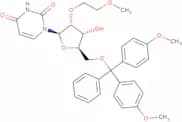
Formula:C40H72N7O17P3SPurity:Min. 95%Molecular weight:1,048.02 g/mol5'-O-DMT-2'-O-(2-methoxyethyl)uridine
CAS:5'-O-DMT-2'-O-(2-methoxyethyl)uridine is a modified nucleoside that is an antiviral and anticancer agent. It was first synthesized in the early 1980s, and has been shown to be active against a variety of viruses, such as herpes simplex virus (HSV), varicella zoster virus (VZV), cytomegalovirus (CMV), hepatitis B virus (HBV), and Epstein-Barr virus (EBV). 5'-O-DMT-2'-O-(2-methoxyethyl)uridine inhibits the growth of cancer cells by interfering with DNA synthesis. This drug also has been shown to be an activator for DNA polymerases and is used as a building block for antiretroviral drugs.
Formula:C33H36N2O9Purity:Min. 95%Molecular weight:604.65 g/mol2',3'-Dideoxy-2',2'-difluorocytidine
CAS:2',3'-Dideoxy-2',2'-difluorocytidine is a monophosphate derivative of the antiviral and anticancer drug 2',3'-dideoxycytidine. It is an activator of DNA synthesis, nucleosides, and nucleotides. It is also a phosphoramidite for the synthesis of oligonucleotides and modified ribonucleosides. 2',3'-Dideoxy-2',2'-difluorocytidine has CAS number 124708-94-7. It is available in high purity and quality, which makes this product suitable for research purposes.
Purity:Min. 95%Ref: 3D-ND158370
Discontinued product2'-Deoxy-5'-O-DMT-N2-isobutyryl-guanosine-3'-lcaa-CPG
2'-Deoxy-5'-O-DMT-N2-isobutyryl-guanosine-3'-lcaa-CPG is a modified nucleoside, which is synthetically prepared. It is an activator of DNA polymerase and has been shown to be active against human leukemia cells. 2'-Deoxy-5'-O-DMT-N2-isobutyryl Guanosine 3'-lcaa CPG has also been shown to inhibit the replication of the herpes simplex virus type 1 in vitro. The compound is a novel high quality nucleoside phosphoramidite that can be used as a building block in the synthesis of deoxyribonucleosides and modified nucleosides with novel chemical structures.
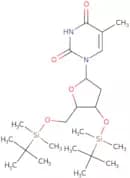
Purity:Min. 95%3',5'-Bis-O-(t-butyldimethylsilyl)thymidine
CAS:3',5'-Bis-O-(t-butyldimethylsilyl)thymidine is a novel nucleoside phosphoramidite that can be used in the synthesis of oligonucleotides. This compound has antiviral and anticancer activities and is an excellent building block for the synthesis of modified nucleosides. 3',5'-Bis-O-(t-butyldimethylsilyl)thymidine is a high quality, high purity chemical with a CAS number of 40733-26-4.
Formula:C22H42N2O5Si2Purity:Min. 95%Molecular weight:470.7 g/molRef: 3D-QBA73326
Discontinued product3',5'-Di-O-acetyl-2'-deoxyguanosine
CAS:3',5'-Di-O-acetyl-2'-deoxyguanosine is a nucleoside that is activated by hypochlorous acid to form a reactive intermediate, which can then react with other molecules. 3',5'-Di-O-acetyl-2'-deoxyguanosine has been shown to be selectively cytotoxic to human tumor cells and may be used as a radiosensitizer for cancer treatment. The reaction products of this compound include hypochlorite and hydrogen peroxide, which are strong oxidizing agents that cause tissue injury. This compound is also an effective reagent for the detection of myeloperoxidase in plasma samples.
Formula:C14H17N5O6Purity:Min. 95%Color and Shape:PowderMolecular weight:351.32 g/molRef: 3D-ND04500
Discontinued product









![4-[(1Z)-2-(4-Chlorophenyl)vinyl]pyridine](/_next/image/?url=https%3A%2Fstatic.cymitquimica.com%2Fproducts%2F3D%2Fthumb-webp%2FNC65881.webp&w=3840&q=75)