Nucleosides
Nucleosides are fundamental building blocks of nucleic acids, composed of a nitrogenous base attached to a sugar molecule. In this section, you can find a wide variety of nucleosides essential for research in molecular biology, biochemistry, and pharmacology. These compounds play crucial roles in the synthesis of DNA and RNA, and are also vital in various metabolic processes. Nucleosides are used in studying genetic material, developing antiviral and anticancer therapies, and understanding cellular mechanisms. At CymitQuimica, we provide high-quality nucleosides to support your research and development needs, ensuring purity and reliability for your experimental applications.
Found 3569 products of "Nucleosides"
Sort by
Purity (%)
0
100
|
0
|
50
|
90
|
95
|
100
1-(3'-azido-3'-deoxy-b-D-ribofuranosyl)-5-nitro-2(1H)-pyridinone
CAS:1-(3'-azido-3'-deoxy-b-D-ribofuranosyl)-5-nitro-2(1H)-pyridinone is a nucleoside analog that has antiviral and anticancer activities. It has been shown to be an activator of cellular DNA polymerase γ, which is involved in the DNA chain elongation process during DNA replication. 1-(3'-azido-3'-deoxy-b-D-ribofuranosyl)-5-nitro-2(1H)-pyridinone also inhibits the activity of human T cell leukemia virus type 1 (HTLV1) reverse transcriptase by binding to its active site and preventing the synthesis of viral DNA. This compound has a high quality with a purity > 98% and is not radioactive or toxic.Purity:Min. 95%2'/3'-(N-Methylanthraniloyl)-adenosine-5'-monophosphate triethylammonium salt
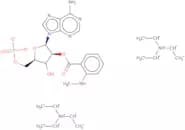
CAS:2'/3'-(N-Methylanthraniloyl)-adenosine-5'-monophosphate triethylammonium salt is an antiviral agent that is based on ribonucleosides. This drug has been shown to be effective against cancer and herpes simplex virus type 1 (HSV-1) and may have potential as a treatment for HIV. It also inhibits the growth of tumors in animal models. 2'/3'-(N-Methylanthraniloyl)-adenosine-5'-monophosphate triethylammonium salt is synthesized by reacting ribonucleosides with N-(2,2,2,-trimethylpropyl)anthranilic acid chloride in the presence of triethylamine. The resulting product can be purified by column chromatography or recrystallization.Formula:C18H21N6O8PPurity:Min. 95%Molecular weight:480.37 g/molN-(13C-Methyl)adenosine
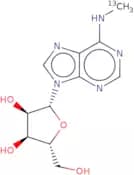
N-(13C-Methyl)adenosine is a modified nucleoside with antiviral activity. It is an analog of adenosine and has been shown to inhibit the replication of DNA viruses, such as herpes simplex virus type 1 and type 2, varicella zoster virus, and cytomegalovirus. This drug has also been found to be effective in animal models against human immunodeficiency virus (HIV) infection. N-(13C-Methyl)adenosine does not inhibit the replication of cellular RNA viruses such as influenza A virus or vesicular stomatitis virus.Purity:Min. 95%Molecular weight:3,656.49 g/mol2-Methylthio-N6-isopentenyladenosine
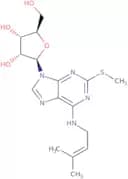
CAS:A nucleoside analogue of adenosine that arises from post-transcriptional modification. In humans, this is mediated by the enzyme CDK5RAP1 in mitochondrial transfer RNA (tRNA) at amino acid 37. Deficiency for this modification, for example due to CDK5RAP1 deficiency, leads to impaired mitochondrial protein synthesis. This has implications for mitochondrial diseases, as well as cancer, type II diabetes and vitiligo. Synthetic ms2i6A can be used to raise monoclonal antibodies against this nucleotide in vivo.Formula:C16H23N5O4SPurity:Min. 95%Color and Shape:White PowderMolecular weight:381.45 g/molN2-Isobutyryl-2'-deoxy-5'-O-pixylguanosine
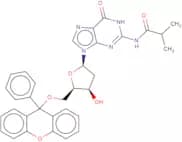
N2-Isobutyryl-2'-deoxy-5'-O-pixylguanosine is a modified nucleotide that has been shown to be an activator of the protein kinase C and may have anticancer and antiviral properties. N2-Isobutyryl-2'-deoxy-5'-O-pixylguanosine is a synthetic nucleoside that is structurally similar to ribonucleosides and deoxyribonucleosides, but contains a modified base. The nucleotide is activated by phosphorylation and then undergoes hydrolysis in the cell to form diphosphate. This product has CAS No. 125965-04-3, purity at 99%, and high quality.Formula:C33H31N5O6Purity:Min. 95%Molecular weight:593.64 g/mol3’-Deoxy-3’C-methyl-5-methyluridine
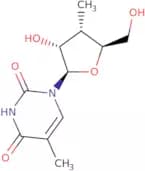
CAS:3’-Deoxy-3’C-methyl-5-methyluridine is a novel and efficient phosphoramidite monophosphate, which can be used in the synthesis of DNA. This product has antiviral activity against HIV and some other viruses. The phosphoramidite is modified with a diphosphate group, which increases the efficiency of DNA synthesis. 3’-Deoxy-3’C-methyl-5-methyluridine is synthesized by modifying 5′ position with a C6 methylaminomethyl group and coupling with the 3′ deoxynucleoside.Purity:Min. 95%3',5'-Di-O-acetylthymidine
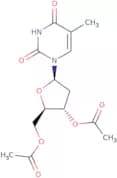
CAS:3',5'-Di-O-acetylthymidine is a pyrimidine nucleoside that has antibacterial activity. It is an anomer of thymidine, which makes it a hydroxymethylated analog of thymine. It can be used in the preparation of uridine for the treatment of human immunodeficiency virus type 1 (HIV-1) infection and to study the mechanism of action of this nucleoside on HIV-1 replication. 3',5'-Di-O-acetylthymidine binds to the ribose moiety of pyrimidines and inhibits bacterial growth by inhibiting DNA synthesis. This compound also inhibits the growth of staphylococcus that are resistant to penicillin. The chemical structure of 3',5'-Di-O-acetylthymidine can be modified with different acetic acid substituents to produce other pyrimidine nucleosides with different antibacterial properties, such as 4-Formula:C14H18N2O7Purity:Min. 95%Color and Shape:PowderMolecular weight:326.3 g/molN4-Benzoyl-2'-deoxy-5'-O-pixylcytidine
CAS:N4-Benzoyl-2'-deoxy-5'-O-pixylcytidine is a novel nucleoside that is structurally related to cytidine. It is synthesized from 2'-deoxycytidine monophosphate and 4-benzoylpixyl chloride. N4-Benzoyl-2'-deoxy-5'-O-pixylcytidine has antiviral, antiangiogenic and anticancer properties, as well as the ability to inhibit the replication of DNA in cells. This compound can be used for synthesis of phosphoramidites, which are used in the production of oligonucleotides.Formula:C35H29N3O6Purity:Min. 95%Molecular weight:587.64 g/mol4’,5’-Didehydro-5’-deoxy-5-methyluridine
CAS:4’,5’-Didehydro-5’-deoxy-5-methyluridine is a monophosphate nucleoside that is used as an antiviral agent. It has been shown to be active in the treatment of HIV and hepatitis B. 4’,5’-Didehydro-5’-deoxy-5-methyluridine also has anticancer properties and has been shown to inhibit cell proliferation in vitro by interfering with DNA synthesis. This product is an intermediate for the synthesis of other nucleosides and phosphoramidites.Purity:Min. 95%6-Amino-1-(2'-deoxy-b-D-ribofuranosyl)-4-hydroxyamino-1H-pyrazolo[3,4-d]pyrimidine
6-Amino-1-(2'-deoxy-b-D-ribofuranosyl)-4-hydroxyamino-1H-pyrazolo[3,4-d]pyrimidine is a modified nucleoside with antiviral and anticancer properties. It is an activator of ribonucleotide reductase, which converts ribonucleotides to deoxyribonucleotides. 6-Amino-1-(2'-deoxy-b-D-ribofuranosyl)-4-hydroxyamino-1H pyrazolo[3,4 d]pyrimidine can be used in the synthesis of phosphoramidites for DNA synthesis and for the production of monophosphate nucleotides. The compound has been shown to inhibit the growth of cells in culture that are resistant to other antiinfectives such as erythromycin and chloramphenicol.Purity:Min. 95%3’-Deoxy-3’-fluoro-N6-hydroxyadenosine
CAS:3’-Deoxy-3’-fluoro-N6-hydroxyadenosine (3'-DF) is an antiviral nucleoside that inhibits viral DNA synthesis and has shown cytotoxic effects in human cancer cells. 3'-DF is a novel chemical compound that was first synthesized in 1994. It is a nucleotide analog that is structurally related to adenosine, with the exception of the fluoro atom at position 6 on the ribose sugar. 3'-DF inhibits DNA polymerase and RNA polymerase by competitively binding to the ribonucleotide reductase enzyme, inhibiting the production of new RNA and DNA molecules. This compound also has been shown to inhibit protein synthesis in cancer cells without affecting normal cells.Purity:Min. 95%N6-Benzoyl-9-(2'-deoxy-5’-O-DMT-2’-fluoro-b-D-arabinofuranosyl)adenine 3’-CE-phosphoramidite
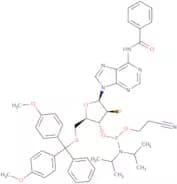
CAS:N6-Benzoyl-9-(2'-deoxy-5’-O-DMT-2’-fluoro-b-D-arabinofuranosyl)adenine 3’-CE-phosphoramidite is an antiviral agent that inhibits the replication of DNA. This compound was synthesized in the laboratory, and has not been found in nature. N6-Benzoyl-9-(2'-deoxy-5’-O--DMT--2’--fluoro--b--D--arabinofuranosyl)adenine 3’--CE--phosphoramidite is a novel compound that is effective against HIV and other viruses. It also has anticancer properties, which may be due to its ability to inhibit the transcription of genes involved in cell proliferation.Purity:Min. 95%5'-O-MMT-thymidine 3'-CE phosphoramidite
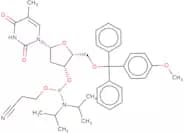
CAS:5'-O-MMT-thymidine 3'-CE phosphoramidite is a novel anticancer drug that is modified from the natural nucleoside thymidine. It has been shown to inhibit the activity of DNA polymerase, preventing DNA synthesis and replication. It also inhibits viral DNA replication, including HIV and herpes simplex virus type-1 (HSV-1). 5'-O-MMT-thymidine 3'-CE phosphoramidite has antiviral properties against HIV and HSV-1. This nucleoside is synthesized by reacting 5'-O-methyl cytidylic acid with an activated phosphite in the presence of triethylamine in dichloromethane. The product is purified by column chromatography on silica gel and recrystallization from acetonitrile.
Formula:C39H47N4O7PPurity:Min. 95%Molecular weight:714.81 g/molN2-DMF-5'-O-DMT-2'-O-methylguanosine 3'-CE phosphoramidite
N2-DMF-5'-O-DMT-2'-O-methylguanosine 3'-CE phosphoramidite is a novel ribonucleotide with high purity and high quality. It is an activator of DNA synthesis and can be used in the synthesis of DNA, monophosphate, and diphosphate. N2-DMF-5'-O-DMT-2'-O-methylguanosine 3'-CE phosphoramidite is used for the preparation of anticancer drugs, antiviral agents, and other nucleosides.Formula:C44H55N8O8PPurity:Min. 95%Color and Shape:White PowderMolecular weight:854.95 g/mol5'-Amino-5'-deoxythymidine
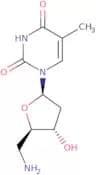
CAS:5'-Amino-5'-deoxythymidine is a nucleoside that is structurally related to thymidine. It has been shown to be a substrate for fatty acid synthase, which is a key enzyme in the synthesis of membrane lipids. 5'-Amino-5'-deoxythymidine has been shown to induce tumorigenesis in mouse bladder carcinoma cells. This compound also does not form stable complexes with DNA duplexes and can inhibit uptake of thymidylate into cells by competitive inhibition. 5'-Amino-5'-deoxythymidine binds to the cell surface and acts as an antibody response modifier.Formula:C10H15N3O4Purity:Min. 98 Area-%Color and Shape:White Off-White PowderMolecular weight:241.24 g/mol3’-b-Amino-2’,3-dideoxy uridine
CAS:3’-b-Amino-2’,3-dideoxy uridine is an activator nucleoside that is a novel therapeutic agent for viral infections and cancer. It has antiviral activity against herpes simplex virus type 1 (HSV-1) and cytomegalovirus (CMV), as well as anticancer activity against human breast adenocarcinoma cells. 3’-b-Amino-2’,3-dideoxy uridine is a modified nucleoside with antiviral and anticancer properties. This drug has been shown to inhibit HSV-1 replication by interfering with the synthesis of viral DNA. 3’-b-Amino-2’,3-dideoxy uridine also inhibits the proliferation of human breast adenocarcinoma cells by inhibiting ribonucleotide reductase.Formula:C9H13N3O4Purity:Min. 95%Molecular weight:227.22 g/molN6-Benzoyl-2'-chloro-2'-deoxy-5'-O-DMT-adenosine
The N6-benzoyl-2'-chloro-2'-deoxy-5'-O-DMT-adenosine is a novel nucleoside that is a potent inhibitor of the human immunodeficiency virus type 1 (HIV-1) and has been shown to be effective against cancer. It is a phosphoramidite nucleoside with high purity and high quality, which can be used as an antiviral agent or an anticancer agent. The chemical name for this compound is 2'-(N6-Benzoyl)-2'-deoxyadenosine 5'-O-(DMT). This product is also known as NBDT, and it has been modified by changing the ribose sugar to DMT. NBDT inhibits viral replication by preventing the formation of DNA from RNA in the reverse transcription process. This process requires two enzymes: HIV reverse transcriptase and DNA polymerase α. The first enzyme, HIV reverse transcriptase,Purity:Min. 95%1-(Arabinofuranosyl)-5-azidomethyluracil
CAS:1-(Arabinofuranosyl)-5-azidomethyluracil (AFAU) is a novel nucleoside that is synthesized by the reaction of 5-azido-1-(2'-deoxyribofuranosyl) uracil with phosphoramidite. The synthesis of this nucleoside has been used as a model for the synthesis of other deoxyribonucleosides. AFAU is an activator of ribonucleotide reductase and has shown activity against DNA and RNA viruses, such as influenza virus, herpes simplex virus type 1, and human immunodeficiency virus type 1.Purity:Min. 95%S-Adenosylmethione-1,4-butanedisulfonate
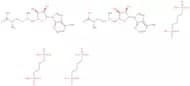
CAS:S-adenosylmethionine is a compound that is naturally produced in the body and has been shown to be involved in many biochemical reactions. It can be found as a supplement at health food stores, but also is available as a prescription for the treatment of certain liver diseases such as hepatitis. S-adenosylmethionine may have some drug transporter function and can affect the metabolism of other drugs.Formula:C42H74N12O28S8Purity:Min. 95 Area-%Color and Shape:White PowderMolecular weight:1,451.63 g/molGuanosine 3',5'-cyclic monophosphate sodium salt
CAS:Guanosine 3',5'-cyclic monophosphate sodium salt (cGMP) is a cyclic nucleotide that is involved in the regulation of many cellular processes. It binds to specific guanine nucleotide-binding proteins (G proteins) and activates protein kinase A, which regulates glucose metabolism and energy production. cGMP also affects neuronal death, axonal growth, and bowel disease by acting as a cyclase inhibitor or activating the immune system. It has been shown to reduce the severity of infectious diseases such as HIV and malaria by activating the immune system.Formula:C10H11N5NaO7PPurity:Min. 95%Color and Shape:PowderMolecular weight:367.19 g/mol




![6-Amino-1-(2'-deoxy-b-D-ribofuranosyl)-4-hydroxyamino-1H-pyrazolo[3,4-d]pyrimidine](/_next/image/?url=https%3A%2Fstatic.cymitquimica.com%2Fproducts%2F3D%2Fthumb-webp%2FNA162941.webp&w=3840&q=75)