Nucleosides
Found 3569 products of "Nucleosides"
2'-Deoxy-5'-O-DMT-N2-isobutyryl-6-thioguanosine 3-CE phosphoramidite
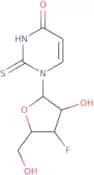
CAS:2'-Deoxy-5'-O-DMT-N2-isobutyryl-6-thioguanosine 3-CE phosphoramidite is an anticancer agent that is used to treat leukemia and other cancers. It also has antiviral activity, inhibiting the viral enzyme RNA polymerase. It is a novel synthetic nucleoside that has been shown to be active against HIV in vitro. 2'-Deoxy-5'-O-DMT-N2-isobutyryl-6-thioguanosine 3-CE phosphoramidite is a nucleotide analogue of guanosine and is phosphorylated by cellular enzymes to form 2'-deoxyguanosine 5' phosphate. This compound binds to DNA and inhibits replication by preventing the unwinding of DNA helixes during transcription. 2'-Deoxyguanosine 5' phosphate also blocks translation by inhibiting ribosomal protein synthesis at the initiationFormula:C44H54N7O7PSPurity:Min. 95%Molecular weight:855.98 g/mol3’-Deoxy-3’-fluoro-2-thiouridine
CAS:3’-Deoxy-3’-fluoro-2-thiouridine is a nucleoside analog that has been modified to have antiviral and anticancer activity. It is an activator of the ribonucleotide reductase enzyme, which is involved in DNA synthesis. 3’-Deoxy-3’-fluoro-2-thiouridine has been used successfully as an antiviral agent against HIV and other viruses, and as an anticancer agent against leukemia. The monophosphate form of this drug has been shown to inhibit DNA replication in vitro.
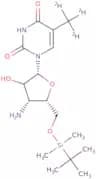
Purity:Min. 95%3'-Amino-5'-O-tert-butyldimethylsilyl-3'-deoxy-D3-thymidine
CAS:Controlled Product3'-Amino-5'-O-tert-butyldimethylsilyl-3'-deoxy-D3-thymidine is a synthetic nucleoside analogue that inhibits the synthesis of DNA. It is a monophosphate and diphosphate analog of thymidine, which are incorporated into DNA during replication. 3'-Amino-5'-O-tert-butyldimethylsilyl-3'-deoxy-D3-thymidine is an activator of RNA polymerase II and inhibits viral replication by inhibiting the function of reverse transcriptase. This drug has been shown to be effective against HIV in vitro and in vivo, as well as herpes simplex virus type 1. 3'-Amino-5'-O-tert-butyldimethylsilyl-3'-deoxy-D3-thymidine also has antitumor activity as it inhibits the growth ofFormula:C16H26N3O5SiD3Purity:Min. 95%Molecular weight:374.52 g/molN2-DMF-guanosine
N2-DMF-guanosine is a novel antiviral agent that has been synthesized by modifying the nucleoside guanosine. It is an analog of guanosine in which the 2'-hydroxyl group has been replaced with a 2'-deoxy-2'-fluoro group, and it inhibits viral replication by inhibiting viral DNA polymerase. N2-DMF-guanosine is also used as a high quality deoxyribonucleoside monophosphate for the synthesis of ribonucleosides and nucleosides. This compound has a CAS number of 6074-37-4.
Formula:C13H18N6O5Purity:Min. 95%Molecular weight:338.32 g/mol5'-O-DMT-N2-phenoxyacetyl-2'-O-methylguanosine 3'-CE phosphoramidite
5'-O-DMT-N2-phenoxyacetyl-2'-O-methylguanosine 3'-CE phosphoramidite is a nucleoside analog that inhibits DNA synthesis by forming a covalent bond with the beta-subunit of DNA polymerase. It is a modified nucleoside that has been synthesized from 2'-O-methylguanosine and N2,N2-dimethoxyacetyl. 5'-O-DMT-N2-phenoxyacetyl-2'-O methylguanosine 3'-CE phosphoramidite possesses the CAS No. 16053526.Purity:Min. 95%3’,2-anhydro-2'-deoxyuridine
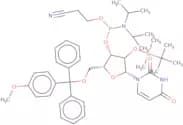
CAS:3’,2-anhydro-2'-deoxyuridine is a nucleoside analog that has antiviral and anticancer activities. It is an activator of the ribonucleotide reductase enzyme, which catalyses the conversion of ribonucleotide diphosphates to deoxynucleotides. 3’,2-anhydro-2'-deoxyuridine also inhibits DNA synthesis by cytostatic mechanisms. This product is used as a building block in phosphoramidite synthesis and can be used for the preparation of novel nucleosides and phosphoramidites. This product was originally synthesized for use as an antiviral agent against herpes simplex virus type 1 (HSV-1) and human cytomegalovirus (HCMV). It is also used as an anticancer agent in preclinical research.Purity:Min. 95%2'-O-tert-Butyldimethylsilyl-5'-O-MMT-uridine 3'-CE phosphoramidite
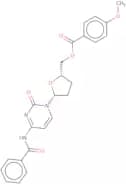
2'-O-tert-Butyldimethylsilyl-5'-O-MMT-uridine 3'-CE phosphoramidite is a monophosphate that is synthesized by reacting 2'-O-tert-butyldimethylsilyl-5'-O-methylguanosine 3'-CE with uridine 3'-CE. This nucleoside has been shown to be an activator of the immune system and to inhibit cancer cell growth in vitro. It also inhibits the synthesis of DNA and RNA, as well as ribonucleosides and deoxyribonucleosides. The purity of this product is high, with no detectable impurities or toxic substances known to the manufacturer. It is also stable at room temperature for at least six months. This product does not contain any phosphate groups or other reactive functional groups that could interfere with downstream reactions. 2'-O-tert-ButyldimethylsilyFormula:C44H59N4O8PSiPurity:Min. 95%Molecular weight:831.04 g/mol5'-O-p-Anisoyl-N4-benzoyl-2',3'-dideoxycytidine
CAS:5'-O-p-Anisoyl-N4-benzoyl-2',3'-dideoxycytidine is a synthetic nucleoside that belongs to the class of deoxyribonucleosides. It is a modified nucleoside with an anisoyl group at the 5' position and a benzoyl group at the 2' position. This product can be used in the synthesis of DNA, RNA, and phosphoramidites. 5'-O-p-Anisoyl-N4-benzoyl-2',3'-dideoxycytidine has antiviral properties and has been shown to inhibit viral replication in vitro and in vivo. It also has anticancer activities as it inhibits cell proliferation and induces apoptosis, which may be due to its ability to inhibit DNA synthesis.Formula:C24H23N3O6Purity:Min. 95%Molecular weight:449.46 g/mol3-Deazaadenosine
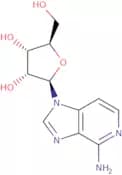
CAS:A potential role in apoptosis and cellular senescence.Formula:C11H14N4O4Purity:Min. 99 Area-%Color and Shape:PowderMolecular weight:266.26 g/molN6-Benzoyl-2'-O-benzyl-5'-O-DMT-adenosine
CAS:N6-Benzoyl-2'-O-benzyl-5'-O-DMT-adenosine is a novel nucleoside with anticancer and antiviral properties. It is a phosphoramidite that can be used for the synthesis of DNA, RNA, and other nucleosides. N6-Benzoyl-2'-O-benzyl-5'-O-DMT-adenosine has been shown to inhibit the growth of cancer cells by preventing RNA synthesis and DNA replication. This chemical also has antiviral effects against HIV and can inhibit the replication of herpes simplex virus type 1. The chemical is highly soluble in water, methanol, ethanol, acetone, chloroform, ethyl ether and acetonitrile.Formula:C45H41N5O7Purity:Min. 95%Molecular weight:763.84 g/mol1-(2'C-Methyl-b-D-ribofuranosyl)-5-nitropyridine-2(1H)-one
CAS:1-(2'C-Methyl-b-D-ribofuranosyl)-5-nitropyridine-2(1H)-one (1) is a synthetic nucleoside that has been modified to be activated with the addition of a phosphoryl group. It inhibits viral replication by inhibiting viral DNA synthesis. It also inhibits cancer cell growth, and has shown potential as an antiviral agent against HIV, herpes simplex type 2, and influenza A viruses. 1 is a novel monophosphate nucleoside with high purity and high quality. CAS No. 2072145-17-4.Purity:Min. 95%N6-Benzoyl-2'-O-tert-butyldimethylsilyladenosine
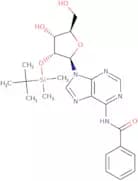
CAS:N6-Benzoyl-2'-O-tert-butyldimethylsilyladenosine (BTS) is a novel phosphoramidate monophosphate nucleoside analog that has been modified to be resistant to the ribonuclease A enzyme. BTS is an activator of DNA synthesis and inactivator of RNA synthesis, which makes it useful for the treatment of cancer and antiviral infections. This drug is synthesized using high quality reagents and can be used for the production of phosphoramidites to produce high purity oligonucleotides.Formula:C23H31N5O5SiPurity:Min. 95%Color and Shape:PowderMolecular weight:485.61 g/mol1-(b-L-Arabinofuranosyl)uracil 5'-triphosphate triethylammonium salt
1-(b-L-Arabinofuranosyl)uracil 5'-triphosphate triethylammonium salt is a novel antiviral agent that is synthesized from ribonucleosides. It is an activator of the monophosphate form of RNA polymerase and inhibits the synthesis of DNA in cells. This drug has also been shown to be effective against cancer cells and may be useful for treatment of leukemia.Purity:Min. 95%2'-O-Methyl-N6-phenoxyacetyladenosine
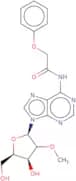
CAS:2'-O-Methyl-N6-phenoxyacetyladenosine is a phosphoramidite nucleoside that is used in the synthesis of DNA and RNA. It has antiviral, anticancer, and antiribonucleases properties. The chemical structure of 2'-O-Methyl-N6-phenoxyacetyladenosine is similar to that of adenosine, but contains a methyl group on C2' position and an oxyalkyl group on N6. This compound can be used as a novel anticancer agent and has been shown to have high affinity for the purine receptor, inhibiting cancer cell proliferation by activating the p53 tumor suppressor pathway.Formula:C19H21N5O6Purity:Min. 95%Color and Shape:White to off-white solid.Molecular weight:415.41 g/mol9-(2'-C-methyl-b-D-ribofuranosyl)6-methylpurine
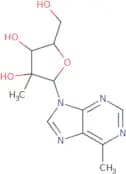
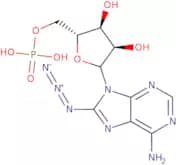
CAS:9-(2'-C-methyl-b-D-ribofuranosyl)6-methylpurine is a modified monophosphate nucleoside that is an antiviral agent. It can be used as a building block for the synthesis of ribonucleosides, deoxyribonucleosides, and phosphoramidites. This product has been shown to have anticancer properties and may be used in the development of new anticancer drugs. 9-(2'-C-methyl-b-D-ribofuranosyl)6-methylpurine has also been shown to inhibit the growth of bacteria by inhibiting DNA synthesis.Purity:Min. 95%8-Azidoadenosine 5'-monophosphate sodium salt
CAS:8-Azidoadenosine 5'-monophosphate sodium salt is an azido-conjugated adenosine monophosphate derivative used to introduce a label on oligonucleotides. A click reaction between the azide-functionalised nucleotide and a terminal alkyne-functionalised labelled moiety (with either a fluorophore or biotin) generates a stable conjugate containing a triazole link.Formula:C10H13N8O7PPurity:Min. 95%Molecular weight:388.23 g/mol3'-Deoxy-2'-O-methyladenosine
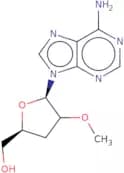
CAS:3'-Deoxy-2'-O-methyladenosine is a nucleoside that has antiviral and anticancer activity. It is a novel chemical compound with a unique structure, which makes it highly reactive. 3'-Deoxy-2'-O-methyladenosine induces DNA synthesis and cell proliferation in cancer cells. It also inhibits the production of viral DNA and RNA in infected cells by inhibiting the enzyme ribonucleotide reductase, which converts ribonucleotides to deoxyribonucleotides. 3'-Deoxy-2'-O-methyladenosine can be used as an antiviral agent against herpes simplex virus type 1 (HSV1), herpes simplex virus type 2 (HSV2) and human cytomegalovirus (CMV).
Formula:C11H15N5O3Purity:Min. 95%Color and Shape:Off-White PowderMolecular weight:265.27 g/mol7-Deaza-2'-deoxy-7-iodoguanosine
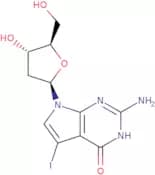
CAS:7-Deaza-2'-deoxy-7-iodoguanosine is a purine nucleoside that is synthesized from guanosine and iodine. It is used as a marker in sequencing reactions because it can be easily detected by UV light at 254 nm. 7-Deaza-2'-deoxy-7-iodoguanosine can be synthesized using the following general equation:
Formula:C11H13IN4O4Purity:Min. 97 Area-%Color and Shape:White PowderMolecular weight:392.16 g/mol2-Thiocytidine
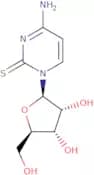
CAS:2-Thiocytidine is a nucleoside that is an intermediate in the synthesis of thiamine. It has been shown to be effective in the treatment of prostate cancer cells, which may be due to its ability to inhibit protein synthesis. 2-Thiocytidine binds to the catalytic site of ribonucleotide reductase (RR) and inhibits the enzyme's activity, thereby inhibiting DNA synthesis. This drug also has been shown to inhibit crosslinking caused by UV light or other agents that generate reactive oxygen species. 2-Thiocytidine binds to the active site of RR and prevents the formation of the enzyme-substrate complex. This binding prevents reduction of ribose into ribonucleotides and inhibits DNA synthesis.
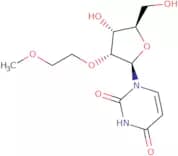
Formula:C9H13N3O4SPurity:Min. 95%Color and Shape:Yellow PowderMolecular weight:259.28 g/mol2'-O-(2-Methoxyethyl)uridine
CAS:2'-O-(2-Methoxyethyl)uridine is a nucleoside analog that inhibits the synthesis of DNA, RNA and protein. It can be used as an antimetabolite to treat cancer and prevents tumor growth by interfering with cell division. 2'-O-(2-Methoxyethyl)uridine is often used in combination with other chemotherapeutic drugs. This drug is not active against bacteria and does not inhibit the growth of bacteria. The major disadvantage of this drug is its lack of efficacy against tumors, which may be due to the lack of penetration through the cell membrane or damage to DNA caused by radiation, abiotic factors, or malfunctioning enzymes. 2'-O-(2-Methoxyethyl)uridine has been shown to cause damage to cells by altering their metabolism and affecting the function of their mitochondria. Damage can cause cells to die through apoptosis or necrosis.Formula:C12H18N2O7Purity:Min. 95 Area-%Color and Shape:PowderMolecular weight:302.28 g/mol