Nucleosides
Nucleosides are fundamental building blocks of nucleic acids, composed of a nitrogenous base attached to a sugar molecule. In this section, you can find a wide variety of nucleosides essential for research in molecular biology, biochemistry, and pharmacology. These compounds play crucial roles in the synthesis of DNA and RNA, and are also vital in various metabolic processes. Nucleosides are used in studying genetic material, developing antiviral and anticancer therapies, and understanding cellular mechanisms. At CymitQuimica, we provide high-quality nucleosides to support your research and development needs, ensuring purity and reliability for your experimental applications.
Found 3567 products of "Nucleosides"
Sort by
Purity (%)
0
100
|
0
|
50
|
90
|
95
|
100
2-Methoxycarbonyl adenosine
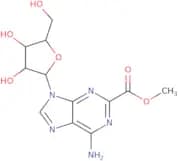
CAS:<p>2-Methoxycarbonyl adenosine is a modified nucleoside and nucleotide. It is an antiviral agent that has been shown to be effective against herpes simplex virus type 1 (HSV-1) and varicella zoster virus (VZV). 2-Methoxycarbonyl adenosine also has anticancer activity, which may be due to its ability to inhibit DNA synthesis. This agent can also be used as a phosphoramidite for the synthesis of oligonucleotides and as a monophosphate for the synthesis of ribonucleosides. 2-Methoxycarbonyl adenosine is also available in high purity and high quality with CAS No. 70255-70-8.</p>Purity:Min. 95%2,8-Dimethyladenosine
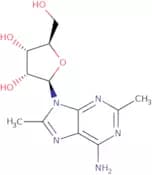
CAS:<p>2,8-Dimethyladenosine is a methylated derivative of the purine nucleoside adenosine, in which methyl groups are added at the 2-position and 8-position of the adenine base.</p>Formula:C12H17N5O4Purity:Min. 95%Color and Shape:White PowderMolecular weight:295.29 g/mol2'-Deoxy-5-methylcytidine
CAS:<p>2'-Deoxy-5-methylcytidine is a nucleoside analogue that inhibits the synthesis of DNA. It prevents methylation of guanine, which disrupts the binding of guanine nucleotide-binding proteins to the dna template and prevents polymerase chain reactions. 2'-Deoxy-5-methylcytidine has been shown to inhibit colon cancer cells in vitro, and may be a potential biomarker for bowel disease. This drug is also a methyltransferase inhibitor, which means it blocks the enzyme responsible for adding methyl groups to cytosine molecules.</p>Formula:C10H15N3O4Purity:Min. 98 Area-%Color and Shape:White PowderMolecular weight:241.25 g/molThymidine-3',5'-diphosphate sodium salt
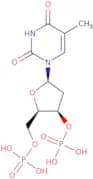
CAS:<p>Thymidine-3',5'-diphosphate sodium salt is a nucleoside that is used in the synthesis of oligonucleotides. It is an antiviral and anticancer agent. Thymidine-3',5'-diphosphate sodium salt has been shown to inhibit DNA synthesis, leading to cell death. It also has been shown to be effective against Hepatitis B virus and HIV-1.</p>Formula:C10H16N2O11P2·xNaPurity:Min. 98 Area-%Color and Shape:White PowderMolecular weight:402.19 g/mol3'-Deoxythymidine
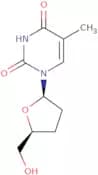
CAS:<p>3'-Deoxythymidine (3DT) is a nucleoside analog that has high resistance to HIV. It is an analogue of the human insulin-like growth factor-1 (IGF-1), which binds to the IGF-1 receptor and inhibits the binding of IGF-1 to its receptor, thereby inhibiting the growth of cells. 3DT has been shown to have a protective effect against radiation in mice, with an LD50 at a dose of 5.0 mg/kg for radiation exposure. 3DT also has antiviral activity against murine sarcoma virus, as well as other biological properties such as enzyme activities and disease activity. This drug may be used in future research on polymerase chain reactions (PCRs) and DNA sequencing, since it is chemically stable and can be easily synthesized.</p>Formula:C10H14N2O4Purity:Min. 95%Color and Shape:White PowderMolecular weight:226.23 g/molN4-Benzoyl-2'-deoxy-a-cytidine
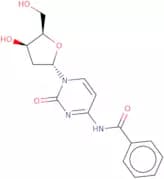
CAS:<p>N4-Benzoyl-2'-deoxy-a-cytidine is a novel, modified nucleoside that has shown anticancer and antiviral activity. It is synthesized by the enzymatic oxidation of 2'-deoxyadenosine with benzoyl chloride and sodium bicarbonate. N4-Benzoyl-2'-deoxy-a-cytidine has been shown to activate transcription, increase DNA synthesis, and inhibit virus replication. It also inhibits bacterial growth, but does not appear to have any effect on mammalian cells.</p>Formula:C16H17N3O5Purity:Min. 95%Color and Shape:PowderMolecular weight:331.32 g/molN6-Benzoyl-2'-deoxy-5'-O-DMT-adenosine 3'-Rp-oxazaphospholidine
<p>N6-Benzoyl-2'-deoxy-5'-O-DMT-adenosine 3'-Rp-oxazaphospholidine is an activator of DNA polymerase. It has been shown to be a potent inhibitor of viral replication and an anticancer agent in vitro. The compound has also been shown to inhibit the growth of tumor cells in vivo. N6-Benzoyl-2'-deoxy-5'-O-DMT-adenosine 3'-Rp-oxazaphospholidine is a novel nucleoside analogue that has not been previously reported.</p>Purity:Min. 95%3'-Deoxy-3'-fluoro-5'-O-toluoylthymidine
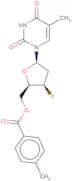
<p>3'-Deoxy-3'-fluoro-5'-O-toluoylthymidine is a nucleoside that can be used as an antiviral and anticancer agent. It is structurally similar to thymidine, but differs by the replacement of a hydrogen atom at position 3 with a fluorine atom. The replacement of this hydrogen atom with a fluorine atom results in the removal of hydroxyl group from the 5' carbon position on the sugar ring, which is then converted into an ester moiety. 3'-Deoxy-3'-fluoro-5'-O-toluoylthymidine has been shown to inhibit DNA replication, RNA transcription and protein synthesis. This nucleoside also has been found to stimulate apoptosis in cancer cells by inhibiting DNA replication.</p>Formula:C18H19FN2O5Purity:Min. 95%Molecular weight:348.43 g/mol5'-O-Benzoyl-2'-deoxyuridine 3'-CE phosphoramidite
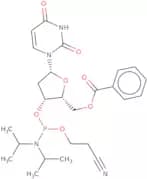
<p>5'-O-Benzoyl-2'-deoxyuridine 3'-CE phosphoramidite is an anticancer drug that inhibits viral and tumor DNA synthesis. It is a nucleoside monophosphate with antiviral and antitumor activities. The compound is synthesized by coupling a benzoyl group to 5'-O-DMT-2'-deoxyuridine 3'-phosphate, followed by the addition of a triethylammonium salt group. The phosphoramidite is then reacted with 2,4,6-trichlorophenylisocyanate to produce the final product. This product has a CAS number of 86825-34-1.</p>Formula:C25H33N4O7PPurity:Min. 95%Molecular weight:532.54 g/molN4-Benzoyl-5'-O-DMT-2'-O-(2-methoxyethyl)cytidine 3'-CE phosphoramidite
<p>Nucleoside phosphoramidite used in oligonucleotide synthesis</p>Formula:C49H58N5O10PPurity:Min. 95%Molecular weight:907.99 g/molAdenosine 3',5'-diphosphate disodium salt
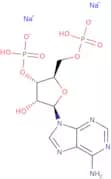
CAS:<p>Adenosine 3',5'-diphosphate disodium salt is a nucleotide that is found in all cells and is involved in the regulation of many physiological processes, including energy metabolism and blood flow. It has inhibitory effects on platelets and calcium ion channels. Adenosine 3',5'-diphosphate disodium salt also inhibits the synthesis of prostaglandins by blocking the conversion of arachidonic acid to prostaglandin H2, which leads to an anti-inflammatory effect. Adenosine 3',5'-diphosphate disodium salt has been shown to be effective in treating primary pulmonary hypertension and bowel disease. The reaction solution can be used for polymerase chain reactions, multivariate logistic regression, or other applications.</p>Formula:C10H15N5O10P2·2NaPurity:Min. 96 Area-%Color and Shape:White Beige PowderMolecular weight:473.18 g/mol2,2'-Anhydrouridine
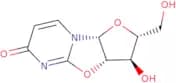
CAS:<p>The nucleophilic opening of 2,2'-Anhydrouridine represents a novel synthetic approach for elaborating the ring of nucleosides. For example, compounds such as 2-amino-, 2-fluoro- and 2-phenylseleno-2-deoxyuridines are prepared from the nucleophilic opening of 2,2'-Anhydrouridine.Â2,2'-Anhydrouridine inhibits uridine phosphorylase, a key enzyme targeted by some antitumor drugs.</p>Formula:C9H10N2O5Purity:Min. 98 Area-%Color and Shape:White Off-White PowderMolecular weight:226.19 g/mol2’C-Methyl-5-methoxyuridine
CAS:<p>2’-C-Methyl-5-methoxyuridine is a nucleoside analog that inhibits viral replication by inhibiting DNA synthesis. It is also used in the treatment of cancer, as it inhibits the growth of tumor cells by altering their genetic material. This drug is a phosphorothioate and can be activated with an activator to form its active form, which is incorporated into DNA during replication. 2’-C-Methyl-5-methoxyuridine has been shown to be effective against many viruses, including human immunodeficiency virus (HIV), herpes simplex virus type 1 (HSV1), and herpes simplex virus type 2 (HSV2). This drug has been shown to cause death of tumor cells via apoptosis or cell cycle arrest at the G0/G1 phase.</p>Purity:Min. 95%N4-Acetyl-2'-O-tert-butyldimethylsilyl-5'-O-DMT-5-methylcytidine 3'-CE phosphoramidite
<p>N4-Acetyl-2'-O-tert-butyldimethylsilyl-5'-O-DMT-5-methylcytidine 3'-CE phosphoramidite is a novel monophosphate nucleotide that can be used for the synthesis of DNA and RNA. It has antiviral, anticancer, and activating properties. N4-Acetyl-2'-O-tert-butyldimethylsilyl-5'-O-DMT-5-methylcytidine 3'-CE phosphoramidite is synthesized by modifying cytosine with an acetyl group at the 4th position in the ribose ring, a tertiary butyldimethylsilyl group at the 2nd position on the 5' carbon atom, and a DMT group at the 5' position on the 5' carbon atom. The CAS number for this compound is 868312050.</p>Purity:Min. 95%UDP-N-azidoacetylgalactosamine triethylamine
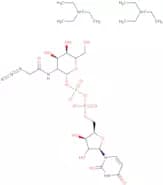
CAS:<p>UDP-N-azidoacetylgalactosamine (UDP-GlcNAz) is an analogue of UDP-GalNAc, bearing an azido group on the N-acyl side chain. It acts as an unnatural substrate for the polypeptide N-R-acetylgalactosaminyltransferases (ppGalNAcTs) which are enzymes that play a role in mucin-type O-linked glycoprotein biosynthesis. UDP-GlcNAz is accepted as a nucleotide-sugar donor, appending an azidosugar onto its native substrates, which can then be detected using azide-reactive chemical probes. The azide group can be detected by the conjugation with phosphine probes via the Staudinger ligation, or alkyne probes via cycloaddition reactions.</p>Formula:C17H26N6O17P2Purity:Min. 90 Area-%Color and Shape:PowderMolecular weight:848.73 g/mol2'-O-Acetyl-3'-deoxy-3'-fluoro-5-methoxy-5'-O-toluoyluridine
CAS:<p>2'-O-Acetyl-3'-deoxy-3'-fluoro-5-methoxy-5'-O-toluoyluridine is a modified nucleoside that has antiviral, anticancer and antimalarial activities. This compound has been synthesized as a monophosphate derivative of the natural nucleoside uridine. It is an activator of DNA polymerase, which helps to synthesize DNA in cells. 2'-O-Acetyl-3'-deoxy-3'-fluoro-5-methoxy-5'-O-toluoyluridine also has anticancer activity due to its ability to inhibit the replication of the human tumor virus KSHV.</p>Purity:Min. 95%2’-Deoxyisoguanosine
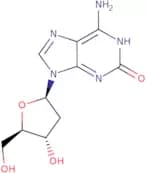
CAS:<p>Incorporated in DNA/RNA hybrids and mismatch pairs to analyse helix stability</p>Formula:C10H13N5O4Purity:Min. 95%Color and Shape:PowderMolecular weight:267.24 g/mol1,5-Anhydro-2,3-dideoxy-2-(N2-isobutyrylguanidin-1-yl)-D-glucitol
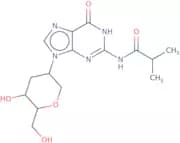
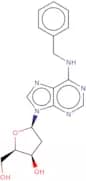
<p>1,5-Anhydro-2,3-dideoxy-2-(N2-isobutyrylguanidin-1-yl)-D-glucitol is a novel, activator ribonucleosides deoxyribonucleosides diphosphate phosphoramidites modified anticancer antiviral monophosphate nucleosides synthetic high purity CAS No. It has been shown to have anticancer and antiviral properties. This compound also inhibits the replication of HIV in vitro.</p>Formula:C15H21N5O5Purity:Min. 95%Molecular weight:351.37 g/molN6-Benzyl-2-deoxyadenosine
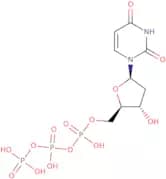
<p>N6-Benzyl-2-deoxyadenosine is a modified nucleotide that can be incorporated into DNA during replication. The compound has antiviral properties and can act as an activator for the transcription of genes involved in the immune response. It is synthesized by coupling two phosphate groups to adenosine monophosphate, which is then modified with a benzyl group. This modification prevents N6-benzyl-2-deoxyadenosine from being phosphorylated and degraded to adenosine monophosphate, resulting in a stable molecule that can be incorporated into DNA.</p>Formula:C17H19N5O3Purity:Min. 95%Color and Shape:PowderMolecular weight:341.36 g/mol2'-Deoxyuridine-5'-triphosphate trisodium
CAS:<p>2'-Deoxyuridine-5'-triphosphate trisodium salt is a fluorophore that is excited by the absorption of light at wavelengths of 365 nm. The emission spectrum ranges from 380 to 500 nm and has a maximum at 480 nm. 2'-Deoxyuridine-5'-triphosphate trisodium salt can be used as a labeling agent for metal ion, molecule, or macrocyclic ligand. It can also be used as an acceptor in fluorescence energy transfer experiments.</p>Formula:C9H15N2O14P3•Na3Purity:Min. 95%Color and Shape:PowderMolecular weight:537.11 g/mol