Nucleosides
Nucleosides are fundamental building blocks of nucleic acids, composed of a nitrogenous base attached to a sugar molecule. In this section, you can find a wide variety of nucleosides essential for research in molecular biology, biochemistry, and pharmacology. These compounds play crucial roles in the synthesis of DNA and RNA, and are also vital in various metabolic processes. Nucleosides are used in studying genetic material, developing antiviral and anticancer therapies, and understanding cellular mechanisms. At CymitQuimica, we provide high-quality nucleosides to support your research and development needs, ensuring purity and reliability for your experimental applications.
Found 3567 products of "Nucleosides"
Sort by
Purity (%)
0
100
|
0
|
50
|
90
|
95
|
100
Fluorescein-5(6)-carboxamidocaproyl-[5(3-aminoallyl)2-deoxyuridine-5-tr
<p>Fluorescein-5(6)-carboxamidocaproyl-[5(3-aminoallyl)2-deoxyuridine-5-triphosphate] is a modified nucleoside analog that is used as an antiviral agent against herpesviruses. This compound is phosphorylated by the virus encoded thymidine kinase, which converts it to the monophosphate form. Fluorescein-5(6)-carboxamidocaproyl-[5(3-aminoallyl)2-deoxyuridine-5-triphosphate] inhibits DNA synthesis by inhibiting viral DNA polymerase and has been shown to be active against human papillomavirus type 16 (HPV16) in vitro. It has also been shown to inhibit tumor cell proliferation and induce apoptosis in some types of cancer cells.</p>Purity:Min. 95%N3-Methylcytidine
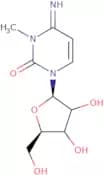
CAS:<p>N3-Methylcytidine is a synthetic analog of uridine. It is used for the treatment of syncytial virus infection, which is a group of diseases caused by viruses that have an RNA genome and replicate by forming syncytia—large groups of infected cells. N3-Methylcytidine inhibits the synthesis of proteins in cells and inhibits the growth of bacteria. This drug has been shown to inhibit actin polymerization and prevents cell spreading. N3-Methylcytidine also binds to RNA polymerase II and blocks its interaction with DNA, inhibiting protein synthesis at the ribosome level. N3-Methylcytidine is metabolized in vivo into methylated cytidine, which can be detected in urine samples using chemical biology methods or fluorescence resonance energy transfer (FRET) analysis. Synonyms: N3-methyluridine; 3-methyluridine</p>Formula:C10H15N3O5Purity:Min. 95%Color and Shape:White PowderMolecular weight:257.24 g/molN4-Benzoyl-5'-O-DMT-2'-O-(2-methoxyethyl)cytidine 3'-O succinate TEA
<p>N4-Benzoyl-5'-O-DMT-2'-O-(2-methoxyethyl)cytidine 3'-O succinate TEA salt (BEDOT) is a novel nucleoside analogue that is a phosphoramidite for DNA synthesis. BEDOT has shown anticancer and antiviral activity in vitro.</p>Purity:Min. 95%2'-Deoxy-5'-O-DMT-N4-isobutyryl-5-methylcytidine
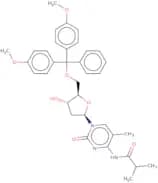
CAS:<p>The chemical compound 2'-deoxy-5'-O-dimethyltryptophan 4-isobutyryl-5-methylcytidine is an antiviral and anticancer agent. It is a nucleoside analog that inhibits the synthesis of DNA, RNA, and proteins by inhibiting the activity of various enzymes in the cell. This agent also acts as an activator that binds to DNA, preventing transcription of genes. The modified nucleotide has been used in research to study the effects on cancer cells and HIV cells.</p>Purity:Min. 95%Flavin adenine dinucleotide
CAS:<p>Flavin adenine dinucleotide, also known as FAD, plays a crucial role in several enzymatic reactions involved in metabolism. It is essential for the function of flavoproteins, which are involved in processes such as the electron transport chain and the citric acid cycle.</p>Formula:C27H33N9O15P2Purity:Min. 95%Color and Shape:PowderMolecular weight:785.5 g/molS-(5'-Adenosyl)-L-homocysteine dihydrate
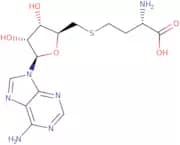
CAS:<p>S-(5'-Adenosyl)-L-homocysteine dihydrate is the active form of homocysteine. It has been shown to inhibit the growth of HL-60 cells and induce apoptosis in these cells. S-(5'-Adenosyl)-L-homocysteine dihydrate binds to dsDNA as a methyltransferase inhibitor, which leads to DNA methylation and inhibits DNA binding. The inhibition of DNA binding prevents transcription, leading to cell death. This drug has also been shown to have an anti-atherosclerotic effect in a model system by inhibiting the adenosine receptor.</p>Formula:C14H20N6O5S•(H2O)2Purity:Min. 98 Area-%Color and Shape:PowderMolecular weight:420.44 g/molN3-Cyanoethyl-5’-O-DMT-2’-O-methyluridine
<p>N3-Cyanoethyl-5’-O-DMT-2’-O-methyluridine is a nucleoside that is synthesized from 5'-O-DMT-2’-O-methyluridine. It has antiviral and anticancer properties, as well as an inhibitory effect on DNA synthesis. N3-Cyanoethyl-5’-O-DMT-2’-O methyluridine is a novel nucleoside with DMT and methylated uracil at the 3' position of the sugar moiety. Synthesis may be achieved by using phosphoramidites or modified nucleosides such as N3-(cyanoethyl)-5'-0-(dimethoxytrityl)thymidine. This product meets high purity standards, with a CAS number of 68719–77–8.</p>Purity:Min. 95%7-[3,5-Bis-O-[(-2,4-dichlorophenyl)methyl]-2-C-methyl-b-D-ribofuranosyl]-4-chloro-5-iodo-7H-pyrrolo[2,3-d]pyrimidine
CAS:<p>7-[3,5-Bis-O-[(-2,4-dichlorophenyl)methyl]-2-C-methyl-b-D-ribofuranosyl]-4-chloro-5-iodo-7H-pyrrolo[2,3-d]pyrimidine is a synthetic nucleoside that inhibits viral DNA synthesis by interfering with the viral enzyme polymerase. It has been shown to be active against HIV and HSV and may have potential therapeutic use in antiviral therapy. 7-[3,5-Bis-O-[(-2,4-dichlorophenyl)methyl]-2-C--methyl--b--D--ribofuranosyl]-4--chloro--5--iodo--7H--pyrrolo[2,3--d]pyrimidine has been synthesized for the first time by a novel process involving deoxyribonucleosides and phosphor</p>Purity:Min. 95%3’-deoxy-3’-fluorotoyocamycin
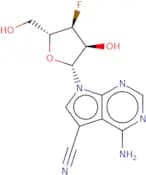
CAS:<p>3’-deoxy-3’-fluorotoyocamycin is a nucleoside, ribonucleoside and antiviral agent. It inhibits the replication of DNA viruses by inhibiting the viral enzyme RNA polymerase. This drug also has anticancer activity and can be used to treat leukemia and other cancers. 3’-deoxy-3’-fluorotoyocamycin can be used as a monophosphate or diphosphate activator for phosphoramidites in the synthesis of modified DNA. It is also a novel drug that has been modified to contain an additional phosphate group at position 3' on the sugar moiety. The CAS number for this compound is 847649-44-9.</p>Purity:Min. 95%3'-Deoxy-3'-fluoro-2'-C-methylguanosine
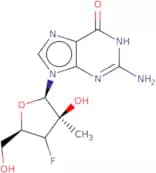
CAS:<p>3'-Deoxy-3'-fluoro-2'-C-methylguanosine is a nucleoside analog that is used in the treatment of cancer. It is an activator of the anticancer drug 5-FU, which inhibits DNA synthesis and cell division. 3'-Deoxy-3'-fluoro-2'-C-methylguanosine may also be used as a starting material for the synthesis of other nucleosides, such as 2',3'-deoxyadenosine and 3',5' -deoxycytidine.</p>Formula:C11H14FN5O4Purity:Min. 95%Molecular weight:299.26 g/mol9-(2',3',5'-tri-O-benzoyl-5'-(R)-C-Methyl-b-D-ribofuranosyl)-6-chloropurine
<p>9-(2',3',5'-tri-O-benzoyl-5'-(R)-C-Methyl-b-D-ribofuranosyl)-6-chloropurine is a modified nucleoside that is used as an antiviral and anticancer agent. It also has been shown to have antimalarial properties. 9-(2',3',5'-tri-O-benzoyl-5'-(R)-C-Methyl-b-D-ribofuranosyl)-6-chloropurine inhibits viral replication by inhibiting DNA polymerase and RNA polymerase, which are enzymes that synthesize DNA and RNA, respectively. It also possesses anticancer properties and has been shown to be effective against leukemia cells in vitro.</p>Purity:Min. 95%2,2'-Anhydrocytidine HCl
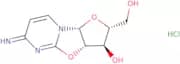
CAS:<p>2,2'-Anhydrocytidine HCl is a nucleoside for use as a DNA synthesis inhibitor</p>Formula:C9H11N3O4·HClPurity:Min. 98 Area-%Color and Shape:White PowderMolecular weight:261.66 g/mol2’C-Methyl-2-thiouridine
CAS:<p>2’C-Methyl-2-thiouridine is a novel nucleoside phosphoramidite that has been synthesized to serve as an activator for DNA polymerases. 2’C-Methyl-2-thiouridine is a potent antiviral agent that inhibits the replication of the hepatitis C virus in vitro. It also has antiproliferative effects against certain cancer cells and can be used as an anticancer drug. 2’C-Methyl-2-thiouridine contains a methylated thiol group, which confers a high degree of resistance to degradation by thiols, including glutathione (GSH). This compound is stable to hydrolysis and may be used in the synthesis of deoxyribonucleosides or monophosphate nucleotides.</p>Purity:Min. 95%2'-O-tert-Butyldimethylsilyl-5'-O-toluoyluridine 3'-CE phosphoramidite
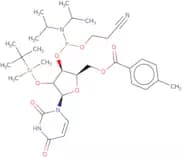
<p>2'-O-tert-Butyldimethylsilyl-5'-O-toluoyluridine 3'-CE phosphoramidite is a modified ribonucleotide that can be used as an activator in oligonucleotide synthesis. 2'-O-tert-Butyldimethylsilyl-5'-O-toluoyluridine 3'-CE phosphoramidite is a novel nucleoside that has antiviral and anticancer properties. It has been shown to inhibit the growth of cells by inhibiting DNA synthesis, which may be due to its ability to bind to DNA and inhibit DNA polymerase. The CAS number for this product is 126214-01-3.</p>Formula:C32H49N4O8PSiPurity:Min. 95%Molecular weight:676.83 g/mol2'-Deoxy-L-cytidine 3'-O-L-valinyl ester 2HCl
CAS:<p>2'-Deoxy-L-cytidine 3'-O-L-valinyl ester 2HCl is a nucleoside analog that is converted to its active form by intracellular dephosphorylation. It inhibits viral DNA polymerase, thereby preventing the replication of the virus. This drug has been shown to be effective against hepatitis B virus and influenza A virus. The triphosphate form of 2'-deoxy-3'-O-L-valinyl cytidine 2HCl is used as an antiviral agent in the treatment of chronic hepatitis and for prophylaxis against influenza A.</p>Formula:C14H22N4O5·2HClPurity:Min. 95%Color and Shape:Off-White PowderMolecular weight:399.27 g/mol2'-Deoxy-5'-O-DMT-cytidine
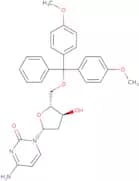
CAS:<p>2'-Deoxy-5'-O-DMT-cytidine is an organic compound. It is a synthetic, combinational and amine nitrogen containing heterocyclic compound that is used in organic synthesis. This chemical is also used as a building block for the synthesis of heterocyclic compounds with other functional groups such as thionyl, formulae, chlorides and hydrogen atoms.</p>Formula:C30H31N3O6Purity:Min. 95 Area-%Color and Shape:White PowderMolecular weight:529.58 g/mol5-[3-(Trifluoroacetyl)aminopropyn-1-yl]uridine
CAS:<p>5-[3-(Trifluoroacetyl)aminopropyn-1-yl]uridine is a new nucleoside analog that has antiviral activity. This drug is synthesized by the modification of the natural uracil nucleoside, which contains a 5-fluoro group and an aminopropynyl substituent on the nitrogen atom. The structure of this molecule allows it to be activated and incorporated into DNA. It also has high quality and purity, as well as novel properties.</p>Purity:Min. 95%3'-O-Acetyl-5'-tert-butyldiphenylsilyl-2'-deoxy-2'-fluoro-5-methyluridine
<p>3'-O-Acetyl-5'-tert-butyldiphenylsilyl-2'-deoxy-2'-fluoro-5-methyluridine is a synthetic nucleoside that has antiviral activity. It is a modified nucleoside that contains a monophosphate group, which makes it an activator of DNA polymerase. 3'-O-Acetyl-5'-tert-butyldiphenylsilyl-2'-deoxy-2'-fluoro-5-methyluridine is novel because it contains an acetyl group at the 3' position and a silyl ether on the 2' oxygen atom. 3'-O-Acetyl-5'-tert-butyldiphenylsilyl-2'-deoxy-2'-fluoro -5 -methyluridine has CAS No. 62768‑36‑3 and is available in high purity.</p>Purity:Min. 95%2'-O-Acetyl-3'-deoxy-3'-fluoro-5-methoxy-5'-O-toluoyluridine
CAS:<p>2'-O-Acetyl-3'-deoxy-3'-fluoro-5-methoxy-5'-O-toluoyluridine is a modified nucleoside that has antiviral, anticancer and antimalarial activities. This compound has been synthesized as a monophosphate derivative of the natural nucleoside uridine. It is an activator of DNA polymerase, which helps to synthesize DNA in cells. 2'-O-Acetyl-3'-deoxy-3'-fluoro-5-methoxy-5'-O-toluoyluridine also has anticancer activity due to its ability to inhibit the replication of the human tumor virus KSHV.</p>Purity:Min. 95%5'-O-DMT-uridine 3'-CE phosphoramidite
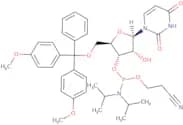
CAS:<p>5'-O-DMT-uridine 3'-CE phosphoramidite is a novel, modified and activator nucleoside. It can be used as an antiviral agent or in the synthesis of DNA. 5'-O-DMT-uridine 3'-CE phosphoramidite has been shown to be cytotoxic in vitro to cancer cells.</p>Formula:C39H47N4O9PPurity:Min. 95%Molecular weight:746.79 g/mol





![7-[3,5-Bis-O-[(-2,4-dichlorophenyl)methyl]-2-C-methyl-b-D-ribofuranosyl]-4-chloro-5-iodo-7H-pyrrol…](/_next/image/?url=https%3A%2Fstatic.cymitquimica.com%2Fproducts%2F3D%2Fthumb-webp%2FNB14088.webp&w=3840&q=75)



![5-[3-(Trifluoroacetyl)aminopropyn-1-yl]uridine](/_next/image/?url=https%3A%2Fstatic.cymitquimica.com%2Fproducts%2F3D%2Fthumb-webp%2FNT163019.webp&w=3840&q=75)