Nucleosides
Found 3569 products of "Nucleosides"
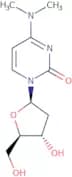
2’-Deoxy-N4-dimethylcytidine
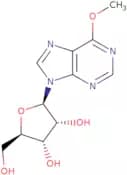
CAS:2’-Deoxy-N4-dimethylcytidine is a synthetic nucleoside analog that is used to inhibit viral replication in the treatment of AIDS and cancer. It is phosphorylated by adenosine kinase to form deoxydimethylcytidine monophosphate (dDMP), which inhibits viral DNA synthesis by inhibiting the activity of reverse transcriptase, an enzyme involved in the production of viral DNA. 2’-Deoxy-N4-dimethylcytidine has also been shown to inhibit cancer cell growth by interrupting mitosis and inducing apoptosis.Purity:Min. 95%6-O-Methylinosine
CAS:6-O-Methylinosine is a modified nucleoside that is used in the synthesis of recombinant proteins. It is synthesized from the reaction of methylphosphate and 6-O-methylguanosine. The phosphate group of the 6-O-methylguanosine molecule reacts with methylphosphate in an acid or neutral environment, while it reacts with phosphoric acid in a basic environment. This reaction can be monitored by measuring the amount of free phosphate groups present after the reaction. The rate of this reaction can be increased by increasing temperature and pH. 6-O-Methylinosine has been shown to have anticancer activity, which may be due to its ability to inhibit enzyme catalysis and modify DNA structure.Formula:C11H14N4O5Purity:Min. 95%Color and Shape:White PowderMolecular weight:282.25 g/mol2’-O-Methyl-5-methyluridine 5’-triphosphate triethylammonium salt
CAS:2’-O-Methyl-5-methyluridine 5’-triphosphate triethylammonium salt is a nucleoside that can be used as an antiviral or anticancer drug. It is a modified nucleoside, which is synthesized by phosphoramidite chemistry. 2'-O-Methyl-5'-methyluridine 5'-triphosphate triethylammonium salt has been shown to be an activator of DNA polymerase in vitro and in vivo. It also has high purity and high quality.Formula:C11H19N2O15P3Purity:Min. 95%Molecular weight:512.19 g/molRibavirin 5'-triphosphate tetrasodium salt - 10mM aqueous solution
CAS:Ribavirin triphosphate is the biologically active metabolite of antiviral nucleoside analog ribavirin. In cells, the prodrug ribavirin gets triphosphorylated and in it inhibits viral RNA polymerases, interfering with the synthesis of newly formed RNA.Formula:C8H15N4O14P3·Na4Purity:Min. 95 Area-%Color and Shape:PowderMolecular weight:576.1 g/mol3'-O-Methyladenosine
CAS:3'-O-Methyladenosine (3'OMeA) is a monomethylated adenosine that belongs to the group of nucleosides. It has been found to inhibit the activity of adenosine receptors, which are important for the regulation of blood pressure and central nervous system function. 3'OMeA also inhibits virus replication in human lymphocytes. 3'OMeA is synthesized by reaction with methylamine and purification by column chromatography. The molecule is a potential therapeutic target for HIV/AIDS, as it can be used as a specific agonist in order to block viral entry into cells.
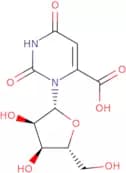
Formula:C11H15N5O4Purity:Min. 95%Color and Shape:White PowderMolecular weight:281.27 g/molOrotidine
CAS:Orotidine is a decarboxylase inhibitor. It inhibits the enzyme that converts orotate to uridine and the enzyme that converts orotate to decarboxylase. Orotidine has been shown to inhibit the growth of opportunistic fungal organisms and may be useful in treating infections caused by these pathogens. Orotidine is an analytical method for measuring the activity of orotidase, which catalyzes conversion of orotate to uridine. The enzyme form of orotidase found in human erythrocytes is very sensitive to inhibition by picolinic acid, which is used as a substrate for this reaction.
Formula:C10H12N2O8Purity:Min. 95 Area-%Color and Shape:White PowderMolecular weight:288.21 g/molN4-Benzoyl-3'-O-tert-butyldimethylsilyl-5'-O-DMT-N4-methylcytidine
N4-Benzoyl-3'-O-tert-butyldimethylsilyl-5'-O-DMT-N4-methylcytidine is a nucleoside that is chemically modified by the addition of a benzoyl group. It has antiviral, anticancer and antiretroviral activities. N4-Benzoyl-3'-O-tert-butyldimethylsilyl-5'-O-DMT-N4-methylcytidine inhibits viral DNA synthesis by inhibiting both viral DNA polymerase and reverse transcriptase, which are enzymes required for the production of viral DNA. It also inhibits cancer cell growth by forming covalent bonds with deoxyribonucleic acid (DNA) in the cancer cells and initiating apoptosis. This nucleoside has been shown to be active against HIV, Herpes Simplex Virus Type 1 (HSV1), and Human CytomegalovPurity:Min. 95%Uridine 5'-diphosphate disodium salt
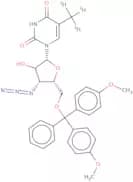
CAS:Agonist of P2Y6 purinoceptor; antagonist of P2Y14Formula:C9H12N2O12P2Na2Purity:Min. 95%Color and Shape:White PowderMolecular weight:448.12 g/mol3'-Azido-3'-deoxy-5'-O-DMT-D3-thymidine
Controlled Product3'-Azido-3'-deoxy-5'-O-DMT-D3-thymidine is a novel nucleoside that has antiviral, anticancer and phosphoramidite activities. It is an activator of the thymidine kinase enzyme and phosphorylates its substrate to form 3'-azido-3'-deoxy-5'-O-DMT-diphosphate. It is also a monophosphate and diphosphate analog of thymidine. This product can be used in the synthesis of DNA or RNA by modifying the sugar moiety. 3'-Azido-3'-deoxy-5'-O-DMT-D3 -thymidine can also be used for anticancer therapy because it inhibits ribonucleotide reductase, which is necessary for DNA synthesis.Formula:C31H28N5O7D3Purity:Min. 95%Molecular weight:588.62 g/mol5'-O-DMT-5-iodo-2'-O-methyluridine
CAS:5'-O-DMT-5-iodo-2'-O-methyluridine is an activator and antitumor agent that is used in the synthesis of 5'-O-DMT-5-iodo-2'-O-(2,4,6-trimethoxybenzoyl)uridine for cancer research. This chemical is a novel synthetic nucleoside with a high purity and quality that can be used to synthesize deoxyribonucleosides, nucleosides, and phosphoramidites. It has a CAS number of 588691-24-1. 5'-O-DMT-5-iodo-2'-O-(2,4,6 trimethoxybenzoyl)uridine can be used as an antiviral agent against HIV and other retroviruses.Formula:C31H31IN2O8Purity:Min. 98 Area-%Color and Shape:PowderMolecular weight:686.49 g/mol6-Mercapto-9-(2'-deoxy-β-D-ribofuranosyl)purine
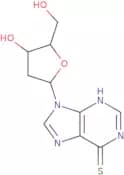
CAS:6-Mercapto-9-(2'-deoxy-b-D-ribofuranosyl)purine (6MPD) is a purine nucleoside that is used in the preparation of glycosidic bonds. It forms a glycosidic bond with the terminal residue of an oligosaccharide, which leads to the formation of an oligodeoxynucleotide. 6MPD also has binding properties to DNA binding proteins, and it can be used as a growth factor. 6MPD is obtained by reacting 3-chloroperoxybenzoic acid with sodium trifluoroacetate in the presence of mercaptoethanol and sodium hydroxide. This reaction yields 6MPD as a white solid with a melting point of 179°C.Formula:C10H12N4O3SPurity:Min. 95%Color and Shape:PowderMolecular weight:268.29 g/mol2'-O-Methyladenosine-5'-triphosphate sodium salt - 100mM aqueous solution
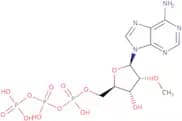
CAS:2'-O-Methyladenosine-5'-triphosphate sodium salt is a novel nucleoside phosphoramidite. It is an activator and it can be used in the synthesis of DNA and RNA. The compound has antiviral properties and has been shown to inhibit DNA replication, protein synthesis, and RNA transcription. The compound also inhibits the growth of cancer cells by inducing apoptosis.Formula:C11H18N5O13P3·xNaPurity:Min. 95%Color and Shape:PowderMolecular weight:521.21 g/mol1-(4’-Azido-3’,5’-di-O-benzoyl-2’-deoxy-2’-fluoro-b-D-arabinofuranosyl)uracil
CAS:1-(4’-Azido-3’,5’-di-O-benzoyl-2’-deoxy-2’-fluoro-b-D-arabinofuranosyl)uracil is a synthetic antiviral agent that inhibits the activity of DNA and RNA polymerases. It also has anticancer properties. The compound is an analogue of 2'-deoxycytidine monophosphate (dCMP). This compound binds to the phosphate group of nucleoside triphosphates and prevents their incorporation into DNA or RNA. 1-(4’-Azido-3’,5’-di-O-benzoyl-2’-deoxy) -2′ fluoro -b D arabinofuranosyl) uracil has been shown to inhibit the growth of cancer cells in vitro.Purity:Min. 95%2-Chloro-2'-deoxyadenosine 5'-triphosphate sodium salt
2-Chloro-2'-deoxyadenosine 5'-triphosphate sodium salt is a nucleoside that can be used in the synthesis of DNA and RNA. It is a synthetic, high quality, and novel compound that has been shown to have antiviral, anticancer, and anti-inflammatory properties. This compound has been shown to inhibit the growth of cancer cells by inhibiting the production of proteins vital for cell division. 2-Chloro-2'-deoxyadenosine 5'-triphosphate sodium salt has also been shown to be an activator of nucleoside phosphorylase and deoxynucleotide kinase, which are enzymes that catalyze the conversion of nucleosides into their corresponding monophosphates.Purity:Min. 95%5'-Amino-5'-deoxyadenosine hydrochloride
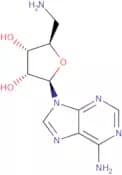
CAS:5'-Amino-5'-deoxyadenosine hydrochloride (5'-ADeA) is a nucleotide that is synthesized from ribose 5-phosphate and adenosine monophosphate. It has been shown to have potential as a biomarker for skin cancer. The synthesis of 5'-ADeA is catalyzed by the enzyme caffeic acid 4-monooxygenase, which converts caffeic acid into 5'-ADeA. This reaction requires molecular oxygen, NADPH, and iron ions. The activity of this enzyme can be inhibited by sodium carbonate or basic fibroblast growth factor (bFGF). This drug has been shown to have anti-inflammatory effects in vivo.Formula:C10H14N6O3Purity:Min. 95 Area-%Color and Shape:PowderMolecular weight:266.26 g/mol2',3'-Dideoxy-2',3'-didehydroadenosine
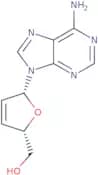
CAS:2′,3′-Dideoxy-2′,3′-didehydroadenosine, abbreviated to d4A, is a synthetic purine nucleoside analog. Possible applications are its use to study antiviral activity.Formula:C10H11N5O2Purity:Min. 95%Color and Shape:Off-White PowderMolecular weight:233.23 g/mol5'-O-DMT-uridine 3'-CE phosphoramidite
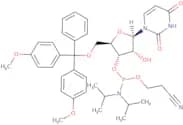
CAS:5'-O-DMT-uridine 3'-CE phosphoramidite is a novel, modified and activator nucleoside. It can be used as an antiviral agent or in the synthesis of DNA. 5'-O-DMT-uridine 3'-CE phosphoramidite has been shown to be cytotoxic in vitro to cancer cells.Formula:C39H47N4O9PPurity:Min. 95%Molecular weight:746.79 g/mol3'-O-Aminoacetoxy-2'-deoxyadenosine
amino functionalised nucleosideFormula:C13H22N6O3Purity:Min. 98 Area-%Color and Shape:PowderMolecular weight:310.36 g/molN6-Dimethyl-2’C-methyladenosine
CAS:N6-Dimethyl-2’C-methyladenosine is an antiviral agent that inhibits the synthesis of DNA and RNA by inhibiting the enzyme DNA polymerase. It is a novel nucleoside analogue with high antiviral activity against herpes simplex virus type 1 (HSV-1) and HSV-2. N6-Dimethyl-2’C-methyladenosine has been shown to be more potent than acyclovir, which is currently used to treat these viruses. This compound also enhances the effectiveness of other antiviral drugs, such as ganciclovir, in vitro.Purity:Min. 95%5'-O-p-Anisoyl-N6-benzoyl-2'-deoxyadenosine
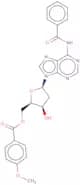
5'-O-p-Anisoyl-N6-benzoyl-2'-deoxyadenosine is a novel nucleoside analog with anticancer, antiviral, and antimalarial activities. It is synthesized by the condensation of 2'-deoxyadenosine with anisic acid in the presence of phosphoramidites. The compound is a potent inhibitor of DNA synthesis in cultured cells, and has been shown to inhibit replication of human immunodeficiency virus type 1 (HIV-1) in vitro. 5'-O-p-Anisoyl-N6-benzoyl-2'-deoxyadenosine also exhibits antiinflammatory activity against carrageenan induced paw edema in rats.Formula:C25H23N5O6Purity:Min. 95%Molecular weight:489.48 g/mol