Nucleosides
Nucleosides are fundamental building blocks of nucleic acids, composed of a nitrogenous base attached to a sugar molecule. In this section, you can find a wide variety of nucleosides essential for research in molecular biology, biochemistry, and pharmacology. These compounds play crucial roles in the synthesis of DNA and RNA, and are also vital in various metabolic processes. Nucleosides are used in studying genetic material, developing antiviral and anticancer therapies, and understanding cellular mechanisms. At CymitQuimica, we provide high-quality nucleosides to support your research and development needs, ensuring purity and reliability for your experimental applications.
Found 3567 products of "Nucleosides"
Sort by
Purity (%)
0
100
|
0
|
50
|
90
|
95
|
100
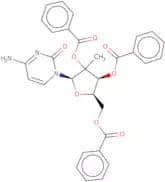
2',3',5'-Tri-O-benzoyl-2'-C-methylcytidine
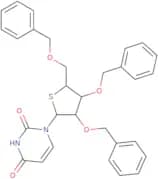
CAS:<p>2',3',5'-Tri-O-benzoyl-2'-C-methylcytidine is a modified cytidine analog. Cytidine is a pyrimidine nucleoside, composed of cytosine attached to a ribose sugar via a β-glycosidic bond. The hydroxyl groups on the ribose sugar at the 2′, 3′, and 5′ positions are protected with benzoyl groups which can prevent side reactions during chemical synthesis. A methyl group is also added to the 2′ carbon of the sugar ring.</p>Formula:C31H27N3O8Purity:Min. 95%Color and Shape:PowderMolecular weight:569.56 g/mol1-(2’,3’,5’-Tri-O-benzyl-4’-thio-b-D-arabinofuranosyl)uracil
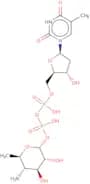
CAS:<p>Ribonucleosides are a type of nucleoside that contains ribose sugar in its structure. Ribonucleosides have been synthesized from 1-(2’,3’,5’-tri-O-benzyl-4’-thio-b-D-arabinofuranosyl)uracil using phosphoramidites. These compounds are novel nucleosides and deoxyribonucleosides with the potential to be used as anticancer agents and antiviral drugs. Ribonucleosides can also act as activators for DNA polymerases, which may be useful in the treatment of cell proliferation disorders. They are modified nucleotides that are high purity, high quality and CAS No. 267665-69-0.</p>Purity:Min. 95%Thymidine-5'-diphosphate-D-viosamine disodium salt
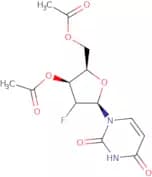
CAS:<p>Thymidine-5'-diphosphate-D-viosamine disodium salt is a nucleoside that has been conjugated to a carrier molecule. This compound is an anomeric, pyranose, and conjugate acid. It has been shown to have antiviral activity in vitro and in vivo against herpes simplex virus type 1 (HSV-1), herpes simplex virus type 2 (HSV-2), and human cytomegalovirus (CMV). Thymidine-5'-diphosphate-D-viosamine disodium salt inhibits the synthesis of viral DNA by inhibiting the incorporation of uracil into the viral DNA strand. This inhibition prevents the production of new viruses by preventing replication.</p>Formula:C16H25N3O14P2Na2Purity:Min. 95 Area-%Color and Shape:White Off-White PowderMolecular weight:591.31 g/mol3',5'-Di-O-acetyl-2'-deoxy-2'-fluorouridine
CAS:<p>3',5'-Di-O-acetyl-2'-deoxy-2'-fluorouridine is a nucleoside monophosphate with antiviral activity. It is a synthetic nucleoside that has been modified to be resistant to degradation by ribonucleases. 3',5'-Di-O-acetyl-2'-deoxy-2'-fluorouridine inhibits the synthesis of DNA, RNA and protein and is used for treatment of cancer. This drug is not active against other types of viruses such as herpes simplex virus or cytomegalovirus.</p>Formula:C13H15FN2O7Purity:Min. 95%Color and Shape:White PowderMolecular weight:330.27 g/mol2'-Deoxy-5'-O-DMT-5-(methylthio)-uridine 3'-CE phosphoramidite
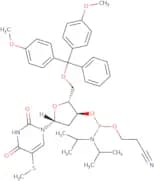
CAS:<p>2'-Deoxy-5'-O-DMT-5-(methylthio)-uridine 3'-CE phosphoramidite is a novel anticancer agent that inhibits DNA synthesis and RNA transcription. It is a nucleoside analog, which is not metabolized by the body, and can therefore be used in combination with other drugs to treat cancer. This drug has been shown to be active against influenza virus and herpes simplex virus, as well as inhibiting the production of HIV. 2'-Deoxy-5'-O-DMT-5-(methylthio)-uridine 3'-CE phosphoramidite has also been shown to inhibit the growth of tumor cells when combined with other chemotherapeutic agents.</p>Formula:C40H49N4O8PSPurity:Min. 95%Molecular weight:776.88 g/mol3'-Amino-2',3'-dideoxy-5'-O-DMT-N2-isobutyrylguanosine
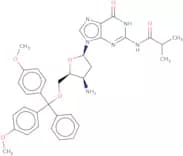
<p>a specifically designed building block for introducing a 3'-amino group into oligonucleotides. The dideoxy sugar ensures the amino group is the primary functionality at the 3' end, while the DMT and isobutyryl protecting groups ensure controlled reactivity during oligonucleotide synthesis and subsequent modification steps.</p>Formula:C35H38N6O6Purity:Min. 95%Molecular weight:638.71 g/mol5’-Azido-5’-deoxy-2’-O,4’-C-methyleneuridine
CAS:<p>5’-Azido-5’-deoxy-2’-O,4’-C-methyleneuridine is a novel modified nucleoside that is phosphorylated to the 5′ position. It can be used as a purine analogue in the synthesis of DNA and RNA. This compound has antiviral activity, which may be due to its ability to inhibit viral DNA polymerase and/or viral RNA polymerase. 5’-Azido-5’-deoxy-2’-O,4’-C methyleneuridine also has anticancer properties by inhibiting DNA synthesis and cell division.</p>Formula:C10H11N5O5Purity:Min. 95%Molecular weight:281.22 g/mol3’-Deoxy-N6,N6-dimethyladenosine
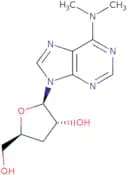
CAS:<p>Please enquire for more information about 3’-Deoxy-N6,N6-dimethyladenosine including the price, delivery time and more detailed product information at the technical inquiry form on this page</p>Purity:Min. 95%1-Methyl-3-(3-amino-3-carboxypropyl)pseudouridine
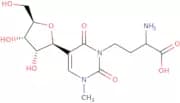
CAS:<p>1-Methyl-3-(3-amino-3-carboxypropyl)pseudouridine is a nucleoside analog for use in research into biological functions. Pseudouridine is a modified version of uridine found in certain types of RNA e.g. tRNA. This nucleoside analog could be used for research into how alteration to RNA structures can impact cellular function.</p>Formula:C14H21N3O8Purity:Min. 95%Color and Shape:PowderMolecular weight:359.33 g/mol5'-o-(Dimethoxytrityl)-5,6-dihydro-2'-deoxyuridine
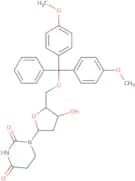
CAS:<p>5'-O-Dimethoxytrityl-5,6-dihydro-2'-deoxyuridine is a nucleoside that is used as an anticancer drug. It is a modified nucleoside with a dimethoxytrityl group at the 5'-position and a phosphate group at the 2' position. This modification makes it resistant to degradation by phosphodiesterases. 5'-O-Dimethoxytrityl-5,6-dihydro-2'-deoxyuridine is used as a precursor in the synthesis of DNA or RNA and has been shown to be effective against some human cancer cell lines.</p>Formula:C30H32N2O7Purity:Min. 95%Molecular weight:532.6 g/mol2'-Deoxy-5'-O-DMT-N2-isobutyryl-O6-methylguanosine 3'-CE phosphoramidite
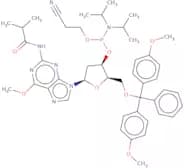
<p>2'-Deoxy-5'-O-DMT-N2-isobutyryl-O6-methylguanosine 3'-CE phosphoramidite is a modified nucleoside that can be used in the synthesis of DNA. It is a modified nucleoside with a methyl group at the 2' position and an isobutyryl group at the 6' position. The methyl group is attached to the 5' carbon atom of the ribose sugar, and the isobutyryl group is attached to the 2' carbon atom. This product has anticancer activity, as well as antiviral, antibacterial, and antifungal properties. It has been shown to inhibit transcription by binding to RNA polymerase II in vitro and in vivo. This product also has high purity and high quality for research purposes.</p>Formula:C45H56N7O8PPurity:Min. 95%Color and Shape:Off-White To Light (Or Pale) Brown SolidMolecular weight:853.96 g/molN4-Acetyl-2'-O-acetyl-5'-O-DMT-arabinosyl cytosine 3'-CE phosphoramidite
<p>N4-Acetyl-2'-O-acetyl-5'-O-DMT-arabinosyl cytosine 3'-CE phosphoramidite is a prodrug that is activated by intracellular enzymes. It has been shown to be an immunostimulatory agent, which modulates the immune system for the treatment of cancer and autoimmune disorders. N4-Acetyl-2'-O-acetyl-5'-O-DMT-arabinosyl cytosine 3'-CE phosphoramidite can also act as a ligand for various cell surface receptors and transporters, including CD28, interleukin 2 receptor alpha chain, CD40, CD84, and MHC class II. The compound has been shown to inhibit tumor cells in culture and induces apoptosis in these cells.</p>Purity:Min. 95%N-Succinyl-5-aminoimidazole-4-carboxamide ribose 5'-phosphate dibarium salt
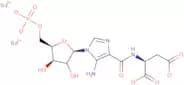
CAS:<p>N-Succinyl-5-aminoimidazole-4-carboxamide ribose 5'-phosphate dibarium salt is a novel, modified, and synthetic nucleotide that belongs to the group of ribonucleosides. It is an activator of DNA and has antiviral properties. This compound was developed for use in high quality pharmaceuticals for the treatment of cancer and as an antiviral drug. The synthesis of this compound is based on the incorporation of phosphoramidites in place of deoxyribonucleosides. This process yields high purity compounds that are used in various research applications.</p>Formula:C13H15Ba2N4O12PPurity:Min. 95%Molecular weight:724.91 g/molN6-Benzoyl-3'-O-tert-butyldimethylsilyl-5'-O-DMT-adenosine
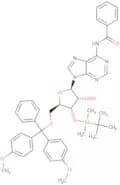
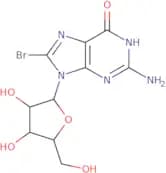
CAS:<p>N6-Benzoyl-3'-O-tert-butyldimethylsilyl-5'-O-DMT-adenosine is a modified nucleoside that is used in the synthesis of oligonucleotides. It is an activator of DNA and RNA synthesis, which has antiviral and antitumor properties. The CAS number for this compound is 81256-88-4.</p>Formula:C44H49N5O7SiPurity:Min. 95%Color and Shape:PowderMolecular weight:787.97 g/mol8-Bromo-9-(b-D-xylofuranosyl)guanine
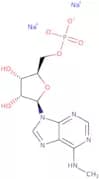
CAS:<p>8-Bromo-9-(beta-D-xylofuranosyl)guanine (8BrG) is a modified nucleoside that has been shown to inhibit DNA and RNA synthesis in cells. This compound is also an antiviral agent with activity against herpes simplex virus type 1, herpes simplex virus type 2, and HIV. 8BrG inhibits the production of viral diphosphate and ribonucleosides by competitive inhibition of cellular enzymes involved in nucleotide biosynthesis. 8BrG is not active against bacterial cells, which lack these enzymes. 8BrG is synthesized by the addition of a bromine to the 9th position of guanine. It is a novel nucleotide that may have applications as an activator for other drugs or as a cancer treatment.</p>Formula:C10H12BrN5O5Purity:Min. 95%Molecular weight:362.14 g/molN6-Methyladenosine-5'-monophosphate sodium
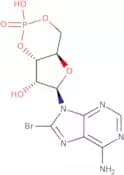
CAS:<p>N6-Methyladenosine-5'-monophosphate sodium is a synthetic nucleoside that has antiviral and anticancer activity. It is an activator of DNA polymerase α, which is involved in the synthesis of DNA. N6-Methyladenosine-5'-monophosphate sodium has been shown to inhibit the replication of human immunodeficiency virus type 1 (HIV-1) in cultured cells and to induce apoptosis in cancer cells. This drug also inhibits the growth of certain bacteria, such as methicillin-resistant Staphylococcus aureus (MRSA) or Mycobacterium tuberculosis. N6-Methyladenosine-5'-monophosphate sodium may be used for the treatment of HIV/AIDS or cancer.</p>Formula:C11H16N5O7P·2NaPurity:Min. 98 Area-%Color and Shape:White PowderMolecular weight:407.23 g/mol8-Bromoadenosine 3',5'-cyclic monophosphate
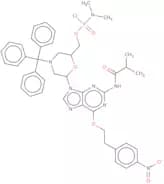
CAS:<p>8-Bromoadenosine 3',5'-cyclic monophosphate (8-Br-cAMP) is a cyclic nucleotide that is involved in the regulation of energy metabolism. It is a pharmacological agent that regulates the intracellular levels of cAMP and plays an important role in regulating cell proliferation, differentiation, and survival. 8-Br-cAMP binds to specific protein kinases and alters their activity. It also inhibits the enzymatic activity of DNA polymerase II. 8-Br-cAMP has been shown to inhibit tumor growth in mice with bone cancer. The mechanism by which this drug exerts its antitumor effect appears to be related to increased expression of basic proteins and decreased expression of phosphatase 2A, leading to increased activation of protein kinase A. 8-Br-cAMP also causes cellular accumulation of Ca2+ ions by stimulating an increase in the activity of phospholipase C, which hydrolyzes phosphat</p>Formula:C10H11BrN5O6PPurity:Min. 98 Area-%Color and Shape:Beige PowderMolecular weight:408.11 g/molMorpholino O6-(p-nitrophenethyl) G monomer
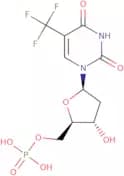
CAS:<p>Morpholino O6-(p-nitrophenethyl) G monomer is a sub-unit used to prepare morpholino oligomers</p>Formula:C43H46ClN8O7PPurity:Min. 98 Area-%Color and Shape:PowderMolecular weight:853.3 g/mol2'-Deoxy-5-trifluoromethyluridine-5'-monophosphate
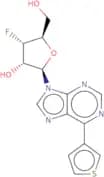
CAS:<p>2'-Deoxy-5-trifluoromethyluridine-5'-monophosphate is a prodrug that has been shown to inhibit the growth of endothelial cells. It has also been shown to be effective against cancer cells, specifically those that are resistant to other chemotherapeutic agents. The mechanism of action is not yet known, but it may be due to inhibition of thymidylate synthase and DNA synthesis. 2'-Deoxy-5-trifluoromethyluridine-5'-monophosphate is a potential drug for use in the treatment of cancer. Clinical trials have shown that it can promote tumor regression in patients with advanced solid tumors.</p>Formula:C10H12F3N2O8PPurity:Min. 95%Molecular weight:376.18 g/mol9-(3'-Deoxy-3'-fluoro-b-D-ribofuranosyl)-6-(thiophen-3-yl)purine
CAS:<p>9-(3'-Deoxy-3'-fluoro-b-D-ribofuranosyl)-6-(thiophen-3-yl)purine is a novel monophosphate nucleotide analog, which has been shown to be an activator of anticancer activity. It has been found to inhibit the activity of deoxyribonucleoside kinase, ribonucleotide reductase, and DNA polymerase in vitro. 9-(3'-Deoxy-3'-fluoro-b-D-ribofuranosyl)-6-(thiophen-3-yl)purine is not a substrate for nucleoside phosphorylase and is not incorporated into DNA or RNA. This compound can be used as a precursor for the synthesis of modified nucleotides and phosphoramidites.</p>Purity:Min. 95%