Nucleosides
Found 3573 products of "Nucleosides"
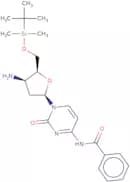
3'-Amino-N4-benzoyl-5'-O-tert-butyldimethylsilyl-2',3'-dideoxycytidine
CAS:3'-Amino-N4-benzoyl-5'-O-tert-butyldimethylsilyl-2',3'-dideoxycytidine (3'-ABT) is a novel diphosphate nucleoside that has been used in clinical trials as an activator of anticancer drugs. 3'-ABT is also used as a building block for synthesis of 2',3'-dideoxyuridine, which has antiviral properties. 3'-ABT can be synthesized by reacting N4-benzoyl-5'-O-tert-butyldimethylsilylcytosine with sodium bis(trimethylsilyl)amide and 2,6,8,10,-dodecatriene.
Formula:C22H32N4O4SiPurity:Min. 95%Molecular weight:444.6 g/molN6-Benzoyl-5'-O-trityl-adenosine
N6-Benzoyl-5'-O-trityl-adenosine is a novel nucleoside, which has been synthesized to be a phosphoramidite. It is an anticancer drug that inhibits the growth of tumor cells by competitively inhibiting the synthesis of DNA and RNA. In addition, N6-Benzoyl-5'-O-trityl-adenosine has antiviral properties, which may be due to its ability to inhibit viral DNA polymerase. This compound also shows high purity and quality.
Formula:C36H31N5O5Purity:Min. 95%Molecular weight:613.66 g/mol3’-Azido-3’-deoxy-2-thiouridine
CAS:3’-Azido-3’-deoxy-2-thiouridine is an antiviral agent that is used to synthesize phosphoramidites for the preparation of modified oligonucleotides. 3’-Azido-3’-deoxy-2-thiouridine has been shown to inhibit cancer growth and induce apoptosis in cancer cells, suggesting that it may have anticancer properties. It is also a novel deoxyribonucleoside that can be used as a building block for the synthesis of ribonucleosides. 3’-Azido-3’-deoxy-2-thiouridine is a high quality product with high purity and excellent activator properties. This product has CAS No. 2305416–00–4 and can be used in pharmaceuticals, biotechnology, and other chemical applications.
Formula:C9H11N5O4SPurity:Min. 95%Molecular weight:285.28 g/mol6-Amino-4-hydroxyamino-2-(b-D-ribofuranosyl)-2H-pyrazolo[3,4-d]pyrimidine
6-Amino-4-hydroxyamino-2-(b-D-ribofuranosyl)-2H-pyrazolo[3,4-d]pyrimidine is a novel synthetic ribonucleotide that inhibits the growth of tumor cells by interfering with DNA synthesis. This compound has been shown to inhibit the replication of HIV and herpes simplex virus type 1. The phosphoramidite monomer is readily available and can be synthesized in high purity and high quality. 6-Amino-4-hydroxyamino-2-(b-D-ribofuranosyl)-2H-pyrazolo[3,4-d]pyrimidine is a modified nucleoside that is activated by phosphorylation at the 5' position. CAS No.: 10266890
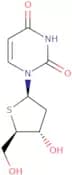
Purity:Min. 95%2'-Deoxy-4'-thiouridine
CAS:2'-Deoxy-4'-thiouridine (2dT) is a synthetic purine nucleoside analogue that has antiviral activity against herpes simplex virus and hepatitis B virus. It is a lead compound for the development of therapeutic agents for human immunodeficiency virus type 1 and varicella, and it has potential applications in the treatment of renal toxicity. 2dT inhibits viral replication by inhibiting viral thymidine kinase, which converts 2dT to 2'-deoxy-4'-thioguanosine monophosphate (2'TGMP). The 2'TGMP inhibits intracellular phosphorylation reactions necessary for DNA synthesis and cell division. This inhibition leads to death of the infected cells.
Formula:C9H12N2O4SPurity:Min. 95%Molecular weight:244.27 g/mol2’C-Methyl-2-thiouridine
CAS:2’C-Methyl-2-thiouridine is a novel nucleoside phosphoramidite that has been synthesized to serve as an activator for DNA polymerases. 2’C-Methyl-2-thiouridine is a potent antiviral agent that inhibits the replication of the hepatitis C virus in vitro. It also has antiproliferative effects against certain cancer cells and can be used as an anticancer drug. 2’C-Methyl-2-thiouridine contains a methylated thiol group, which confers a high degree of resistance to degradation by thiols, including glutathione (GSH). This compound is stable to hydrolysis and may be used in the synthesis of deoxyribonucleosides or monophosphate nucleotides.
Purity:Min. 95%2'-Deoxyguanosine-5'-carboxylic acid
CAS:2'-Deoxyguanosine-5'-carboxylic acid is a synthetic nucleoside that has antiviral and anticancer properties. It is an activator of DNA polymerase, which is used in the synthesis of DNA. 2'-Deoxyguanosine-5'-carboxylic acid also inhibits the activity of ribonucleotide reductase and deoxyribonucleotide reductase, which are enzymes that catalyze the conversion of ribose-5-phosphate to deoxyribose-5-phosphate. This substance also blocks viral replication by inhibiting RNA synthesis in cells infected with HIV or herpes simplex virus type 1.
Formula:C10H11N5O5Purity:Min. 95%Molecular weight:281.23 g/mol3'-O-Amino-2'-deoxycytidine
CAS:3'-O-Amino-2'-deoxycytidine (3'-AAC) is an activator nucleoside that has antiviral and anticancer properties. It can be used with other anticancer agents such as doxorubicin, methotrexate, and 5-fluorouracil to increase the efficacy of these compounds. 3'-AAC is a phosphoramidite monophosphate that can be used in the synthesis of oligodeoxynucleotides. This product is also a novel chemical entity that has not been previously described in any publication or patent application.
Formula:C9H14N4O4Purity:Min. 95%Molecular weight:242.23 g/mol3’-Deoxy-5-methoxyuridine
CAS:3’-Deoxy-5-methoxyuridine is a modified nucleoside that has antiviral and anticancer properties. It is an activator of DNA synthesis, which is the first step in the process of DNA replication. It also inhibits DNA gyrase and topoisomerase II, enzymes that maintain the integrity of bacterial DNA. 3’-Deoxy-5-methoxyuridine phosphoramidites are used in anticancer drugs.
Formula:C10H12N2O6Purity:Min. 95%Molecular weight:258.23 g/mol9-[2'-O-Acetyl-3'-azido-3'-deoxy-5'-O-toluoyl-b-L-ribofuranosyl)-6-chloropurine
CAS:9-[2'-O-Acetyl-3'-azido-3'-deoxy-5'-O-toluoyl-b-L-ribofuranosyl)-6-chloropurine is a modified nucleoside. It is synthesized by attaching an acetyl group to the 2' position of the sugar moiety and a toluoyl group to the 3' position of the ribose moiety. 9-[2'-O-Acetyl-3'-azido-3'-deoxy-5'-O-toluoyl]-6 chloropurine has been shown to be an activator of RNA polymerase II and III, which are involved in transcription and replication. This drug also has antiviral properties against influenza virus, herpes simplex virus type 1, Epstein Barr Virus (EBV), and HIV as well as anticancer activity against human cells. 9-[2'-O-Acetyl]-6 chlor
Purity:Min. 95%N′-[9-(2-Deoxy-2-fluoro-β-D-arabinofuranosyl)-6,9-dihydro-6-oxo-1H-purin-2-yl]-N,N-dimethylmethanimidamide
CAS:Please enquire for more information about N′-[9-(2-Deoxy-2-fluoro-β-D-arabinofuranosyl)-6,9-dihydro-6-oxo-1H-purin-2-yl]-N,N-dimethylmethanimidamide including the price, delivery time and more detailed product information at the technical inquiry form on this page
Formula:C13H17FN6O4Purity:Min. 95%Molecular weight:340.31 g/molCytidine based prodrug with gemcitabine
Cytidine based prodrug with gemcitabine is a nucleoside analog that has antiviral and anticancer properties. It is a modified cytidine-based prodrug with gemcitabine which is an anticancer drug. Cytidine based prodrug with gemcitabine inhibits viral DNA synthesis by competitively inhibiting the incorporation of deoxycytidine monophosphate into the viral DNA chain. The prodrug also inhibits the proliferation of cancer cells by interfering with DNA synthesis, which leads to cell death.
Purity:Min. 95%8-Methylthioguanosine
CAS:8-Methylthioguanosine is a purine nucleoside that is synthesized from guanosine by the enzyme nucleoside phosphorylase. 8-Methylthioguanosine is used in the treatment of leukemia cells and has been shown to have homogeneity, with a single peak on paper chromatography. It is also an inhibitor of purine nucleotide phosphorylase, which prevents the conversion of guanosine to inosine monophosphate and leads to depletion of intracellular ATP levels. This drug binds tightly to the active site of purine nucleotide phosphorylase and inhibits its activity. 8-Methylthioguanosine may be used as a radiosensitizer for cancer therapy and can be administered intravenously or orally.
Purity:Min. 95%5-(Aminomethyl)-2-thiouridine
CAS:5-(Aminomethyl)-2-thiouridine is a bifunctional molecule that can be used in chromatography and as a precursor for the epigenetic modifications of DNA. 5-(Aminomethyl)-2-thiouridine has been shown to have an effect on the methyltransferase pathway, which is involved in the epigenome. This molecule has also been shown to affect the growth rate of bacteria in vitro.
Formula:C10H15N3O5SPurity:Min. 95%Molecular weight:289.31 g/molPolyinosinic acid tripotassium salt
CAS:Polyinosinic acid is a single stranded RNA analog which is combined with polycytidylic acid (poly C) to form a stable duplex structure known as Polyinosinic acid-polycytidylic acid (Poly I:C). PolyI:C stimulates the secretion of pro-inflammatory cytokines and type I interferon through its interaction with endosomal Toll-like receptor 3 (TLR-3) and the cytoplasmic receptors melanoma differentiation-associated gene 5 (MDA-5) and retinoic acid-inducible gene I (RIG-I). This immunostimulant activity makes Poly I:C a useful vaccine adjuvant and is used in vaccine formulations. Poly I:C and its stabilized analogs (e.g., poly-ICLC) are also being actively researched for their dual role in oncology: directly targeting tumors and acting as immune potentiators. For example Poly I:C can induce apoptosis in tumor cells and stimulate immunogenic cell death and is therefore being explored alongside chemotherapy, radiotherapy, and checkpoint inhibitors, helping to overcome resistance mechanisms and strengthen treatment outcomes. We can supply PolyI:C to all stages of your project - from R&D and preclinical phases right up to GMP commercial manufacture. Contact our team for custom Poly I:C products.
For more on poly I:C read out blog 'Poly I:C: A Vaccine Adjuvant With Oncological Potential.'Purity:Min. 95%Ref: 3D-TP65775
Discontinued productCytidine 5'-monophosphate sodium salt
CAS:Cytidine 5'-monophosphate sodium salt is a nucleotide that is found in RNA and DNA. Cytidine 5'-monophosphate sodium salt is an intermediate in the biosynthesis of uridine, choline, and saccharose. It also plays an important role in the immune system as it can be a precursor for immunoglobulins. The reaction rate of cytidine 5'-monophosphate sodium salt with lipase has been shown to be constant at pH 7.5-8.0 and 37°C. This product has been shown to have emulsifying properties by forming micelles with water-immiscible solvents such as hexane or heptane, which may be due to its ability to form hydrogen bonds with other molecules such as saccharose or guanosine. Cytidine 5'-monophosphate sodium salt can also be used as a chromatographic material for separating saccharose from other sugars
Formula:C9H14N3O8P·xNaPurity:Min. 95 Area-%Color and Shape:White Off-White PowderMolecular weight:323.2 g/molGuanosine hydrate
CAS:Please enquire for more information about Guanosine hydrate including the price, delivery time and more detailed product information at the technical inquiry form on this page
Formula:C10H13N5O5·xH2OPurity:Min. 98 Area-%Molecular weight:283.24 g/molRef: 3D-W-108553
Discontinued product8-Oxo-N2-isobutyryl-2-deoxyguanosine
CAS:8-Oxo-N2-isobutyryl-2-deoxyguanosine is a modified synthetic nucleoside. It finds applications in understanding mutagenesis and DNA repair mechanisms.
Formula:C14H19N5O6Purity:Min. 95%Molecular weight:353.33 g/molRef: 3D-LFA85976
Discontinued productLauroyl coenzyme A
CAS:Lauroyl CoA is a body-fat molecule that can be formed from acetyl-coenzyme A, which is an intermediate in the metabolism of fatty acids. It is used in analysis as a standard for enzyme activities and as a substrate for reactions involving enzymes with coenzyme A. Reaction mechanisms are determined using titration calorimetry and structural analyses are performed using analytical methods such as infrared spectroscopy and nuclear magnetic resonance spectroscopy. Lauroyl CoA is also used to study the effects of the protein toll-like receptor 4 on hepatic steatosis. The wild-type strain of Escherichia coli was used to measure the activity of bacterial synthetases containing lauroyl CoA.
Formula:C33H58N7O17P3SPurity:Min. 95%Color and Shape:PowderMolecular weight:949.84 g/molRef: 3D-NL47197
Discontinued product5'-Cytidylic acid
CAS:Please enquire for more information about 5'-Cytidylic acid including the price, delivery time and more detailed product information at the technical inquiry form on this page
Formula:C9H14N3O8PPurity:Min. 98.0 Area-%Molecular weight:323.20 g/molRef: 3D-Q-101433
Discontinued product3'-O-Aminoacetoxythymidine 5'-O-triphosphate triethylammonium salt
Please enquire for more information about 3'-O-Aminoacetoxythymidine 5'-O-triphosphate triethylammonium salt including the price, delivery time and more detailed product information at the technical inquiry form on this page
Formula:C13H22N3O14P3•(C6H15N)xPurity:Min. 99 Area-%Color and Shape:PowderMolecular weight:537.25 g/molN2-Benzoylguanosine
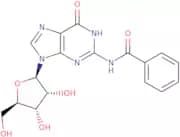
CAS:N2-Benzoylguanosine is a nucleotide derivative that is formed by the acetylation of guanosine. It has been shown to act as a buffer in alkaline solutions and isomerizes to its n-oxide form when heated. N2-Benzoylguanosine reacts with peroxides such as hydrogen peroxide, glyoxal, and organic peroxides, forming hydroperoxide intermediates that can be converted into other products. The acidic hydrolysis of N2-benzoylguanosine yields the corresponding 6-benzoyladenosines. It has been shown to enhance the activity of uridine in inhibiting bacterial growth, while also acting as an inhibitor of viral RNA synthesis. This compound also reacts with nitrous acid to form an n6-benzoyladenosine derivative that inhibits the formation of RNA chains during transcription.
Formula:C17H17N5O6Purity:Min. 95%Color and Shape:White to beige solid.Molecular weight:387.35 g/mol2',3',5'-Tri-O-acetylinosine
CAS:2′,3′,5′-Tri-O-acetylinosine is a protected form of the nucleoside inosine, with potential for use in the preparation of modified nucleotides and nucleoside analogs.
Formula:C16H18N4O8Purity:Min. 95%Color and Shape:White To Off-White SolidMolecular weight:394.34 g/molRef: 3D-NT06708
Discontinued product


![6-Amino-4-hydroxyamino-2-(b-D-ribofuranosyl)-2H-pyrazolo[3,4-d]pyrimidine](/_next/image/?url=https%3A%2Fstatic.cymitquimica.com%2Fproducts%2F3D%2Fthumb-webp%2FNA162982.webp&w=3840&q=75)


![N′-[9-(2-Deoxy-2-fluoro-β-D-arabinofuranosyl)-6,9-dihydro-6-oxo-1H-purin-2-yl]-N,N-dimethylmethani…](/_next/image/?url=https%3A%2Fstatic.cymitquimica.com%2Fproducts%2F3D%2Fthumb-webp%2FNF183584.webp&w=3840&q=75)