Nucleosides
Found 3569 products of "Nucleosides"
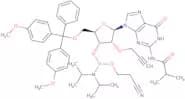
1-[(5E)-5',6'-Dideoxy-6'-diethoxylphosphinyl-2'-O-methyl-b-D-ribo-hex-5-enofuranosyl]uracil 3'-CE phosphoroamidite
1-[(5E)-5',6'-Dideoxy-6'-diethoxylphosphinyl-2'-O-methyl-b-D-ribo-hex-5-enofuranosyl]uracil 3'-CE phosphoroamidite is a nucleoside analog that is a modified form of uracil. It has been shown to inhibit the growth of cancer cells in vitro and in vivo. 1-[(5E)-5',6'-Dideoxy-6'-diethoxylphosphinyl-2'-O-methyl-b-D-ribo-hex-5-enofuranosyl]uracil 3'-CE phosphoroamidite inhibits cellular proliferation by blocking the enzyme ribonucleotide reductase, which plays an essential role in DNA synthesis. This drug also inhibits viral replication by inhibiting reverse transcriptase and integrase, key enzymes in the life cycle of retroviruses andFormula:C22H36N4O9P2Purity:Min. 95%Molecular weight:562.49 g/molN4-Benzoyl-2'-deoxy-5'-O-DMT-3'-O-(methanesulfonyl)cytidine
N4-Benzoyl-2'-deoxy-5'-O-DMT-3'-O-(methanesulfonyl)cytidine is a novel nucleoside with anticancer and antiviral activities. It is synthesized by reacting 4-benzoyl cytidine with 2'-deoxy-5'-O-DMT, followed by the treatment with methanesulfonyl chloride. This compound can be used as an activator of DNA polymerase. It has also been shown to be effective against HIV in vitro.Purity:Min. 95%N4-Benzoyl-3'-O-tert-butyldimethylsilyl-5'-O-DMT-cytidine 2'-CE phosphoramidite
N4-Benzoyl-3'-O-tert-butyldimethylsilyl-5'-O-DMT-cytidine 2'-CE phosphoramidite is a monophosphate nucleotide analog that inhibits the growth of cancer cells by binding to DNA and inhibiting the synthesis of RNA. This drug is a novel, modified nucleoside with anticancer properties. It binds to DNA and inhibits the synthesis of RNA, which may be due to its ability to inhibit the enzyme ribonucleotide reductase. N4-Benzoyl-3'-O-tert-butyldimethylsilyl-5'-O-DMT-cytidine 2'-CE phosphoramidite also has antiviral activity against HIV and Herpes Simplex Virus Type 1 (HSV1).Formula:C52H66N5O9PSiPurity:Min. 95%Molecular weight:964.17 g/mol3',5',N2-Tri-O-acetyl-2'-deoxyguanosine
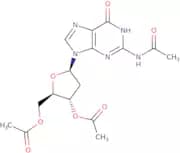
CAS:Tri-O-acetyl-2'-deoxyguanosine is an anticancer and antiviral agent. It is used as a precursor for the synthesis of deoxyribonucleosides and ribonucleosides. This compound has been shown to be a potent activator of DNA polymerase α, and it also inhibits the replication of diphosphate nucleotides. Tri-O-acetyl-2'-deoxyguanosine has also been found to inhibit influenza virus in vitro.Formula:C16H19N5O7Purity:Min. 95%Molecular weight:393.35 g/molN6-Benzoyl-2’-O-tert-butyldimethylsilyl-3’-O-DMT-adenosine
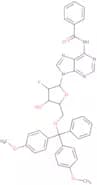
CAS:N6-Benzoyl-2’-O-tert-butyldimethylsilyl-3’-O-DMT-adenosine is a novel nucleoside that is an activator of ribonucleotide reductase and an inhibitor of deoxyribonucleotide reductase. It has been shown to have antiviral and anticancer activities, as well as the ability to inhibit DNA synthesis. The synthetic route to this compound begins with the synthesis of N6-(benzoyl)-2'-O-(tert-butyldimethylsilyl)-3'-O-(dimethoxytrityl)adenosine, which is then converted to the final product by removal of the silyl protecting group and oxidation.Purity:Min. 95%Tert-Butyl 2-Phenyl-4-(P-Tolylsulfonyloxy)-7,8-Dihydropyrido[4,3-D]Pyrimidine-6(5H)-Carboxylate
CAS:Tert-Butyl 2-Phenyl-4-(P-tolylsulfonyloxy)-7,8-dihydropyrido[4,3-D]pyrimidine-6(5H)-carboxylate is an antiviral agent that inhibits the replication of DNA and RNA. It is a phosphoramidate nucleoside analog and a novel compound that has been modified to improve its stability. Tert-butyl 2-phenyl-4-(P-tolylsulfonyloxy)-7,8-dihydropyrido[4,3-D]pyrimidine-6(5H)-carboxylate is currently being investigated for use as a drug to treat HIV/AIDS. This compound has been shown to inhibit HIV protease by binding to the active site of the enzyme and preventing it from cutting the polypeptide chain into smaller pieces. Tert butyl 2 phenyl 4Formula:C25H27N3O5SPurity:Min. 95%Molecular weight:481.57 g/molN4-p-Anisoylcytidine
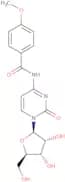
CAS:N4-p-Anisoylcytidine is a labile, crystalline, and water soluble oligoribonucleotide. It is an intermediate in the synthesis of cytidine and phenyl ring. N4-p-Anisoylcytidine can be prepared by reacting p-anisic acid with 4-benzoylcytosine. The reaction yields a mixture of products that can be purified by recrystallization or chromatography. It is hydrolyzed by acidic conditions to yield cytidine and phenyl ring. N4-p-Anisoylcytidine has been used as an intermediate in the synthesis of cytidine, which is subsequently converted to phenyl ring by reaction with benzene. This compound also has been used as an esterification agent for orthoesters.Formula:C17H19N3O7Purity:Min. 95%Molecular weight:377.35 g/mol2'-Deoxy-N2-Isobutyryl-3',5'-O-(1,1,3,3-tetraisopropyl-1,3-disiloxanediyl)guanosine
2'-Deoxy-N2-isobutyryl-3',5'-O-(1,1,3,3-tetraisopropyl-1,3-disiloxanediyl)guanosine (TIG) is a nucleoside and ribonucleoside analog that has antiviral activity. It is synthesized from 2'-deoxyguanosine by the introduction of an isobutyryl moiety at the C2 position and a 1,1,3,3-tetraisopropyl group at the 3' hydroxyl position. TIG is an activator of DNA polymerase β with high quality and high purity and can be used for the synthesis of oligodeoxynucleotide phosphoramidites. TIG can be used to synthesize DNA or RNA molecules with deoxyribonucleosides or modified nucleotides.Purity:Min. 95%2'/3'-O-Trinitrophenyl-adenosine-5'-diphosphate triethylammonium salt
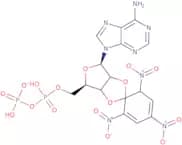
CAS:2'/3'-O-Trinitrophenyl-adenosine-5'-diphosphate triethylammonium salt (TPENAP) is an irreversible inhibitor of the enzyme adenosine kinase. TPENAP binds to the active site of the enzyme and blocks ATP synthesis, resulting in a rapid decrease in ATP levels. TPENAP is a potent fluorescence probe that reacts with tryptophan residues in proteins, thereby enhancing the fluorescence intensity. It has been shown to inhibit actin polymerization and depolymerize actin filaments, which may be due to its ability to inhibit ATP production.Formula:C16H16N8O16P2Purity:Min. 95%Molecular weight:638.29 g/mol2-(2-Deoxy-b-D-ribofuranosyl)-2,3,8,9-tetrahydro-7-oxa-2,3,5,6-tetraazabenz[cd]azulen-4-amine
CAS:2-(2-Deoxy-b-D-ribofuranosyl)-2,3,8,9-tetrahydro-7-oxa-2,3,5,6-tetraazabenz[cd]azulen-4-amine is a novel and structurally distinct nucleoside analog. It has been shown to be an activator of human telomerase reverse transcriptase (hTERT), with low toxicity in vitro and in vivo. 2-(2-Deoxyribofuranosyl)-2,3,8,9 tetrahydro 7 oxa 2 3 5 6 tetraazabenz[cd]azulen 4 amine has been shown to have antiviral activity against the influenza virus A/PR/8/34 (H1N1) and SARS coronavirus in cell cultures. This compound also inhibits the replication of HIV type 1 by inhibiting the reverse transcriptase enzymeFormula:C13H17N5O4Purity:Min. 95%Molecular weight:307.31 g/molPyrido[3,4-d]pyrimidine-2,4(1H,3H)-dione
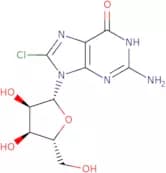
CAS:Pyrido[3,4-d]pyrimidine-2,4(1H,3H)-dione is a small molecule that can function as a transcriptional activator or repressor by binding to DNA. This drug has been shown to upregulate the expression of genes that are involved in the immune system and inflammation.Purity:Min. 95%8-Chloroguanosine
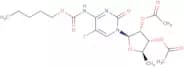
CAS:8-Chloroguanosine is a purine nucleoside that is activated by the addition of adenosine triphosphate (ATP). It reacts with DNA to form a covalent glycosidic bond. 8-Chloroguanosine has been found in urine samples and cell nuclei, as well as in activated and reactive sites in DNA. 8-Chloroguanosine is genotoxic and can cause oxidative damage to DNA. It also has potential as a biomarker for atherosclerosis, because it can be used to detect the group P2 phosphorylation status of proteins in lesions on arteries.Formula:C10H12ClN5O5Purity:Min. 95%Color and Shape:SolidMolecular weight:317.69 g/mol2',3'-Di-O-acetyl-5'-deoxy-5-fluoro-N4-(pentoxycarbonxyl)cytidine
CAS:2',3'-Di-O-acetyl-5'-deoxy-5-fluoro-N4-(pentoxycarbonxyl)cytidine is a nucleoside analog that inhibits DNA polymerase and RNA polymerase, which are enzymes vital for the production of DNA and RNA, respectively. This drug has been shown to be effective in treating cancer cells that are resistant to other chemotherapeutic agents. 2',3'-Di-O-acetyl-5'-deoxy-5-fluoro-N4-(pentoxycarbonxyl)cytidine has also been shown to inhibit viral replication by inhibiting viral reverse transcriptase.Formula:C19H26FN3O8Purity:Min. 95%Molecular weight:443.43 g/mol2',3'-Didehydro-2',3'-dideoxy-5'-acetate inosine
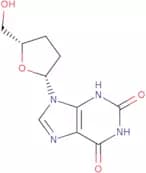
CAS:2',3'-Didehydro-2',3'-dideoxy-5'-acetate inosine (ddA) is a prodrug that is activated by hydrolysis to didanosine. The sodium salt of ddA has been shown to be effective in the treatment of HIV infection. Sodium ddA is a crystalline, neutralized salt with an alkaline pH and a pKa of 9.4. It has been crystallized from an alkaline solution using Raney nickel as a catalyst. This product can be used to synthesize intermediates for pharmaceuticals or other chemical products.Formula:C12H12N4O4Purity:Min. 95%Molecular weight:276.25 g/mol2',3'-Dideoxyxanthosine
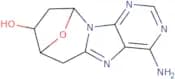
CAS:Controlled Product2',3'-Dideoxyxanthosine is a purine nucleoside analog that inhibits the production of human immunodeficiency virus (HIV). It has potent activity against HIV and is more potent than other drugs in its class. This drug also inhibits the growth of cells by preventing the synthesis of DNA, RNA, and proteins. 2',3'-Dideoxyxanthosine has shown to be an effective treatment for HIV infection.Formula:C10H12N4O4Purity:Min. 95%Molecular weight:252.23 g/mol2',5'-Dideoxy-8,5'-cycloadenosine
CAS:2',5'-Dideoxy-8,5'-cycloadenosine is an anticancer nucleoside. It is a modified deoxyribonucleoside that contains a 2'-deoxyribose sugar with a ribose sugar at the 5' position. This product has been shown to be active against DNA and RNA viruses in the lab. It also has antiviral properties and can inhibit the synthesis of DNA, RNA, or both. The chemical structure of this product is novel and has not been found in nature.
Formula:C10H11N5O2Purity:Min. 95%Molecular weight:233.23 g/mol5-Bromo-deoxyuridine CPG
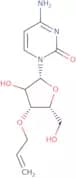
5-Bromo-deoxyuridine CPG is a novel nucleoside. The chemical name of this compound is 5-bromo-2'-deoxyuridine (CAS No. 2305-39-4). 5-Bromo-deoxyuridine CPG has been synthesized from diphosphate and phosphoramidite. It is used to produce the monophosphate form, which acts as an antiviral and anticancer agent.Purity:Min. 95%3'-O-Allylcytidine
3'-O-Allylcytidine is a phosphoramidite nucleoside that is synthesized by the coupling of cytidine with allyl bromoacetate. It has antiviral activity, and has been shown to be active against herpes simplex virus type 1 (HSV-1) and hepatitis B virus (HBV). 3'-O-Allylcytidine has also been shown to inhibit the growth of cells in culture, suggesting that it may have anticancer properties. 3'-O-Allylcytidine is a novel monophosphate nucleoside that has not been previously reported.br>
Formula:C12H17N3O5Purity:Min. 95%Color and Shape:PowderMolecular weight:283.28 g/mol2'-Deoxyadenosine-5'-[(a,b)-methyleno]triphosphate sodium salt - 10 mM aqueous solution
CAS:2'-Deoxyadenosine-5'-[(a,b)-methyleno]triphosphate sodium salt - 10 mM aqueous solution is a molecule that binds to the epidermal growth factor receptor (EGFR). It is a nucleotide that is used in pharmaceutical preparations to treat certain types of cancer. This drug can be used in tissue culture to increase follicular growth and pge2 levels. 2'-Deoxyadenosine-5'-[(a,b)-methyleno]triphosphate sodium salt - 10 mM aqueous solution has been shown to inhibit the proliferation of monoclonal antibody-producing cells by inhibiting DNA synthesis through the inhibition of RNA polymerase II and polymerase chain reaction.Formula:C11H18N5O11P3·xNaPurity:Min. 95%Color and Shape:PowderMolecular weight:489.21 g/mol2'-Deoxyuridine-5'-[(a,b)-methyleno]triphosphate sodium salt - 10 mM aqueous solution
CAS:2'-Deoxyuridine-5'-[(a,b)-methyleno]triphosphate sodium salt - 10 mM aqueous solution is an activator of nucleoside diphosphates. It is a novel and anticancer nucleoside analog with high purity, high quality and a CAS number of 170428-84-9. This activator has been shown to inhibit the growth of tumor cells by inhibiting DNA synthesis and ribonucleotide reductase activity. The 2'-deoxyuridine-5'-[(a,b)-methyleno]triphosphate sodium salt - 10 mM aqueous solution can be used in the synthesis of deoxyribonucleosides and phosphoramidites as well as modified DNA.Formula:C10H17N2O13P3Purity:Min. 95%Color and Shape:liquid.Molecular weight:466.17 g/mol5-[3-(Trifluoroacetamido)-E-1-propenyl]-2’- deoxyuridine
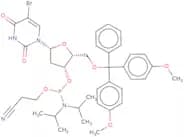
CAS:5-[3-(Trifluoroacetamido)-E-1-propenyl]-2’-deoxyuridine is a monophosphate nucleoside analog that inhibits DNA synthesis by inhibiting the activity of ribonucleotide reductase. It is also antiviral, and has been shown to inhibit the growth of human erythroleukemia cells in vitro and to produce cytotoxic effects on murine leukemia cells. 5-[3-(Trifluoroacetamido)-E-1-propenyl]-2’-deoxyuridine is an anticancer drug that has been shown to be effective against a variety of cancers, including those of the breast, lung, prostate, and colon. It has also been shown to have high quality as it does not cause any significant side effects or show cross resistance with other cancer drugs.Formula:C14H16F3N3O6Purity:Min. 95%Molecular weight:379.29 g/mol5-Bromo-2'-deoxy-5'-O-DMT-uridine 3'-CE phosphoramidite
CAS:5-Bromo-2'-deoxy-5'-O-DMT-uridine 3'-CE phosphoramidite is a nucleoside analog and a potential anticancer drug. It is an excellent monophosphate, which can be used as a building block for synthesis of DNA. 5-Bromo-2'-deoxy-5'-O-DMT-uridine 3'-CE phosphoramidite has antiviral activity against HIV and herpes simplex virus, as well as antifungal activity against Candida albicans. This compound has also been shown to have antitumor activity in vitro in the presence of other anticancer drugs.Formula:C39H46BrN4O8PPurity:Min. 95%Molecular weight:809.7 g/molγ-(2-Azidoethyl)-ATP sodium, 10 mM aqueous solution
Please enquire for more information about γ-(2-Azidoethyl)-ATP sodium, 10 mM aqueous solution including the price, delivery time and more detailed product information at the technical inquiry form on this page
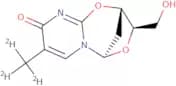
Formula:C12H19N8O13P3•NaxPurity:Min. 95%2,3'-Anhydrothymidine, methyl-D3
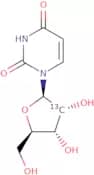
Controlled Product2,3'-Anhydrothymidine, methyl-D3 is a monophosphate nucleoside analogue that has antiviral and anticancer properties. It is a synthetic compound that has been modified to have some of the characteristics of natural DNA. 2,3'-Anhydrothymidine, methyl-D3 is an activator of ribonucleotide reductase and inhibits the synthesis of deoxyribonucleotides in cells. This compound can also be used as an anticancer agent due to its ability to inhibit DNA synthesis in cells.Formula:C10H9D3N2O4Purity:Min. 95%Molecular weight:227.23 g/mol2'-13CUridine
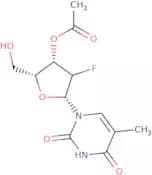
CAS:2'-13CUridine is a nucleoside that is a pyrimidine nucleoside. It is a structural analogue of cytidine and deamination. 2'-13CUridine has been used in the synthesis of anti-cancer drugs such as cytarabine and 5-flurouracil. Cytarabine, a purine analog, is an important component of chemotherapy for the treatment of leukemia, lymphoma, and other cancers.Formula:CC8H12N2O6Purity:Min. 95%Color and Shape:PowderMolecular weight:245.19 g/mol3'-O-Acetyl-2'-deoxy-2'-fluoro-5-methyluridine
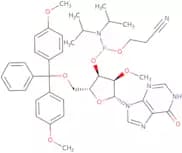
3'-O-Acetyl-2'-deoxy-2'-fluoro-5-methyluridine (3'-O-AFA) is a synthetic, novel antiviral agent that has been shown to inhibit the synthesis of DNA and RNA in cells infected with viruses. 3'-O-AFA is an activator that binds to ribonucleosides and deoxyribonucleosides, which are used in the synthesis of DNA and RNA respectively. The phosphoramidites are then converted into monophosphate or diphosphate nucleotides by the enzyme DNA polymerase. 3'-O-AFA is a modified nucleoside which can be incorporated into viral DNA during replication, inhibiting its production. This drug has also been shown to have anticancer properties against human tumor cells and may be effective against other cancers such as leukemia.Formula:C12H15FN2O6Purity:Min. 95%Molecular weight:302.26 g/mol5'-O-DMT-2'-O-methylinosine 3'-CE phosphoramidite
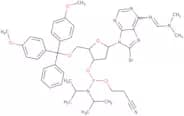
CAS:5'-O-DMT-2'-O-methylinosine 3'-CE phosphoramidite is a novel modified nucleoside analog. It is synthesized from the corresponding ribonucleoside and deoxyribonucleoside by means of a high-yield, convergent method. This compound has antiviral activity against herpes simplex virus type 1 (HSV-1) and cytomegalovirus (CMV) in vitro. 5'-O-DMT-2'-O-methylinosine 3'-CE phosphoramidite also exhibits anticancer activities in cell culture.Formula:C41H49N6O8PPurity:Min. 95%Molecular weight:784.86 g/mol8-Bromo-DA cep
CAS:8-Bromo-2'-deoxyadenosine cep is a modified nucleoside that is used in the treatment of cancer. It has been shown to be effective in treating leukemia, lymphoma and myeloma. 8-Bromo-2'-deoxyadenosine cep inhibits the growth of cells by inhibiting DNA synthesis through inhibition of deoxynucleotide biosynthesis. This drug also has antiviral activity against herpes simplex virus type 1 (HSV1), herpes simplex virus type 2 (HSV2) and human immunodeficiency virus type 1 (HIV1). 8-Bromo-2'-deoxyadenosine cep is a synthetic nucleoside that is phosphoramidite that can be used to synthesize DNA or RNA.
Formula:C43H52BrN8O6PPurity:Min. 95%Color and Shape:PowderMolecular weight:887.8 g/mol3,5-Di-o-acetyl-5-fluoro-O4-(2,4,6-trimethylphenyl)-2-deoxyuridine
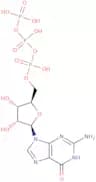
CAS:3,5-Di-o-acetyl-5-fluoro-O4-(2,4,6-trimethylphenyl)-2-deoxyuridine is a novel modified monophosphate nucleoside. It is an antiviral agent and has been shown to have anticancer activity. 3,5-Di-o-acetyl-5-fluoro-O4-(2,4,6-trimethylphenyl)-2-deoxyuridine is synthesized by the reaction of 5'-triphosphates with 2'-deoxyribonucleosides in the presence of a phosphoramidite. This nucleoside has been found to be cytotoxic in vitro and in vivo against cancer cell lines and can be used as a therapeutic agent for the treatment of leukemia.Formula:C22H25FN2O7Purity:Min. 95%Molecular weight:448.40 g/molGuanosine 5'-triphosphate
CAS:Guanosine 5'-triphosphate (GTP) is a nucleotide that is involved in many cellular processes including transcription, protein synthesis, and intracellular signaling. GTP binds to the enzyme guanine nucleotide-binding proteins and regulates the activity of certain enzymes. One such enzyme is adenylyl cyclase, which converts ATP into cAMP. GTP also activates other enzymes that are involved in signal transduction pathways, such as phospholipase C-β1 and phospholipase D. The antimicrobial agents can inhibit these enzymes, thereby preventing bacterial growth and replication.
Formula:C10H16N5O14P3Purity:Min. 95%Molecular weight:523.18 g/mol2'-Deoxy-5'-O-DMT-inosine 3'-succinyl CPG 1000Å
2'-Deoxy-5'-O-DMT-inosine 3'-succinyl CPG 1000Å is an antiviral and anticancer nucleoside. It is synthesized by the reaction of 2'-deoxy-5'-O-dimethoxytrityl-N4-benzoyladenosine with succinic anhydride. This product is a modified nucleoside that can be used in the synthesis of DNA or RNA, as well as to produce antiviral and anticancer compounds. The purity of this compound is typically greater than 99% and it has been shown to be stable for up to six months at room temperature.
2'-Deoxy-5'-O-DMT-inosine 3'-succinyl CPG 1000Å is also known by CAS number 57568-24-8.Purity:Min. 95%N6-Benzoyl-9-(2'-deoxy-5'-O-DMT-2'-fluoro-b-D-arabinofuranosyl)adenine
CAS:N6-Benzoyl-9-(2'-deoxy-5'-O-DMT-2'-fluoro-b-D-arabinofuranosyl)adenine is a synthetic nucleoside that has antiviral activity. It is activated by the enzyme ribonucleotide reductase and inhibits viral DNA synthesis. This agent also inhibits the production of deoxyribonucleosides, which are needed for DNA synthesis. In addition, this compound inhibits bacterial growth by inhibiting the enzyme DNA gyrase. N6-Benzoyl-9-(2'-deoxy-5'-O-DMT-2'-fluoro-b-D-arabinofuranosyl)adenine has novel properties in that it does not contain any ribose or phosphate groups. This product is available as a white powder with a purity of at least 98%.Formula:C38H34FN5O6Purity:Min. 95%Molecular weight:675.71 g/mol2',3'-Dideoxyinosine-5'-monophosphate sodium salt
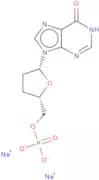
CAS:2',3'-Dideoxyinosine-5'-monophosphate sodium salt (ddI-MP) is an antiviral drug that is effective against HIV. It inhibits the reverse transcriptase enzyme, which is responsible for the conversion of RNA to DNA. ddI-MP has cytotoxic properties and prevents the production of DNA and protein. This agent also has a prophylactic effect against retroviruses, such as HIV, by preventing them from establishing latency in lymphocytes.Formula:C10H11N4O6P·Na2Purity:Min. 95%Molecular weight:360.17 g/mol2'-O-Methylguanosine 5'-triphosphate lithium salt - 100mM aqueous solution
CAS:2'-O-Methylguanosine 5'-triphosphate lithium salt is a synthetic nucleotideFormula:C11H18N5O14P3·xLiPurity:Min. 95%Color and Shape:Clear LiquidMolecular weight:537.21 g/mol1-(3',5'-Di-O-benzoyl-2'-deoxy-2'-fluoro-b-D-arabinofuranosyl)-5-bromo-uracil
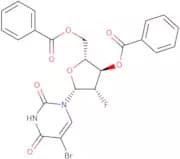
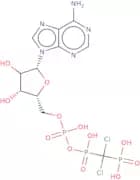
CAS:1-(3',5'-Di-O-benzoyl-2'-deoxy-2'-fluoro-b-D-arabinofuranosyl)-5-bromo-uracil is a novel antiviral and antitumor agent, synthesized by using a new synthetic approach. It has been shown to be effective in vitro against influenza A virus and herpes simplex virus types 1 and 2. This compound is also active against HIV type 1 (HIV) and Kaposi's sarcoma cells. The antiviral activity of this compound may be due to its ability to inhibit viral DNA polymerase activity. The antitumor activity of this compound may be due to its ability to inhibit the proliferation of tumor cells, leading to their death by apoptosis or necrosis.Formula:C23H18BrN2O7Purity:Min. 95%Molecular weight:514.3 g/mol5'-Adenylic acid monoanhydride with (dichlorophosphonomethyl)phosphonic acid
CAS:5'-Adenylic acid monoanhydride with (dichlorophosphonomethyl)phosphonic acid is a neuronal blocker that inhibits the enzyme acetylcholinesterase. It is an efficient inhibitor of AChE and has been shown to be effective in animal models of Alzheimer's disease. The inhibition of AChE by 5'-Adenylic acid monoanhydride with (dichlorophosphonomethyl)phosphonic acid leads to increased levels of acetylcholine, which can stimulate nerve impulses and slow or stop the progression of Alzheimer's disease.Formula:C11H16Cl2N5O12P3Purity:Min. 95%Molecular weight:574.1 g/mol2'-Deoxyuridine-5'-[(a,b)-methyleno]diphosphate sodium salt - 10mM aqueous solution
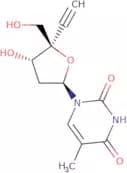
2'-Deoxyuridine-5'-[(a,b)-methyleno]diphosphate sodium salt is a nucleoside and ribonucleoside that is modified with a methylene group at the 2' position of the sugar moiety. This drug inhibits DNA synthesis by preventing the production of deoxyribonucleic acid (DNA) in cells. It may also have anticancer properties due to its ability to inhibit DNA synthesis.Formula:C10H16N2O10P2Purity:Min. 95%Molecular weight:386.19 g/mol4'-Ethynylthymidine
CAS:4'-Ethynylthymidine is a novel nucleoside analog that has been shown to be active against HIV-1. It has been shown to inhibit the incorporation of uridine into viral DNA and terminate elongation of viral DNA. 4'-Ethynylthymidine has also been shown to be active against other viruses such as vesicular stomatitis virus, influenza virus, and hepatitis C virus. The cytotoxicity of this drug is significant and may provide potential therapeutics for cancer treatment.
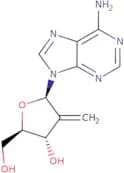
Purity:Min. 95%2'-Deoxy-2'-methyleneadenosine
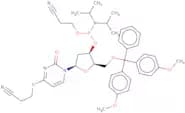
CAS:2'-Deoxy-2'-methyleneadenosine is a potential mechanism for the treatment of cancer. It has been shown to be active against the murine leukemia cell line, L1210, and to cause inactivation of the cells. This drug inhibits cellular RNA synthesis by binding to either the ribonucleoside or deoxyribonucleoside pools in the cell and preventing their conversion into nucleotides. 2'-Deoxy-2'-methyleneadenosine has also been shown to be an effective inhibitor of gamma-aminobutyric acid (GABA) uptake and cross-resistance with other drugs that are GABA uptake inhibitors.Formula:C11H13N5O3Purity:Min. 95%Molecular weight:263.25 g/mol4-(2-Cyanoethylthio)-2'-deoxy-5'-DMT-uridine 3'-CE phosphoramidite
CAS:4-(2-Cyanoethylthio)-2'-deoxy-5'-DMT-uridine 3'-CE phosphoramidite is a novel DNA synthesis inhibitor that is synthesized by the reaction of 4-(2-cyanoethylthio)-2'-deoxy-5'-DMT-uridine and phosphorous oxychloride. This product has antiviral and anticancer activities, as well as high purity and high quality. It can be used in cellular biology research, including the study of ribonucleosides, nucleosides, and deoxyribonucleosides. This product also inhibits HIV replication in vitro.Formula:C42H50N5O7PSPurity:Min. 95%Molecular weight:799.93 g/molL-Thymidine-5'-triphosphate sodium salt
L-Thymidine-5'-triphosphate sodium salt (L-TTP) is a modified nucleoside that is used as an anticancer agent. L-TTP is phosphorylated by ATP to form L-thymidine 5'-monophosphate (L-TMP). It also inhibits viral replication by inhibiting the synthesis of DNA and RNA, leading to cell death. L-TTP has been shown to be active against herpes simplex virus type 1, herpes simplex virus type 2, and cytomegalovirus.
Purity:Min. 95%p-Topolin riboside-5'-monophosphate sodium salt
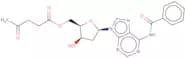
p-Topolin riboside-5'-monophosphate sodium salt is a novel modified nucleotide, which is an activator of the RNA polymerase I and III. It has been shown to be an effective antiviral agent, by inhibiting the synthesis of viral DNA and RNA. p-Topolin riboside-5'-monophosphate sodium salt also inhibits the growth of cancer cells in vitro and in vivo. This drug has been shown to inhibit tumor growth by targeting regulatory proteins that control cell proliferation, such as cyclin D1, CDK4, and CDK6.Formula:C17H18N5Na2O8P·H2OPurity:Min. 95%Molecular weight:515.32 g/molN6-Benzoyl-2'-deoxy-5'-O-levulinoyladenosine
N6-Benzoyl-2'-deoxy-5'-O-levulinoyladenosine is a modified nucleoside which can be used in the synthesis of DNA. It is phosphorylated to form N6-benzoyl-2'-deoxyadenosine monophosphate (BADAMP), which is converted to N6-benzoyl-2'-deoxyadenosine diphosphate (BADAP) through the action of ATP. The drug has antiviral properties and can be used to treat HIV infection.Formula:C22H23N5O6Purity:Min. 95%Molecular weight:453.46 g/mol5-Carboxymethylaminomethyl- 2'-O-methyluridine
CAS:5-Carboxymethylaminomethyl- 2'-O-methyluridine (5CmAMU) is a modified nucleobase that is categorized as a modified base. It is an analog of uridine, which has been shown to be effective against tuberculosis in mice. 5CmAMU inhibits the methylation of rRNA and DNA by binding to the enzyme RNA methyltransferase, thereby inhibiting transcription and replication. This modification has also been shown to inhibit cellular proliferation and promote apoptosis. 5CmAMU binds to guanine with a stoichiometry of 1:1, which provides evidence for its role in DNA synthesis and repair. The structural modifications on this molecule may lead to diagnostic applications or treatments for diseases such as tuberculosis.Formula:C13H19N3O8Purity:Min. 95%Color and Shape:PowderMolecular weight:345.31 g/molBiotin-11-uridine-5'-triphosphate, lithium salt - 1 mM aqueous solution
CAS:Biotin-11-uridine-5'-triphosphate, lithium salt (BUP) is a nucleoside analog that has been modified to allow the incorporation of BUP into DNA. The modification of BUP with lithium salts allows for the covalent attachment of BUP to DNA. This incorporation of BUP into DNA prevents the polymerase from binding to DNA and thus inhibits replication. Biotin-11-uridine-5'-triphosphate, lithium salt (BUP) has demonstrated anticancer and antiviral activity as well as being novel and high quality.Formula:C28H45N6O18P3S·xLiPurity:Min. 95%Molecular weight:878.67 g/molN4-Benzoyl-1-(2'-deoxy-5'-O-DMT-2'-fluoro-b-D-arabinofuranosyl)-5-methylcytosine
N4-Benzoyl-1-(2'-deoxy-5'-O-DMT-2'-fluoro-b-D-arabinofuranosyl)-5-methylcytosine is a synthetic nucleoside analog that is used as an antiviral agent. It inhibits the activity of reverse transcriptase, which is an enzyme that synthesizes DNA from RNA. N4-Benzoyl-1-(2'-deoxy-5'-O-DMT-2'-fluoro-b-D-arabinofuranosyl)-5 methylcytosine has been shown to be active against human immunodeficiency virus type 1 (HIV), herpes simplex virus type 2 (HSV), and cytomegalovirus (CMV). The drug has also been shown to be potent in inhibiting the replication of HIV in cell culture.
Formula:C38H36FN3O7Purity:Min. 95%Molecular weight:665.72 g/molN4-Acetyl-2'-deoxy-5'-O-DMT-cytidine 3'-Rp-oxazaphospholidine
N4-Acetyl-2'-deoxy-5'-O-DMT-cytidine 3'-Rp-oxazaphospholidine is a novel modified nucleoside and antiviral agent. It is the first nucleoside to be synthesized in which the ribose of the sugar moiety has been acetylated at the 2' position. N4-acetyl-2'-deoxy-5'-O-DMT cytidine 3'-Rp oxazaphospholidine has been shown to inhibit viral replication in vitro and in vivo, with activity against HSV type 1 (HSV1) and HSV type 2 (HSV2) viruses. This drug can also be used as an anticancer agent, by inhibiting DNA synthesis. N4-acetyl-2'-deoxy-5'-O-DMT cytidine 3'-Rp oxazaphospholidine is a high purity, synthetic compound, with highPurity:Min. 95%5'-O-DMT-N2-isobutyryl-2'-O-propynylguanosine 3'-CE phosphoramidite
CAS:5'-O-DMT-N2-isobutyryl-2'-O-propynylguanosine 3'-CE phosphoramidite is a novel modified monophosphate. It has antiviral and anticancer activities. The CAS number of 5'-O-DMT-N2-isobutyryl-2'-O-propynylguanosine 3'-CE phosphoramidite is 171486-61-6.Formula:C47H56N7O9PPurity:Min. 95%Molecular weight:893.96 g/molFluorous propanol cep
CAS:Controlled ProductFluorous propanol cep is a novel activator of ribonucleosides and deoxyribonucleosides. It is a nucleoside phosphoramidite that can be used to synthesize modified nucleosides, and has anticancer, antiviral and antibacterial properties. Fluorous propanol cep is an excellent activator for the synthesis of ribonuclesides and deoxyribonucleosides from their corresponding monophosphate derivatives. The product has been shown to inhibit replication of the human immunodeficiency virus (HIV-1) in vitro, with IC50 values less than 1 mM.
Formula:C20H24F17N2O2PPurity:Min. 95%Molecular weight:678.4 g/mol3'-Deoxy-3'-fluoroxylocytidine
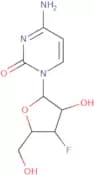
CAS:3'-Deoxy-3'-fluoroxylocytidine is a synthetic phosphate derivative of cytidine. It is an activator for phosphoramidites, deoxyribonucleosides and ribonucleosides. 3'-Deoxy-3'-fluoroxylocytidine is an anticancer agent that has been shown to have activity against various cancer cell lines, including prostate cancer cells. This compound has also been shown to have antiviral activity against herpes simplex virus type 1 (HSV-1) and influenza A virus in the laboratory.Purity:Min. 95%
![1-[(5E)-5',6'-Dideoxy-6'-diethoxylphosphinyl-2'-O-methyl-b-D-ribo-hex-5-enofuranosyl]uracil 3'-CE …](/_next/image/?url=https%3A%2Fstatic.cymitquimica.com%2Fproducts%2F3D%2Fthumb-webp%2FPD76593.webp&w=3840&q=75)


![Tert-Butyl 2-Phenyl-4-(P-Tolylsulfonyloxy)-7,8-Dihydropyrido[4,3-D]Pyrimidine-6(5H)-Carboxylate](/_next/image/?url=https%3A%2Fstatic.cymitquimica.com%2Fproducts%2F3D%2Fthumb-webp%2FNB57393.webp&w=3840&q=75)
![2-(2-Deoxy-b-D-ribofuranosyl)-2,3,8,9-tetrahydro-7-oxa-2,3,5,6-tetraazabenz[cd]azulen-4-amine](/_next/image/?url=https%3A%2Fstatic.cymitquimica.com%2Fproducts%2F3D%2Fthumb-webp%2FND145590.webp&w=3840&q=75)
![Pyrido[3,4-d]pyrimidine-2,4(1H,3H)-dione](/_next/image/?url=https%3A%2Fstatic.cymitquimica.com%2Fproducts%2F3D%2Fthumb-webp%2FNP44307.webp&w=3840&q=75)


![2'-Deoxyadenosine-5'-[(a,b)-methyleno]triphosphate sodium salt - 10 mM aqueous solution](/_next/image/?url=https%3A%2Fstatic.cymitquimica.com%2Fproducts%2F3D%2Fthumb-webp%2FND46688.webp&w=3840&q=75)
![2'-Deoxyuridine-5'-[(a,b)-methyleno]triphosphate sodium salt - 10 mM aqueous solution](/_next/image/?url=https%3A%2Fstatic.cymitquimica.com%2Fproducts%2F3D%2Fthumb-webp%2FND45198.webp&w=3840&q=75)
![5-[3-(Trifluoroacetamido)-E-1-propenyl]-2’- deoxyuridine](/_next/image/?url=https%3A%2Fstatic.cymitquimica.com%2Fproducts%2F3D%2Fthumb-webp%2FNT57550.webp&w=3840&q=75)



![2'-Deoxyuridine-5'-[(a,b)-methyleno]diphosphate sodium salt - 10mM aqueous solution](/_next/image/?url=https%3A%2Fstatic.cymitquimica.com%2Fproducts%2F3D%2Fthumb-webp%2FND45197.webp&w=3840&q=75)