Nucleosides
Nucleosides are fundamental building blocks of nucleic acids, composed of a nitrogenous base attached to a sugar molecule. In this section, you can find a wide variety of nucleosides essential for research in molecular biology, biochemistry, and pharmacology. These compounds play crucial roles in the synthesis of DNA and RNA, and are also vital in various metabolic processes. Nucleosides are used in studying genetic material, developing antiviral and anticancer therapies, and understanding cellular mechanisms. At CymitQuimica, we provide high-quality nucleosides to support your research and development needs, ensuring purity and reliability for your experimental applications.
Found 3567 products of "Nucleosides"
Sort by
Purity (%)
0
100
|
0
|
50
|
90
|
95
|
100
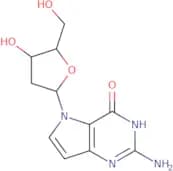
9-Deaza-2'-deoxyguanosine
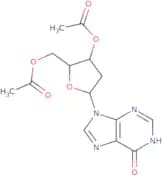
CAS:<p>9-Deaza-2'-deoxyguanosine is a novel synthetic nucleoside that activates the ribonucleotide reductase enzyme. The activation of this enzyme was found to be dependent on the presence of diphosphate, which is a cofactor for this enzyme. 9-Deaza-2'-deoxyguanosine has been shown to inhibit the growth of cells in culture and to induce apoptosis. It also inhibits viral replication by interfering with the synthesis of viral DNA. In addition, 9-Deaza-2'-deoxyguanosine can inhibit tumor cell proliferation and promote differentiation in vitro.</p>Formula:C11H14N4O4Purity:Min. 95%Molecular weight:266.25 g/mol3',5'-Di-O-acetyl-2'-deoxyinosine
CAS:<p>3',5'-Di-O-acetyl-2'-deoxyinosine is a dimer of 2'-deoxyinosine, which is an analog of inosine. It catalyzes the chlorination of aromatic substrates such as benzene or toluene with chlorine gas in the presence of FeCl3. The resulting product is a chlorinated aromatic compound. This reaction proceeds by electrophilic substitution at the C-2 position. 3',5'-Di-O-acetyl-2'-deoxyinosine has been shown to be more active than 2'-deoxyinosine in this reaction because it reacts faster and its reactive intermediate is more stable.</p>Formula:C14H16N4O6Purity:Min. 95%Molecular weight:336.3 g/mol2'-Deoxy-5'-O-DMT-N2-isobutyryl-guanosine-3'-lcaa-CPG
<p>2'-Deoxy-5'-O-DMT-N2-isobutyryl-guanosine-3'-lcaa-CPG is a modified nucleoside, which is synthetically prepared. It is an activator of DNA polymerase and has been shown to be active against human leukemia cells. 2'-Deoxy-5'-O-DMT-N2-isobutyryl Guanosine 3'-lcaa CPG has also been shown to inhibit the replication of the herpes simplex virus type 1 in vitro. The compound is a novel high quality nucleoside phosphoramidite that can be used as a building block in the synthesis of deoxyribonucleosides and modified nucleosides with novel chemical structures.</p>Purity:Min. 95%5-Hydroxymethyl-dc ce-phosphoramidite (hmdc)
CAS:<p>Please enquire for more information about 5-Hydroxymethyl-dc ce-phosphoramidite (hmdc) including the price, delivery time and more detailed product information at the technical inquiry form on this page</p>Formula:C50H57N6O9PPurity:Min. 95%Molecular weight:917 g/mol5-Phenylcytidine
CAS:<p>5-Phenylcytidine is a nitro compound that is used as an antiviral agent. It inhibits the replication of the virus by interfering with viral DNA synthesis and preventing the assembly of viral proteins. 5-Phenylcytidine is also capable of inhibiting influenza A virus in vitro at concentrations below 1 μM and has been shown to inhibit herpes simplex virus type 1 (HSV-1) in cell culture. The antiviral activity of 5-phenylcytidine may be due to its ability to form a stable reaction product with cytosine in alkaline conditions, which prevents the incorporation of this nucleobase into DNA or RNA.</p>Purity:Min. 95%N6-Benzoyl-9-(2'-deoxy-5'-O-DMT-2'-fluoro-b-D-arabinofuranosyl)adenine 3'-O-succinate triethylammonium salt
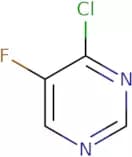
<p>N6-Benzoyl-9-(2'-deoxy-5'-O-DMT-2'-fluoro-b-D-arabinofuranosyl)adenine 3'-O-succinate triethylammonium salt is a novel antiviral nucleotide. This drug has been shown to be an activator of DNA synthesis and to inhibit the growth of viruses such as influenza A, herpes simplex virus type 1, and HIV type 1. N6-Benzoyl-9-(2'-deoxy-5'-O-DMT-2'-fluoro-b-D arabinofuranosyl)adenine 3'-O succinate triethylammonium salt is synthesized by the reaction of 6-[(3,4,5,6 -tetrahydrobenzo[1,2]dioxaphosphinanyl)methyl]aminopurine (N6BA), 2',5' -d</p>Formula:C42H38FN5O9·C6H16NPurity:Min. 95%Molecular weight:878 g/mol4-Chloro-5-fluoropyrimidine
CAS:<p>4-Chloro-5-fluoropyrimidine is a fluoropyrimidine that is used in the synthesis of pharmaceuticals, such as 4-amino-2-chloro-5-fluoropyrimidine. This compound is synthesized by chlorinating 4-chloro-5-fluoropyrimidine with chlorine gas. The resulting product is hydrolyzed to yield 4-amino-2,4,5,6 tetrafluoro pyrimidines. 4CFP can also be obtained by hydrogenolysis of toluene with chlorine gas and sodium hydroxide or hydrolyzing an ammonium salt with hydrochloric acid.</p>Formula:C4H2ClFN2Purity:Min. 95%Molecular weight:132.52 g/molIsowyosine
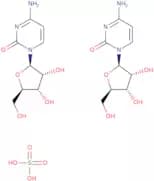
CAS:<p>Isowyosine is a protein that catalyzes the synthesis of purines, which are essential for DNA synthesis and repair. Isowyosine is found in mammalian cells, where it has been observed to play a role in the translation of messenger RNA (mRNA). Isowyosine also plays a role in the synthesis of viral proteins and viral replication. It has been shown to be active against various viruses, including herpes simplex virus and influenza virus. Isowyosine may also have anti-cancer properties due to its ability to inhibit tumor growth.</p>Formula:C14H17N5O5Purity:Min. 95%Color and Shape:PowderMolecular weight:335.32 g/molCytidine hemisulfate salt
CAS:<p>Cytidine hemisulfate salt is a postulated inhibitor of the blood group antigen. It inhibits the phosphatase activity of blood group-specific phosphatases, which may be caused by its specific inhibition of α-tocopherol and phenolphthalein. Cytidine hemisulfate salt has been shown to inhibit both adenylic and uridylic phosphatases, but does not inhibit other phosphatases. This drug is also an antigen that can stimulate B cells, which produce antibodies against it. Cytidine hemisulfate salt is found in DNA and RNA.</p>Formula:C9H13N3O5H2SO4Purity:Min. 95%Molecular weight:292.26 g/mol5'-O-p-Anisoyl-3'-fluoro-3'-deoxythymidine
<p>5'-O-p-Anisoyl-3'-fluoro-3'-deoxythymidine is a novel anticancer agent that has been shown to be active against leukemia, lymphoma and myeloma. The compound is a nucleoside analogue that inhibits DNA synthesis by inhibiting the activity of DNA polymerase. It has been shown to have antiviral activity in vitro against herpes simplex virus type 1 and type 2, influenza A virus and HIV. 5'-O-p-Anisoyl-3'-fluoro-3'-deoxythymidine can also inhibit protein synthesis by blocking the incorporation of amino acids into protein. This drug is synthesized from 3',5'-dideoxyuridine (dU) and fluoroacetyl chloride to produce 5'-O-p-anisoyl-3',5'-difluoroacetyl dU (ADUF). ADUF is then reacted with anisole to produce 5</p>Formula:C18H19FN2O6Purity:Min. 95%Molecular weight:378.4 g/mol1,N6-Ethenoadenosine-5'-triphosphate sodium salt-10mM aqueous solution
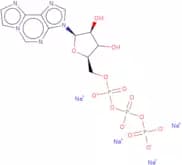
CAS:<p>1,N6-Ethenoadenosine-5'-triphosphate sodium salt-10mM aqueous solution is a modified ATP molecule for use in research</p>Formula:C12H16N5O13P3Purity:Min. 98 Area-%Color and Shape:Clear LiquidMolecular weight:531.2 g/molEthyl 2-chloro-4-methylpyrimidine-5-carboxylate
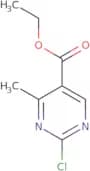
CAS:<p>Ethyl 2-chloro-4-methylpyrimidine-5-carboxylate is an antiviral drug that inhibits the replication of RNA viruses. It binds to the active site of the enzyme responsible for viral RNA synthesis. Ethyl 2-chloro-4-methylpyrimidine-5-carboxylate has been shown to inhibit the growth of Mycobacterium tuberculosis in cell cultures. This drug also has cytostatic activity and can be used to treat tumors in cell culture.</p>Formula:C8H9ClN2O2Purity:Min. 95%Molecular weight:200.62 g/mol3'-O-Allyluridine
<p>3'-O-Allyluridine is a nucleoside that has antiviral, anticancer, and antibacterial activities. 3'-O-Allyluridine is an activator of RNA polymerase and is used to synthesize DNA in vitro. It can be used as a substrate for phosphoramidites in the synthesis of oligonucleotides with modified backbones. 3'-O-Allyluridine has been shown to inhibit the growth of cancer cells by blocking the synthesis of DNA and RNA. The drug also inhibits the production of ribonucleases, which are enzymes that break down RNA in cells.</p>Formula:C12H16N2O6Purity:Min. 95%Molecular weight:284.27 g/molN,7-Dimethyl- 2'- O- methylguanosine
CAS:<p>N,7-Dimethyl-2'-O-methylguanosine (DMOG) is a modified nucleoside with antiviral and anticancer properties. DMOG can be used as an activator of transcription, which activates the synthesis of viral RNA and dsDNA. This compound has shown to inhibit the activity of HIV by preventing reverse transcriptase from synthesizing DNA from viral RNA. It also inhibits tumor cell proliferation by inhibiting DNA synthesis and protein synthesis. DMOG is synthesized in high purity by chemical phosphoramidite chemistry.</p>Formula:C13H20N5O5Purity:Min. 95%Molecular weight:326.33 g/mol5-Fluorocytosine arabinoside
CAS:<p>5-Fluorocytosine arabinoside (5FCA) is an analog of fluorocytosine and a degradable prodrug that is converted to fluorouracil (5FU) in the human liver. It acts as an inhibitor of DNA synthesis and has been used for the treatment of leukemias. 5-Fluorocytosine arabinoside is rapidly degraded by tissue culture cells, which may be due to its reactive functional groups. The inhibitory activity of this drug against cell culture was found to be minimal at low concentrations and reached a maximum at concentrations greater than 1 mM. The affinity ligands for this compound are reactive functional groups such as sulfhydryl, hydroxyl, and carboxyl groups, but not ester or amide bonds. This drug can be used in the synthesis of affinity ligands with a reactive functional group.</p>Formula:C9H12FN3O5Purity:Min. 95%Molecular weight:261.21 g/mol7-Deaza-2'-deoxy-5'-O-DMT-N2-isobutyrylguanosine
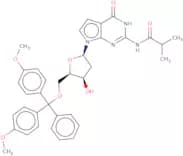
<p>7-Deaza-2'-deoxy-5'-O-DMT-N2-isobutyrylguanosine is an activator that has been shown to stimulate the production of DNA and RNA. This compound is a novel synthetic nucleoside with high purity and quality. 7-Deaza-2'-deoxy-5'-O-DMT-N2-isobutyrylguanosine is effective against viruses and cancer cells by inhibiting viral protein synthesis and by stimulating the immune system. This drug has also been shown to be an anticancer agent, which may be due to its ability to inhibit cell division, induce apoptosis, or inhibit cellular proliferation.</p>Formula:C36H38N4O7Purity:Min. 95%Molecular weight:638.73 g/molN4-Benzoyl-2'-O-tert-butyldimethylsilyl-5'-O-DMT-2'C-methylcytidine 3'-CE phosphoramidite
<p>N4-Benzoyl-2'-O-tert-butyldimethylsilyl-5'-O-DMT-2'C-methylcytidine 3'-CE phosphoramidite is a novel, deoxynucleoside phosphoramidite with high purity and high quality. It has been used in the synthesis of anticancer agents, ribonucleotide analogues and antiviral agents. N4-Benzoyl-2'-O-tert-butyldimethylsilyl-5'-O-DMT-2'C-methylcytidine 3'-CE phosphoramidite can be used as an activator for DNA polymerase to synthesize DNA molecule.</p>Formula:C53H68N5O9PSiPurity:Min. 95%Molecular weight:978.19 g/molAdenylyl-3'-5'-uridine ammonium salt
CAS:<p>Adenylyl-3'-5'-uridine ammonium salt is a novel antiviral agent that has been shown to inhibit the activity of viral DNA polymerase, RNA polymerase and reverse transcriptase. It is also an anticancer agent that can be used as a cytotoxic agent against leukemia and lymphoma cells. Adenylyl-3'-5'-uridine ammonium salt is synthesized by the reaction of adenosine monophosphate with uracil in the presence of phosphate and ammonia. This compound can then be converted to ribonucleosides or deoxyribonucleosides by phosphorylation.<br>SYNONYMS: AMP-uridine; AMP-U; UMP</p>Formula:C19H24N7O12PPurity:Min. 95%Molecular weight:573.41 g/molN6-(tert-Butylphenoxyacetyl)-2'-O-methyl-5'-O-DMT-adenosine 3'-CE phosphoramidite
<p>N6-(tert-Butylphenoxyacetyl)-2'-O-methyl-5'-O-DMT-adenosine 3'-CE phosphoramidite is a novel anticancer, antiviral and antifungal agent. It is synthesized by reacting the nucleoside adenosine with tert-butyl phenoxyacetic acid to form an activated ester derivative which reacts with 2'-O-methyl 5'-O-DMT in the presence of a phosphoramidite reagent to form a DNA precursor. The modified nucleotide has been shown to have high purity and good quality, as well as high antiviral and anti-cancer activities.</p>Formula:C53H64N7O9PPurity:Min. 95%Molecular weight:974.09 g/molThymidine 5’-triphosphate sodium hydrate
<p>Thymidine 5’-triphosphate (dTTP) sodium hydrate is a fundamental building block in chemical biology. As one of the four natural deoxynucleotides, it plays a crucial role in DNA replication and repair, where dTTP is incorporated into growing DNA strands by DNA polymerases, ensuring fidelity during genetic duplication. The use of dTTP spans various applications, including PCR, DNA sequencing, and site-directed mutagenesis.</p>Purity:Min. 95%Thymidine-a,a,a,6-D4
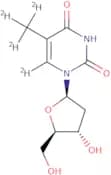
CAS:Controlled Product<p>Thymidine-a,a,a,6-D4 is a nucleoside analogue that inhibits the replication of the hepatitis B virus. It is an analogue of thymidine and is activated by phosphorylation to its active form. This drug prevents viral replication by inhibiting early events in the viral life cycle. Thymidine-a,a,a,6-D4 has been shown to inhibit the synthesis of viral DNA and to inhibit the incorporation of thymidine into newly synthesized DNA. Thymidine-a,a,a,6-D4 also inhibits telbivudine resistance mutations in vitro.</p>Formula:C10H10N2O5D4Purity:Min. 95%Molecular weight:246.25 g/molDdCTP trilithium
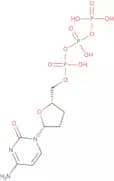
CAS:<p>2',3'-Dideoxycytidine-5'-triphosphate trilithium salt (ddCTP) is a nucleoside analogue that has been shown to inhibit the enzyme activity of DNA polymerase. The ddCTP is a prodrug, which is activated by phosphorylation catalyzed by cellular kinases and then hydrolyzed to its active form, dideoxycytidine triphosphate (ddCTP). This drug also inhibits the synthesis of DNA and RNA. In vitro studies have shown that ddCTP causes cell lysis in murine sarcoma virus-infected cells, although it does not affect uninfected cells. 2',3'-Dideoxycytidine-5'-triphosphate trilithium salt has been shown to be an effective inhibitor of HIV reverse transcriptase and HIV protease in biochemical assays. It has also been found to be an effective inhibitor of mouse monoclon</p>Formula:C9H13N3Li3O12P3Purity:Min. 95%Color and Shape:LiquidMolecular weight:468.96 g/mol2'-O-tert-Butyldimethylsilyl-N2-DMF-5'-O-DMT-guanosine 3'-CE phosphoramidite
<p>2'-O-tert-Butyldimethylsilyl-N2-DMF-5'-O-DMT-guanosine 3'-CE phosphoramidite is a nucleoside monophosphate with CAS No. 58822-52-3. It is an activator that has anticancer and antiviral properties. This product is modified, novel and high purity and quality. 2'-O-tert-Butyldimethylsilyl-N2-DMF-5'-O-DMT-guanosine 3'-CE phosphoramidite can be used in the synthesis of oligonucleotides for use as probes or drugs in the treatment of cancer, HIV, hepatitis B and influenza A.</p>Formula:C49H67N8O8PSiPurity:Min. 95%Molecular weight:955.19 g/molN4-Acetyl-5'-O-DMT-cytidine 3'-CE phosphoramidite
<p>N4-Acetyl-5'-O-DMT-cytidine 3'-CE phosphoramidite is a monophosphate nucleoside that is an important building block in nucleic acid synthesis. It has been shown to be effective against cancer cells and HIV infection. N4-Acetyl-5'-O-DMT-cytidine 3'-CE phosphoramidite also inhibits the production of viral proteins, including new viral particles, by binding to the RNA polymerase enzyme in cells. This compound can be used as a novel antiviral agent for the treatment of human immunodeficiency virus type 1 (HIV1) infections.</p>Purity:Min. 95%S-(2-Hydroxy-5-nitrobenzoyl)-6-thioguanosine
CAS:<p>S-(2-Hydroxy-5-nitrobenzoyl)-6-thioguanosine is a benzodiazepine derivative that inhibits the uptake of uridine into cells. It binds to adenosine receptors and inhibits neurotransmission by preventing the release of the inhibitory neurotransmitter GABA. S-(2-Hydroxy-5-nitrobenzoyl)-6-thioguanosine also has an inhibitory effect on mitochondrial function, which may be due to its ability to bind with and inactivate mitochondrial enzyme succinate dehydrogenase. This drug is potent in inhibiting uptake assays, but has low potency and poor bioavailability as a result of its covalent linkages.</p>Formula:C17H18N6O7SPurity:Min. 95%Molecular weight:450.43 g/mol2'-Deoxy-N2-isobutyryl-a-cytidine
<p>2'-Deoxy-N2-isobutyryl-a-cytidine (DBIC) is a modified nucleoside that is used in the synthesis of DNA. It is an activator that can be used to enhance the antitumor effects of other drugs. DBIC has been shown to inhibit the proliferation of human tumor cells by inactivating the p53 protein, which regulates cell cycle progression and suppresses tumorigenesis. This drug also has antiviral, anticancer, and anti-inflammatory properties.</p>Formula:C13H19N3O5Purity:Min. 95%Molecular weight:297.31 g/molN4-Acetyl-2'-Deoxy-5'-O-DMT-cytidine 3'-succinyl CPG 1000 Å
<p>N4-Acetyl-2'-Deoxy-5'-O-DMT-cytidine 3'-succinyl CPG 1000 Å is a nucleoside analog. It is an antiviral and anticancer agent that inhibits the synthesis of DNA. This compound has a high purity, reactivity and solubility. N4-Acetyl-2'-Deoxy-5'-O-DMT-cytidine 3'-succinyl CPG 1000 Å can be used in the synthesis of oligonucleotides for research purposes or as pharmaceutical ingredients.</p>Purity:Min. 95%4-Amino-5-(2-deoxy-b-D-ribofuranosyl)-1-methyl-2(1H)-pyrimidinone
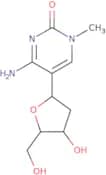
CAS:<p>4-Amino-5-(2-deoxy-b-D-ribofuranosyl)-1-methyl-2(1H)-pyrimidinone is a novel activator that is a ribonucleoside and deoxyribonucleoside diphosphate, as well as phosphoramidite and modified nucleosides. It has been shown to have anticancer, antiviral, and antimalarial activities in vitro. This compound has been synthesized in high purity and high quality with CAS No. 1166395-05-6.</p>Formula:C10H15N3O4Purity:Min. 95%Molecular weight:241.24 g/mol3'-Deoxy-N6-propionyladenosine
CAS:<p>3'-Deoxy-N6-propionyladenosine is a prodrug that is modified in the body to form adenosine. It has been shown to have a high bioavailability and pharmacokinetic profile, with a high initial concentration and rapid elimination. 3'-Deoxy-N6-propionyladenosine has been shown to be effective against tuberculosis and leprosy, with a half-life of approximately 1 hour. The pharmacokinetic curves for this drug have exceeded those of other drugs used for these diseases.</p>Formula:C13H17N5O4Purity:Min. 95%Molecular weight:307.31 g/molDisodium adenosine 5'-phosphate hydrate
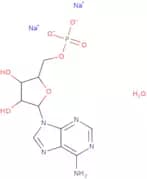
CAS:<p>Disodium adenosine 5'-phosphate hydrate is a novel, modified nucleotide analogue that is used in antiviral therapy. It has been shown to be an effective inhibitor of herpes simplex virus type 1 (HSV-1), herpes simplex virus type 2 (HSV-2), and cytomegalovirus. Disodium adenosine 5'-phosphate hydrate also inhibits DNA polymerase and RNA polymerase, thereby preventing replication of the virus genome. Disodium adenosine 5'-phosphate hydrate has been shown to be active against cancer cells in vitro and in vivo, as well as being useful in the treatment of cancer.</p>Formula:C10H14N5Na2O8PPurity:Min. 95%Molecular weight:409.2 g/molN6-Dansylhexyl-5'-ethylcarboxamidoadenosine
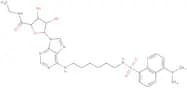
CAS:<p>N6-Dansylhexyl-5'-ethylcarboxamidoadenosine is a fluorescent molecule that can be used in the field of microscopy and cytometry. It has been shown to be an adenosine receptor agonist, which may be due to its ability to bind to the adenosine receptor and activate it. This ligand has also been shown to bind with high affinity to the fluorescence resonance transfer protein, resulting in a fluorescent signal. In addition, this molecule is a linker for fluorescence resonance energy transfer between two molecules that are not close enough for direct contact.</p>Formula:C30H40N8O6SPurity:Min. 95%Molecular weight:640.75 g/mol2-Chloro-4-hydroxy-5-fluoropyrimidine
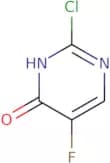
CAS:<p>2-Chloro-4-hydroxy-5-fluoropyrimidine is a nucleoside with antiviral and anticancer activity. It has shown to be an effective agent against HIV, herpes virus and human papilloma virus. 2-Chloro-4-hydroxy-5-fluoropyrimidine inhibits the synthesis of DNA by inhibiting the enzyme DNA polymerase, which catalyzes the formation of diphosphate from monophosphate. In addition, it inhibits protein synthesis by inhibiting ribonucleotide reductase, which catalyzes the conversion of ribonucleotides to deoxyribonucleotides.</p>Formula:C4H2ClFN2OPurity:Min. 95%Molecular weight:148.52 g/molN4-Benzoyl-1-(2'-deoxy-5'-O-DMT-2'-fluoro-b-D-arabinofuranosyl)-5-methylcytosine
<p>N4-Benzoyl-1-(2'-deoxy-5'-O-DMT-2'-fluoro-b-D-arabinofuranosyl)-5-methylcytosine is a synthetic nucleoside analog that is used as an antiviral agent. It inhibits the activity of reverse transcriptase, which is an enzyme that synthesizes DNA from RNA. N4-Benzoyl-1-(2'-deoxy-5'-O-DMT-2'-fluoro-b-D-arabinofuranosyl)-5 methylcytosine has been shown to be active against human immunodeficiency virus type 1 (HIV), herpes simplex virus type 2 (HSV), and cytomegalovirus (CMV). The drug has also been shown to be potent in inhibiting the replication of HIV in cell culture.</p>Formula:C38H36FN3O7Purity:Min. 95%Molecular weight:665.72 g/mol2'-Deoxy-5'-O-DMT-N4-(hexyloxylevulinyl)-5-methylcytidine 3'-CE phosphoramidite
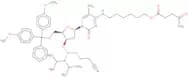
<p>2'-Deoxy-5'-O-DMT-N4-(hexyloxylevulinyl)-5-methylcytidine 3'-CE phosphoramidite is a novel modified nucleoside that can be used in the synthesis of oligonucleotides. 2'-Deoxy-5'-O-DMT-N4-(hexyloxylevulinyl)-5-methylcytidine 3'-CE phosphoramidite is an activator of adenovirus, herpes simplex virus and human immunodeficiency virus type 1 (HIV-1). It is also an anticancer agent that has been shown to inhibit proliferation of various tumor cells. This product has high purity, high quality and is available at CAS No.<br>216837-27-3.</p>Formula:C51H68N5O10PPurity:Min. 95%Molecular weight:942.11 g/mol4-Amino-2,6-dimethyl-8-(2'-deoxy-3',5'-di-O-toluoyl-D-ribofuranosyl)-7-pteridone
<p>4-Amino-2,6-dimethyl-8-(2'-deoxy-3',5'-di-O-toluoyl-D-ribofuranosyl)-7-pteridone is an activator that has been shown to be a novel antiviral agent. It inhibits the activity of viral RNA polymerase and prevents the synthesis of viral RNA. This drug also has anticancer activity, which may be due to its ability to inhibit DNA synthesis. 4-Amino-2,6-dimethyl-8-(2'-deoxy-3',5'-di-O-toluoyl) -7 pteridone is a nucleoside with phosphoramidite chemistry.</p>Formula:C29H29N5O6Purity:Min. 95%Molecular weight:543.57 g/molN6-Benzoyl-5'-O-DMT-2'-O-(2-methylacetamido)-adenosine 3'-CE phosphoramidite
<p>N6-Benzoyl-5'-O-DMT-2'-O-(2-methylacetamido)-adenosine 3'-CE phosphoramidite is a modified nucleoside that is used in the synthesis of DNA. It is an activator for antiviral and anticancer drugs, as well as a ribonucleoside monophosphate, diphosphate, or deoxyribonucleoside. N6-Benzoyl-5'-O-DMT-2'-O-(2-methylacetamido)-adenosine 3'-CE phosphoramidite has been shown to have a novel anticancer activity.</p>Purity:Min. 95%N4-Benzoyl-2'-deoxy-3'-O-DMT-cytidine
CAS:<p>N4-Benzoyl-2'-deoxy-3'-O-DMT-cytidine is a novel nucleoside phosphoramidite with antiviral and anticancer activities. It is synthesized from 2'-deoxycytidine and 4-aminobenzoyl chloride in the presence of tetrazole as a catalyst. The cytidine moiety of N4-benzoyl-2'-deoxy-3'-O-DMT-cytidine is activated by diphosphate, which leads to phosphorylation. This nucleotide has shown potential in inhibiting cancer cell growth and may be used for treatment of leukemia, lymphomas, and myeloma.</p>Formula:C37H35N3O7Purity:Min. 95%Molecular weight:633.69 g/mol2'-Deoxy-5'-O-DMT-5-D-uridine 3'-CE phosphoramidite
Controlled Product<p>2'-deoxy-5'-O-DMT-5-D-uridine 3'-CE phosphoramidite (2'DMTU) is a synthetic nucleoside with anticancer, antiviral and antiretroviral activity. 2'DMTU is a ribonucleotide monophosphate that can be used to modify RNA in the laboratory. It is a modified nucleoside that prevents RNA polymerase from adding onto the DNA strand and has been shown to activate apoptosis in cells that are resistant to anticancer drugs.</p>Formula:C39H46N4O8PDPurity:Min. 95%Molecular weight:731.81 g/mol5'-O-Levulinoylthymidine 3'-CE phosphoramidite
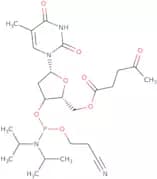
CAS:<p>5'-O-Levulinoylthymidine 3'-CE phosphoramidite is a novel, high quality diphosphate nucleoside. It is modified with levulinic acid and has antiviral and anticancer properties. 5'-O-Levulinoylthymidine 3'-CE phosphoramidite is synthesized from 5'-O-levulinoylthymidine monophosphate, which is synthesized from thymidine and levulinic acid. The synthesis of 5'-O-levulinoylthymidine 3'-CE phosphoramidite starts with the reaction of 1 equivalent of thymidine with 1 equivalent of levulinic acid in aqueous solution at pH 7 to 8 at 100°C for 2 hours, followed by purification by HPLC.</p>Formula:C24H37N4O8PPurity:Min. 95%Molecular weight:540.55 g/molN6-Benzoyl-3'-deoxy-5'-O-DMT-adenosine
CAS:<p>N6-Benzoyl-3'-deoxy-5'-O-DMT-adenosine is a modified nucleoside that has been synthesized to be an activator of ribonucleotide reductase. This product can be used in the preparation of oligoribonucleotides or phosphoramidites for therapeutic purposes. N6-Benzoyl-3'-deoxy-5'-O-DMT-adenosine is also a novel antiviral agent with anticancer activity.</p>Formula:C38H35N5O6Purity:Min. 95%Molecular weight:657.71 g/molLNA-guanosine 3'-CE phosphoramidite
CAS:<p>LNA-guanosine 3'-CE phosphoramidite is a novel, high purity, activated nucleoside. It is an anti-cancer and antiviral agent that is synthetically modified to include a phosphate group at the 3' position of the sugar moiety. This modification prevents viral inhibition by inhibiting viral DNA synthesis. LNA-guanosine 3'-CE phosphoramidite is also used as an anticancer agent due to its ability to inhibit ribonucleotide reductase and diphosphate reductase, which are enzymes required for DNA synthesis.</p>Purity:Min. 95%3'-O-Propargylguanosine
<p>3'-O-Propargylguanosine is a ribonucleoside that is structurally related to guanosine. It has antiviral and anticancer activities, but its most important function is as a substrate for the synthesis of DNA and RNA. The compound is used in the preparation of nucleosides and nucleotides, which are used in DNA synthesis. 3'-O-Propargylguanosine can be synthesized from diphosphate, phosphoramidites, or modified monophosphate. The CAS number for this product is 583-85-4.</p>Formula:C13H15N5O5Purity:Min. 95%Color and Shape:PowderMolecular weight:321.29 g/mol5’-O-DMT-N2-isobutyryl-2’-O-propargylguanosine
CAS:<p>5’-O-DMT-N2-isobutyryl-2’-O-propargylguanosine is an antiviral, anticancer, and nucleoside monophosphate. It is a novel and modified nucleoside. This product has high purity, high quality, and is also a phosphoramidite.</p>Purity:Min. 95%2'-O-Allylguanosine
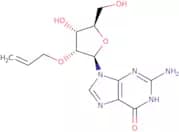
CAS:<p>2'-O-Allylguanosine is an intermediate in the synthesis of 2,6-diaminopurine riboside. It is synthesized from allyl chloride and guanosine by an allylation reaction. The yield for this reaction is high, which makes it a useful synthon. Deamination of the product yields 2'-O-allylguanosine 5'-monophosphate, which can be converted to 2',6-diaminopurine riboside by hydrolysis with phosphoric acid. This intermediate is used in research on nucleic acids sequences and hydrogen bonding.</p>Formula:C13H17N5O5Purity:Min. 95%Color and Shape:White PowderMolecular weight:323.3 g/mol5-Fluoro-1-(2',3'-dideoxy-2',3'-didehydro-5'-O-acetyl-b-L-ribofuranosyl)-uracil
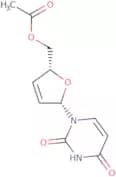
CAS:<p>5-Fluoro-1-(2',3'-dideoxy-2',3'-didehydro-5'-O-acetyl-b-L-ribofuranosyl)-uracil is a modified nucleoside that is phosphorylated and activated to 5'-triphosphate. It has antiviral, anticancer, and antimalarial activities.</p>Formula:C11H12N2O5Purity:Min. 95%Molecular weight:252.22 g/mol2'-Deoxyguanosine-5'-triphosphate sodium salt - 100mmol solution
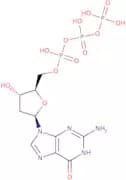
CAS:<p>2'-Deoxyguanosine-5'-triphosphate sodium salt is a triphosphate with antiviral and antifungal activity. It has been shown to inhibit the proliferation of HL60 cells and induce apoptosis in IL-2 receptor-bearing cells. The compound inhibits the growth of opportunistic fungi, such as Aspergillus niger and Candida albicans, by binding to deoxyguanosine residues in DNA. The compound also blocks polymerase activity, preventing DNA replication. 2'-Deoxyguanosine-5'-triphosphate sodium salt is used as a model system for studying the binding of nucleoside analogs to DNA. This drug is prepared as an injection solution for intravenous administration.</p>Formula:C10H16N5O13P3Purity:Min. 95%Molecular weight:507.18 g/molMethyl 2,4-dimethoxypyrimidine-5-carboxylate
CAS:<p>Methyl 2,4-dimethoxypyrimidine-5-carboxylate is a novel anticancer drug that inhibits the growth of cancer cells by blocking DNA polymerase. It is a monophosphate nucleoside analogue that is phosphorylated to methyl 2,4-dimethoxypyrimidine-5′-diphosphate. This compound has been shown to be more effective than other nucleosides in inhibiting the growth of human leukemia cells and it may have potential as a therapeutic agent for treatment of some forms of cancer.</p>Purity:Min. 95%1-(2'-Deoxy-5'-O-DMT-3'-O-nitrophenylsulphonyl-b-D-lyxofuranosyl)thymine
CAS:<p>1-(2'-Deoxy-5'-O-DMT-3'-O-nitrophenylsulphonyl-b-D-lyxofuranosyl)thymine is a synthetic nucleoside that is used as an activator of phosphoramidites. It has been shown to be active against cancer cells and viruses. 1-(2'-Deoxy-5'-O-DMT-3'-O-nitrophenylsulphonyl-b-D-lyxofuranosyl)thymine can be modified to produce other nucleosides, including deoxyribonucleosides, ribonucleosides, or monophosphate nucleotides. 1-(2'-Deoxy-5'-O-DMT-3'-O-nitrophenylsulphonyl -b -D -lyxofuranosyl)thymine has not yet been approved for use in humans.</p>Formula:C37H35N3O11SPurity:Min. 95%Molecular weight:729.75 g/mol(+)-Emtricitabine
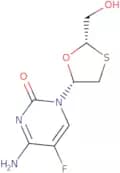
CAS:Emtricitabine is a synthetic nucleoside analog of cytidine. It is used in the treatment of HIV infection and hepatitis B virus infection. Emtricitabine binds to human DNA polymerase, preventing the incorporation of viral DNA into the host cell's genome. This prevents the virus from multiplying and reproducing, thereby inhibiting the spread of HIV in humans. The drug has been shown to inhibit replication at all stages of HIV-1, including reverse transcription and integration into host cell DNA. Emtricitabine also inhibits replication of other viruses such as herpes simplex virus type 1 (HSV-1) and hepatitis C virus (HCV). Emtricitabine is a prodrug that must be activated by phosphorylation before it can be incorporated into DNA. This activation requires tenofovir alafenamide hemifumarate as an activator, which is an experimental drug with improved bioavailability, reduced renal clearance, andFormula:C8H10FN3O3SPurity:Min. 95%Molecular weight:247.25 g/molN4-Benzoyl-5'-O-tert-butyldimethylsilyl-2'-deoxy-5-iodocytidine
<p>N4-Benzoyl-5'-O-tert-butyldimethylsilyl-2'-deoxy-5-iodocytidine is an antiviral drug that inhibits viral DNA synthesis by blocking the conversion of ribonucleotides to deoxyribonucleotides. It is a nucleoside analog that is used for the treatment of cancer and for the prevention of AIDS. N4-Benzoyl-5'-O-tert-butyldimethylsilyl-2'-deoxy-5 -iodocytidine is synthesized in high purity, with a purity level of > 98%. This product can be used as an activator or ligand in phosphoramidite synthesis.</p>Formula:C22H30IN3O5SiPurity:Min. 95%Color and Shape:PowderMolecular weight:571.48 g/mol