Nucleosides
Found 3569 products of "Nucleosides"
2’-O-(2-Methoxy-2-oxoethyl)adenosine
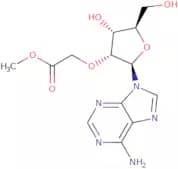
CAS:2’-O-(2-Methoxy-2-oxoethyl)adenosine is a novel antiviral and anticancer agent. It is an antiviral due to its ability to inhibit viral DNA synthesis and replication by competitively inhibiting the incorporation of deoxyribonucleoside triphosphate precursors into viral DNA. 2’-O-(2-Methoxy-2-oxoethyl)adenosine has been shown to be active against human cancer cells in vitro and in vivo, as well as other cell lines. This compound is a phosphoramidite that can be used for the synthesis of modified oligonucleotides, including ribonucleosides and deoxyribonucleosides. 2’-O-(2-Methoxy-2-oxoethyl)adenosine has also been shown to be an activator of RNA polymerase II transcriptional activity.Purity:Min. 95%2'-Deoxy-5'-O-DMT-5-propargyloxyuridine
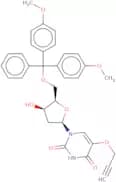
2'-Deoxy-5'-O-DMT-5-propargyloxyuridine is a nucleoside analogue that is an activator of the antiviral enzyme ribonuclease L. It has been shown to be cytotoxic in cell culture and has also been shown to induce apoptosis in human leukemia cells. 2'-Deoxy-5'-O-DMT-5-propargyloxyuridine is a novel modified nucleoside that has a high purity.Formula:C33H32N2O8Purity:Min. 95%Molecular weight:584.63 g/molN-Acetyl-5-[1,2-bis(acetyloxy)ethyl]-5'-O-DMT-2'-deoxycytidine 3'-CE phosphoramidite
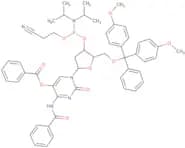
CAS:N-Acetyl-5-[1,2-bis(acetyloxy)ethyl]-5'-O-DMT-2'-deoxycytidine 3'-CE phosphoramidite is a Ribonucleoside, Deoxyribonucleoside, Activator, Antiviral. It is a modified nucleoside with N-(acetyl)-N′-[1,2-bis(acetyloxy)ethyl]glycine esterified to the 5′ position of the ribose and 2′deoxycytidine esterified to the 3′ position of the sugar. N-Acetyl-5-[1,2-bis(acetyloxy)ethyl]-5'-O-DMT-2'-deoxycytidine 3'-CE phosphoramidite has been shown to inhibit HIV replication in vitro and in vivo. This drug also inhibits influenza A viruses and herpes simplex virus type 1 (Formula:C47H58N5O12PPurity:Min. 95%Molecular weight:915.96 g/mol3-Deaza-2'-Deoxyadenosine
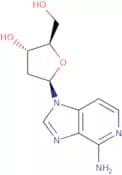
CAS:3-Deaza-2'-Deoxyadenosine is a nucleoside analog that is synthesized from 2'-deoxyadenosine. It has been shown to be more potent than natural adenosine in inhibiting the activity of certain RNA polymerases. 3-Deaza-2'-Deoxyadenosine inhibits RNA synthesis by binding to the ribose moiety of the ribonucleotide, which prevents the formation of an enzyme-substrate complex and thus blocks chain elongation. This compound is also able to inhibit DNA synthesis by binding to the deoxyribose moiety of DNA and preventing DNA polymerase from adding nucleotides to the growing strand. 3-Deaza-2'-Deoxyadenosine has been shown to have antiviral activity against influenza virus and herpes simplex virus type 1 (HSV) in vitro.Formula:C11H14N4O3Purity:Min. 95%Molecular weight:250.25 g/mol2'-o-Butyryladenosine 3',5'-cyclic phosphate dmap
CAS:Please enquire for more information about 2'-o-Butyryladenosine 3',5'-cyclic phosphate dmap including the price, delivery time and more detailed product information at the technical inquiry form on this pageFormula:C14H18N5O7PPurity:Min. 95%Molecular weight:399.3 g/mol3',5'-Di-O-benzoyl-2'-deoxy-2'-fluoro-b-D-arabinocytidine
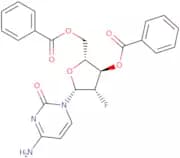
CAS:3',5'-Di-O-benzoyl-2'-deoxy-2'-fluoro-b-D-arabinocytidine is a modified nucleoside that is used as an anticancer agent. This active form has been shown to have antiviral and antitumor activities. The drug is synthesized by reacting 2,4,6-trihydroxybenzoic acid with 2'-deoxyribose and then 2'-fluoroarabinonucleotidase. 3',5'-Di-O-benzoyl-2'-deoxy-2'-fluoro-b-D-arabinocytidine has high purity and high quality, which makes it suitable for use in the synthesis of phosphoramidites.Purity:Min. 95%2-Amino-9-(b-D-ribofuranosyl)purine 5'-O-triphosphate - 10mM aq. solution
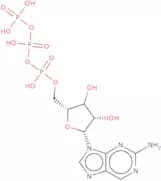
CAS:2-Amino-9-(b-D-ribofuranosyl)purine 5'-O-triphosphate is a synthetic nucleoside that is modified by phosphoramidite chemistry. This compound is an antiviral agent that inhibits viral DNA synthesis and replication. It has also been shown to have anticancer properties. 2-Amino-9-(b-D-ribofuranosyl)purine 5'-O-triphosphate inhibits the enzymatic activity of the enzyme ribonucleotide reductase, which converts ribonucleotides into deoxyribonucleotides. The resulting monophosphate form of this compound accumulates in cells, which leads to cell death.Formula:C10H16N5O13P3Purity:Min. 95%Color and Shape:PowderMolecular weight:507.18 g/mol5-Hydroxy-DC CEP
CAS:Please enquire for more information about 5-Hydroxy-DC CEP including the price, delivery time and more detailed product information at the technical inquiry form on this page
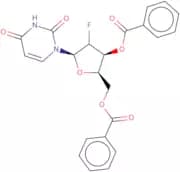
Formula:C53H56N5O10PPurity:Min. 95%Molecular weight:954 g/mol3',5'-Di-O-benzoyl-2'-deoxy-2'-fluorouridine
3',5'-Di-O-benzoyl-2'-deoxy-2'-fluorouridine is a novel nucleoside analog that has been shown to have anticancer activity in vitro. The compound is a monophosphate, which is synthesized from 2'-deoxyuridine and benzoyl chloride. 3',5'-Di-O-benzoyl-2'-deoxy-2'-fluorouridine was found to have antiviral activity against herpes simplex virus type 1 (HSV1) and cytomegalovirus (CMV). It also inhibited the production of HIV in human lymphocytes. This nucleoside analog can be activated by phosphorylation at the 5' position to form a diphosphate, which inhibits DNA synthesis by incorporating into the growing DNA chain and preventing the movement of RNA polymerase along the template strand.Formula:C23H19FN2O7Purity:Min. 95%Molecular weight:454.42 g/mol7-TFA-ap-7-Deaza-2',3'-dideoxyadenosine
CAS:7-TFA-ap-7-Deaza-2',3'-dideoxyadenosine is a diphosphate nucleoside analogue that can be activated by phosphoramidites. It is a novel, synthetic, and high quality nucleotide with antiviral and anticancer properties. This drug has been shown to inhibit the synthesis of DNA and RNA at the transcriptional level. 7-TFA-ap-7-Deaza-2',3'-dideoxyadenosine is a monophosphate nucleoside analogue that can be used in ribonucleotide synthesis for the treatment of cancer.Formula:C16H16F3N5O3Molecular weight:383.33 g/molRef: 3D-J-700297
1gTo inquire50mgTo inquire100mgTo inquire250mgTo inquire500mgTo inquire-Unit-ggTo inquire3'-Deoxy-3'-C-methyluridine
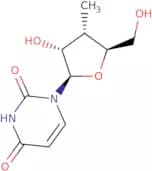
CAS:3'-Deoxy-3'-C-methyluridine is a novel and modified nucleoside that is synthesized from uridine. It is a monophosphate and has been shown to be an activator of the mammalian enzyme ribonucleotide reductase. 3'-Deoxy-3'-C-methyluridine has also been shown to have antiviral effects, as well as anticancer activity in studies with mice. The high purity and high quality of this product make it ideal for use in research, pharmaceuticals, and other applications.Formula:C10H14N2O5Purity:Min. 95%Molecular weight:242.23 g/mol5'-O-DMT-cytidine
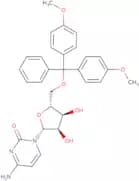
CAS:5'-O-DMT-cytidine is a modified nucleoside that is used as an activator for phosphoramidites and as a building block for DNA, RNA, and other nucleic acids. 5'-O-DMT-cytidine has been shown to have anticancer and antiviral properties in laboratory tests. It is also known to inhibit the replication of HIV virus by blocking the reverse transcriptase enzyme. The compound is available with high purity and high quality. This product can be synthesized into a diphosphate, monophosphate or ribonucleotide form.
Formula:C30H31N3O7Purity:Min. 95%Molecular weight:545.58 g/molS-Adenosyl-L-methionine
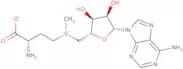
CAS:S-Adenosyl-L-methionine (SAM-e) is a co-substrate involved in methyl group transfer to nucleic acids, proteins and lipids. SAM-e is produced in the liver from adenosine triphosphate (ATP) and methionine by action of the enzyme methionine adenosyltransferase. Therapeutic use of S-adenosyl-L-methionine includes osteoarthritis, liver disease and major depressive disorder. S-Adenosyl-L-methionine is available as a dietary supplement.Formula:C15H22N6O5SPurity:Min. 95%Color and Shape:White PowderMolecular weight:398.44 g/mol1-Hydroxyethyl-2'-deoxyadenosine
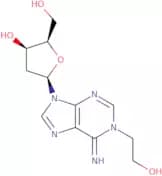
CAS:1-Hydroxyethyl-2'-deoxyadenosine (1HEDA) is an antiviral drug that inhibits the synthesis of viral DNA by blocking the formation of a ribonucleoside triphosphate intermediate. 1HEDA is a novel monophosphate nucleoside that has been modified to be resistant to phosphodiesterase enzymes and can be used as a chemotherapeutic agent for cancer. 1HEDA has been shown to have anticancer activity in vitro, in vivo, and in human clinical trials.Formula:C12H17N5O4Purity:Min. 95%Molecular weight:295.29 g/molGuanosine 5'-[γ-thio]triphosphate tetralithium
CAS:Guanosine 5'-[γ-thio]triphosphate tetralithium (GTPγS) is a guanine nucleotide analog that has been shown to modulate the signal transduction pathway in many types of cells. GTPγS activates the extracellular signal-transducing receptor kinase and phospholipase C, which are involved in cellular proliferation and differentiation. This agent also blocks calcium channels, thereby inhibiting neuromuscular transmission. It has been shown to be effective against pertussis toxin and other agents that block G protein coupling by inhibiting adenylate cyclase. In addition, GTPγS inhibits staurosporin-sensitive K+ channels in some neuronal cells, but not those that are insensitive to this blocker.Formula:C10H12Li4N5O13P3SPurity:Min. 90 Area-%Color and Shape:PowderMolecular weight:562.98 g/molGuanylyl-3'-5'-uridine ammonium salt
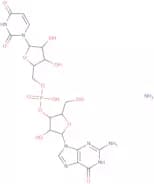
CAS:Guanylyl-3'-5'-uridine ammonium salt is a nucleoside compound that has been synthesized to inhibit the growth of cancer cells. The guanylyl-3'-5'-uridine monophosphate (GMP) is an activator of ribonucleotide reductase, which converts ribonucleotides to deoxyribonucleotides. It also inhibits DNA synthesis by inhibiting the activity of DNA polymerase and DNA gyrase, which are enzymes that maintain the integrity of DNA. Guanylyl-3'-5'-uridine ammonium salt has been shown to be active against leukemia and colon cancer cells in vitro and in vivo.
Formula:C19H24N7O13P·NH3Purity:Min. 95%Color and Shape:White to off-white solid.Molecular weight:606.45 g/molUridylyl-3'-5'-guanosine ammonium salt
Ribonucleosides are a group of nucleosides that includes ribose, 2'-deoxyribose, and their derivatives. Ribonucleosides are the building blocks of DNA and RNA. Uridylyl-3'-5'-guanosine ammonium salt is a novel monophosphate nucleotide with antiviral properties. It has been shown to inhibit the synthesis of viral proteins by binding to viral dsDNA and preventing them from being transcribed into mRNA. This drug is also an activator that increases the activity of RNA polymerase II during transcription initiation. The high purity and quality make Uridylyl-3'-5'-guanosine ammonium salt suitable for use in research or as a pharmaceutical ingredient for the manufacture of other drugs.Formula:C19H24N7O13PPurity:Min. 95%Molecular weight:589.41 g/molgamma-(BBT)-GTP
gamma-(BBT)-GTP is a synthetic nucleoside phosphoramidite that is used in the synthesis of DNA and RNA. It has antiviral properties and can be used as an activator of DNA polymerase in the deoxyribonucleotide synthesis. This chemical is novel because it can be modified to contain a phosphate group at the 2'-position, which is not found in natural nucleosides or nucleotides. gamma-(BBT)-GTP is a high-purity chemical that can be synthesized using CAS No. 72335-45-2.
Formula:C24H22N7O14P3S2·xNaPurity:Min. 95%Molecular weight:789.52 g/molm-Topolin riboside-5'-monophosphate salt
CAS:m-Topolin riboside-5'-monophosphate salt is a novel nucleoside that has been modified with a nitrogenous base and a phosphate group. It is an antiviral and anticancer agent, which may be due to its ability to inhibit the synthesis of DNA. m-Topolin riboside-5'-monophosphate salt inhibits viral replication by inhibiting viral diphosphate kinase or deoxyribonucleotide triphosphate reductase, preventing the production of DNA. This product is also an inhibitor of cellular proliferation, which may be due to its ability to inhibit DNA synthesis and repair.Formula:C17H18N5Na2O8P·H2OPurity:Min. 95%Molecular weight:515.32 g/molN2-Isobutyryl-2'-(2-methoxyethyl)guanosine
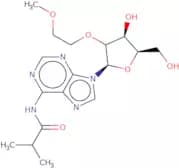
CAS:N2-Isobutyryl-2'-(2-methoxyethyl)guanosine is a nucleoside that is structurally related to guanosine. It is used as an activator for RNA synthesis and as a novel antiviral agent. This compound has been shown to have high purity, high quality, and excellent solubility. N2-Isobutyryl-2'-(2-methoxyethyl)guanosine has also been found to be active against HIV in vitro by inhibiting reverse transcriptase activity.
Purity:Min. 95%

![N-Acetyl-5-[1,2-bis(acetyloxy)ethyl]-5'-O-DMT-2'-deoxycytidine 3'-CE phosphoramidite](/_next/image/?url=https%3A%2Fstatic.cymitquimica.com%2Fproducts%2F3D%2Fthumb-webp%2FPA146815.webp&w=3840&q=75)


![Guanosine 5'-[γ-thio]triphosphate tetralithium](/_next/image/?url=https%3A%2Fstatic.cymitquimica.com%2Fproducts%2F3D%2Fthumb-webp%2FNG63193.webp&w=3840&q=75)