Nucleosides
Nucleosides are fundamental building blocks of nucleic acids, composed of a nitrogenous base attached to a sugar molecule. In this section, you can find a wide variety of nucleosides essential for research in molecular biology, biochemistry, and pharmacology. These compounds play crucial roles in the synthesis of DNA and RNA, and are also vital in various metabolic processes. Nucleosides are used in studying genetic material, developing antiviral and anticancer therapies, and understanding cellular mechanisms. At CymitQuimica, we provide high-quality nucleosides to support your research and development needs, ensuring purity and reliability for your experimental applications.
Found 3567 products of "Nucleosides"
Sort by
Purity (%)
0
100
|
0
|
50
|
90
|
95
|
100
Pyrimidine-4-carboxylic acid hydrazide
CAS:<p>Pyrimidine-4-carboxylic acid hydrazide (PCAH) is an antimycobacterial agent that inhibits the growth of Mycobacterium tuberculosis and other related species. PCAH is a ligand that binds to redox active metal ions, forming a supramolecular complex. The carboxyl group on PCAH reacts with the hydroxide ion in the presence of water to produce hydrogen peroxide, which in turn oxidizes the mycolic acids in the cell wall of M. tuberculosis, leading to cell death. The pyridine ring on PCAH is nucleophilic and can react with nucleophiles such as thiols or amines, which are found in proteins or peptides. This reaction results in nucleophilic substitutions, which inhibit bacterial protein synthesis and lead to cell death.</p>Formula:C5H6N4OPurity:Min. 95%Molecular weight:138.13 g/molGuanosine 5'-O-(1-thiotriphosphate) lithium salt - 100mM aqueous solution
CAS:<p>Guanosine 5'-O-(1-thiotriphosphate) lithium salt is a nucleotide analogue that binds to the guanine nucleotide-binding site on the enzyme. This agent has been shown to inhibit the growth of viruses, such as influenza virus and human immunodeficiency virus, by inhibiting viral transcription. The drug also has antiviral activity against herpesviruses and cytomegalovirus in cell culture. Guanosine 5'-O-(1-thiotriphosphate) lithium salt inhibits the binding of RNA polymerase to DNA templates and prevents the initiation of transcription. It also reduces the expression of a number of genes in cells by inhibiting protein synthesis in the cytoplasm. Guanosine 5'-O-(1-thiotriphosphate) lithium salt may be used for treating congestive heart failure due to its ability to reduce levels of cytosolic Ca2+ ions, which have been shown to promote cardiac my</p>Formula:C10H16N5O13P3S·4LiPurity:Min. 95%Color and Shape:Colourless liquid.Molecular weight:567.01 g/mol4'-Ethynylthymidine
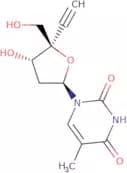
CAS:<p>4'-Ethynylthymidine is a novel nucleoside analog that has been shown to be active against HIV-1. It has been shown to inhibit the incorporation of uridine into viral DNA and terminate elongation of viral DNA. 4'-Ethynylthymidine has also been shown to be active against other viruses such as vesicular stomatitis virus, influenza virus, and hepatitis C virus. The cytotoxicity of this drug is significant and may provide potential therapeutics for cancer treatment.</p>Purity:Min. 95%Cytidine-5'-triphosphate, lithium salt
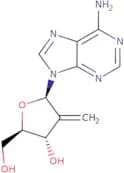
<p>Cytidine-5'-triphosphate, lithium salt (CTP, Li) is a monophosphate that is used as a cofactor in the synthesis of DNA and RNA. It is also used for the treatment of viral infections. CTP, Li has antiviral activity against herpes simplex virus type 1 and 2 (HSV-1 and HSV-2), varicella zoster virus (VZV), human cytomegalovirus (CMV) and Epstein-Barr virus (EBV). CTP, Li can be used to inhibit the growth of cancer cells by modifying DNA.</p>Purity:Min. 95%2'-Deoxy-2'-methyleneadenosine
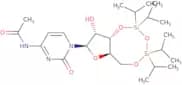
CAS:<p>2'-Deoxy-2'-methyleneadenosine is a potential mechanism for the treatment of cancer. It has been shown to be active against the murine leukemia cell line, L1210, and to cause inactivation of the cells. This drug inhibits cellular RNA synthesis by binding to either the ribonucleoside or deoxyribonucleoside pools in the cell and preventing their conversion into nucleotides. 2'-Deoxy-2'-methyleneadenosine has also been shown to be an effective inhibitor of gamma-aminobutyric acid (GABA) uptake and cross-resistance with other drugs that are GABA uptake inhibitors.</p>Formula:C11H13N5O3Purity:Min. 95%Molecular weight:263.25 g/molN-Acetyl-3',5'-O-(1,1,3,3-tetraisopropyl-1,3-disiloxanediyl)cytidine
CAS:<p>N-Acetyl-3',5'-O-(1,1,3,3-tetraisopropyl-1,3-disiloxane diyl) cytidine is a novel modified ribonucleoside. It is an activator of DNA and RNA synthesis with anticancer properties. N-Acetyl-3',5'-O-(1,1,3,3-tetraisopropyl-1,3-disiloxane diyl) cytidine has been shown to be effective against influenza A virus and herpes simplex virus type 1. NACCTC has also shown antiviral activity against HIV type 2 in cell culture.</p>Formula:C23H41N3O7Si2Purity:Min. 95%Molecular weight:527.76 g/molN2-Methylguanosine-3',5'-cyclic monophosphate
CAS:<p>N2-Methylguanosine-3',5'-cyclic monophosphate is a synthetic nucleoside that is the cyclic monophosphate analog of guanosine. It has antiviral, anticancer, and anti-inflammatory properties. N2-Methylguanosine-3',5'-cyclic monophosphate has been shown to inhibit viral replication in cells by inhibiting the synthesis of viral DNA and RNA. This compound also inhibits cancer cell growth in culture. The antiviral activity may be due to methylation at the 2' position of the sugar moiety, which prevents viral reverse transcriptase from copying viral RNA into DNA. The anticancer activity may be due to inhibition of ribonucleotide reductase and deoxyribonucleotide reductase, which are enzymes that maintain nucleotide pools necessary for DNA synthesis.</p>Formula:C11H13N5O7P·NaPurity:Min. 95%Molecular weight:381.21 g/molUridine-15N2
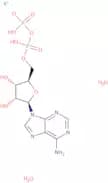
CAS:<p>Uridine-15N2 is a novel nucleoside that has antiviral, anticancer and antifungal effects. It has been shown to inhibit the growth of tumor cells by blocking the synthesis of DNA and RNA. Uridine-15N2 is synthesized from uridine-5N2 and 15N2 gas. This product is used in molecular biology research as a substrate for DNA polymerase, to study the enzymatic process of DNA replication. It can also be used as an activator for ribonuclesides or deoxyribonucleosides in organic synthesis. Uridine-15N2 is soluble in water and has a high purity.</p>Formula:C9H12N2O6Purity:Min. 95%Molecular weight:244.20 g/molAdenosine 5'-diphosphate potassium salt
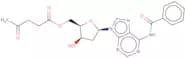
CAS:<p>Adenosine 5'-diphosphate potassium salt can be used as a substrate for a variety of protein kinases known as AMP-activated protein kinases (AMPK)</p>Formula:C10H14N5O10P2·KPurity:Min. 95%Color and Shape:PowderMolecular weight:465.29 g/molN6-Benzoyl-2'-deoxy-5'-O-levulinoyladenosine
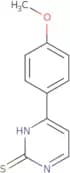
<p>N6-Benzoyl-2'-deoxy-5'-O-levulinoyladenosine is a modified nucleoside which can be used in the synthesis of DNA. It is phosphorylated to form N6-benzoyl-2'-deoxyadenosine monophosphate (BADAMP), which is converted to N6-benzoyl-2'-deoxyadenosine diphosphate (BADAP) through the action of ATP. The drug has antiviral properties and can be used to treat HIV infection.</p>Formula:C22H23N5O6Purity:Min. 95%Molecular weight:453.46 g/mol4-(4-Methoxyphenyl)-2-pyrimidinethiol
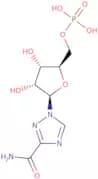
CAS:<p>4-(4-Methoxyphenyl)-2-pyrimidinethiol is a synthetic nucleoside analog. It is a monophosphate that inhibits the production of RNA by inhibiting ribonucleotide reductase. 4-(4-Methoxyphenyl)-2-pyrimidinethiol has antiviral properties and can be used to treat infections caused by herpes simplex virus or HIV. This compound also has anticancer activity and can inhibit DNA synthesis in tumor cells. 4-(4-Methoxyphenyl)-2-pyrimidinethiol can also inhibit bacterial growth and is used as an antibiotic for Mycobacterium tuberculosis, Mycobacterium avium, and other bacteria.</p>Formula:C11H10N2OSPurity:Min. 95%Molecular weight:218.28 g/molRibavirin 5'-monophosphate sodium salt
CAS:<p>Ribavirin is an antiviral drug that is used in the treatment of a number of viral infections, including chronic hepatitis C, respiratory syncytial virus, and influenza. Ribavirin inhibits the synthesis of RNA by interfering with ribonucleotide reductase. Ribavirin 5'-monophosphate sodium salt (RPMPS) is a prodrug that is hydrolyzed to form ribavirin 5'-triphosphate (RTP). This active form inhibits the polymerase chain reaction by binding to DNA polymerase. Ribavirin has been shown to be effective against cell lines resistant to other antiviral drugs such as zirconium oxide. RPMPS has also been shown to be an inhibitor of structural analysis and energy metabolism in erythrocytes.</p>Formula:C8H13N4O8P·xNaPurity:Min. 95%Color and Shape:PowderMolecular weight:324.18 g/mol4-Methyl-6-phenyl-pyrimidine-2-thiol
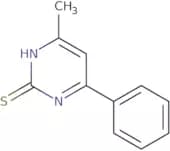
CAS:<p>4-Methyl-6-phenyl-pyrimidine-2-thiol is a copper(II) dehalogenating agent that belongs to the group of amplifiers. It has been used in the preparation of syntheses, including as an intermediate in the synthesis of phenylpyrimidines and amidines. The synthesis of 4-methyl-6-phenyl-pyrimidine-2-thiol can be accomplished by condensation of phleomycin with a biaryl. This reaction is followed by oxidation to give a biaryl sulfone, which is then reduced with hydrogen gas and ammonium formate.</p>Formula:C11H10N2SPurity:Min. 95%Molecular weight:202.28 g/mol2'-O-(tert-Butyldimethylsilyl)-3'-deoxy-5'-O-trityluridine
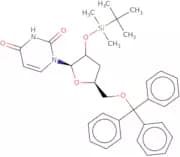
CAS:<p>2'-O-(tert-Butyldimethylsilyl)-3'-deoxy-5'-O-trityluridine is a nucleoside that has antiviral and anticancer properties. It is a monophosphate of uridine, which is an important precursor in the synthesis of DNA and RNA. This product has been modified to improve its purity and quality, making it suitable for use in laboratory research.</p>Formula:C34H40N2O5SiPurity:Min. 95%Molecular weight:584.78 g/mol1-[(5E)-5',6'-Dideoxy-6'-diethoxylphosphinyl-2'-O-methyl-b-D-ribo-hex-5-enofuranosyl]uracil 3'-CE phosphoroamidite
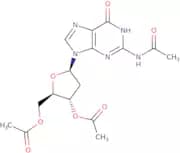
<p>1-[(5E)-5',6'-Dideoxy-6'-diethoxylphosphinyl-2'-O-methyl-b-D-ribo-hex-5-enofuranosyl]uracil 3'-CE phosphoroamidite is a nucleoside analog that is a modified form of uracil. It has been shown to inhibit the growth of cancer cells in vitro and in vivo. 1-[(5E)-5',6'-Dideoxy-6'-diethoxylphosphinyl-2'-O-methyl-b-D-ribo-hex-5-enofuranosyl]uracil 3'-CE phosphoroamidite inhibits cellular proliferation by blocking the enzyme ribonucleotide reductase, which plays an essential role in DNA synthesis. This drug also inhibits viral replication by inhibiting reverse transcriptase and integrase, key enzymes in the life cycle of retroviruses and</p>Formula:C22H36N4O9P2Purity:Min. 95%Molecular weight:562.49 g/mol3',5',N2-Tri-O-acetyl-2'-deoxyguanosine
CAS:<p>Tri-O-acetyl-2'-deoxyguanosine is an anticancer and antiviral agent. It is used as a precursor for the synthesis of deoxyribonucleosides and ribonucleosides. This compound has been shown to be a potent activator of DNA polymerase α, and it also inhibits the replication of diphosphate nucleotides. Tri-O-acetyl-2'-deoxyguanosine has also been found to inhibit influenza virus in vitro.</p>Formula:C16H19N5O7Purity:Min. 95%Molecular weight:393.35 g/mol2,6-Dihydro-9-(2',3',5'-tri-O-acetyl-b-D-ribofuranosyl)purine
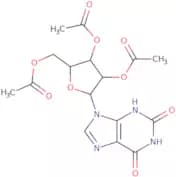
CAS:Controlled Product<p>2,6-Dihydro-9-(2',3',5'-tri-O-acetyl-b-D-ribofuranosyl)purine is a synthetic activator that is used in the synthesis of nucleosides and nucleotide phosphoramidites. It has been shown to have antiviral activity against herpes simplex virus type 1, herpes simplex virus type 2, and vesicular stomatitis virus.</p>Formula:C16H22N4O7Purity:Min. 95%Molecular weight:382.37 g/mol2,6-Diamino-9-(3'-O-methyl-b-D-ribofuranosyl)purine
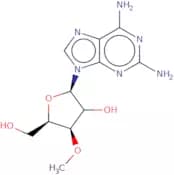
CAS:<p>2,6-Diamino-9-(3'-O-methyl-b-D-ribofuranosyl)purine is an activator of antineoplastic drugs. It is a synthetic nucleoside that is modified at the 2' and 6' positions. The modification of the 2' position increases the stability and bioavailability of the drug in vivo. This product can be used to synthesize deoxyribonucleosides, phosphoramidites, ribonucleotides, or antiviral drugs.</p>Formula:C11H16N6O4Purity:Min. 95%Molecular weight:296.29 g/molCytidine-5'-carboxylic acid
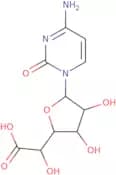
CAS:<p>Cytidine-5'-carboxylic acid is a member of the family of phenylephrine, which is a solid-phase peptide synthesized by reacting amino acids with N,O-bis(trimethylsilyl)acetamide and trimethylchlorosilane. Cytidine-5'-carboxylic acid is known to modulate substances that affect cell membrane properties and cause contraction in isolated rat stomachs. It has been shown to bind to the receptor agonist in laboratory animals. The concentration-response curve for cytidine-5'-carboxylic acid was determined in isolated rat stomach preparations.</p>Formula:C9H11N3O6Purity:Min. 95%Molecular weight:257.2 g/mol3-Benzoylpyridine
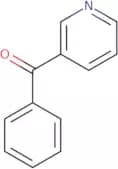
CAS:<p>3-Benzoylpyridine is a natural product that has been isolated from the plant Plectranthus fruticosus. It is an aromatic compound, with a trifluoromethyl group and a hydroxy group. 3-Benzoylpyridine has been shown to react with amines in the presence of hydrogen gas to form 1H-1,2,3-triazole derivatives. This reaction is catalyzed by light or UV irradiation. The absorption maxima for 3-benzoylpyridine are at 270 nm and 330 nm in water and ethanol, respectively. In addition, 3-benzoylpyridine is able to combine with hydroxide ions to form the corresponding salt, which can be reduced to yield the nitrogen containing heterocyclic ring (3-benzo[b]pyridin).</p>Formula:C12H9NOPurity:Min. 95%Molecular weight:183.21 g/mol


![1-[(5E)-5',6'-Dideoxy-6'-diethoxylphosphinyl-2'-O-methyl-b-D-ribo-hex-5-enofuranosyl]uracil 3'-CE …](/_next/image/?url=https%3A%2Fstatic.cymitquimica.com%2Fproducts%2F3D%2Fthumb-webp%2FPD76593.webp&w=3840&q=75)