Nucleosides
Nucleosides are fundamental building blocks of nucleic acids, composed of a nitrogenous base attached to a sugar molecule. In this section, you can find a wide variety of nucleosides essential for research in molecular biology, biochemistry, and pharmacology. These compounds play crucial roles in the synthesis of DNA and RNA, and are also vital in various metabolic processes. Nucleosides are used in studying genetic material, developing antiviral and anticancer therapies, and understanding cellular mechanisms. At CymitQuimica, we provide high-quality nucleosides to support your research and development needs, ensuring purity and reliability for your experimental applications.
Found 3567 products of "Nucleosides"
Sort by
Purity (%)
0
100
|
0
|
50
|
90
|
95
|
100
2'-O-(2-Methoxyethyl)adenosine 5'-a-thiotriphosphate sodium salt
<p>2'-O-(2-Methoxyethyl)adenosine 5'-a-thiotriphosphate sodium salt is a synthetic nucleoside with antiviral and anticancer properties. It is an analog of adenosine 5'-triphosphate (ATP) in which the ribose sugar has been replaced by a 2'-O-(methoxyethyl) moiety. It has shown to be cytotoxic against cancer cells, and it is a potent activator of human telomerase, the enzyme that synthesizes telomeres at the end of chromosomes. This compound has been shown to have high purity and quality and does not have any CAS numbers assigned to it.</p>Formula:C13H18N5O13P3S·4NaPurity:Min. 95%Molecular weight:669.25 g/mol2'-Deoxy-a-adenosine
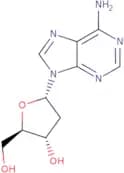
CAS:<p>2'-Deoxy-a-adenosine is a nucleoside that contains an adenine base. It has been studied for its biological properties, including its reaction with solution and its use as an antimicrobial agent. 2'-Deoxy-a-adenosine has been shown to inhibit the growth of bowel disease in mice by binding to the adenosine A3 receptor on the surface of cells. This nucleoside also binds to nuclear DNA and may be used as a pharmacological agent, but more research is needed to determine whether it would be effective against cancer cells. 2'-Deoxy-a-adenosine may also be useful as a potential drug target for the treatment of cancer due to its ability to bind with dna duplexes, which are found in all cancer cells.</p>Formula:C10H13N5O3Purity:Min. 95%Color and Shape:White PowderMolecular weight:251.25 g/molRibavirin 5'-triphosphate triethylammonium salt - 10 mM aqueous solution
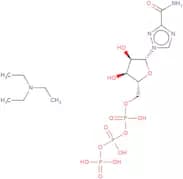
CAS:<p>Ribavirin triphosphate is the biologically active metabolite of antiviral nucleoside analog ribavirin. In cells, the prodrug ribavirin gets triphosphorylated and in it inhibits viral RNA polymerases, interfering with the synthesis of newly formed RNA.</p>Formula:C8H15N4O14P3•(C6H15N)xPurity:Min. 95 Area-%Color and Shape:Clear LiquidMolecular weight:789.735'-O-Tosylthymidine
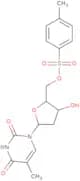
CAS:<p>5'-O-Tosylthymidine is a bifunctional reagent that is used in the synthesis of DNA. It is a nucleophilic, inorganic compound that reacts with the electrophilic acrylonitrile group on 5'-hydroxythymidine to form a stable thiophosphate linkage. The reaction takes place stepwise and is catalyzed by an enzyme called DNA polymerase. This product has been used as an antimetabolite in medicine, mainly for treating leukemia.</p>Formula:C17H20N2O7SPurity:Min. 95%Molecular weight:396.42 g/mol2-Amino-9-(2'-deoxy-β-D-ribofuranosyl)purine
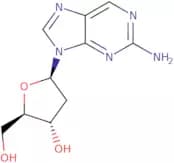
CAS:<p>2-Amino-9-(2'-deoxy-b-D-ribofuranosyl)purine is a nucleoside analog that has been found to be effective in the treatment of leukemia.</p>Formula:C10H13N5O3Purity:(Hplc) Min. 98.00%Color and Shape:PowderMolecular weight:251.24 g/mol(-)-Emtricitabine triphosphate sodium salt
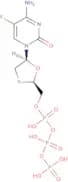
CAS:<p>Emtricitabine is a nucleoside reverse transcriptase inhibitor with activity against human immunodeficiency virus and hepatitis B virus</p>Formula:C8H9FN3Na4O12P3SPurity:Min. 95%Molecular weight:575.11 g/mol2-Fluoroadenosine
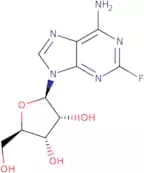
CAS:<p>2-Fluoroadenosine is a nucleoside that has shown high resistance to the enzyme cyclase. This property may be due to its structural and conformational properties, which are different from those of adenosine. 2-Fluoroadenosine has been shown to inhibit the synthesis of ATP in ventricular myocardium and fat cells, as well as increase levels of adenylate kinase in blood. It has also been shown to have potential as a drug target for autoimmune diseases, such as multiple sclerosis. 2-Fluoroadenosine can be used for biochemical and pharmacokinetic studies because it is rapidly metabolized by the liver and excreted in urine.<br>2-Fluoroadenosine can also be used to measure changes in the ratio of adenylate kinase:adenylate kinase reductase (AKAR) in blood plasma.</p>Formula:C10H12FN5O4Purity:Min. 95%Color and Shape:White Slightly Yellow PowderMolecular weight:285.23 g/mol[(2S,6R)-6-{Thymin-1-yl}-4-tritylmorpholin-2-yl]methyl dimethyl-phosphoramidochloridate
CAS:<p>[(2S,6R)-6-{Thymin-1-yl}-4-tritylmorpholin-2-yl]methyl dimethyl-phosphoramidochloridate (TMP) is a Ribonucleoside and Deoxyribonucleoside Activator that is synthesized from Thymine (T), Thymidine (Td), and Phosphoramidites. TMP is a novel synthetic derivative of thymine with the ability to activate DNA synthesis reactions. TMP has been shown to provide high quality nucleotides with high purity in a single step reaction.</p>Formula:C31H34ClN4O5PPurity:Min. 95%Color and Shape:White To Light (Or Pale) Red SolidMolecular weight:609.05 g/molXanthosine-5'-triphosphate triethylammonium salt - 100 mM aqueous solution
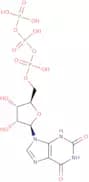
CAS:<p>Inhibitor of adenylyl and guanylyl cyclase</p>Formula:C10H15N4O15P3·xC6H15NPurity:Min. 95%Color and Shape:Colorless PowderMolecular weight:524.17 g/molUridine diphosphate choline (UDPC) sodium
CAS:<p>Uridine diphosphate choline (UDPC) sodium is a nucleotide that is used as a phosphoramidite for DNA synthesis. The chemical formula for UDPC is C8H14N4O8P. The activation of the molecule occurs in acidic conditions, which may be due to the formation of an amide bond between the terminal phosphate and the amino group on the phosphorylcholine. This same reaction can also occur in alkaline conditions. UDPC has been shown to inhibit viral replication, including HIV-1, by blocking reverse transcription of viral RNA into DNA. It also has anticancer effects, as it inhibits cell proliferation and induces apoptosis in cancer cells. UDPC does not have any known side effects or toxicity.</p>Formula:C14H25N3O12P2•NaPurity:Min. 95%Color and Shape:PowderMolecular weight:512.3 g/molDMTr-TNA-C(Bz)-amidite
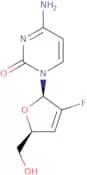
CAS:<p>Please enquire for more information about DMTr-TNA-C(Bz)-amidite including the price, delivery time and more detailed product information at the technical inquiry form on this page</p>Formula:C45H50N5O8PMolecular weight:819.9 g/mol2',3'-Dideoxy-2',3'-didehydro-2'-fluorocytidine
CAS:<p>2',3'-Dideoxy-2',3'-didehydro-2'-fluorocytidine (ddC) is a nucleoside with antiviral activity. The mechanism of action is not well understood, but ddC has been shown to inhibit the proliferation of human immunodeficiency virus (HIV). It is also active against isolates of herpes simplex virus and vesicular stomatitis virus. The elimination half-life of ddC in humans is about 8 hours. In humans, this drug is eliminated by methylation and glucuronidation reactions. The pharmacokinetics of ddC have been studied in animals, including rats and rabbits, with preliminary indications that the elimination half-life may be longer than in humans.</p>Formula:C9H10FN3O3Purity:Min. 95%Molecular weight:227.19 g/molGuanosine 5'-diphosphate sodium
CAS:<p>Pyruvate kinase substrate</p>Formula:C10H15N5O11P2•Na2Purity:Min. 95%Color and Shape:PowderMolecular weight:466.19 g/molCaffeoyl-coenzym A
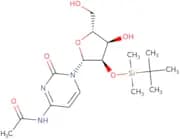
CAS:<p>Please enquire for more information about Caffeoyl-coenzym A including the price, delivery time and more detailed product information at the technical inquiry form on this page</p>Formula:C30H42N7O19P3SPurity:Min. 95%Molecular weight:929.68 g/molN4-Acetyl-2'-O-tert-butyldimethylsilylcytidine
CAS:<p>N4-Acetyl-2'-O-tert-butyldimethylsilylcytidine is a novel nucleoside that has been extensively studied for its anticancer and antiviral properties. It is a modified nucleoside that inhibits the production of DNA, RNA, and protein. This product is also used as an activator in the synthesis of oligonucleotides. N4-Acetyl-2'-O-tert-butyldimethylsilylcytidine can be used in vitro to study the effects of different cancer cells on DNA replication. It has been shown to inhibit the growth of human leukemia cells in culture.</p>Formula:C17H29N3O6SiPurity:Min. 95%Color and Shape:PowderMolecular weight:399.51 g/molGuanosine5'-diphosphate
CAS:<p>Pyruvate kinase substrate</p>Formula:C10H15N5O11P2Purity:Min. 95%Color and Shape:PowderMolecular weight:443.2 g/mol2'-Deoxy-3'-O-DMT-N2-isobutyrylguanosine 5'-CE phosphoramidite
<p>2'-Deoxy-3'-O-DMT-N2-isobutyrylguanosine 5'-CE phosphoramidite is a 5'-3’ “reverse” (or “inverse”) amidite.</p>Formula:C44H54N7O8PPurity:Min. 95%Molecular weight:839.94 g/mol4-Chloro-5-iodo-pyrrolo[2,3-d]pyriMidine-7-carboxylic acid tert-butyl ester
CAS:<p>Focuses is a chemical compound that does not have any known commercial or industrial uses.</p>Purity:Min. 95%Kinetin riboside-5'-monophosphate sodium salt
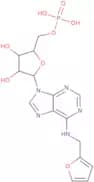
CAS:<p>Kinetin riboside-5'-monophosphate sodium salt is a synthetic nucleotide that has been modified to include a phosphate group at the 5' position. Kinetin riboside-5'-monophosphate sodium salt is an activator of DNA synthesis and can be used for the treatment of viral infections. It also shows anticancer activity and is effective against cancer cells that are resistant to other cancer drugs.</p>Formula:C15H16N5Na2O8P·H2OPurity:Min. 95%Color and Shape:PowderMolecular weight:489.29 g/mol


![[(2S,6R)-6-{Thymin-1-yl}-4-tritylmorpholin-2-yl]methyl dimethyl-phosphoramidochloridate](/_next/image/?url=https%3A%2Fstatic.cymitquimica.com%2Fproducts%2F3D%2Fthumb-webp%2FNT58203.webp&w=3840&q=75)






![4-Chloro-5-iodo-pyrrolo[2,3-d]pyriMidine-7-carboxylic acid tert-butyl ester](/_next/image/?url=https%3A%2Fstatic.cymitquimica.com%2Fproducts%2F3D%2Fthumb-webp%2FNC44293.webp&w=3840&q=75)