Non Polar Solvents
Non-polar solvents are a class of solvents that dissolve non-polar compounds due to their low dielectric constants and lack of significant partial charges. They are widely used in various chemical processes and applications, including organic synthesis, extractions, and chromatography. Common non-polar solvents include substances with 6-membered rings and building blocks such as hexane and toluene, which are crucial for dissolving hydrophobic compounds. These solvents play an essential role in the preparation of active pharmaceutical ingredients (APIs) and related research compounds. Additionally, non-polar solvents are utilized in NMR spectroscopy, where they help dissolve non-polar analytes without interfering with the spectral analysis. They are also important in processes involving amino acids, organic chlorinated compounds, and various building blocks. Their effectiveness in dissolving organic compounds makes non-polar solvents indispensable in both laboratory and industrial settings.
Found 188 products for "Non Polar Solvents".
Sort by
Purity (%)
0
100
|
0
|
50
|
90
|
95
|
100
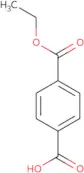
1,4-Benzenedicarboxylic acid, monoethyl ester
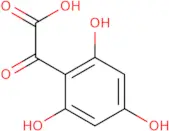
CAS:1,4-Benzenedicarboxylic acid, monoethyl ester (1,4-BDE) is a monomer that is used in the manufacture of polycarbonates and other plastics. 1,4-BDE is also used as a solvent for xylene and butanol. It has been shown to be useful in the production of polyester fibers. The monomer can be synthesized by reacting ethylene with terephthalic acid or dimethyl terephthalate (DMT). This reaction produces 1,4-BDE and methanol as byproducts. The process is carried out at temperatures of 250 °C to 300 °C and under atmospheric pressure. The purified product can be isolated using distillation or extraction with organic solvents such as benzene or butanol. The reaction can be carried out in the presence of ruthenium, which acts as a catalyst.Formula:C10H10O4Purity:Min. 95%Color and Shape:White PowderMolecular weight:194.18 g/mol2-Oxo-2-(2,4,6-trihydroxyphenyl)acetic acid
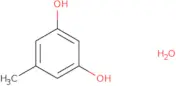
CAS:2-Oxo-2-(2,4,6-trihydroxyphenyl)acetic acid is a useful synthetic building block/scaffold.Formula:C8H6O6Purity:Min. 95%Molecular weight:198.13 g/molOrcinol monohydrate
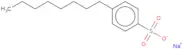
CAS:Orcinol monohydrate is a high quality chemical that can be used as a reagent, complex compound, or useful intermediate in the synthesis of fine chemicals. It is also an important building block in the synthesis of other compounds. This product has CAS No. 6153-39-5 and is classified as a speciality chemical. It is also a versatile building block that can be used as a reaction component in organic syntheses.Formula:C7H10O3Molecular weight:142.16 g/mol4-Octylbenzenesulfonic acid sodium salt
CAS:4-Octylbenzenesulfonic acid sodium salt is a versatile building block that is used in the synthesis of pharmaceuticals, agrochemicals, and specialty chemicals. The compound is soluble in water and can be used as an intermediate in organic synthesis. 4-Octylbenzenesulfonic acid sodium salt has been used as a reagent for research purposes and as a starting material for the synthesis of other compounds. It is also used as a building block for complex molecules. CAS No. 6149-03-7Formula:C14H21NaO3SPurity:Min. 97 Area-%Color and Shape:PowderMolecular weight:292.37 g/mol4-Methoxybenzenediazonium tetrafluoroborate
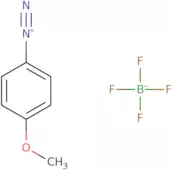
CAS:4-Methoxybenzenediazonium tetrafluoroborate is a reactive chemical that is used as a component of a number of reagents, including those used in organic chemistry. This compound has been used as an intermediate for the synthesis of other chemicals, such as 4-methoxybenzenediazonium chloride and 4-methoxybenzenediazonium bromide. 4-Methoxybenzenediazonium tetrafluoroborate is also an excellent building block for complex compounds and fine chemicals. The CAS No. for this chemical is 459-64-3.Formula:C6H16N2Molecular weight:116.2 g/mol1-Bromo-2,4-dinitrobenzene
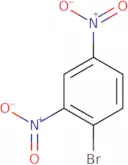
CAS:1-Bromo-2,4-dinitrobenzene, also known as DNB, is a molecule that belongs to the group p2. It has been shown to be a substrate for catalysis in vitro assays. 1-Bromo-2,4-dinitrobenzene is used in cancer research and can inhibit the growth of skin cells. 1-Bromo-2,4-dinitrobenzene does not show any cytotoxic effects on untreated control cells and it has been shown to have limited solubility in water (less than 0.1 g/L). This molecule also shows low reactivity with nucleophilic compounds and has been found to be less reactive than nitro compounds.Formula:C6H3BrN2O4Purity:Min. 95%Color and Shape:Off-White PowderMolecular weight:247 g/molSodium Dodecylbenzenesulfonate (soft type) (mixture)
CAS:Sodium dodecylbenzenesulfonate is a surfactant that has been used in a wide variety of industrial and research applications. Sodium dodecylbenzenesulfonate is not considered to be toxicologically harmful, but it can produce byproducts that are hazardous. These byproducts are controlled by regulatory authorities and are removed during the manufacturing process. It can also absorb other chemicals, such as carbamates and silicone oils, from the atmosphere. The focus of its use is as an absorbent for water-based paints.Formula:C18H29NaO3SPurity:Min. 95%Color and Shape:PowderMolecular weight:348.48 g/molRef: 3D-FS62998
Discontinued product5-Propyl-1,3-benzenediol
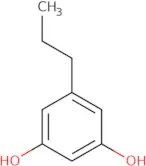
CAS:5-Propyl-1,3-benzenediol is a chemical compound that is found in cannabis. It has been shown to have anti-inflammatory and neuroprotective effects in vitro. 5-Propyl-1,3-benzenediol also inhibits the growth of cancer cells in vivo by inducing apoptosis.
5-Propyl-1,3-benzenediol can be synthesized from cannabidiol with high yield and selectivity by a one-pot reaction. This product has not been studied for toxicity or other side effects on humans.Formula:C9H12O2Purity:Min. 95%Color and Shape:PowderMolecular weight:152.19 g/mol