Polysaccharides
Found 505 products of "Polysaccharides"
Cellulose, particle size 20μm
CAS:Cellulose with a particle size of 20μm is an industrial biomass material that has various applications. It is commonly used in the production of paper, textiles, and biofuels. Cellulose is a complex carbohydrate that provides structural support to plant cell walls. It can also be used as an excipient in pharmaceutical formulations, such as in the production of tablets.Purity:Min. 95%Color and Shape:PowderWheat starch
CAS:Starch is an energy storing polysaccharide produced by higher plants and some algae. Pure starch is a white, tasteless and odorless powder that is insoluble in cold water or alcohol. It consists of two types of polysaccharide: the linear and helical amylose (α-1,4-linked glucose) and the branched amylopectin (α-1,4 and α-1,6-linked glucose). Depending on the plant, starch generally contains 20 to 25% amylose and 75 to 80% amylopectin by weight.Purity:Min. 95%Color and Shape:PowderDextran sulfate sodium - MW 5,000-8,000
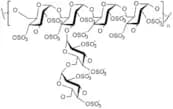
CAS:Dextran sulphate is a dextran derivative whose ulcer (colitis) -causing properties were first reported in hamsters and extrapolated a few years later to mice and rats. The exact mechanisms through which dextran sulphate induces intestinal inflammation are unclear but may be the result of direct damage of the monolayer of epithelial cells in the colon, leading to the crossing of intestinal contents (for e.g. commensal bacteria and their products) into underlying tissue and therefore induction of inflammation. The dextran sulphate sodium induced ulceration model in laboratory animals has some advantages, when compared to other animal models of colitis, due to its simplicity and similarities to human inflammatory bowel disease.Formula:(C6H7Na3O14S3)nPurity:Min. 95%Color and Shape:PowderChondroitin sulfate A sodium salt - Average MW 10,000 - 50,000
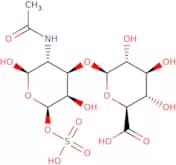
CAS:Chondroitin sulfate A sodium salt is a glycosaminoglycan that is derived from chondroitin. It is a complex carbohydrate with a high molecular weight and an average MW of 10,000 to 50,000 Da. The synthesis of the monosaccharide units in chondroitin sulfate A sodium salt occurs by Methylation, Click modification, Polysaccharide, or Fluorination. Chondroitin sulfate A sodium salt can be custom synthesized according to customer specifications and can be ordered as a CAS No. 39455-18-0 with high purity.Purity:Min. 95%Color and Shape:White Off-White PowderHydroxypropyl cellulose - Average MW 80,000
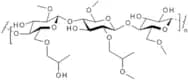
CAS:In water, hydroxypropyl cellulose forms liquid crystals with many mesophases depending on concentration. These mesophases include isotropic, anisotropic, nematic and cholesteric, the latter resulting in many colors such as violet, green and red. Pharmaceutical applications include treatments for medical conditions such as dry eye syndrome (keratoconjunctivitis sicca), recurrent corneal erosions, decreased corneal sensitivity, exposure and neuroparalytic keratitis. It is also used as a binder in tablets. Hydroxypropylcellulose is also used as a thickener, a binder and emulsion stabiliser in foods with E number E463. HPC is used as a support matrix for DNA separations by capillary and microchip electrophoresis.Purity:Min. 95%Glycogen - from oyster for molecular biology
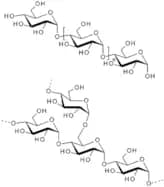
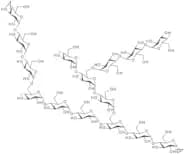
CAS:Glycogen is a highly branched polysaccharide of glucose that serves as a form of energy storage in animals and fungi. It is the main storage form of glucose in the body. In humans, glycogen is made and stored primarily in liver and muscle cells and functions as the second most important energy storage molecule to fat which is held in adipose tissue. Glycogen is analogous to starch and has a structure similar to amylopectin, but is more extensively branched and compact than starch. It occurs as granules in the cytosol/cytoplasm in many cell types, and plays an important role in the glucose cycle.
Purity:Min. 95%Fluorescein isothiocyanate-dextran - Average MW 70,000
CAS:Anterograde and retrograde tracer in neurons; biologically inertPurity:Min. 95%Isomaltopentaose
CAS:Applications Isomaltopentaose, is an isomalto-oligosaccharides (IMO) compound, used as functional food ingredients.
References Hu, Y., et al.: Lett. App. Microbio., 57, 108 (2013);Formula:C30H52O26Color and Shape:NeatMolecular weight:828.72Isomaltotetraose
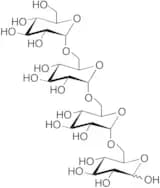
CAS:Controlled ProductApplications Isomaltotetraose, can be used for immunizication of hybridoma antibodies. the use of synthetic glycolipids as antigens enables one to study the gene control of antibody responses to glycolipids and to investigate the combining-site specificities of antibodies to a single antigenic determinant.
References Lai, E., et al.: Mol. Immunology, 22(9), 1021 (1985); Chen, H. T., et al.: Mol. Immunology, 24(4), 333 (1987);Formula:C24H42O21Color and Shape:NeatMolecular weight:666.58D-Aminogalacturonic Acid Hydrochloride
CAS:Controlled ProductApplications 2-Amino-2-deoxygalacturonic acid was a component of the lipopolysaccharide from P. aeruginosa NCTC 8505 and probably occurs in the region of polysaccharide responsible for O-antigenic specificity.
References Wilkinson, S.G., et al.: Biochem. J., 149, 783 (1975),Formula:C6H12ClNO6Color and Shape:NeatMolecular weight:229.62(Hydroxypropyl)methyl cellulose - USP39, Viscocity 3000-5600 cP
CAS:Viscoelastic polymer; excipient; food additive
Purity:Min. 95%Fluorescein isothiocyanate-dextran - Average MW 20,000
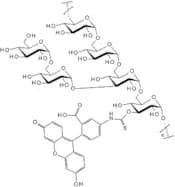
CAS:Anterograde and retrograde tracer in neurons; biologically inertPurity:Min. 95%Fluorescein isothiocyanate-dextran - Average MW 3,000-5,000
CAS:Fluorescein isothiocyanate dextran is a fluorescent derivative of a dextran fraction with an average molecular weight of approximately 4000. It is supplied as a yellow powder which is readily soluble in water.
Purity:Min. 95%Ulvan - Ulva rotondata-Summer
CAS:Ulvans are structural polysaccharides present in the cell walls of green algae such as Ulva armoricana, Ulva rotondata, Ulva rigida, Ulva lacterca and Ulva pertusa. They are highly sulphated and contain rhamnose 3-sulphate, xylose, xylose 2-sulphate, glucuronic acid and iduronic acid residues. Ulvan has several potentially valuable functionalities such as gel formation for agricultural and food applications. It has also an anticoagulant, antioxidant, antihyperlipidemic and antitumor activities that are attractive for pharmaceutical applications. The image was kindly provided by Prof Mike Guiry from Cork who runs ‘The Seaweed Site’.Purity:Min. 95%Color and Shape:PowderFluorescein isothiocyanate-carboxymethyl-dextran - Average MW 150,000
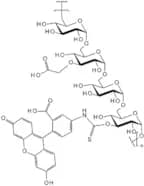
Fluorescein isothiocyanate carboxymethyl dextran (FITC-CM Dextran) has been reported to provide a valuable carrier for nanoparticles of iron oxide. These products provide a potent tool for contrast enhancement in magnetic resonance imaging.Purity:Min. 95%Methyl cellulose - USP testing specifications, viscosity: 1,500 cP
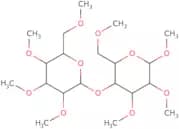
CAS:Methyl cellulose is a synthetic polymer of cellulose. It is prepared by treating the natural polymer with a methylating agent, such as dimethyl sulfate. Methylation is carried out in the presence of an acid catalyst to produce mainly methyl ethers and methyl esters. The degree of substitution may be controlled by the amount of catalyst. Methyl cellulose is used as a thickener, emulsifier, or stabilizer in many food products, including ice cream and toothpaste.Purity:Min. 95%Low calcium heparin
CAS:Low calcium heparin is a glycosaminoglycan, which occurs in many mammalian tissues and has important anticoagulant and thrombolytic properties. The chemical structure is composed mainly of two disaccharide repeating units A and B. A is L-iduronic acid 2-suplhate linked α-(1,4) to 2-deoxy-2-sulfamido-D-galactose 6-sulphate, while B is D-glucuronic acid β-(1,4) linked to 2-deoxy-2-sulfamido-D-glucose 6-sulphate.Purity:Min. 95%Galactan - from gum arabic
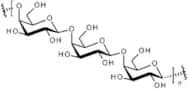
CAS:A linear β-(1,4)-galactan from Acacia gum. Other linear β-(1,4)-galactans have been isolated from lemon peel, potato tubers and Norwegian spruce compresssion wood.Purity:Min. 95%Color and Shape:White PowderHydroxyethyl cellulose - Viscocity 4500-6500mPa·s
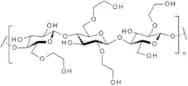
CAS:Water thickener; rheological control additive; has industrial appplicationsPurity:Min. 95%Fluorescein isothiocyanate-carboxymethyl-dextran - Average MW 4,000
Fluorescein isothiocyanate carboxymethyl dextran (FITC-CM Dextran) has been reported to provide a valuable carrier for nanoparticles of iron oxide. These products provide a potent tool for contrast enhancement in magnetic resonance imaging.Purity:Min. 95%Color and Shape:Powder