Polysaccharides
Found 505 products of "Polysaccharides"
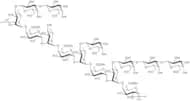
Rhamnogalacturonan - from potato
CAS:Pectin is a highly complex polysaccharide matrix that is found in the primary walls of dicotyledenous and monocotyledenous plants and gymnosperms, including potato. A key fragment of this complex is rhamnogalacturonan I, containing a backbone of the repeating disaccharide [-4)-α-D-GalpA-(1,2)-α-L-Rhap-(1,]. Several applications for RG1 have been described including drug targeting to the colon via the oral administration route for local treatment of e.g. inflammatory bowel disease and colon cancer. This has several advantages such as needle-free administration and low infection risk. In the gastro-intestinal tract RG-I is only degraded by the action of the colonic microflora. High purity rhamnogalacturonan I is also used in research, biochemical enzyme assays and in vitro diagnostic analysis.
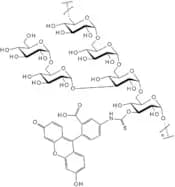
Purity:Min. 95%Fluorescein isothiocyanate-dextran - Average MW 10,000
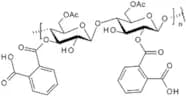
CAS:Fluorescein dextran (FD) is widely used as both an anterograde and retrograde tracer in neurons and for numerous other applications. It is biologically rather inert having α-1,6-linked glucose residues resistant to cleavage by most endogenous cellular glycosidases. It has low immunogenicity and makes an ideal long-term tracer for live cells. FD also serves as a valuable marker for cell loading of macromolecules by micro-injection, vesicular fusion, and electroporation, as well as for the uptake and internal processing of exogenous materials by phagocytotic and endocytic pathways.Purity:Min. 95%Cellulose acetate hydrogen phthalate
CAS:Cellulose acetate phthalate (CAP) finds use in the formulation of pharmaceuticals, such as the enteric coating of tablets or capsules and for controlled release formulations, where it is often used with other coating agents such as ethyl cellulose. It contains about 50% acetate and 25% as the phthalate ester with the rest as free hydroxyl groups. Enteric coatings based on CAP are resistant to acidic gastric fluids, but easily soluble in mildly basic medium of the intestine. The pH-sensitive solubility of CAP is mainly determined (as are other properties of this mixed ester) by the degree of substitution and by the molar ratio (acetyl and phthaloyl groups).Purity:Min. 95%Ulvan - Ulva armoricana-winter-light
CAS:Ulvans are structural polysaccharides present in the cell walls of green algae such as Ulva armoricana, Ulva rotondata, Ulva rigida, Ulva lacterca and Ulva pertusa. They are highly sulphated and contain rhamnose 3-sulphate, xylose, xylose 2-sulphate, glucuronic acid and iduronic acid residues. Ulvan has several potentially valuable functionalities such as gel formation for agricultural and food applications and possible anticoagulant, antioxidant, antihyperlipidemic and antitumoral activities for pharmaceutical applications.
The image was kindly provided by Prof Mike Guiry from Cork who runs ‘The Seaweed Site’.Purity:Min. 95%Hydroxypropyl cellulose - Average MW 200,000
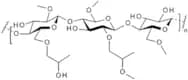
CAS:In water, hydroxypropyl cellulose forms liquid crystals with many mesophases depending on concentration. These mesophases include isotropic, anisotropic, nematic and cholesteric, the latter resulting in many colors such as violet, green and red. Pharmaceutical applications include treatments for medical conditions such as dry eye syndrome (keratoconjunctivitis sicca), recurrent corneal erosions, decreased corneal sensitivity, exposure and neuroparalytic keratitis. It is also used as a binder in tablets. Hydroxypropylcellulose is also used as a thickener, a binder and emulsion stabiliser in foods with E number E463. HPC is used as a support matrix for DNA separations by capillary and microchip electrophoresis.Color and Shape:PowderFluorescein isothiocyanate-carboxymethyl-dextran - Average MW 70,000
Fluorescein isothiocyanate carboxymethyl dextran (FITC-CM Dextran) has been reported to provide a valuable carrier for nanoparticles of iron oxide. These products provide a potent tool for contrast enhancement in magnetic resonance imaging.Purity:Min. 95%Heparan sulfate
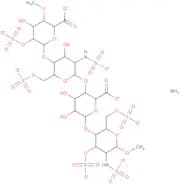
CAS:Glycosaminoglycan in mammalian tissues; anti-coagulant; thrombolyticPurity:Min. 95%Xyloglucan
CAS:Xyloglucans are members of a group of polysaccharides typically refered to as hemicelluloses. Hemicelluloses are plant cell wall polysaccharides that are not solubilized by water but are solubilized by aqueous alkali (e.g. 1 and 4M KOH). Other hemicellulosic polysaccharides include xylan, glucuronoxylan, arabinoxylan, mannan, glucomannan and galactoglucomannan. Hemicelluloses have a backbone of 1,4-linked β-D-pyranosyl residues in which O4 is in the equatorial orientation (e.g. Glc, Man, and Xyl). Xyloglucan is the predominant hemicellulose in the primary walls of dicots and non-graminaceous monocots and may account for up to 20% of the dry weight of the primary wall. Xyloglucan has a backbone composed of 1,4-linked β-D-Glcp residues. Up to 75% of these residues are substituted at O6 with mono-, di-, or triglycosyl side chains.Purity:(Dry Basis) Min. 95%Color and Shape:PowderCellulose - Particle Size approx 50 um
CAS:Cellulose is a linear polysaccharide of β 1-4 linked glucose residues. The polysaccharide chains are bundled as microfibrils in cell walls and provide the essential structural components within growing plants. Each microfibril exhibits a high degree of three-dimensional internal bonding resulting in a crystalline structure that is insoluble in water, resistant to reagents and very strong.Purity:Min. 95%Color and Shape:PowderHydroxypropyl cellulose - Average MW 100,000
CAS:In water, hydroxypropyl cellulose forms liquid crystals with many mesophases depending on concentration. These mesophases include isotropic, anisotropic, nematic and cholesteric, the latter resulting in many colors such as violet, green and red. Pharmaceutical applications include treatments for medical conditions such as dry eye syndrome (keratoconjunctivitis sicca), recurrent corneal erosions, decreased corneal sensitivity, exposure and neuroparalytic keratitis. It is also used as a binder in tablets. Hydroxypropylcellulose is also used as a thickener, a binder and emulsion stabiliser in foods with E number E463. HPC is used as a support matrix for DNA separations by capillary and microchip electrophoresis.Purity:Min. 95%Teichuronic acid
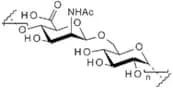
CAS:Teichuronic acid is isolated from the cell walls of Micrococcus luteus. The structure has been elucidated as [ManNAcUAp-(β-1,6)-Glcp-(α -1,4)]n.Purity:Min. 95%Arthrobacter stabilis exopolysaccharide
The extracellular polysaccharide produced by Arthrobacter stabilis NRRL B-3225 contains D-glucose, D-galactose, pyruvic acid, O-succinyl, and O-acetyl in the approximate molar ratio of 6:3:1:1:1.5. Succinyl is linked as its half-ester, making it readily removable. The viscosity of aqueous, salt-free solutions of both native and deacylated polymer is relatively low, but atypical of anionic polysaccharides, increases rapidly in the presence of salts, acids, or alkali.
Purity:Min. 95%Low-Substituted hydroxypropylcellulose
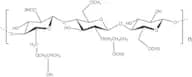
CAS:LH 21 is a low-substituted hydroxypropylcellulose. It is produced by the fluorination of cellulose, followed by substitution with a variety of monosaccharides and oligosaccharides to produce a complex carbohydrate. LH 21 is synthesized for custom needs, glycosylated, methylated, and modified at the sugar level with click chemistry. It has a CAS No. 9004-64-2 and is Carbohydrate in nature. LH 21 has high purity and can be used in many applications including as an excipient or additive in pharmaceutical formulations.Purity:Min. 95%Color and Shape:PowderDiethylaminoethyl-dextran HCl
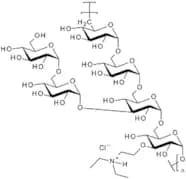
CAS:DEAE-Dextran hydrochloride (DEAE-D) is a positively-charged dextran derivative that can be used for vaccine production, gene therapy, protein stabilisation, dyslipidemia prevention, as flocculating agent, and many other applications. DEAE-D is also used for transfecting animal cells with foreign DNA. DEAE-Sepharose, DEAE-650 and DEAE-Sephadex are commonly used in chromatography for the separation of biological molecules such as proteins and carbohydrates.
Purity:Min. 95%Color and Shape:White Off-White PowderFluorescein isothiocyanate-carboxymethyl-dextran - Average MW 20,000
Fluorescein isothiocyanate carboxymethyl dextran (FITC-CM Dextran) has been reported to provide a valuable carrier for nanoparticles of iron oxide. These products provide a potent tool for contrast enhancement in magnetic resonance imaging.Purity:Min. 95%Chondroitin sulfate A sodium from bovine trachea
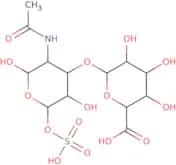
CAS:Chondroitin sulfate A sodium from bovine trachea is a natural substance that has been found to have potential anticancer properties. It has been shown to inhibit the growth of cancer cells in Chinese hamster ovary cells and human urine tumor cell lines. Chondroitin sulfate A sodium from bovine trachea works by inhibiting kinases, which are proteins that play a key role in cell growth and division. This inhibition leads to apoptosis, or programmed cell death, in cancer cells. Additionally, chondroitin sulfate A sodium from bovine trachea has been found to enhance the anticancer activity of artesunate analogs, making it a promising candidate for combination therapy in cancer treatment.Purity:Min. 95%Color and Shape:Powder(Hydroxypropyl)methyl cellulose - Viscocity 75000-140000 cP, 2 % in H2O
CAS:Viscoelastic polymer; excipient; food additivePurity:Min. 95%kappa-Carrageenan
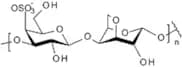
CAS:Kappa-Carrageenan is a gelling sulphated galactan extracted from red seaweed (typically Mastocarpus stellata and Chondrus crispus). The structure of all carrageenans consists of a strictly alternating masked repeating unit of 1,3-linked α-D-galactose and 1,4-linked β-D-galactose. The α-linked galactose occurs as α-3-6-anhydro unit and the β-linked sugar occurs as the 4-sulphate.
The image was kindly provided by Prof Mike Guiry from Cork who runs ‘The Seaweed Site’.Color and Shape:White PowderPachyman - from Poria cocos
CAS:Poria cocos is an edible medicinal fungus known as “Fuling” in Chinese that has been used as a Chinese traditional medicine for more than two thousand years. Polysaccharide material is the most abundant organic substance in the fungus, accounting for about 85% of the total and is a mixture of polysaccharides with the major component being Pachyman, a β-glucan with a 1,3 backbone and 1,6 side chains. It is reported that Pachyman has a wide range of biological activities including antitumour, immunomodulatory, anti-inflammatory and antioxidative properties. Pachyman is a beta-glucan with a 1,3 backbone and 1,6 side chains of fungal origin (Poria cocos). The image was kindly provided by Dr. Chris Lawson.Purity:Min. 95%Color and Shape:White Powder(Hydroxypropyl)methyl cellulose, viscosity 5 cP 80%-120%, 2% aqueous solution
CAS:Please enquire for more information about (Hydroxypropyl)methyl cellulose, viscosity 5 cP 80%-120%, 2% aqueous solution including the price, delivery time and more detailed product information at the technical inquiry form on this page
Purity:Min. 95%