Serotonin–Norepinephrine Reuptake Inhibitors (SNRI)
Serotonin–Norepinephrine Reuptake Inhibitors (SNRI) are a class of compounds that inhibit the reuptake of the neurotransmitters serotonin and norepinephrine, thereby increasing their levels in the synaptic cleft. This action enhances neurotransmission and is commonly used in the treatment of depression, anxiety, and chronic pain. SNRIs are vital tools in studying mood disorders and the development of antidepressant therapies. At CymitQuimica, we provide a selection of SNRIs to aid your research in psychopharmacology, mood disorders, and neurobiology.
Found 427 products of "Serotonin–Norepinephrine Reuptake Inhibitors (SNRI)"
Sort by
Purity (%)
0
100
|
0
|
50
|
90
|
95
|
100
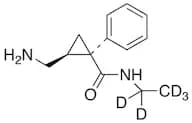
N-Desethyl Milnacipran-d5
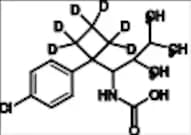
CAS:Controlled Product<p>Applications A labelled metabolite of Milnacipran.<br> Not a dangerous good if item is equal to or less than 1g/ml and there is less than 100g/ml in the package<br>References Bonnaud, B., et al.: J. Med. Chem., 30, 318 (1987), Kazuta, Y., et al.: Bioorg. Med. Chem., 10, 3829 (2002), Iversen, L., et al.: Br. J. Pharmacol., 147, S82 (2006),<br></p>Formula:C13H13D5N2OColor and Shape:NeatMolecular weight:223.33N-[3-Methyl-1-(1-phenylcyclobutyl)butyl]-N,N-dimethylamine Hydrochloride
CAS:Controlled Product<p>Applications N-[3-Methyl-1-(phenylcyclobutyl)butyl]-N,N-dimethylamine Hydrochloride is an impurity of Sibutramine Hydrochloride (S422500), a serotonin and noradrenaline reuptake inhibitor.<br>References Hanotin, C., et al.: Int. J. Obesity, 22, 32 (1998)<br></p>Formula:C17H27N·ClHColor and Shape:NeatMolecular weight:281.86Des(1-cyclohexanol) Venlafaxine-d6
CAS:Controlled Product<p>Applications Labelled Venlafaxine (V119995) impurity.<br>References Basappa., et al.: Bioorg. Med. Chem. Lett., 14, 3279 ( 2004),<br></p>Formula:C11H11D6NOColor and Shape:NeatMolecular weight:185.3rac N,N-Didesmethyl-O-desmethyl Venlafaxine Glucuronide
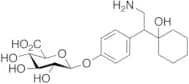
CAS:Controlled Product<p>Stability Hygroscopic<br>Applications A metabolite of Venlafaxine.<br></p>Formula:C20H29NO8Color and Shape:NeatMolecular weight:411.45N-[1-(4-Chlorophenyl)cyclobutylmethyl]-N,N-dimethylamine Hydrochloride
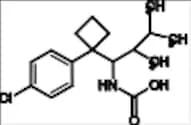
CAS:Controlled Product<p>Applications N-[1-(4-Chlorophenyl)cyclobutylmethyl]-N,N-dimethylamine Hydrochloride is an impurity of Sibutramine Hydrochloride (S422500), a serotonin and noradrenaline reuptake inhibitor.<br>References Hanotin, C., et al.: Int. J. Obesity, 22, 32 (1998)<br></p>Formula:C13H19Cl2NColor and Shape:NeatMolecular weight:260.2(+)-N,O-Didesmethyl Tramadol
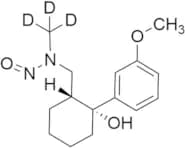
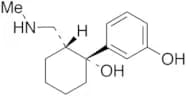
CAS:Controlled Product<p>Applications An optically active metabolite of Tramadol.<br>References Garrido, M., et al.: J. Pharmacol. Exp. Ther., 305, 710 (2003), Pedersen, R., et al.: Eur. J. Clin. Pharmacol., 62, 513 (2006),<br></p>Formula:C14H21NO2Color and Shape:NeatMolecular weight:235.32S-(+)-Atomoxetine Hydrochloride
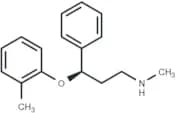
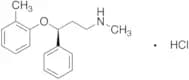
CAS:Controlled Product<p>Impurity Atomoxetine EP Impurity B<br>Applications ent S-(+)-Atomoxetine Hydrochloride (Atomoxetine EP Impurity B) is an enatiomer of Atomoxetine, a Norepinephrine uptake blocker.<br> Not a dangerous good if item is equal to or less than 1g/ml and there is less than 100g/ml in the package<br>References Robertson, D., et al.: J. Med. Chem., 31, 1412 (1988), Hwamg, et al.: Neurosci. Lett., 265, 151 (1999),<br></p>Formula:C17H21NO·ClHColor and Shape:NeatMolecular weight:291.824-[3-(Methylamino)-1-(2-thienyl)propyl]-1-naphthalenol Hydrochloride (Duloxetine Impurity)
CAS:Controlled Product<p>Impurity D721000<br>Applications Duloxetine impurity; also a related compound of Duloxetine metabolite.<br></p>Formula:C18H19NOS·ClHColor and Shape:NeatMolecular weight:333.88(S)-3-(Dimethylamino)-1-(2-thienyl)propan-1-ol
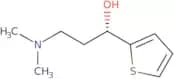
CAS:<p>(S)-3-(Dimethylamino)-1-(2-thienyl)propan-1-ol is a polymerase chain reaction (PCR) reagent that is used as a building block for the synthesis of five membered ring lactams and dihedral polymers. This compound is synthesized by chemoenzymatic coupling of propanamine with trifluoroacetic acid in the presence of methyl groups, followed by catalytic hydrogenation to yield the desired product. The asymmetric synthesis of this compound was achieved through chiral resolution using NMR spectroscopy.</p>Formula:C9H15NOSPurity:Min. 95%Molecular weight:185.29 g/mol3-(Methylamino)-1-(2-thienyl)propan-1-ol
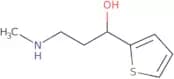
CAS:<p>3-(Methylamino)-1-(2-thienyl)propan-1-ol is a lipase inhibitor that belongs to the group of 1-fluoronaphthalene. It is an efficient method for the demethylation of 1-fluoronaphthalene, which is used in the synthesis of many pharmaceuticals. The synthesis of this compound was achieved through a kinetic study and confirmed by x-ray crystallography. This compound has been shown to be an analytical method for the determination of impurities in other drugs. 3-(Methylamino)-1-(2-thienyl)propan-1-ol can also be used as a drug substance for other pharmaceuticals and has been shown to inhibit the transfer of chiral centers mediated by enzymes and substrates.</p>Formula:C8H13NOSPurity:Min. 95%Molecular weight:171.26 g/mol3-(Dimethylamino)-1-(2-thienyl)propanone hydrochloride
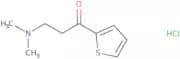
CAS:<p>3-(Dimethylamino)-1-(2-thienyl)propanone hydrochloride is a sulfoxide that is used as a solvent. It has been used in the synthesis of benzylsulfoxides and solvents for the manufacture of pharmaceuticals. 3-(Dimethylamino)-1-(2-thienyl)propanone hydrochloride is also a potent compound, which is structurally similar to benzene but with an additional methyl group. 3-(Dimethylamino)-1-(2-thienyl)propanone hydrochloride has been used in the synthesis of melphalan and elemental analysis. The chloride group on its structure makes it soluble in water and organic solvents such as acetonitrile. 3-(Dimethylamino)-1-(2-thienyl)propanone hydrochloride can be synthesized by reacting nitric acid with 2-aminothiophenol and dimethylanil</p>Formula:C9H14ClNOSPurity:Min. 95%Molecular weight:219.73 g/mol3-(Dimethylamino)-1-(2-thienyl)propan-1-ol
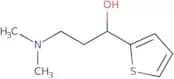
CAS:<p>3-(Dimethylamino)-1-(2-thienyl)propan-1-ol is an organic compound that is used as a chiral building block in the synthesis of drugs. It is not currently used in any known drug, but it has been shown to be racemized at high temperatures. 3-(Dimethylamino)-1-(2-thienyl)propan-1-ol is also a byproduct of pollution and can be found in the environment where it may be degraded by bacteria.</p>Formula:C9H15NOSPurity:Min. 95%Molecular weight:185.29 g/mol1-[1-(4-Methoxyphenyl)-2-(methylamino)ethyl]-cyclohexanol hydrochloride
CAS:<p>1-[1-(4-Methoxyphenyl)-2-(methylamino)ethyl]-cyclohexanol hydrochloride is a drug product that is not yet approved for use in humans. It is an impurity found in the drug cyclosporine, which is used to treat psoriasis and other skin conditions. 1-[1-(4-Methoxyphenyl)-2-(methylamino)ethyl]-cyclohexanol hydrochloride has been shown to be inactive in the metabolism studies of rats and dogs. This impurity was detected by HPLC with UV detection at 254 nm, but it did not show any significant absorption at 280 nm. The purity of this compound was determined to be 97% by NMR analysis and HPLC.</p>Formula:C16H25NO2·HClPurity:Min. 95%Molecular weight:299.84 g/mol(2RS)-2-(Cyclohex-1-enyl)-2-(4-methoxyphenyl)-N,N-dimethylethanamine Hydrochloride
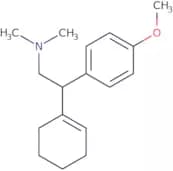
CAS:Controlled Product<p>(2RS)-2-(Cyclohex-1-enyl)-2-(4-methoxyphenyl)-N,N-dimethylethanamine Hydrochloride is a white crystalline powder with a melting point of 136.5°C and a molecular formula of C13H20N2O. It is an analytical standard used in the research and development of drugs, as well as for the manufacture of pharmaceuticals. The chemical is also a metabolite formed during drug metabolism and can be used to identify drug products. (2RS)-2-(Cyclohex-1-enyl)-2-(4-methoxyphenyl)-N,N-dimethylethanamine Hydrochloride has been approved by the United States Pharmacopeia (USP).</p>Formula:C17H25NO·ClHPurity:Min. 95%Molecular weight:295.85 g/mol5-(4-Methoxyphenyl)-3-methyl-1-oxa-3-azaspiro[5.5]undecane
CAS:<p>5-(4-Methoxyphenyl)-3-methyl-1-oxa-3-azaspiro[5.5]undecane is an analytical standard used in HPLC and GC. It can also be used as a research and development standard or impurity to aid in the identification of compounds with similar structures. 5-(4-Methoxyphenyl)-3-methyl-1-oxa-3-azaspiro[5.5]undecane has a purity of 99% and a melting point of 80°C. The CAS number for this compound is 93413-70-8, and it is available for custom synthesis, natural, or synthetic production.</p>Formula:C17H25NO2Purity:Min. 95%Molecular weight:275.39 g/molVenlafaxine Impurity F HCl
CAS:Controlled Product<p>b-1-Cyclohexen-1-yl-4-methoxy-N,N-dimethylbenzeneethanamine is a drug product that is used in the development of drugs. It is a metabolite of cyclizine and has been shown to have antihistaminic effects. This chemical compound is an impurity standard for HPLC analyses of other substances. b-1-Cyclohexen-1-yl-4-methoxy-N,N-dimethylbenzeneethanamine has also been shown to be a synthetic intermediate in the synthesis of pharmaceuticals.</p>Formula:C17H25NO·HClPurity:Min. 95%Molecular weight:295.85 g/mol1-[1-(4-Methoxyphenyl)-2-[[2-(4-methoxyphenyl)ethyl]amino]ethyl]cyclohexanol
CAS:<p>1-[1-(4-Methoxyphenyl)-2-[[2-(4-methoxyphenyl)ethyl]amino]ethyl]cyclohexanol is a drug product that is used as a standard for HPLC. It is also used in the development of drugs, natural research and development, and analytical studies. The impurity standard is an analytical impurity that has CAS No. 1329795-88-1 and is synthetically made. Metabolism studies have been done to determine how this drug product will be metabolized by the body. This drug product is found naturally in the plant Nicotiana tabacum, but it can also be manufactured synthetically using commercial processes. 1-[1-(4-Methoxyphenyl)-2-[[2-(4-methoxyphenyl)ethyl]amino]ethyl]cyclohexanol has niche uses as it can be used as a pharmacopoeia imp</p>Formula:C24H33NO3Purity:Min. 95%Molecular weight:383.52 g/mol2-Cyclohexyl-2-(4-methoxyphenyl)-N,N-dimethylethanamine
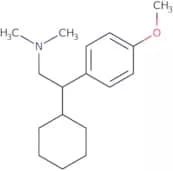
CAS:Controlled Product<p>2-Cyclohexyl-2-(4-methoxyphenyl)-N,N-dimethylethanamine is a synthetic research and development impurity standard. This compound is used as an analytical reference in pharmacopoeia to determine the purity of synthesized drugs. 2-Cyclohexyl-2-(4-methoxyphenyl)-N,N-dimethylethanamine is also a metabolite of other compounds and can be used for metabolism studies.</p>Formula:C17H27NOPurity:Min. 95%Molecular weight:261.4 g/mol2,2'-Methylenebis[4-[2-(dimethylamino)-1-(1-hydroxycyclohexyl)ethyl]phenol
CAS:<p>2,2'-Methylenebis[4-[2-(dimethylamino)-1-(1-hydroxycyclohexyl)ethyl]phenol] is a synthetic drug product that is used as a reference standard for HPLC and GC analyses. It is also a metabolite of the drug product 2,2'-methylenebis[4-[2-(dimethylamino)-1-(1-hydroxycyclohexyl)ethyl]phenol], which is used in pharmaceuticals. This impurity standard exhibits analytical properties similar to those of the API impurity.<br>The chemical structure of this compound consists of an aromatic ring with two methyl groups and two methoxy groups attached to it.</p>Formula:C33H50N2O4Purity:Min. 95%Molecular weight:538.76 g/molAtomoxetine
CAS:<p>Atomoxetine (HSDB 7352) is a selective norepinephrine inhibitor that may cause an increase in blood pressure by increasing norepinephrine concentrations in</p>Formula:C17H21NOPurity:98%Color and Shape:SolidMolecular weight:255.35Tramadol Related Compound A CIV ((RS,SR)-1-(3-Methoxyphenyl)-2-(dimethylaminomethyl)cyclohexanol hydrochloride)
CAS:Controlled Product<p>Aromatic amino-alcohol-phenols, aromatic amino-acid-phenols and other aromatic amino compounds with oxygen function</p>Formula:C16H25NO2·HClColor and Shape:White PowderMolecular weight:263.188531-Fluoronaphthalene
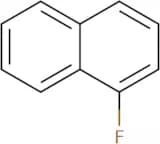
CAS:<p>1-Fluoronaphthalene is a polyunsaturated compound that is used in analytical chemistry for the determination of test samples. It is an inhibitor of the enzyme IDO1, which plays an important role in the regulation of immune function, and has been shown to have anti-inflammatory properties. 1-Fluoronaphthalene can be synthesized by reacting n-dimethyl formamide with hydrogen fluoride and then adding a diazonium salt and hydrochloric acid. The UV absorption spectrum of 1-fluoronaphthalene displays a maximum at 248 nm. This compound binds to cation channels on cells, causing hyperpolarization.</p>Formula:C10H7FPurity:Min. 95%Molecular weight:146.16 g/molTramadol Hydrochloride CIV
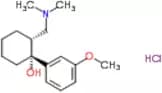
CAS:Controlled Product<p>Aromatic amino-alcohol-phenols, aromatic amino-acid-phenols and other aromatic amino compounds with oxygen function</p>Formula:C16H25NO2·HCIColor and Shape:White Crystalline PowderMolecular weight:403.10083Ref: 4Z-S-0522
Discontinued productRef: 4Z-S-0517
Discontinued productRef: 4Z-S-0519
Discontinued product

![N-[3-Methyl-1-(1-phenylcyclobutyl)butyl]-N,N-dimethylamine Hydrochloride](/_next/image/?url=https%3A%2Fstatic.cymitquimica.com%2Fproducts%2FTR%2Fthumb-webp%2FM326058.webp&w=3840&q=75)
![N-[1-(4-Chlorophenyl)cyclobutylmethyl]-N,N-dimethylamine Hydrochloride](/_next/image/?url=https%3A%2Fstatic.cymitquimica.com%2Fproducts%2FTR%2Fthumb-webp%2FC378585.webp&w=3840&q=75)
![4-[3-(Methylamino)-1-(2-thienyl)propyl]-1-naphthalenol Hydrochloride (Duloxetine Impurity)](/_next/image/?url=https%3A%2Fstatic.cymitquimica.com%2Fproducts%2FTR%2Fthumb-webp%2FM287200.webp&w=3840&q=75)

![1-[1-(4-Methoxyphenyl)-2-(methylamino)ethyl]-cyclohexanol hydrochloride](/_next/image/?url=https%3A%2Fstatic.cymitquimica.com%2Fproducts%2F3D%2Fthumb-webp%2FIM63866.webp&w=3840&q=75)

![5-(4-Methoxyphenyl)-3-methyl-1-oxa-3-azaspiro[5.5]undecane](/_next/image/?url=https%3A%2Fstatic.cymitquimica.com%2Fproducts%2F3D%2Fthumb-webp%2FIM28679.webp&w=3840&q=75)
![1-[1-(4-Methoxyphenyl)-2-[[2-(4-methoxyphenyl)ethyl]amino]ethyl]cyclohexanol](/_next/image/?url=https%3A%2Fstatic.cymitquimica.com%2Fproducts%2F3D%2Fthumb-webp%2FIM63868.webp&w=3840&q=75)
![2,2'-Methylenebis[4-[2-(dimethylamino)-1-(1-hydroxycyclohexyl)ethyl]phenol](/_next/image/?url=https%3A%2Fstatic.cymitquimica.com%2Fproducts%2F3D%2Fthumb-webp%2FIM21345.webp&w=3840&q=75)