Enzymes in Recombinant Proteins
Found 3319 products of "Enzymes in Recombinant Proteins"
Citrate synthase
CAS:Citrate synthase (E.C. 2.3.3.1) is an enzyme that catalyzes the following reaction: acetyl-CoA + oxaloacetate + H2O → citrate + CoA-SHOne unit of citrate synthase will form 1.0 μmole of citrate from acetyl-CoA and oxalacetate per min at pH 8.0 and 37 °C.Origin is porcine heart.Molecular weight ~ 49kDa (monomer) and ~ 98kDa (dimer)
Formula:C197H238O43S6Color and Shape:PowderMolecular weight:3,486 g/molRecombinant Isocitrate Dehydrogenase
CAS:Recombinant Isocitrate Dehydrogenase is a bioengineered enzyme, which is derived from microbial or eukaryotic expression systems designed to mirror its naturally occurring form. This enzyme catalyzes the oxidative decarboxylation of isocitrate to alpha-ketoglutarate, utilizing NADP+ as a cofactor in the process. Its mode of action involves the conversion of isocitrate to alpha-ketoglutarate with the concomitant reduction of NADP+ to NADPH.
Purity:Min. 95%Immobilized Lipase Kit, 7 unique immobilized EUCODIS® Lipases, immobilized by adsorption and covalent binding - ELIM Kit
Lipases belong to the family of esterases and naturally act on triglycerides at lipid-water interfaces. Lipases/esterases can be used as versatile tools in hydrolytic reactions, esterifications and transesterification reactions in industrial and food applications. The immobilized Lipase kit contains 7 different lipases, immobilised on a hydrophobic carrier either by adsorption or covalent linkage. Immobilized lipases can be utilized in various reaction types, and are optimal for all reactions in organic solvents or solvent-free systems.Chymase
CAS:Chymase (alternative names mast cell protease 1, mast cell serine proteinase, skeletal muscle protease, EC 3.4.21.39) is a serine protease, found in mast cells and basophil granulocytes.Purity:Min. 95%Diaphorase (from Clostridium kluyveri)
CAS:Diaphorase (lipoyl dehydrogenase, EC 1.8.1.4) is an NAD+/NADH-dependent oxidoreductase. One unit of diaphorase will convert 1.0 μmole NADH into NAD+ the presence of substrate at pH 7.5 and 25 °C.Purity:Min. 95%Aconitase (human recombinant)
CAS:Aconitase catalyzes isomerization of citrate to isocitrate via cis-aconitate. Systemic enzyme name is aconitate hydratase; EC 4.2.1.3.Purity:Min. 95%Lipoxidase
CAS:Lipoxidase is an enzyme, which is typically sourced from various plant tissues, animals, and some microorganisms. It functions by catalyzing the oxidation of polyunsaturated fatty acids in the presence of oxygen. This enzymatic action results in the formation of lipid hydroperoxides, which are key intermediates in various biochemical pathways, including those involved in cell signaling and the modulation of gene expression.Purity:Min. 95%PNPase
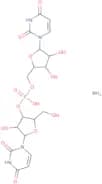
Specific activity: >500 units/mg-protein.Unit definition: One unit will polymerize 1.0 micro mole of ADP, releasing 1.0 micro mole of inorganic phosphate in 15 minutes at pH 9.1 at 37 °C.
Carboxypeptidase Y, from S. cerevisiae, recombinant, lyophilized - ECPY001
CAS:Carboxypeptidase Y (EC 3.4.16.1) is an exopeptidase enzyme. It hydrolyzes peptide bonds of C-terminal residues and it remains active in the presence of urea at low to moderate concentrations. One unit of the Carboxypeptidase Y will hydrolyze 1.0 μmole of a chromogenic peptide substrate, releasing C-terminal alanine and generating a light-absorbing product. Carboxypeptidase Y has been obtained from yeast S. cerevisiae, has a broad substrate specificity and can therefore be used in sequence analysis of proteins. Carboxypeptidase Y has a temperature optimum in the 20 – 30 °C range and pH optimum between pH 6 and 7.Proteinase, Bacillus subtilis, sutilain
CAS:Proteinase, Bacillus subtilis, sutilain is a proteolytic enzyme, which is derived from the bacterium Bacillus subtilis. This enzyme exhibits a serine-type mechanism of action, characterized by its ability to cleave peptide bonds in proteins efficiently. It catalyzes the hydrolysis of proteins into peptides and amino acids, facilitating the breakdown of complex proteins into simpler, soluble forms.Purity:Min. 95%Color and Shape:PowderUrate oxidase (from Yeast)
CAS:Urate Oxidase, also known as uricase, catalizes the following reaction: Uric acid + O2 + H2O → 5-hydroxyisourate + H2O2.Formula:C18H26N5O14PPurity:Min. 95%Molecular weight:567.4 g/molEUCODIS® CalB01, engineered variant of Candida antarctica Lipase B - ELCB01
Lipases belong to the family of esterases and naturally act on triglycerides at lipid-water interfaces. Lipases/esterases can be used as versatile tools in hydrolytic reactions, esterifications and transesterification reactions in industrial and food applications. The CalB01 lipase has a temperature optimum in the 40 - 50 °C range and pH optimum between pH 5 and 8.
Aminopeptidase I from streptomyces griseus
CAS:Aminopeptidase I is a specialized proteolytic enzyme derived from the actinobacterium Streptomyces griseus. This enzyme functions by catalyzing the cleavage of amino acids from the N-terminus of peptides, which plays a pivotal role in protein metabolism and regulation. The source of this enzyme, Streptomyces griseus, is well-regarded for producing a variety of bioactive compounds owing to its rich genetic and biochemical repertoire.Mannitol dehydrogenase from leuconostoc mesenteroides
CAS:Mannitol dehydrogenase (MDH, mannitol 2-dehydrogenase, EC 1.1.1.67) is an enzyme that catalyzes the following reaction: D-mannitol + NAD+ ⇌ D-fructose + NADH + H+ One unit of mannitol dehydrogenase will generate 1.0 μmole of D-fructose per min in the presence of NAD+ at pH 8.6 and 40°C. NAD+ is available here and NADH is available here, depending on whether you require the reaction to proceed from left to right or from righ to left, respectively.
Purity:Min. 95%Ubiquitin Conjugating enzyme E2C Human Recombinant
Ubiquitin Conjugating enzyme E2C (other names UBE2C, UBCH10, dJ447F3.2, ubiquitin conjugating enzyme E2 C; EC 2.3.2.24) is an essential mediator of mitotic destruction events and cell cycle progression. It catalyzes the destruction of cyclins A and B in conjunction with the anaphase-promoting complex, and therefore, plays an important role in the control of the cell exit from mitosis This activity is essential at then end of mitosis for the inactivation of their partner kinase Cdc2 and exit from mitosis into G1 of the next cell cycle. In addition, UBE2C bears homology to yeast PAS2, a gene that is essential for biogenesis of peroxisomes. UBE2C is useful for in vitro ubiquitinylation reactions.β-Glucanase 2, thermostable
CAS:Thermostable β-Glucanase 2 is an enzyme that hydrolases β-Glucans into glucose. One unit of β-Glucanase 2 will produce 1.0 μmole of glucose from β-glucan per minute at pH 5.8 and 70 °C.Purity:Min. 95%Transglutaminase from guinea pig liver
CAS:Transglutaminase (2.3.2.13) is an enzyme that catalyzes formation of isopeptide bonds between the γ-carboxamide groups ( -(C=O)NH2 ) of glutamine side chains and amino groups. The donor of the amino group is usually (but not always) an ε-amino group ( -NH2 ) of lysine residue. The reaction also releases ammonia: Gln-(C=O)NH2 + NH2-Lys → Gln-(C=O)NH-Lys + NH3One unit of transglutaminase will catalyze the formation of 1.0 μmole transglutamination product per min at pH 6.0 and 37 °C.Purity:Min. 95%Casein Kinase 2
Casein kinase 2 (CK2, CSNK2; EC 2.7.11.1) is a constitutively active serine and threonine protein kinase. It plays a role in a range of cellular processes, including DNA repair, cell cycle control, metabolic regulation, circadian rhythms and more. Its known substrates include hundreds of proteins. One unit of CK2 will phosphorylate of 1 pmol of of peptide substrate in 1 minute at 30°C and presence of ATP.Formula:C45H73N19O24Purity:Min. 95%Molecular weight:1,264.17 g/molCitrate lyase from klebsiella pneumonia ≥0.20 unit/mg solid
CAS:Citrate lyase (also known as ATP citrate synthase, EC 2.3.3.8) is an enzyme that catalyzes the following reaction:citrate + ATP + CoA → oxaloacetate + Acetyl-CoA + ADP + PiEnzymatic activity: One unit will convert 1.0 micromole of citrate to oxalacetate per minute at pH 7.6 and 25 °C in the presence of required cofactors. Citrate lyase is supplied lyophylized, with activity ≥0.20 unit/mg solid.Purity:Min. 95%Pyruvate kinase (from Rabbit muscle), ammonium sulfate suspension
CAS:Pyruvate kinase (from Rabbit muscle), ammonium sulfate suspension is an enzyme product, which is a purified protein extracted from the muscle tissue of rabbits. This enzyme plays a crucial role in glycolysis, specifically catalyzing the transphosphorylation of phosphoenolpyruvate (PEP) to pyruvate, generating ATP from ADP in the process. This step is a key regulatory point in the glycolytic pathway, which is essential for cellular energy production.
Purity:Min. 95%