Others
Found 6326 products of "Others"
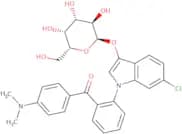
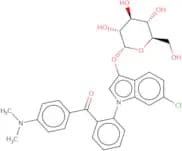
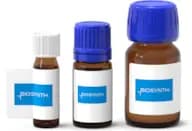
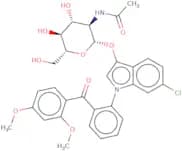
Aldol® 518 α-D-galactopyranoside, Biosynth Patent: EP 2427431 and US 8940909
CAS:Aldol® 518 alpha-D-galactopyranoside is a chromogenic and fluorogenic enzyme substrate used for detection of alpha-galactosidase activity. The enzyme substrate is cleaved by alpha-galactosidase positive bacteria and yeasts in liquid or solid media, yielding red color and red fluorescence signal. Aldol® 518 alpha-D-galactopyranoside can also be used to detect alpha-galactosidase (encoded by the Mel1 gene) in yeast gene reporter assays or for identification of alpha-gal positive transformants on agar plates. Aldol® 518 alpha-D-galactopyranoside can be used under aerobic and anaerobic conditions.
Formula:C29H29ClN2O7Purity:Min. 95%Color and Shape:PowderMolecular weight:553.01 g/mol5-Bromo-3-indoxyl choline phosphate
Please enquire for more information about 5-Bromo-3-indoxyl choline phosphate including the price, delivery time and more detailed product information at the technical inquiry form on this page
Formula:C13H18BrN2O4PMolecular weight:377.18 g/molAldol® 495 acetate, Biosynth Patent: EP 2427431 and US 8940909
CAS:Controlled ProductAldol 495 acetate is a chromogenic substrate that contains the chemical compound Aldol. It is used in food testing, diagnostics, and environmental testing. Aldol 495 acetate can be used as a ligand to detect the presence of enzymes or bacteria in culture media and diagnostics. This product has been shown to have a high purity and quality.
Formula:C22H17ClN2O3Purity:Min. 95.0 Area-%Molecular weight:392.83 g/molBronze-Gal
Bronze-Gal (Bronze-beta-D-galactopyranoside) is a chromogenic indicator for beta-galactosidase activity. The colorless product is cleaved by lactose-utilizing bacteria in liquid media or on agar plates and yields a bronze colored precipitate. Bronze-Gal can also be used as detecting agent for beta-galactosidase activity in reporter gene assays or for identification of positive transformants on agar plates when using the α-complementation approach. Read more in the Application Notes.
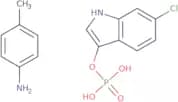
Purity:Min. 95%Molecular weight:443.576-Chloro-3-indolyl phosphate p-toluidine salt
CAS:A substrate for visualising alkaline phosphatase activity. Produces a red colored insoluble end product that is detected visually, when used together with Nitroblue tetrazolium. The substrate system is versatile and functions in a variety of applications, including Northern, Southern, and Western blotting, in situ hybridization, ELISAs and immunohistochemistry. DMF soluble.
Formula:C15H16ClN2O4PPurity:Min. 98%Color and Shape:White Off-White PowderMolecular weight:354.73 g/molRef: 3D-EC09439
Discontinued productEspresso-Gal
Espresso-Gal (Espresso-beta-D-galactopyranoside) is a chromogenic indicator for beta-galactosidase activity. The colorless product is cleaved by lactose-utilizing bacteria in liquid media or on agar plates and yields an espresso brown colored precipitate. Espresso-Gal can also be used as detecting agent for beta-galactosidase activity in reporter gene assays or for identification of positive transformants on agar plates when using the α-complementation approach. Read more in the Application Notes.
Purity:Min. 95%6-Chloro-3-indoxyl palmitate
CAS:6-Chloro-3-indoxyl palmitate is a high quality, pure chemical reagent that can be used as a substrate for enzyme activity. It is a chromogenic substrate that is used in the detection of esterase activity. 6-Chloro-3-indoxyl palmitate is also used as a fluorogenic substrate in the presence of horseradish peroxidase and hydrogen peroxide to produce chemiluminescence. 6-Chloro-3-indoxyl palmitate has been shown to be an effective bioluminescent substrate for luciferase enzymes, such as firefly luciferase and Renilla luciferase.
Formula:C24H36ClNO2Purity:Min. 98 Area-%Molecular weight:406.01 g/mol4-Chloro-1-naphthol
CAS:4-Chloro-1-naphthol is a chemical compound that has been used in clinical pathology to identify human immunoglobulin. It is also used as a potential biomarker for the diagnosis of Alzheimer's disease. 4-Chloro-1-naphthol binds to the amyloid fibrils and has anti-angiogenic effects in the hippocampus, which may be due to its ability to inhibit the formation of new blood vessels. This chemical compound can be used as a substrate molecule for electrochemical impedance spectroscopy and is used in wastewater treatment.
Formula:C10H7ClOPurity:Min. 97.0 Area-%Molecular weight:178.62 g/mol3,4-Cyclohexenoesculetine-N-acetyl-glucosamine
Please enquire for more information about 3,4-Cyclohexenoesculetine-N-acetyl-glucosamine including the price, delivery time and more detailed product information at the technical inquiry form on this page
5-Bromo-4-chloro-3-indoxyl-α-L-arabinopyranoside
5-Bromo-4-chloro-3-indoxyl-alpha-L-arabinopyranoside is a fluorogenic substrate that can be used in enzyme and chromogenic assays. It is a high purity, stable product with a CAS number of 53673-61-7. This product has been shown to have fluorescence properties under acidic conditions, as well as chemiluminescence properties when exposed to an oxidizing agent. This compound can be used for the detection of bacterial activity in culture media and for the detection of pathogens in environmental samples. The conjugate can also be used for food testing.
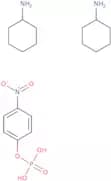
Formula:C13H13BrClNO5Molecular weight:378.61 g/mol4-Nitrophenyl phosphate bis(cyclohexylammonium)
CAS:4-Nitrophenyl phosphate bis(cyclohexylammonium) is an excellent chromogenic substrate designed for the detection and quantification of phosphatase enzyme activities. Aided by the presence of the cyclohexylammonium cation, it undergoes enzymatic hydrolysis, yielding the colored 4-nitrophenolate ion, which can be readily observed at 405 nm. The substrate has become an essential tool for biomedical research, playing a crucial role in unearthing cellular mechanisms, function, and potential drug targets.
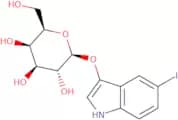
Formula:C18H32N3O6PPurity:97.0 To 103.0%Color and Shape:PowderMolecular weight:417.44 g/mol5-Iodo-3-indolyl b-D-galactopyranoside
CAS:5-Iodo-3-indolyl b-D-galactopyranoside is a chromogenic substrate used for beta-galactosidase. It is incorporated into media or detection kits for rapid and direct identification of microorganisms.
Formula:C14H16INO6Purity:Min. 98 Area-%Color and Shape:PowderMolecular weight:421.18 g/molRef: 3D-EI03217
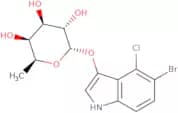
Discontinued product5-Bromo-4-chloro-3-indoxyl-alpha-L-fucopyranoside
CAS:5-Bromo-4-chloro-3-indoxyl-alpha-L-fucopyranoside is a chromogenic substrate for alpha-L-Fucosidase. It produces a green-blue color.
Formula:C14H15BrClNO5Purity:Min. 98 Area-%Color and Shape:PowderMolecular weight:392.63 g/molRef: 3D-EB03266
Discontinued product2-Chloro-4-nitrophenyl-α-L-fucopyranoside
CAS:2-Chloro-4-nitrophenyl-alpha-L-fucopyranoside is a compound that is commonly used as an enzyme substrate for glycogen synthase kinase (GSK). It is activated by GSK-3β and has been shown to inhibit the activity of this enzyme. This compound has also been found to have inhibitory effects on other enzymes such as carbonic anhydrase and lactate dehydrogenase. Additionally, 2-Chloro-4-nitrophenyl-alpha-L-fucopyranoside exhibits antifungal activity against various fungi, including those resistant to other antifungal agents such as fluopyram and prothioconazole. Its mechanism of action involves interfering with ergosterol biosynthesis, an essential component of fungal cell membranes. Furthermore, this compound has potential applications in the development of new drugs targeting GSK-3β and β-catenin signaling pathways, which are implicated in various diseases including cancer and neuro
Formula:C12H14ClNO7Purity:Min. 98 Area-%Molecular weight:319.7 g/molAldol® 518 alpha-D-glucopyranoside, Biosynth Patent: EP 2427431 and US 8940909
CAS:Aldol® 518 alpha-D-glucopyranoside is a fluorogenic enzyme substrate used for detection of alpha-D-glucosidase activity. The colorless enzyme substrate is cleaved by alpha-D-glucosidase, generating red fluorescent signal and in some conditions, an orange colour in the visible spectrum can get formed, staining bacterial colonies in faint orange coloration. Aldol® 518 alpha-D-glucopyranoside can be used under aerobic and anaerobic conditions.
Formula:C29H29ClN2O7Purity:Min. 95%Color and Shape:PowderMolecular weight:553 g/molAldol® 455 β-D-galactopyranoside, Biosynth Patent: EP 2427431 and US 8940909
CAS:Aldol® 455 beta-D-galactopyranoside is a chromogenic substrate for the enzyme β-galactosidase. It is used to detect the activity of β-galactosidase in cell culture, and has been shown to be highly purified and of high quality. This product can be used as a ligand for receptor binding studies or as an agent in enzyme substrates in fluorescence and chemiluminescence reactions.
Formula:C27H24ClNO7Purity:Min. 93.0 Area-%Molecular weight:509.94 g/molRef: 3D-A-4684_P00
Discontinued productAldol® 455 beta-D-glucopyranoside - Biosynth Patent: EP 2427431 and US 8940909
Aldol® 455 is a substrate for the enzyme beta-galactosidase. It is used in food testing, staining, and environmental testing. Aldol® 455 has been shown to be a good substrate for fluorogenic and chromogenic substrates. It can be conjugated with an antibody or other ligand for use in immunoassays. Aldol® 455 is of high purity and high quality, making it suitable for use in diagnostics and as an enzyme substrate. This product can also be used as a culture media additive.
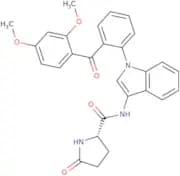
Purity:Min. 95%Aldol® 470 L-pyroglutamic acid amide, Biosynth Patent: EP 2427431 and US 8940909
CAS:Controlled ProductAldol® 470 L-pyroglutamic acid amide is a chromogenic and fluorogenic enzyme substrate used for detection of pyrrolidonyl peptidase (PYRase) activity. The colorless enzyme substrate is cleaved by PYRase-producing bacteria grown in liquid or solid media, yielding orange color. In addition, green fluorescence is generated when a suitable matrix is present, such as, the surface of cellulose acetate filters, polypropylene tubes or microplates, and polyethylene vials. Aldol® 470 L-pyroglutamic acid amide is suitable for use under aerobic and anaerobic conditions.
Formula:C28H25N3O5Purity:Min. 95.0 Area-%Molecular weight:483.52 g/molAldol® 467 N-acetyl-beta-D-glucosaminide, Biosynth Patent: EP 2427431 and US 8940909
CAS:Aldol® 467 N-acetyl-beta-D-glucosaminide is a chromogenic and fluorogenic enzyme substrate used for detection of beta-N-acetyl-glucosaminidase activity. The colorless enzyme substrate is cleaved in the presence of beta-N-acetyl-glucosaminidase yielding development of a yellow product. In addition, green fluorescence is generated when a suitable matrix or Aldol® 355 fluorescence enhancer is present. Aldol® 467 N-acetyl-beta-D-glucosaminide amide can be used in enzymatic assays or in live bacterial cultures. Aldol® 467 N-acetyl-beta-D-glucosaminide is suitable for use in liquid and solid media, under aerobic as well as anaerobic conditions.
Formula:C31H31ClN2O9Purity:Min. 95%Color and Shape:PowderMolecular weight:611.04 g/mol5-Bromo-3-indoxyl-β-D-galactopyranoside-6-sulfate sodium salt
CAS:5-Bromo-3-indoxyl-beta-D-galactopyranoside (5BIG) is a fluorogenic substrate that has been shown to be an effective enzyme substrate. It is used in the chemiluminescence, bioluminescence, and fluorescence detection of enzymes. 5BIG is also a chromogenic substrate for nucleic acid staining and can be used in food testing as well as diagnostics. 5BIG is highly pure and high quality with a CAS number of 1301706-59-1.
Formula:C14H15BrNNaO9SPurity:Min. 98 Area-%Molecular weight:476.24 g/mol5-Bromo-4-chloro-3-indoxyl-α-D-xylopyranoside
CAS:5-Bromo-4-chloro-3-indoxyl-alpha-D-xylopyranoside is an enzyme substrate that can be used in the detection of β-galactosidase activity. This product has been shown to be a good ligand for various xanthine oxidoreductases, including xanthine dehydrogenase and uricase. 5BBIX is also a chromogenic substrate for horseradish peroxidase and can be used to detect hydrogen peroxide in the presence of osmium tetroxide or potassium permanganate. 5BBIX has been extensively tested for use in diagnostics, food, and environmental testing.
Formula:C13H13BrClNO5Purity:Min. 98.0 Area-%Molecular weight:378.61 g/mol5-Bromo-4-chloro-3-indoxyl-a-D-xylopyranoside
5-Bromo-4-chloro-3-indoxyl-a-D-xylopyranoside is a fluorogenic substrate that can be used in food testing and environmental testing. This product is a conjugate of the xylosidase enzyme (EC 3.2.1.37) with 5-bromo-4-chloroindoxyl, which has been shown to have a high affinity for the enzyme's active site and enzymatic activity. The purity of this product is > 95% and the CAS number is 68618-41-5.
Purity:Min. 95%Aldol® 515 N-glutaryl-L-phenylalanine amide potassium salt, Biosynth Patent: EP 2427431 and US 8940909
CAS:Aldol® 515 N-glutaryl-L-phenylalanine amide is a chromogenic and fluorogenic enzyme substrate used for detection of L-glutamate-phenylalanine (GluPhe)-specific peptidase activity. The colorless enzyme substrate is cleaved the GluPhe-specific peptidase, yielding development of orange-red coloration. In addition, red fluorescence is generated when Aldol® 355 fluorescence enhancer or a suitable matrix is present. Aldol® 515 N-glutaryl-L-phenylalanine amide can be used in enzyme assays and live bacterial cultures. Aldol® 515 N-glutaryl-L-phenylalanine amide is suitable for use in liquid and solid media, under aerobic as well as anaerobic conditions.
Formula:C37H35KN4O5Purity:Min. 95.0 Area-%Molecular weight:654.80 g/molRef: 3D-A-4763_P00
Discontinued product4-Chloro-3-indoxyl-1,3-diacetate
CAS:4-Chloro-3-indoxyl-1,3-diacetate is a chromogenic substrate used in the identification of bile acids. It reacts with 4-chlorophenol to form a red dye. This compound is also used as a ligand for metal ions.
Formula:C12H10ClNO3Molecular weight:251.67 g/molRef: 3D-C-4848
Discontinued product