Others
Found 6279 products of "Others"
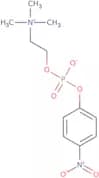
4-Nitrophenylphosphorylcholine
CAS:Chromogenic substrate used to measure phospholipase C (PLC) activity
Formula:C11H17N2O6PPurity:Min. 95 Area-%Color and Shape:PowderMolecular weight:304.24 g/molOstazin brilliant red H-3B starch
Ostazin Brilliant Red H-3B is a water soluble, non-toxic, and non-hazardous substrate for enzymes that catalyze reactions involving the cleavage of β-D-glucosides. It is used as a chromogenic or fluorogenic substrate in diagnostic tests. Ostazin Brilliant Red H-3B can also be used in bioluminescence reaction with luciferase to measure ATP levels in living cells.Purity:Min. 95%Aldol® 515 nonanoate hydrochloride, Biosynth Patent: EP 2427431 and US 8940909
CAS:Aldol® 515 nonanoate hydrochloride is a chromogenic and fluorogenic enzyme substrate for detection of lipase activity. The colorless product is cleaved by C9 esterases produced by bacteria in liquid or solid media, yielding a red color and red fluorescence when Aldol® 355 fluorescence enhancer or a suitable matrix is present. Aldol® 515 nonanoate can be used under aerobic and anaerobic conditions. Well detectable color/fluorescence of bacterial colonies or liquid cultures is obtained within 24-48 h. In the presence of a purified lipase, color and fluorescence develops within minutes to few hours.Formula:C32H36ClN2O3Purity:Min. 95 Area-%Molecular weight:533.1 g/mol3-Indoxyl choline phosphate
CAS:Please enquire for more information about 3-Indoxyl choline phosphate including the price, delivery time and more detailed product information at the technical inquiry form on this pageFormula:C13H19N2O4PPurity:Min. 99 Area-%Molecular weight:298.28 g/molRef: 3D-I-5696
1gTo inquire5gTo inquire10gTo inquire500mgTo inquire2500mgTo inquire-Unit-ggTo inquireAldol® 515 caprylate solution, 0.50 M in DMSO, Biosynth Patent: EP 2427431 and US 8940909
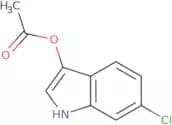
CAS:Aldol® 515 caprylate is a chromogenic and fluorogenic enzyme substrate used for detection of lipase activity. The colorless enzyme substrate is cleaved by C8 esterases, yielding development of red coloration. In addition, red fluorescence is generated when Aldol® 355 fluorescence enhancer or a suitable matrix is present. Aldol® 515 caprylate can be used in enzyme assays and live bacterial cultures. Aldol® 515 caprylate is suitable for use in liquid and solid media, under aerobic as well as anaerobic conditions.Formula:C31H34N2O3Purity:Of Solute (Hplc) Min. 90.0 Area-%Molecular weight:482.62 g/mol6-Chloro-3-indoxyl-3-acetate
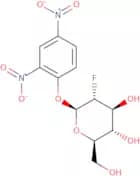
CAS:6-Chloro-3-indoxyl-3-acetate is a chromogenic substrate for carboxylesterase yielding a salmon colored precipitate upon cleavage. Mainly used in histochemistry.Purity:Min. 95%Color and Shape:White PowderMolecular weight:209.63 g/mol2,4-Dinitrophenyl 2-deoxy-2-fluoro-b-D-glucopyranoside
CAS:2,4-Dinitrophenyl 2-deoxy-2-fluoro-β-D-glucopyranoside, sometimes referred as 2F-DNPG, is an enzyme substrate for measuring beta-glucosidase activity. It is a mechanism-based inactivator of glycosidases, including beta-glucocerebrosidase (Gcase), a lysosomal enzyme encoded by the GBA1 gene responsible for breaking down glucosylceramide into ceramide and glucose. The use of 2,4-dinitrophenyl 2-deoxy-2-fluoro-β-D-glucopyranoside as an enzyme substrate permits the study of the catalytic mechanism and reaction intermediate of these enzymes.Formula:C12H13FN2O9Purity:Min. 98 Area-%Color and Shape:PowderMolecular weight:348.24 g/molAldol® 518 acetate, Biosynth Patent: EP 2427431 and US 8940909
CAS:Aldol® 518 acetate is a fluorogenic substrate for the enzyme aldolase. It is used in diagnostic kits for detecting aldolase in blood and other body fluids, and as an indicator of liver function. Aldol® 518 acetate can be used to detect the presence of aldolase in foods and beverages. The compound has also been shown to be an excellent substrate for bioluminescence and chemiluminescence reactions, which are widely used in research laboratories.Formula:C25H21ClN2O3Purity:Min. 95.0 Area-%Molecular weight:432.9 g/mol4-Nitrophenyl-beta-D-xylopyranoside
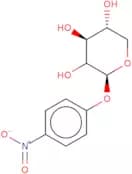
CAS:Chromogenic β-xylosidase substrate yielding a yellow solution upon cleavage.Formula:C11H13NO7Purity:Min. 99 Area-%Molecular weight:271.23 g/mol4-Nitrophenyl 4,6-benzylidene-α-D-glucopyranoside
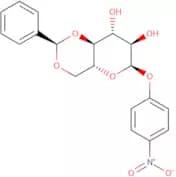
CAS:4-Nitrophenyl 4,6-benzylidene-alpha-D-glucopyranoside is a chromogenic substrate for alpha-glucosidase. Upon hydrolysis, para-nitrophenol is released yielding a yellowish colour. 4-Nitrophenyl 4,6-benzylidene-alpha-D-glucopyranoside is used in different applications such as the Pompe disease diagnosis, glycogen metabolism researchFormula:C19H19NO8Purity:Min. 95%Color and Shape:PowderMolecular weight:389.36 g/mol2-Chloro-4-nitrophenyl b-D-maltoheptaoside
CAS:2-Chloro-4-nitrophenyl b-D-maltoheptaoside is a fluorescent compound that is used in medical research for the visualization of muscle glycogen. It is also used to study the binding of molecules to proteins, as well as to measure enzyme activity. The compound has been shown to be insensitive to changes in pH and temperature, so it can be used at different pH levels and temperatures without affecting its function. 2-Chloro-4-nitrophenyl b-D-maltoheptaoside can be detected by titration calorimetry due to its high molecular weight. The molecule's affinity for carbohydrates also allows it to be used in optimization studies of carbohydrate molecules.Purity:Min. 95%Molecular weight:1,308.54 g/mol4-Nitrophenyl phosphate mono(2-amino-2-ethyl-1,3-propanediol) salt monohydrate
CAS:4-Nitrophenyl phosphate mono(2-amino-2-ethyl-1,3-propanediol) salt monohydrate is a chromogenic substrate that can be used to detect the presence of alkaline phosphatase. It is also used in food testing and diagnostics. 4NPPMD is a substrate for the enzyme alkaline phosphatase, which has been shown to play a role in the inflammatory response. The production of 4NPPMD by bacteria in the environment can be detected with chemiluminescence or bioluminescence. This product has been shown to react with both horseradish peroxidase and alkaline phosphatase, as well as other enzymes that are involved in metabolic pathways. This substrate also has high purity and fluorescence properties.Formula:C11H21N2O9PPurity:Min. 95 Area-%Molecular weight:356.26 g/mol4-Nitrophenyl 2-acetamido-2-deoxy-b-D-glucopyranoside-6-sulfate sodium salt
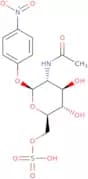
CAS:4-Nitrophenyl 2-acetamido-2-deoxy-beta-D-glucopyranoside-6-sulfate sodium salt is a chromogenic substrate for N-acetylglucosamine-6-sulfatase. Upon hydrolysis, para-nitrophenol is released yielding a yellowish colour. 4-Nitrophenyl 2-acetamido-2-deoxy-beta-D-glucopyranoside-6-sulfate sodium salt is used in different applications such as the Mucopolysaccharidosis IIID (Sanfilippo D) diagnosis
Formula:C14H17N2O11S·NaPurity:Min. 95 Area-%Color and Shape:PowderMolecular weight:444.35 g/mol6-Chloro-3-indoxyl-β-D-glucuronic acid methyl ester, Biosynth Patent: EP 2718458 and US 9127303
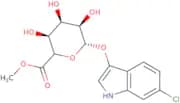
6-Chloro-3-indoxyl-beta-D-glucuronic acid methyl ester is a chromogenic substrate that can be used for the detection of indoxyl glucuronide in urine and other biological fluids. 6-Chloro-3-indoxyl-beta-D-glucuronic acid methyl ester is a white or light yellow crystalline solid that is soluble in water. It has a melting point of about 80°C and is stable at pH levels ranging from 2 to 12. The CAS number for this compound is 13982-87-6.Formula:C15H16ClNO7Purity:Min. 97.0 Area-%Molecular weight:357.74 g/mol4-Nitrophenyl 2-acetamido-2-deoxy-b-D-glucopyranoside-6-sulfate
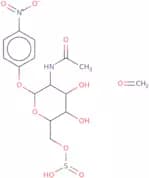
4-Nitrophenyl 2-acetamido-2-deoxy-b-D-glucopyranoside is a chemiluminescent substrate that can be used in the detection of various enzymes. This product has been tested for sterility and purity, and it has passed all tests. It is also free of any detectable levels of heavy metals or other contaminants. 4NP2AG6S is a high quality bioluminescent substrate with CAS No. 71498-92-5. It is a fluorescent compound that reacts with an enzyme to produce light. The reaction can be detected by measuring the emitted light intensity at 680 nm (max).Purity:Min. 95%N-Methylindoxyl-beta-D-galactopyranoside monohydrate
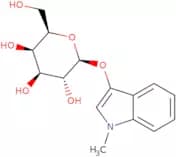
CAS:N-Methylindoxyl-beta-D-galactopyranoside monohydrate (MG) is a chromogenic probe that interacts with galactose residues found on glycoproteins, which are found on cell surfaces, leading to activation of cells. MG also binds specifically to the surface of lung cells and can inhibit the development of certain types of infections..Formula:C15H21NO7Purity:Min. 98 Area-%Color and Shape:PowderMolecular weight:327.33 g/mol5-Bromo-4-chloro-3-indolyl b-D-galactofuranoside
5-Bromo-4-chloro-3-indolyl b-D-galactofuranoside is a chromogenic substrate used to detect the specific enzymatic activity of beta-D-galactofuranosidase. After cleavage, 5-bromo-4-chloro-indoxyl is released, resulting in a blue to blue-green color change in bacterial colonies or media. 5-Bromo-4-chloro-3-indolyl b-D-galactofuranoside is used in assays for detecting bacterial pathogens (e.g., Mycobacterium tuberculosis).Formula:C14H15BrClNO6Purity:Min. 95%Color and Shape:PowderMolecular weight:408.63 g/mol5-Bromo-3-indoxyl caprylate
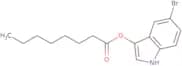
CAS:Also known as Lapis-caprylate; targeting esterase with C8 activity; Blue colorFormula:C16H20BrNO2Purity:Min. 98 Area-%Color and Shape:PowderMolecular weight:338.24 g/mol6-Chloro-3-indoxyl-β-D-glucuronic acid methyl ester, Biosynth Patent: EP 2718458 and US 9127303
6-Chloro-3-indoxyl-beta-D-glucuronic acid methyl ester is a chemiluminescent substrate that is used to measure the activity of enzymes in the beta-galactosidase family. This product is a white crystalline solid that dissolves in water and ethanol. 6-Chloro-3-indoxyl-beta-D-glucuronic acid methyl ester has been shown to be stable for at least two years when stored at -20°C. It can be used for diagnostic purposes, such as the detection of bacterial infections, or as an enzyme substrate in biochemistry studies.Purity:Min. 95%5-Bromo-6-chloro-3-indoxyl myo-inositol-1-phosphate, ammonium salt
Indoxyl substrate targeting the enzyme inositol monophosphatase; Magenta colorFormula:C14H19BrClN2O9PPurity:Min. 99 Area-%Molecular weight:505.65 g/mol4-Nitrophenyl phosphate disodium hexahydrate
CAS:4-Nitrophenyl phosphate disodium salt hexahydrate is a substrate of the hydrolase alkaline phosphatase. The products of the enzymatic reaction are 4-nitrophenol and phosphate.Formula:C6H16NNa2O12PColor and Shape:PowderMolecular weight:371.15 g/mol6-Chloro-3-indoxyl-beta-D-glucuronic acid, cyclohexylammonium salt
CAS:6-Chloro-3-indoxyl-beta-D-glucuronic acid (cyclohexylammonium salt) is a chromogenic substrate for beta-glucuronidase yielding a salmon colored precipitate upon cleavage.Formula:C20H27ClN2O7Purity:Min. 98.0 Area-%Molecular weight:442.90 g/mol6-Nitro-3-indoxyl-β-D-galactopyranoside
For the detection of beta-galactosidase activityFormula:C14H16N2O8Molecular weight:340.29 g/molN-Acetyl-5-bromo-3-indoxyl-2,3,4-tri-O-acetyl-β-D-glucuronic acid methyl ester
N-Acetyl-5-bromo-3-indoxyl-2,3,4-tri-O-acetyl-beta-D-glucuronic acid methyl ester is a chromogenic substrate that can be used for the detection of bile acids and bilirubin in food testing. It is a conjugate of an acetylated 2,3,4 triacetyl glucuronic acid methyl ester with 5 bromo 3 indoxyl. This product has high purity and high quality.Formula:C23H24BrNO11Purity:Min. 98.0 Area-%Molecular weight:570.34 g/mol5-Bromo-6-chloro-3-indoxyl-beta-D-galactopyranoside
CAS:5-Bromo-6-chloro-3-indoxyl-beta-D-galactopyranoside is a chromogenic substrate for beta-D-galactosidase, yielding a magenta precipitate and contained in a chromogenic culture media. It is an indolyl carbohydrate that is the alpha-D-mannoside of indoxyl, in which the indole moiety is substituted at positions 4 and 5 by chlorine and bromine, respectively.Formula:C14H15BrClNO6Purity:Min. 99.0 Area-%Molecular weight:408.64 g/molAldol® 470 nonanoate, Biosynth Patent: EP 2427431 and US 8940909
CAS:Controlled ProductAldol® 470 nonanoate is a chromogenic substrate with a molecular weight of 496.5 g/mol. Aldol® 470 nonanoate has been used to detect the presence of L-amino acids using a fluorogenic assay. This substrate can be used as a ligand in an enzyme-linked immunosorbent assay (ELISA) to measure the concentration of L-amino acids in food and drink samples, as well as in diagnostics for detecting fluoroquinolone resistance in bacteria. Aldol® 470 nonanoate is also used in the detection of bioluminescence and chemiluminescence reactions. CAS No.: 2484872-50-4
Formula:C32H35NO5Purity:Min. 95.0 Area-%Molecular weight:513.62 g/mol3-Indoxyl caprylate
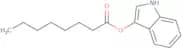
CAS:3-Indoxyl caprylate is a chemiluminescent substrate that is used in the detection of bacteria. It has been shown to be a very sensitive and selective fluorogenic substrate for the detection of bacterial activity, which can be used with an appropriate enzyme reaction. 3-Indoxyl caprylate has also been shown to be a potent quencher of bioluminescence, and can be used as a chromogenic substrate in diagnostic assays. 3-Indoxyl caprylate is often used as a culture media supplement or food additive to enhance its growth properties. It has been found to have high purity and quality levels, making it suitable for use in diagnostics and research.Purity:Min. 95%Molecular weight:259.34 g/mol2-Naphthyl b-D-galactopyranoside
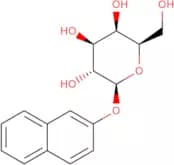
CAS:2-Naphthyl beta-D-galactopyranoside is a glycoside that is found in the flowers of the plant Eschscholzia californica. It is used as a localizer for bacterial strains and can be hydrolyzed by enzymes to release naphthalene. 2-Naphthyl beta-D-galactopyranoside has been shown to inhibit the growth of corynebacterium and diazonium salt, which may be due to its ability to bind to DNA and disrupt protein synthesis. The potential use of this molecule is for its insolubility, which prevents it from being absorbed by skin cells.
Formula:C16H18O6Purity:Min. 99 Area-%Color and Shape:PowderMolecular weight:306.31 g/molAldol® 515 propionate, Biosynth Patent: EP 2427431 and US 8940909
CAS:Aldol® 515 propionate is a chromogenic substrate for many enzymes, including beta-galactosidase, β-glucuronidase, α-galactosidase, β-galactosidase, and acid phosphatase. It can be used as a substrate in the detection of staining and enzyme activity in diagnostic testing. Aldol® 515 propionate has been shown to be an effective ligand for the protein Glu-C.Formula:C26H24N2O3Purity:Min. 95%Color and Shape:PowderMolecular weight:412.48 g/mol5-Bromo-4-chloro-3-indolyl b-D-fucopyranoside
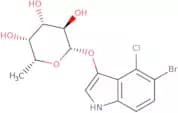
CAS:5-Bromo-4-chloro-3-indolyl b-D-fucopyranoside is a chromogenic substrate used is for the enzyme beta-fucosidase.
Formula:C14H15BrClNO5Purity:Min. 98 Area-%Color and Shape:PowderMolecular weight:392.63 g/mol4-Nitrophenyl laurate
CAS:4-Nitrophenyl laurate is a chromogenic substrate for lipase. Upon hydrolysis, para-nitrophenol is released yielding a yellowish colour. 4-Nitrophenyl laurate is used in different applications such as the Lipase activity screening, clinical diagnosticsFormula:C18H27NO4Purity:Min. 95%Color and Shape:White PowderMolecular weight:321.41 g/molAldol® 495 beta-D-glucuronic acid, Biosynth Patent: EP 2427431 and US 8940909
CAS:Aldol® 495 beta-D-glucuronic acid is a chromogenic and fluorogenic enzyme substrate used for detection of beta-glucuronidase activity. The living cells of Escherichia coli can be reliably detected in growth media containing Aldol® 495 beta-D-glucuronic acid, as beta-glucuronidase occurs almost exclusively in E. coli. Aldol® 495 beta-D-glucuronic acid can also be in GUS reporter assays. Aldol® 495 beta-D-glucuronic acid can be used in liquid culture and solid media, and is suitable for use under aerobic and anaerobic conditions. Upon exposure to active beta-glucuronidase, Aldol® 495 beta-D-glucuronic acid develops orange colour and green fluorescence.Formula:C26H23ClN2O8Purity:Min. 95.0 Area-%Molecular weight:526.93 g/mol5-Bromo-6-chloro-3-indoxyl phosphate, disodium salt monohydrate
CAS:5-Bromo-6-chloro-3-indoxyl phosphate, disodium salt monohydrate is a substrate used to visualize phosphatase activity via showing magenta colored end product when used with Nitroblue Tetrazolium.Formula:C8H6BrClNNa2O5PPurity:Min. 99.0 Area-%Molecular weight:388.45 g/mol5-Bromo-4-chloro-3-indolyl palmitate
CAS:5-Bromo-4-chloro-3-indolyl palmitate is a chromogenic substrate used to detect the specific enzymatic activity of lipase. After cleavage, 5-bromo-4-chloro-indoxyl is released, resulting in a blue to blue-green color change in bacterial colonies or media. 5-Bromo-4-chloro-3-indolyl palmitate is used in lipase activity assays or cystic fibrosis diagnostics.Formula:C24H35BrClNO2Purity:Min. 95%Color and Shape:PowderMolecular weight:484.9 g/mol6-Chloro-3-indoxyl choline phosphate
CAS:6-Chloro-3-indoxyl choline phosphate is a chromogenic substrate for phosphatidylcholine-specific phospholipase C (PC-PLC) for the detection of mibrobial metabolites. The use of this specific substrate permits monitoring the activity of PC-PLC. This an important enzyme for the regulation of steady-state levels of phosphatidylcholine (PC) and diacylglycerol (DAG). Abnormally high levels of PC-PLC activity in various tissues have been linked to many disease progressions.Formula:C13H18ClN2O4PPurity:Min. 99 Area-%Color and Shape:PowderMolecular weight:332.72 g/mol2-Naphthyl caprylate
CAS:2-Naphthyl caprylate is a substrate that is employed in an assays for carboxylesterase and lipase and when hydrolyzed, produces 2-naphthol, a compound that can also be identified via fluorescence analysis. By combining it with a diazonium salt, the formation of the corresponding azo dye occurs. In particular, this substrate is used to detect the extracellular lipase of Pseudomonas fluorescens B52.Formula:C18H22O2Purity:Min. 95%Color and Shape:White PowderMolecular weight:270.37 g/mol4-Nitrophenyl b-D-arabinopyranoside
CAS:Chromogenic substrate targeting beta-L-arabinofuranosidasePurity:Min. 95%Molecular weight:271.22 g/mol2-Chloro-4-nitrophenyl α-D-mannopyranoside
CAS:2-Chloro-4-nitrophenyl alpha-D-mannopyranoside is a substrate used to measure the alpha-mannosidase activity. This enzyme plays a crucial role in the lysosomal degradation of asparagine-linked carbohydrate cores of glycoproteinsis. The use of 2-Chloro-4-nitrophenyl alpha-D-mannopyranoside in diagnostic assays is important as a deficiency in alpha-mannosidase leads to the accumulation of mannose-rich oligosaccharides in lysosomes, causing a range of health problems collectively known as alpha-mannosidosis.
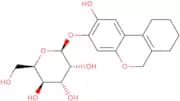
Formula:C12H14ClNO8Purity:Min. 98 Area-%Color and Shape:White PowderMolecular weight:335.69 g/mol3,4-Cyclohexenoesculetin β-D-galactopyranoside
CAS:Chromogenic substrate for beta-galactosidase
Formula:C19H22O9Purity:Min. 95 Area-%Molecular weight:394.37 g/molAldol® 495 beta-D-galactopyranoside, Biosynth Patent: EP 2427431 and US 8940909
CAS:Aldol® 495 beta-D-galactopyranoside is a chromogenic and fluorogenic enzyme substrate used for detection of beta-galactosidase activity. The colorless enzyme substrate is cleaved by lactose-utilizing bacteria in liquid or solid media, yielding orange color as well as green fluorescence if a fluorescence enhancer or a suitable matrix are present. Aldol® 495 beta-D-galactopyranoside can also be used in beta-gal reporter gene assays or for identification of beta-gal positive transformants on agar plates. Aldol® 495 beta-D-galactopyranoside can be used under aerobic and anaerobic conditions.Formula:C26H25ClN2O7Purity:Min. 95.0 Area-%Molecular weight:512.94 g/mol6-Chloro-3-indoxyl-beta-D-galactopyranoside, plant origin
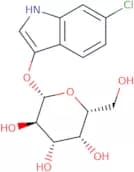
CAS:6-Chloro-3-indoxyl-beta-D-galactopyranoside is a chromogenic substrate for beta-galactosidase that yields a salmon or rose-coloured precipitate and hence is also known as Salmon-Gal. It can be used in conjunction with isopropyl-beta-D-thiogalactopyranoside (IPTG) as an alternative to the chromogenic substrate 5-bromo-4-chloro-3-indolyl beta-D-galactopyranoside (X-Gal) for detection of beta-galactosidase activity in bacterial colonies in colorimetric assays. Where beta-galactosidase expressed from a reporter gene in molecular biology experiments, recombinant colonies on growth plates are salmon-coloured while non-recombinants appear as white. Use of nitroblue tetrazolium salt (NBT) with Salmon-Gal may provide faster results, yielding a clear, purple precipitate, than for Salmon-Gal alone. In conjunction with 5-bromo-4-chloro-3-indolyl-beta-D-glucoside (X-Glc), Salmon-Gal is useful for simultaneous detection of GUS and Lac activities in the same medium.Formula:C14H16ClNO6Purity:Min. 98.0 Area-%Molecular weight:329.74 g/mol2-(N-Hexadecanoylamino)-4-nitrophenylphosphocholine hydroxide
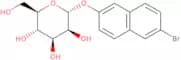
CAS:2-(N-Hexadecanoylamino)-4-nitrophenylphosphocholine hydroxide, often abbreviated as HDA-PC, is a chromogenic substrate for acid sphingomyelinase enzyme. HDA-PC is used as a key substrate for measuring the activity of this enzyme, responsible for catalyzing the hydrolysis of sphingomyelin to ceramide. The activity assay for this measuring this enzyme's acitivy is to detect a deficiency (or lack) of the enzyme which is directly related to the Niemann-Pick disease.Formula:C27H50N3O8PPurity:Min. 95%Color and Shape:Off-White PowderMolecular weight:575.68 g/mol6-Bromo-2-naphthyl α-D-mannopyranoside
CAS:Chromogenic substrate to visualize the activity of alpha-D-mannopyranoside; red color producedFormula:C16H17BrO6Purity:Min. 95%Color and Shape:PowderMolecular weight:385.21 g/mol2-Nitrophenyl 2-acetamido-2-deoxy-a-D-glucopyranoside
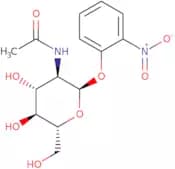
CAS:2-Nitrophenyl 2-acetamido-2-deoxy-alpha-D-glucopyranoside is a chromogenic substrate used to assay the activity of enzymes that cleave N-acetyl-alpha-D-glucosaminide, such as chitinases and lysozymes. Upon cleavage by the enzyme of interest, the substrate releases a yellow-colored 2-nitrophenol that can be measured spectrophotometrically. This substrate is widely used in the food industry to monitor the activity of lysozyme in cheese, as well as in biomedical research for studying cellular and molecular mechanisms involved in conditions such as inflammation and cancer.Purity:Min. 95%Color and Shape:PowderMolecular weight:342.3 g/mol6-Fluoro-3-indoxyl-beta-D-galactopyranoside
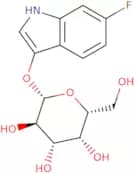
CAS:6-Fluoro-3-indoxyl-beta-D-galactopyranoside is a fluorescent chromogenic substrate that is commonly used for the detection and quantification of beta-galactosidase activity. When this substrate is hydrolyzed by beta-galactosidase, it produces a fluorescent blue product that can be easily detected and measured using a fluorometer or spectrophotometer. This substrate is often used in microbiology and molecular biology research to study gene expression and enzyme kinetics, and is also used in medical diagnostics as a marker for specific diseases and conditions.Formula:C14H16FNO6Purity:Min. 98.0 Area-%Molecular weight:313.29 g/mol4-Nitrophenyl-N-acetyl-α-D-glucosaminide
CAS:4-Nitrophenyl-N-acetyl-α-D-glucosaminide is a chromogenic substrate for N-acetyl-β-D-glucosaminidase yielding a yellow solution upon cleavage.Formula:C14H18N2O8Molecular weight:342.31 g/molRef: 3D-N-4030
1gTo inquire100mgTo inquire250mgTo inquire500mgTo inquire2500mgTo inquire-Unit-ggTo inquire4-Nitrophenyl-α-D-maltopyranoside
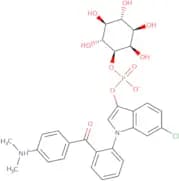
CAS:Chromogenic α-maltosidase substrate yielding a yellow solution upon cleavage.Formula:C18H25NO13Purity:Min. 98.0 Area-%Molecular weight:463.40 g/molAldol® 518 myo-inositol-1-phosphate - Biosynth Patent: EP 2427431 and US 8940909
CAS:Aldol® 518 myo-inositol-1-phosphate is a chromogenic and fluorogenic enzyme substrate used for detection of phosphatidyl-inositol specific phospholipase C activity (PI-PLC, EC 4.6.1.13). The colorless enzyme substrate is cleaved by PI-PLC or PI-PLC-positive microorganisms grown in liquid or solid media, yielding an intense red coloration. In combination with Aldol® 355 fluorescence enhancer, red fluorescence can also obtained. Aldol® 518 myo-inositol-1-phosphate is suitable for use in liquid and solid media, under aerobic as well as anaerobic conditions.Formula:C29H33ClN3O10PPurity:Min. 95 Area-%Color and Shape:PowderMolecular weight:650.02 g/mol3,4-Cyclohexenoesculetin beta-D-galactopyranoside
CAS:Chromogenic substrate for beta-galactosidaseFormula:C19H22O9Purity:Min. 95 Area-%Color and Shape:PowderMolecular weight:394.37 g/mol