Others
Found 6300 products of "Others"
Aldol® 515 caprylate solution, 0.50 M in DMSO, Biosynth Patent: EP 2427431 and US 8940909
CAS:Aldol® 515 caprylate is a chromogenic and fluorogenic enzyme substrate used for detection of lipase activity. The colorless enzyme substrate is cleaved by C8 esterases, yielding development of red coloration. In addition, red fluorescence is generated when Aldol® 355 fluorescence enhancer or a suitable matrix is present. Aldol® 515 caprylate can be used in enzyme assays and live bacterial cultures. Aldol® 515 caprylate is suitable for use in liquid and solid media, under aerobic as well as anaerobic conditions.Formula:C31H34N2O3Purity:Min. 95%Color and Shape:Clear Liquid PowderMolecular weight:482.62 g/mol5-Bromo-4-chloro-3-indoxyl-β-D-xylopyranoside
CAS:5-Bromo-4-chloro-3-indoxyl-beta-D-xylopyranoside is a fluorogenic substrate that can be used to measure the activity of bacterial esterases. The enzyme cleaves the xylose moiety from 5-bromo-4-chloro-3-indoxyl, yielding indoxyl as an intermediate product. This reaction can be catalyzed by esterases found in bacteria, which hydrolyze esters containing a single hydroxyl group at one end and a carboxylic acid or alcohol at the other end. Indoxyl is fluorescent and can be detected using a fluorimeter. 5BX is also chromogenic, so it can be used as an enzyme substrate for detecting beta galactosidase activity in bacteria such as Mycobacterium smegmatis or Escherichia coli. 5BX is also used to detect chemiluminesFormula:C13H13BrClNO5Molecular weight:378.61 g/molRef: 3D-B-7750
1gTo inquire5gTo inquire10gTo inquire500mgTo inquire2500mgTo inquire-Unit-ggTo inquire5-Bromo-4-chloro-3-indoxyl-N-acetyl-beta-D-glucosaminide
CAS:Chromogenic substrate for N-acetyl-β-D-glucosaminidase yielding a blue precipitate. Contained in certain mycological culture media. Used in histochemistry.
Formula:C16H18BrClN2O6Purity:Min. 99.5 Area-%Molecular weight:449.69 g/molNaphthol AS-BI N-acetyl-beta-D-glucosaminide
CAS:Naphthol AS-BI N-acetyl-beta-D-glucosaminide is a fluorogenic substrate for the pararosaniline-glyoxalase (PG) reaction. This substrate is used to study enzymatic activity in two human isoenzymes of PG, PG I and PG II. The conversion of this substrate by PG I or PG II results in a color change from yellow to red. Naphthol AS-BI N-acetyl-beta-D-glucosaminide may be used as an experimental tool to measure the activity of these enzymes and to study the effect of inhibitors on their activity. It can also be used as a marker for studying enzyme transfer between cells.Formula:C26H27BrN2O8Purity:Min. 97.0 Area-%Molecular weight:575.42 g/mol3-Indoxyl-beta-D-glucopyranoside anhydrous
CAS:The maunfacturing of blue jeans started 150 years ago as workwear, and are found nowadays in almost every wardrobe. Their renowned indigo color tone is truly unique; nevertheless, the high demand for the dye poses serious sustainability and environmental problems connected with its manufacturing process. Recently, a group of scientists presented an alternative indigo dyeing method inspired by the indoxyl glucoconjugate present in the plant P.tinctorium. The researchers proposed as an alternative approach a biocatalytic process using recombinant E.coli to access water soluble β-gluco-indoxyl (indican). At the point of coloring, indican gets hydrolyzed by β-glucosidase enzymes forming indoxyl, which suddenly undergoes oxidation to leucoindigo and further crystallizes to indigo giving the typical blue denim its signature character.Formula:C14H17NO6Purity:Min. 99.0 Area-%Molecular weight:295.29 g/mol5-Bromo-4-chloro-3-indoxyl butyrate
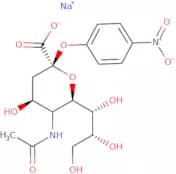
CAS:Chromogenic substrate for carboxylesterase yielding a blue precipitate upon cleavage. It has been proposed for the rapid detection of Branhamella catarrhalis in a strip test because unlike most other members of the family Neisseriaceae, Branhamella catarrhalis produces a butyrateesterase.Formula:C12H11BrClNO2Purity:Min. 98.0 Area-%Molecular weight:316.59 g/mol2-O-(4-Nitrophenyl)-a-D-N-acetylneuraminic acid sodium salt
CAS:2-O-(4-Nitrophenyl)-alpha-D-N-acetylneuraminic acid sodium salt is a chromogenic substrate used to detect the enzymatic activity of neuraminidase or sialidase. After cleavage, the nitrophenyl moiety is released exhibiting a light yellowish color. 2-O-(4-Nitrophenyl)-alpha-D-N-acetylneuraminic acid sodium salt is used in bacterial neuraminidase activity assays.Purity:Min. 95%Color and Shape:Yellow PowderMolecular weight:452.35 g/mol6-Nitro-3-indolyl-b-D-galactopyranoside
6-Nitro-3-indolyl-b-D-galactopyranoside is a chemiluminescent substrate that reacts with horseradish peroxidase to produce light. 6NIGP is used in the diagnostic field as a fluorogenic or chromogenic substrate for enzymes such as alkaline phosphatase, and as a staining agent for cells, tissues, and other biological materials. 6NIGP has been used in the detection of bacteria, fungi, parasites, and viruses. It is also used in food testing as an enzyme substrate. 6NIGP is purified by recrystallization from water or acetone and can be stored at −20°C.Purity:Min. 95%5-Bromo-6-chloro-3-indoxyl sulfate, potassium salt
CAS:5-Bromo-6-chloro-3-indoxyl sulfate, potassium salt is a fluorogenic substrate for the enzyme alkaline phosphatase. This compound is used in the detection of alkaline phosphatase activity as well as in many other applications such as diagnostic tests and environmental testing. 5-Bromo-6-chloro-3-indoxyl sulfate, potassium salt is available at high purity and quality.Formula:C8H4BrClKNO4SPurity:Min. 98 Area-%Molecular weight:364.65 g/molCelluchrome
Celluchrome (short name for remazol brilliant blue carboxymethyl cellulose or RBB-CMC) is a chromogenic substrate for cellulases. With a higher sensitivity, RBB-CMC allows for the detection of the enzyme activity even when small amounts are present.Purity:Min. 95%Color and Shape:PowderAldol® 518 acetate, Biosynth Patent: EP 2427431 and US 8940909
CAS:Aldol® 518 acetate is a fluorogenic substrate for the enzyme aldolase. It is used in diagnostic kits for detecting aldolase in blood and other body fluids, and as an indicator of liver function. Aldol® 518 acetate can be used to detect the presence of aldolase in foods and beverages. The compound has also been shown to be an excellent substrate for bioluminescence and chemiluminescence reactions, which are widely used in research laboratories.Formula:C25H21ClN2O3Purity:Min. 95.0 Area-%Molecular weight:432.9 g/mol4-Nitrophenyl-beta-D-xylopyranoside
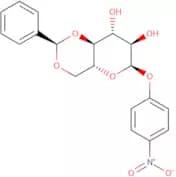
CAS:Chromogenic β-xylosidase substrate yielding a yellow solution upon cleavage.Formula:C11H13NO7Purity:Min. 99 Area-%Molecular weight:271.23 g/mol4-Nitrophenyl 4,6-benzylidene-α-D-glucopyranoside
CAS:4-Nitrophenyl 4,6-benzylidene-alpha-D-glucopyranoside is a chromogenic substrate for alpha-glucosidase. Upon hydrolysis, para-nitrophenol is released yielding a yellowish colour. 4-Nitrophenyl 4,6-benzylidene-alpha-D-glucopyranoside is used in different applications such as the Pompe disease diagnosis, glycogen metabolism researchFormula:C19H19NO8Purity:Min. 95%Color and Shape:PowderMolecular weight:389.36 g/mol6-Bromo-2-naphthyl a-D-glucopyranoside
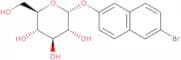
CAS:6-Bromo-2-naphthyl alpha-D-glucopyranoside is a chromogenic substrate used to detect alpha-glucosidase enzyme activity. When cleaved by the enzyme alpha-glucosidase, it releases 6-bromo-2-naphthol, which can be coupled with diazonium salts (for example 4'-amino-2,3'-dimethylazobenzene, also known as Fast Garnet GBC) to form a colored precipitate. 6-Bromo-2-naphthyl alpha-D-glucopyranoside is used in biochemical assays, histochemistry, and diagnostic tests for conditions like lysosomal storage disorders (e.g. Pompe disease) and carbohydrate metabolism studies.
Formula:C16H17BrO6Purity:Min. 95%Color and Shape:White Off-White PowderMolecular weight:385.21 g/mol5-Bromo-4-chloro-3-indoxyl-α-D-N-acetylneuraminic acid, cyclohexylammonium salt
5-Bromo-4-chloro-3-indoxyl-alpha-D-N-acetylneuraminic acid, cyclohexylammonium salt is a Fluorogenic substrate used for the detection of an enzyme that converts sialic acid to fluorescein. This product has a high quality and purity with a CAS number. It is used in Culture media as a conjugate, Enzyme substrate, Food testing, High purity, Diagnostics, ligand, Chromogenic substrate, Environmental testing. The product has been tested and found to be safe for use with animals and humans.Formula:C25H35BrClN3O9Purity:Min. 99.5 Area-%Molecular weight:636.92 g/mol5-Bromo-4-chloro-1H-indol-3-yl-β-D-cellotetraoside
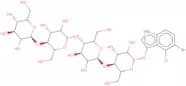
5-Bromo-4-chloro-1H-indol-3-yl-b-D-cellotetraoside is a chromogenic substrate used to detect the specific enzymatic activity of cellulase. After cleavage, 5-bromo-4-chloro-indoxyl is released, resulting in a blue to blue-green color change in bacterial colonies or media. 5-Bromo-4-chloro-1H-indol-3-yl-b-D-cellotetraoside is used in bacterial cellulase detection and biomass conversion research.Formula:C32H45BrClNO21Purity:Min. 95%Color and Shape:PowderMolecular weight:895.05 g/mol3-Indoxyl caprylate
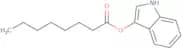
CAS:3-Indoxyl caprylate is a chemiluminescent substrate that is used in the detection of bacteria. It has been shown to be a very sensitive and selective fluorogenic substrate for the detection of bacterial activity, which can be used with an appropriate enzyme reaction. 3-Indoxyl caprylate has also been shown to be a potent quencher of bioluminescence, and can be used as a chromogenic substrate in diagnostic assays. 3-Indoxyl caprylate is often used as a culture media supplement or food additive to enhance its growth properties. It has been found to have high purity and quality levels, making it suitable for use in diagnostics and research.Purity:Min. 95%Molecular weight:259.34 g/mol5-Bromo-4-chloro-3-indoxyl phosphate, disodium salt sesquihydrate
CAS:Water soluble, chromogenic substrate for visualizing alkaline phosphatase activity. Produces a blueinsoluble end product that is detected visually when used together with nitroblue tetrazolium. The substrate system is versatile and functions in a variety of applications, including Northern, Southern, and Western blotting, in situhybridization, ELISAs and immunohistochemistry.Formula:C8H4BrClNNa2O4P·5(H2O)Purity:Min. 98.0 Area-%Molecular weight:397.45 g/mol5-Iodo-3-indoxyl-beta-D-galactopyranoside
CAS:5-Iodo-3-indoxyl-beta-D-galactopyranoside is a chromogenic substrate for beta-galactosidase.Formula:C14H16INO6Purity:Min. 99 Area-%Molecular weight:421.19 g/mol2-Nitrophenyl α-D-glucopyranoside
CAS:2-Nitrophenyl a-D-glucopyranoside is a chromogenic substrate commonly used to assay the activity of glucosidases. Upon cleavage of the glycosidic bond by glucosidases, the released 2-nitrophenyl group yields a yellow color detectable by spectrophotometry. This substrate has high sensitivity and is widely used in a variety of applications, including drug discovery and enzyme kinetics studies.
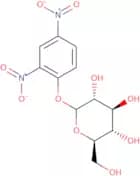
Formula:C12H15NO8Purity:Min. 95%Color and Shape:White to off-white solid.Molecular weight:301.25 g/mol2,4-Dinitrophenyl β-D-glucopyranoside
CAS:2,4-Dinitrophenyl-beta-D-glucopyranoside is a chromogenic substrate used to assay enzymes, such as glucosidases. These enzymes catalyze the hydrolysis of glycosidic bonds in sugars.Formula:C12H14N2O10Purity:Min. 95%Color and Shape:PowderMolecular weight:346.25 g/mol5-Bromo-4-chloro-3-indolyl b-D-fucopyranoside
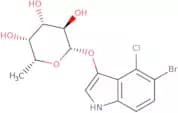
CAS:5-Bromo-4-chloro-3-indolyl b-D-fucopyranoside is a chromogenic substrate used is for the enzyme beta-fucosidase.
Formula:C14H15BrClNO5Purity:Min. 98 Area-%Color and Shape:PowderMolecular weight:392.63 g/mol(R)-1-Cyclohexylethanamine
CAS:Formula:C8H17NPurity:95%Color and Shape:Liquid, ClearMolecular weight:127.231[1,1′-Bi(cyclohexan)]-4-ol
CAS:Formula:C12H22OPurity:98%Color and Shape:SolidMolecular weight:182.307tert-Butyl cis-N-(4-amino-1-methyl-cyclohexyl)carbamate hydrochloride
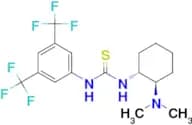
CAS:Purity:95%Molecular weight:264.791-(3,5-Bis(trifluoromethyl)phenyl)-3-((1R,2R)-2-(dimethylamino)cyclohexyl)thiourea
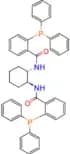
CAS:Purity:97%Color and Shape:SolidMolecular weight:413.4299927(1S,2S)-(-)-1,2-DIAMINOCYCLOHEXANE-N,N’-BIS(2′-DIPHENYLPHOSPHINOBENZOYL)
CAS:Purity:95%Color and Shape:SolidMolecular weight:690.76397713-Methyl-1-cyclohexanecarboxylic acid
CAS:Purity:97%Color and Shape:LiquidMolecular weight:142.197998N-[3,5-Bis(trifluoromethyl)phenyl]-N’-[(1S,2S)-2-(dipentylamino)cyclohexyl]thiourea
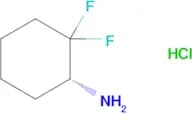
CAS:Purity:97%Molecular weight:525.6400146(1R)-2,2-difluorocyclohexan-1-amine hydrochloride
CAS:Formula:C6H12ClF2NPurity:97%Molecular weight:171.62Dicyclohexyl(2′-methoxy-[1,1′-biphenyl]-2-yl)phosphine
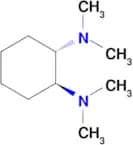
CAS:Formula:C25H33OPPurity:95%Color and Shape:SolidMolecular weight:380.512(1S,2S)-N1,N1,N2,N2-Tetramethylcyclohexane-1,2-diamine
CAS:Purity:95%Color and Shape:LiquidMolecular weight:170.3000031(trans,trans)-4-Butyl-4′-propyl-1,1′-bicyclohexyl
CAS:Formula:C19H36Purity:97%Color and Shape:Liquid, No data available.Molecular weight:264.497(1S,2S,4R)-1-methyl-2-morpholino-4-(prop-1-en-2-yl)cyclohexanol oxalate
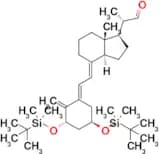
CAS:Purity:98%Molecular weight:329.393(S)-2-((1R,3aS,7aR,E)-4-((E)-2-((3S,5R)-3,5-bis(tert-butyldimethylsilyloxy)-2-methylenecyclohexylidene)ethylidene)-7a-methyloctahydro-1H-inden-1-yl)propanal
CAS:Purity:98%Molecular weight:573.02099613-Oxocyclohexanecarbonitrile
CAS:Formula:C7H9NOPurity:98%Color and Shape:SolidMolecular weight:123.155cis-Cyclohexane-1,2-diol
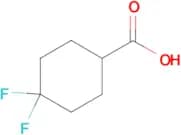
CAS:Formula:C6H12O2Purity:95%Color and Shape:White – Almost white powderMolecular weight:116.164,4-Difluorocyclohexanecarboxylic acid
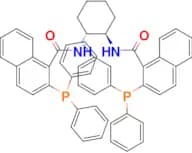
CAS:Formula:C7H10F2O2Purity:98%Color and Shape:No data available.Molecular weight:164.152N,N’-((1R,2R)-Cyclohexane-1,2-diyl)bis(2-(diphenylphosphino)-1-naphthamide)
CAS:Purity:94%Color and Shape:SolidMolecular weight:790.8839722










![(trans,trans)-[1,1′-bi(Cyclohexane)]-4,4′-dicarboxylic acid](/_next/image/?url=https%3A%2Fstatic.cymitquimica.com%2Fproducts%2F10%2Fthumb-webp%2FF988002.webp&w=3840&q=75)
![[1,1′-Bi(cyclohexan)]-4-ol](/_next/image/?url=https%3A%2Fstatic.cymitquimica.com%2Fproducts%2F10%2Fthumb-webp%2FF239563.webp&w=3840&q=75)


![N-[3,5-Bis(trifluoromethyl)phenyl]-N’-[(1S,2S)-2-(dipentylamino)cyclohexyl]thiourea](/_next/image/?url=https%3A%2Fstatic.cymitquimica.com%2Fproducts%2F10%2Fthumb-webp%2FF616094.webp&w=3840&q=75)

![Dicyclohexyl(2′-methoxy-[1,1′-biphenyl]-2-yl)phosphine](/_next/image/?url=https%3A%2Fstatic.cymitquimica.com%2Fproducts%2F10%2Fthumb-webp%2FF216532.webp&w=3840&q=75)