Aminoacids and derivatives
Amino acids are compounds with a structure based on an amino group (-NH₂) and a carboxyl group (-COOH), both attached to a central carbon atom. This structure makes them essential for the synthesis of proteins and other biomolecules. Their derivatives can have regulatory properties over metabolic processes and biological systems, with applications in nutrition, health, and regenerative medicine.
At CymitQuimica, we offer a wide range of amino acids and their derivatives, ideal for research and the formulation of bioactive products.
Found 12257 products of "Aminoacids and derivatives"
Sort by
Purity (%)
0
100
|
0
|
50
|
90
|
95
|
100
2-Benzyl-2,5-diaza-spiro[3.4]octanedihydrochloride
CAS:Purity:97.0%Molecular weight:275.22000122070316-[(2-Amino-1,3-benzothiazol-5-yl)methyl]-1,3-benzothiazol-2-amine
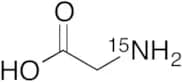
CAS:Purity:90.0%Molecular weight:312.4100036621094Glycine-15N
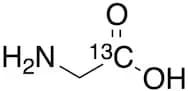
CAS:Controlled Product<p>Applications Glycine-15N is the labelled form of Glycine (G615990). Glycine is a non-essential amino acid for human development. Glycine is an inhibitory neurotransmitter in spinal cord, allosteric regulator of NMDA receptors.<br>References Scott, D., et al.: J. Neurosci., 21, 3063 (2001); Laube, B., et al.: Neuropharmacology, 47, 994 (2004); Papadakis, M., et al.: J. Biol. Chem., 279, 14703 (2004); Chen, P., et al.: Mol. Pharmacol., 67, 1470 (2005); Wolosker, H., et al.: Mol. Neurobiol., 36, 152 (2007)<br></p>Formula:C2H515NO2Color and Shape:White To Off-WhiteMolecular weight:76.060L-Serine -13C3,15N
CAS:<p>Applications Isotope labelled L-Serine is used in the synthesis of purines and pyrimidines as antibacterial/antifungal agents, as well as acting as a proteinogenic compound.<br>References Olivella, M. et al.: Bioorg. Med. Chem., 20, 6109 (2012);<br></p>Formula:C3H715NO3Color and Shape:White To Off-WhiteMolecular weight:109.0644-[4-(dimethylamino)benzoyl]-8-methyl-1-oxa-4,8-diazaspiro[4.5]decane-3-carboxylic acid
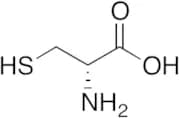
CAS:Purity:95.0%Molecular weight:347.4150085449219D-Cysteine
CAS:Controlled Product<p>Applications D-Cysteine is a strong inhibitor of Escherichia coli growth and also functions to provide inorganic sulfates for the sulfation of xenobiotics. D-Cysteine is a non-physiological isomer of L-Cysteine (C995000), and is not involved in protein or glutathione synthesis.<br>References Glazenburg, E., et al.: Biochem. Pharm., 33, 625 (1984); Klassen, C. & Boles, J.: FASEB J., 11, 404 (1997); Soutourina, J., et al.: J. Biol. Chem., 276, 40864 (2001);<br></p>Formula:C3H7NO2SColor and Shape:NeatMolecular weight:121.16(5R,7R)-5-Methyl-4-(piperazin-1-yl)-6,7-dihydro-5H-cyclopenta[d]pyrimidin-7-ol dihydrochloride
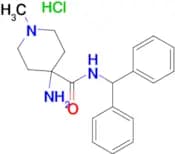
CAS:Purity:98%Molecular weight:307.22000122070314-amino-N-benzhydryl-1-methylpiperidine-4-carboxamide hydrochloride
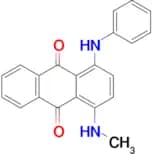
Molecular weight:359.89999389648441-(Methylamino)-4-(phenylamino)anthracene-9,10-dione
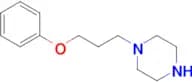
CAS:Purity:95.0%Molecular weight:328.37100219726561-(Phenoxypropyl)piperazine
CAS:Formula:C13H20N2OPurity:98.0%Color and Shape:SolidMolecular weight:220.316(R)-6,7-Dimethoxy-2-methyl-N-(1-(4-(2-((methylamino)methyl)phenyl)thiophen-2-yl)ethyl)quinazolin-4-amine
CAS:Purity:98.0%Color and Shape:Liquid, No data available.Molecular weight:448.5899963378906


![2-Benzyl-2,5-diaza-spiro[3.4]octanedihydrochloride](/_next/image/?url=https%3A%2Fstatic.cymitquimica.com%2Fproducts%2F10%2Fthumb-webp%2FF048293.webp&w=3840&q=75)
![6-[(2-Amino-1,3-benzothiazol-5-yl)methyl]-1,3-benzothiazol-2-amine](/_next/image/?url=https%3A%2Fstatic.cymitquimica.com%2Fproducts%2F10%2Fthumb-webp%2FF182695.webp&w=3840&q=75)

![(3-methylphenyl)[4-(2-methylphenyl)piperazin-1-yl]acetic acid](/_next/image/?url=https%3A%2Fstatic.cymitquimica.com%2Fproducts%2F10%2Fthumb-webp%2FF300212.webp&w=3840&q=75)

![4-[4-(dimethylamino)benzoyl]-8-methyl-1-oxa-4,8-diazaspiro[4.5]decane-3-carboxylic acid](/_next/image/?url=https%3A%2Fstatic.cymitquimica.com%2Fproducts%2F10%2Fthumb-webp%2FF525661.webp&w=3840&q=75)

![(5R,7R)-5-Methyl-4-(piperazin-1-yl)-6,7-dihydro-5H-cyclopenta[d]pyrimidin-7-ol dihydrochloride](/_next/image/?url=https%3A%2Fstatic.cymitquimica.com%2Fproducts%2F10%2Fthumb-webp%2FF623897.webp&w=3840&q=75)