Aminoacids and derivatives
Amino acids are compounds with a structure based on an amino group (-NH₂) and a carboxyl group (-COOH), both attached to a central carbon atom. This structure makes them essential for the synthesis of proteins and other biomolecules. Their derivatives can have regulatory properties over metabolic processes and biological systems, with applications in nutrition, health, and regenerative medicine.
At CymitQuimica, we offer a wide range of amino acids and their derivatives, ideal for research and the formulation of bioactive products.
Found 12278 products of "Aminoacids and derivatives"
Sort by
Purity (%)
0
100
|
0
|
50
|
90
|
95
|
100
3-(4-Chlorophenyl)-4-hydroxybutyric Acid Sodium Salt
CAS:Controlled Product<p>Applications A metabolite of Baclofen (c).<br>References Ault, B., et al.: Eur. J. Pharmacol., 71, 357 (1981),<br></p>Formula:C10H10ClNaO3Color and Shape:NeatMolecular weight:236.63Tert-butyln-[(3r)-spiro[3h-benzofuran-2,4'-piperidine]-3-yl]carbamate
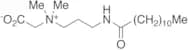
CAS:Purity:98%Molecular weight:304.3900146484375Lauroylamide Propylbetaine
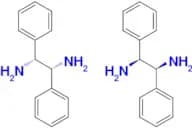
CAS:Controlled Product<p>Applications Lauroylamide Propylbetaine is used cosmetic and hair compositions of enhanced viscosity and clarity.<br>References Anon., et al.: Bull. Chem. Soc. Japan, 41, 1175 (1968),<br></p>Formula:C19H38N2O3Color and Shape:NeatMolecular weight:342.52(1R,2R)-rel-1,2-Diphenylethane-1,2-diamine
CAS:Purity:95%Color and Shape:SolidMolecular weight:424.5926-Aminohexanoic Acid
CAS:Controlled Product<p>Applications 6-Aminohexanoic Acid is a reagent commonly used for the extraction of aldehydes from reaction mixtures. 6-Aminohexanoic Acid has also been shown to improve solubilization of membrane proteins in electrophoresis. Studies suggest that 6-Aminohexanoic Acid inhibits the activation of the first component of the complement system.<br>References Ohta ,S. et al.: Chem. Pharm. Bull., 28, 1917 (1980); Shagger, H. et al.: Anal. Biochem., 199, 223 (1991); Soter, N.A. et al.: J. Immunol., 114, 928 (1975);<br></p>Formula:C6H13NO2Color and Shape:WhiteMolecular weight:131.174-(Aminomethyl)benzoic Acid
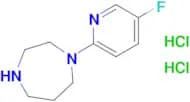
CAS:Controlled Product<p>Impurity Tranexamic EP Impurity D<br>Applications 4-(Aminomethyl)benzoic Acid (Tranexamic EP Impurity D) is a type 2 antifibrinolytic agent.<br>References Markwardt, F., et al.: Prog. Fibrinolysis. 5, 178 (1981); Markswardt, F.. et al.: Thrombosis. Res., 9, 143 (1976);<br></p>Formula:C8H9NO2Color and Shape:WhiteMolecular weight:151.161-(5-Fluoropyridin-2-yl)-1,4-diazepane dihydrochloride
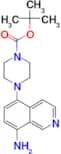
CAS:Purity:95.0%Molecular weight:268.1600036621094Tert-Butyl 4-(8-amino-5-isoquinolinyl)-1-piperazinecarboxylate
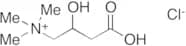
CAS:Purity:95.0%Color and Shape:SolidMolecular weight:328.4159851074219D,L-Carnitine Chloride
CAS:<p>Stability Hygroscopic<br>Applications Vitamin (enzyme cofactor). Essential cofactor of fatty acid metabolism; required for the transport of fatty acids through the inner mitochondrial membrane. Synthesized primarily in the liver and kidney; highest concentrations found in heart and skeletal muscle. Dietary sources include red meat, dairy products, beans, avocado.<br>References Mitchell, M.E., et al.: Am. J. Clin. Nutr., 31, 293 (1978), Lango, R., et al.: Cardiovasc. Res., 51, 21 (2001), Vaz, F.M., et al.: Biochem. J., et al.: 361, 417 (2002), Karlic, H., et al.: Nutrition, 20, 709 (2004),<br></p>Formula:C7H16NO3·ClColor and Shape:Off-WhiteMolecular weight:197.666-BENZYL 2-TERT-BUTYL 2,6,9-TRIAZASPIRO[4.5]DECANE-2,6-DICARBOXYLATE
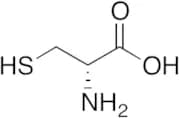
CAS:Purity:95.0%Molecular weight:375.468994140625D-Cysteine
CAS:Controlled Product<p>Applications D-Cysteine is a strong inhibitor of Escherichia coli growth and also functions to provide inorganic sulfates for the sulfation of xenobiotics. D-Cysteine is a non-physiological isomer of L-Cysteine (C995000), and is not involved in protein or glutathione synthesis.<br>References Glazenburg, E., et al.: Biochem. Pharm., 33, 625 (1984); Klassen, C. & Boles, J.: FASEB J., 11, 404 (1997); Soutourina, J., et al.: J. Biol. Chem., 276, 40864 (2001);<br></p>Formula:C3H7NO2SColor and Shape:NeatMolecular weight:121.16R-(+)-Carbidopa
CAS:Controlled Product<p>Stability Hygroscopic<br>Applications R-(+)-Carbidopa is an inhibitor of DOPA decarboxylase, which plays a significant role in the prevention of the conversion of L-DOPA (D533751) to dopamine (D533780). Studies has also indicated the inhibitory effects of towards L-DOPA in human liver prepns and as well as 5-hydroxytryptophan (H975700).<br>References Vogel, W.H. et al.: Arch. Int. Pharmacodyn. Ther. 198, 85 (1972);<br></p>Formula:C10H14N2O4Color and Shape:NeatMolecular weight:226.23(S)-4-((2-(3-Chlorophenyl)-2-hydroxyethyl)amino)-3-(4-methyl-6-morpholino-1H-benzo[d]imidazol-2-yl)pyridin-2(1H)-one
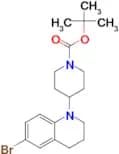
CAS:Purity:98.0%Molecular weight:479.172417372TERT-BUTYL 4-(6-BROMO-3,4-DIHYDROQUINOLIN-1(2H)-YL)PIPERIDIN-1-CARBOXYLATE
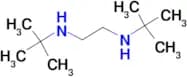
CAS:Purity:95.0%Molecular weight:395.34100341796875N,N'-Di-tert-butylethylenediamine
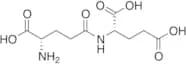
CAS:Purity:95.0%Color and Shape:Liquid, ClearMolecular weight:172.3159942626953γ-L-Glutamyl L-Glutamic Acid
CAS:Controlled Product<p>Applications H-GAMMA-GLU-GLU-OH (cas# 1116-22-9) is a useful research chemical.<br></p>Formula:C10H16N2O7Color and Shape:NeatMolecular weight:276.24Glycine-13C
CAS:Controlled Product<p>Applications Labelled analogue of Glycine (G615990), a non-essential amino acid for human development. Glycine (G615990) is an inhibitory neurotransmitter in spinal cord, allosteric regulator of NMDA receptors.<br>References Scott, D., et al.: J. Neurosci., 21, 3063 (2001), Laube, B., et al.: Neuropharmacology, 47, 994 (2004), Papadakis, M., et al.: J. Biol. Chem., 279, 14703 (2004), Chen, P., et al.: Mol. Pharmacol., 67, 1470 (2005), Wolosker, H., et al.: Mol. Neurobiol., 36, 152 (2007),<br></p>Formula:C13CH5NO2Color and Shape:White PowderMolecular weight:76.06


![Tert-butyln-[(3r)-spiro[3h-benzofuran-2,4'-piperidine]-3-yl]carbamate](/_next/image/?url=https%3A%2Fstatic.cymitquimica.com%2Fproducts%2F10%2Fthumb-webp%2FF719518.webp&w=3840&q=75)




![6-BENZYL 2-TERT-BUTYL 2,6,9-TRIAZASPIRO[4.5]DECANE-2,6-DICARBOXYLATE](/_next/image/?url=https%3A%2Fstatic.cymitquimica.com%2Fproducts%2F10%2Fthumb-webp%2FF502145.webp&w=3840&q=75)


![(S)-4-((2-(3-Chlorophenyl)-2-hydroxyethyl)amino)-3-(4-methyl-6-morpholino-1H-benzo[d]imidazol-2-yl…](/_next/image/?url=https%3A%2Fstatic.cymitquimica.com%2Fproducts%2F10%2Fthumb-webp%2FF549641.webp&w=3840&q=75)