Aminoacids and derivatives
Amino acids are compounds with a structure based on an amino group (-NH₂) and a carboxyl group (-COOH), both attached to a central carbon atom. This structure makes them essential for the synthesis of proteins and other biomolecules. Their derivatives can have regulatory properties over metabolic processes and biological systems, with applications in nutrition, health, and regenerative medicine.
At CymitQuimica, we offer a wide range of amino acids and their derivatives, ideal for research and the formulation of bioactive products.
Found 12270 products of "Aminoacids and derivatives"
Sort by
Purity (%)
0
100
|
0
|
50
|
90
|
95
|
100
L-Homoglutamine
CAS:Controlled Product<p>Applications Glutamine analog.<br>References Hellberg, S., et al.: J. Med. Chem., 30, 1126 (1987), Blondelle, S., et al.: Antimicrob. Agents Chemother., 38, 2280 (1994), Jiracek, J., et al.: J. Biol. Chem., 270, 21701(1995),<br></p>Formula:C6H12N2O3Color and Shape:NeatMolecular weight:160.176-Amino-4-{[3-chloro-4-(pyridin-2-ylmethoxy)phenyl]amino}-7-ethoxyquinoline-3-carbonitrile
CAS:Purity:98%Molecular weight:445.91000366210942-(4-Fluorophenyl)-2-[4-(4-fluorophenyl)piperazin-1-yl]acetic acid
CAS:Molecular weight:332.35101318359375Methyl 6-Aminohexanoate Hydrochloride
CAS:<p>Applications Methyl 6-aminohexanoate is used as a reagent to synthesize straight chain hydroxamates, compounds that act as inhibitors of Human Histone Deacetylase (HDAC) that have the potential to treat cancer. Methyl 6-aminohexanoate is also sometimes used as a spacer unit for peptide synthesis.<br>References Matthews, S., et al.: J. Chem. Soc. Chem. Commun., 17, 1809 (1995); Remiszewski, S., et al.: J. Med. Chem., 45, 753 (2002)<br></p>Formula:C7H15NO2·HClColor and Shape:Off White SolidMolecular weight:181.6602-[4-(3-Chlorophenyl)piperazin-1-yl]-2-(2-fluorophenyl)acetic acid
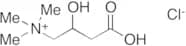
CAS:Molecular weight:348.79998779296875D,L-Carnitine Chloride
CAS:<p>Stability Hygroscopic<br>Applications Vitamin (enzyme cofactor). Essential cofactor of fatty acid metabolism; required for the transport of fatty acids through the inner mitochondrial membrane. Synthesized primarily in the liver and kidney; highest concentrations found in heart and skeletal muscle. Dietary sources include red meat, dairy products, beans, avocado.<br>References Mitchell, M.E., et al.: Am. J. Clin. Nutr., 31, 293 (1978), Lango, R., et al.: Cardiovasc. Res., 51, 21 (2001), Vaz, F.M., et al.: Biochem. J., et al.: 361, 417 (2002), Karlic, H., et al.: Nutrition, 20, 709 (2004),<br></p>Formula:C7H16NO3·ClColor and Shape:Off-WhiteMolecular weight:197.666-BENZYL 2-TERT-BUTYL 2,6,9-TRIAZASPIRO[4.5]DECANE-2,6-DICARBOXYLATE
CAS:Purity:95.0%Molecular weight:375.4689941406253-(Carboxymethyl-methyl-amino)-pyrrolidine-1-carboxylic acid tert-butyl ester
CAS:Purity:95.0%Molecular weight:258.3179931640625Glycine-15N,d2
CAS:Controlled Product<p>Applications Glycine-15N,d2, is the labeled analogue of Glycine (G615990), a non-essential amino acid for human development. Glycine is an inhibitory neurotransmitter in spinal cord, allosteric regulator of NMDA receptors.<br>References Scott, D. et al.: J. Neurosci., 21, 3063 (2001); Laube, B. et al.: Neuropharmacology, 47, 994 (2004); Papadakis, M. et al.: J. Biol. Chem., 279, 14703 (2004); Chen, P. et al.: Mol. Pharmacol., 67, 1470 (2005); Wolosker, H. et al.: Mol. Neurobiol., 36, 152 (2007);<br></p>Formula:C2D2H315NO2Color and Shape:NeatMolecular weight:78.0728-Bromo-1,8a-dihydro-imidazo[1,2-a]pyridine-2-carboxylic acid amide
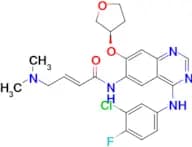
Purity:95.0%Molecular weight:242.0760040283203(R,E)-N-(4-((3-Chloro-4-fluorophenyl)amino)-7-((tetrahydrofuran-3-yl)oxy)quinazolin-6-yl)-4-(dimethylamino)but-2-enamide
CAS:Purity:99.0%Molecular weight:485.940002441406251'H-Spiro[piperidine-4,2'-quinazolin]-4'(3'H)-one
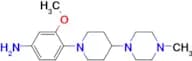
CAS:Purity:95.0%Color and Shape:SolidMolecular weight:217.272003173828123-Methoxy-4-(4-(4-methylpiperazin-1-yl)piperidin-1-yl)aniline
CAS:Purity:97.0%Color and Shape:Liquid, No data available.Molecular weight:304.43798828125


![6-Amino-4-{[3-chloro-4-(pyridin-2-ylmethoxy)phenyl]amino}-7-ethoxyquinoline-3-carbonitrile](/_next/image/?url=https%3A%2Fstatic.cymitquimica.com%2Fproducts%2F10%2Fthumb-webp%2FF788588.webp&w=3840&q=75)

![2-(4-Fluorophenyl)-2-[4-(4-fluorophenyl)piperazin-1-yl]acetic acid](/_next/image/?url=https%3A%2Fstatic.cymitquimica.com%2Fproducts%2F10%2Fthumb-webp%2FF300207.webp&w=3840&q=75)

![2-[4-(3-Chlorophenyl)piperazin-1-yl]-2-(2-fluorophenyl)acetic acid](/_next/image/?url=https%3A%2Fstatic.cymitquimica.com%2Fproducts%2F10%2Fthumb-webp%2FF300386.webp&w=3840&q=75)
![6-BENZYL 2-TERT-BUTYL 2,6,9-TRIAZASPIRO[4.5]DECANE-2,6-DICARBOXYLATE](/_next/image/?url=https%3A%2Fstatic.cymitquimica.com%2Fproducts%2F10%2Fthumb-webp%2FF502145.webp&w=3840&q=75)
![10H,10'H-9,9'-spirobi[acridine]](/_next/image/?url=https%3A%2Fstatic.cymitquimica.com%2Fproducts%2F10%2Fthumb-webp%2FF777917.webp&w=3840&q=75)



![8-Bromo-1,8a-dihydro-imidazo[1,2-a]pyridine-2-carboxylic acid amide](/_next/image/?url=https%3A%2Fstatic.cymitquimica.com%2Fproducts%2F10%2Fthumb-webp%2FF545696.webp&w=3840&q=75)
![1'H-Spiro[piperidine-4,2'-quinazolin]-4'(3'H)-one](/_next/image/?url=https%3A%2Fstatic.cymitquimica.com%2Fproducts%2F10%2Fthumb-webp%2FF077539.webp&w=3840&q=75)