Aminoacids and derivatives
Amino acids are compounds with a structure based on an amino group (-NH₂) and a carboxyl group (-COOH), both attached to a central carbon atom. This structure makes them essential for the synthesis of proteins and other biomolecules. Their derivatives can have regulatory properties over metabolic processes and biological systems, with applications in nutrition, health, and regenerative medicine.
At CymitQuimica, we offer a wide range of amino acids and their derivatives, ideal for research and the formulation of bioactive products.
Found 12278 products of "Aminoacids and derivatives"
Sort by
Purity (%)
0
100
|
0
|
50
|
90
|
95
|
100
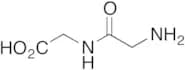
N-Glycylglycine
CAS:Controlled Product<p>Applications N-Glycylglycine is a derivative of Glycine (G615990), a non-essential amino acid that enhances N-methyl-D-aspartate (NMDA) receptor mediated synaptic potentials in the neocortex of rats. Glycine is also being used as adjuvant therapy for the treatment of schizophrenia.<br>References Logan, W. & Snyder, S.: Brain Res., 42, 413 (1972); Rosse, R., et al.: Clin. Neuropharmacol., 12, 416 (1989)<br></p>Formula:C4H8N2O3Color and Shape:NeatMolecular weight:132.122-(4-methoxyphenyl)-2,3,4,5-tetrahydro-1H-1,5-benzodiazepine
CAS:Purity:95.0%Molecular weight:254.33299255371094Cyclopropyl-d5-amine
CAS:Controlled Product<p>Applications Cyclopropyl-d5-amine is labelled Cyclopopylamine (C989140) which can inactivate major human drug-metabolizing cytochromes P450 enzymes.<br> Not a dangerous good if item is equal to or less than 1g/ml and there is less than 100g/ml in the package<br>References Shaffer C., et al.: J. Am. Chem. Soc., 123, 8502 (2001); Polasek, T., et al.: Brit. J. Clin. Pharmaco., 61, 570 (2006)<br></p>Formula:C3D5H2NColor and Shape:NeatMolecular weight:62.13Stearoyl L-a-Lysolecithin
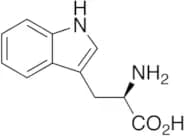
CAS:<p>Stability Hygroscopic, moisture sensitive<br>Applications Stearoyl L-α-Lysolecithin is an bioactive lysophosphatidylcholine derived compound found to be released by bronchial epithelial cells. Stearoyl L-α-Lysolecithin have also been utilized in the development of liposomes and michelles by drug transdermal delivery devices.<br>References Zhuge, Y., et al.: Allergy Asthma Immunol Res., 6, 66 (2014)<br></p>Formula:C26H54NO7PColor and Shape:NeatMolecular weight:523.68D-Tryptophan
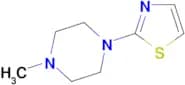
CAS:Controlled Product<p>Applications An essential amino acid found in naturally produced peptides. Unlike its stereoisomer, L-tryptophan, it is not used in structural or enzyme proteins.<br>References Karunakaran, S.et al.: Bochem. J., 414, 343 (2008); Pallaghy, P.K. et al.: Biochem., 38, 11553 (1999);<br></p>Formula:C11H12N2O2Color and Shape:NeatMolecular weight:204.232-(4-Methylpiperazin-1-yl)thiazole
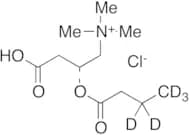
CAS:Formula:C8H13N3SPurity:95.0%Color and Shape:LiquidMolecular weight:183.27(R)-Butyryl Carnitine-d5 Chloride
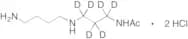
CAS:Controlled ProductFormula:C11H17D5ClNO4Color and Shape:NeatMolecular weight:272.78N1-Acetylspermidine-d6 Dihydrochloride
CAS:Controlled Product<p>Applications Labelled Dihydrochloride salt of N1-Acetylspermidine which is an analog of Spermidine (S680400), an antineoplastic.<br>References Bergeron, R. et al.: J. Med. Chem, 40, 1475 (1997);<br></p>Formula:C9H17D6Cl2N3OColor and Shape:NeatMolecular weight:266.24N4-(Benzo[d][1,3]dioxol-5-ylmethyl)-6-(3-methoxyphenyl)pyrimidine-2,4-diamine
CAS:Purity:95.0%Molecular weight:350.37799072265625Ref: 10-F431587
5mgTo inquire10mgTo inquire25mgTo inquire50mgTo inquire100mgTo inquire250mgTo inquireD-Carnitine
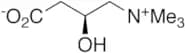
CAS:Controlled Product<p>Stability Hygroscopic<br>Applications Essential cofactor of fatty acid metabolism; required for the transport of fatty acids through the inner mitochondrial membrane. Synthetized primarily in the liver and kidney; highest concentrations found in heart and skeletal muscle. Dietary sources include red meat, dairy products, beans, avocado.<br>References Mitchell, M.E., et al.: Am. J. Clin. Nutr., 31, 293 (1978), Lango, R., et al.: Cardiovasc. Res., 51, 21 (2001), Vaz, F.M., et al.: Biochem. J., et al.: 361, 417 (2002), Karlic, H., et al.: Nutrition, 20, 709 (2004),<br></p>Formula:C7H15NO3Color and Shape:White To BeigeMolecular weight:161.203-O-Methyl Carbidopa
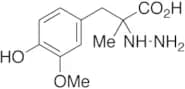
CAS:<p>Applications 3-O-Methylcarbidopa is an impurity of Carbidopa (C175915) with potential use as therapeutic agents to treat hypertension and Parkinson's disease.<br>References Gelber, L. et al.: J. Chrom., 257, 317 (1983); Kallwass, H. et al.: Bioorg. Med. Chem., 2, 557 (1994);<br></p>Formula:C11H16N2O4Color and Shape:NeatMolecular weight:240.265-Hydroxy L-Tryptophan
CAS:Controlled Product<p>Impurity L-5-Hydroxytryptophan(Tryptophan EP Impurity D)<br>Applications 5-Hydroxy-L-Tryptophan (L-5-Hydroxytryptophan(Tryptophan EP Impurity D)) is a hydroxylated metabolite of L-Tryptophan (T947210).<br> Not a dangerous good if item is equal to or less than 1g/ml and there is less than 100g/ml in the package<br>References Gartside, S., et al.: Eur. J. Pharmacol., 179, 103 (1990); Gijsman, H., et al.: J. Clin. Psychopharmacol., 22, 183 (2002),; Schruers, K., et al.: Psychiatry Res., 113, 237 (2002);<br></p>Formula:C11H12N2O3Color and Shape:NeatMolecular weight:220.22N1-(2-(dimethylamino)ethyl)-N3,N3-dimethylpropane-1,3-diamine
CAS:Purity:98%Molecular weight:173.3040008544922Glycine-13C
CAS:Controlled Product<p>Applications Labelled analogue of Glycine (G615990), a non-essential amino acid for human development. Glycine (G615990) is an inhibitory neurotransmitter in spinal cord, allosteric regulator of NMDA receptors.<br>References Scott, D., et al.: J. Neurosci., 21, 3063 (2001), Laube, B., et al.: Neuropharmacology, 47, 994 (2004), Papadakis, M., et al.: J. Biol. Chem., 279, 14703 (2004), Chen, P., et al.: Mol. Pharmacol., 67, 1470 (2005), Wolosker, H., et al.: Mol. Neurobiol., 36, 152 (2007),<br></p>Formula:C13CH5NO2Color and Shape:White PowderMolecular weight:76.06Tert-Butyl 4-[2-(dimethylamino)acetamido]piperidine-1-carboxylate
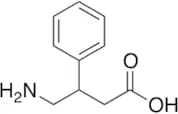
CAS:Purity:95.0%Molecular weight:285.388000488281254-Amino-3-phenylbutanoic Acid
CAS:Controlled Product<p>Applications 4-amino-3-phenylbutanoic acid (cas# 1078-21-3) is a GABAA receptor agonist, used for treatment of disorders influenced by dysfunction of pancreatic β cells and also used in combination with other agents.<br>References Birnir, B., et al.: PCT Int. Appl. 56pp. (2019)<br></p>Formula:C10H13NO2Color and Shape:NeatMolecular weight:179.223,3-Dimethoxybenzidine dihydrochloride
CAS:Purity:98.0%Color and Shape:Solid, solidMolecular weight:317.20999145507811-[3-Chloro-5-(trifluoromethyl)pyrid-2-yl]-1,4-diazepane
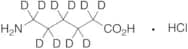
CAS:Purity:98.0%Color and Shape:LiquidMolecular weight:279.69000244140625ε-Aminocaproic Acid-d10 Hydrochloride
CAS:Controlled Product<p>Applications Labelled ε-Aminocaproic Acid. Used in the preparatiom of esters of 6-aminohexanoic acid as antibacterial agents. EACA is reported to inhibit chymotrypsin, Factor VIIa, lysine carbo xy peptidase, plasmin, and plasminogen activator.<br>References Dolezal, P., et al.: Pharm. Res., 10, 1015 (1993), Vavrova, K., et al.: Curr. Med. Chem., 12, 2273 (2005), Holas, T., et al.: Bioorg. Med. Chem., 14, 7671 (2006),<br></p>Formula:C6H4D10ClNO2Color and Shape:NeatMolecular weight:177.7



![N4-(Benzo[d][1,3]dioxol-5-ylmethyl)-6-(3-methoxyphenyl)pyrimidine-2,4-diamine](/_next/image/?url=https%3A%2Fstatic.cymitquimica.com%2Fproducts%2F10%2Fthumb-webp%2FF431587.webp&w=3840&q=75)



![Tert-Butyl 4-[2-(dimethylamino)acetamido]piperidine-1-carboxylate](/_next/image/?url=https%3A%2Fstatic.cymitquimica.com%2Fproducts%2F10%2Fthumb-webp%2FF063753.webp&w=3840&q=75)

![1-[3-Chloro-5-(trifluoromethyl)pyrid-2-yl]-1,4-diazepane](/_next/image/?url=https%3A%2Fstatic.cymitquimica.com%2Fproducts%2F10%2Fthumb-webp%2FF017269.webp&w=3840&q=75)