Natural and semi-synthetic antibiotics
Natural and semisynthetic antibiotics are characterised by chemical structures with heterocyclic rings and active functional groups that inhibit the growth of microorganisms. Their structures allow them to interact with vital bacterial processes, making them useful treatments for bacterial infections. Semisynthetic antibiotics can be modified to enhance their spectrum of activity or resistance to degradation.
At CymitQuimica, we offer high-quality natural and semisynthetic antibiotics for research in microbiology and pharmaceutical development.
Found 6364 products of "Natural and semi-synthetic antibiotics"
Sort by
Purity (%)
0
100
|
0
|
50
|
90
|
95
|
100
15-O-Demethyl Tacrolimus
CAS:<p>Tacrolimus is a macrolide that is used as an immunosuppressive drug. It has been shown to bind to the FK-binding protein, which in turn inhibits calcineurin. This prevents the release of IL-2, TNF-α and other cytokines. The immunosuppressive effects of tacrolimus have been evaluated using analytical methods such as coefficients, affinity, and monitoring techniques such as immunoassays and agglutination. These techniques are used to evaluate the plasma concentration of tacrolimus. Tacrolimus also binds to proteins in the blood samples and can be detected by turbidimetric or electrochemiluminescence immunoassay reagents.</p>Formula:C43H67NO12Purity:Min. 95%Molecular weight:789.99 g/mol4H-Furo[2,3-c]pyranyl Mupirocin Sodium Impurity
CAS:<p>Impurity Mupirocin EP Impurity D<br>Stability Hygroscopic<br>Applications Mupirocin (M794000) impurity. (Mupirocin EP Impurity D) The rearrangement isomer of Mupirocin is prepared using an enzyme-catalyzed, selective deesterification.<br>References Sime, J.T., et al.: Tetrahedron Lett., 28, 5169 (1987),<br></p>Formula:C26H43O9·NaColor and Shape:NeatMolecular weight:522.603-Acetyldeoxynivalenol
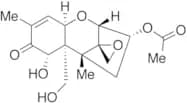
CAS:Controlled Product<p>Stability Appears to decompose in DMSO<br>Applications 3-Acetyldeoxynivalenol is a trichothecene mycotoxin that is produced in a plant-pathogenic fungus, Fusarium graminearum Schwabe.Environmental contaminants; Food contaminants<br> Not a dangerous good if item is equal to or less than 1g/ml and there is less than 100g/ml in the package<br>References Beyer, M., et al.: Int. J. Food. Microbiol., 119, 153 (2007); Schiefer, H.B., et al.: Can. J. Comp. Med., 49, 315 (1985); Mirocha, C.J., et al.: App. Enviro.Microbiol., 55, 1315 (1989);<br></p>Formula:C17H22O7Color and Shape:WhiteMolecular weight:338.3515-Acetyl Deoxynivalenol (~90%)
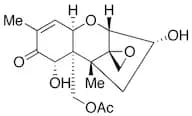
CAS:Controlled Product<p>Applications A mycotoxin produced by the fungi Fusarium culmorum and Fusarium graminearum, inhibits protein synthesis.Environmental contaminants; Food contaminants<br> Not a dangerous good if item is equal to or less than 1g/ml and there is less than 100g/ml in the package<br>References Ashraf, A.; et al.: Int. J. Biol. Biotechnol., 4, 391 (2007), Burlakoti, R., et al.: App. Environ. Microbiol., 74, 6513 (2008), Steinmetz, W., et al.: Eur. J. Med. Chem., 44, 4485 (2009), Zhang, Y., et al.: Phytopathol., 99, 95 (2009),<br></p>Formula:C17H22O7Purity:~90%Color and Shape:WhiteMolecular weight:338.35


![4H-Furo[2,3-c]pyranyl Mupirocin Sodium Impurity](/_next/image/?url=https%3A%2Fstatic.cymitquimica.com%2Fproducts%2FTR%2Fthumb-webp%2FF864850.webp&w=3840&q=75)