Natural and semi-synthetic antibiotics
Natural and semisynthetic antibiotics are characterised by chemical structures with heterocyclic rings and active functional groups that inhibit the growth of microorganisms. Their structures allow them to interact with vital bacterial processes, making them useful treatments for bacterial infections. Semisynthetic antibiotics can be modified to enhance their spectrum of activity or resistance to degradation.
At CymitQuimica, we offer high-quality natural and semisynthetic antibiotics for research in microbiology and pharmaceutical development.
Found 6364 products of "Natural and semi-synthetic antibiotics"
Sort by
Purity (%)
0
100
|
0
|
50
|
90
|
95
|
100
Caspofungin impurity C
<p>Caspofungin impurity C is a high-purity, chromatographically pure, caspofungin impurity. It was isolated by chromatography and was found to have a retention time of 12.5 minutes on the chromatogram. The impurity is thought to be an organic compound with a molecular weight of 437.2 and may be due to the presence of an acetyl group or hydroxyl group.</p>Purity:Min. 95%3-(4-(4-Morpholinyl)phenyl)-5-(hydroxymethyl)oxazolidin-2-one
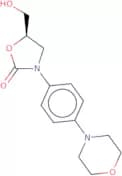
CAS:<p>3-(4-(4-Morpholinyl)phenyl)-5-(hydroxymethyl)oxazolidin-2-one is an impurity in the drug development process. It is used as a standard for HPLC testing and a synthetic intermediate. It has been shown to have niche use in the pharmaceutical industry. 3-(4-(4-Morpholinyl)phenyl)-5-(hydroxymethyl)oxazolidin-2-one has been found to be metabolized through oxidation and reduction reactions, leading to the formation of metabolites such as 2,6-dihydroxypyridine (DHP). Further metabolism studies are required for this substance.</p>Formula:C14H18N2O4Purity:Min. 95%Color and Shape:White to off-white solid.Molecular weight:278.3 g/molMicafungin impurity B
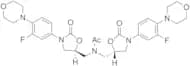
<p>Micafungin impurity B is a natural metabolite of micafungin. It is a synthetic impurity standard used in HPLC analysis. Micafungin impurity B has been shown to be the primary metabolite of micafungin in humans and is excreted in the urine and feces. Metabolism studies have shown that it may be formed by oxidation of the hydroxyl group at position C-3 or by hydrolysis of the amide bond between carbons C-4 and C-5.</p>Purity:Min. 95%N-tert-butyl-N-(((S)-3-(3-fluoro-4-morpholinophenyl)-2-oxooxazolidin-5-yl)methyl)acetamide
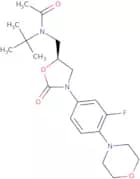
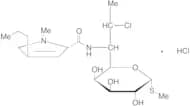
CAS:<p>N-tert-butyl-N-(((S)-3-(3-fluoro-4-morpholinophenyl)-2-oxooxazolidin-5-yl)methyl)acetamide (CAS 1215006-11, API impurity) is a synthetic compound from the drug development process. This impurity has been identified in the natural product and is not an active ingredient. It is found as a Metabolite in the pharmacopoeia and analytical methods. This substance is used for research and development of drugs, such as for standardizing HPLC.</p>Formula:C20H28FN3O4Purity:Min. 95%Color and Shape:White PowderMolecular weight:393.45 g/molBis{2-[(2S-trans)-Methyl 7-chloro-6,7,8-trideoxy-6-[((1-methyl-4-propyl-2-pyrrolidinyl)-carbonyl)amino]-1-thio-L-threo-a-D-galacto-o ctopyranoside]} pyrophosphate
CAS:<p>CAS No. 37450-78-5, drug product, Custom synthesis, High purity, analytical, Metabolism studies, Natural, Drug development, pharmacopoeia, Metabolite, niche, Synthetic</p>Formula:C36H66Cl2N4O15P2S2Purity:Min. 95%Molecular weight:991.91 g/molCephalosporin impurity
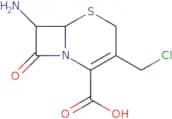
CAS:<p>Cephalosporin impurity is an industrial by-product that is generated during the production of cephalosporins. It is a white powder that has no known toxicological effects. Cephalosporin impurity can be used as a supplement in inoculated soil to increase the yield of cephalosporium, which is a fungus that produces cephalosporins.</p>Formula:C8H9ClN2O3SPurity:Min. 95%Molecular weight:248.69 g/mol(R)-3-(3-Fluoro-4-morpholin-4-ylphenyl)-2-oxo-5-oxazolidinyl)methyl methansulfonate
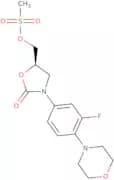
CAS:<p>(R)-3-(3-Fluoro-4-morpholin-4-ylphenyl)-2-oxo-5-oxazolidinyl)methyl methansulfonate is a Custom synthesis, drug product, Metabolite, Synthetic, Drug development, Impurity standard, Metabolism studies, API impurity, Natural, pharmacopoeia, analytical and HPLC standard. It is CAS No. 174649-09-3.</p>Formula:C15H19FN2O6SPurity:Min. 95%Molecular weight:374.39 g/molAmikacin EP Impurity A
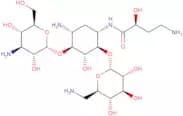
CAS:<p>Amikacin EP Impurity A is a metabolite of amikacin. It is a white crystalline substance with a molecular weight of 269.5. Amikacin EP Impurity A is found in the urine and bile of individuals who have been administered amikacin. It has been shown to be pharmacologically active, inhibiting bacterial growth by binding to DNA-dependent RNA polymerase, thereby preventing transcription and replication.</p>Formula:C22H43N5O13Purity:Min. 95%Molecular weight:585.6 g/molN-(((5S)-3-(4-(4-Morpholinyl)phenyl)-2-oxo-5-oxazolidinyl)methyl) acetamide
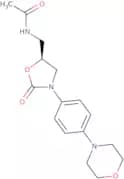
CAS:<p>N-(((5S)-3-(4-(4-Morpholinyl)phenyl)-2-oxo-5-oxazolidinyl)methyl) acetamide is an impurity of the antibiotic linezolid. It is a contaminant that can be found in urine and blood samples. N-(((5S)-3-(4-(4-Morpholinyl)phenyl)-2-oxo-5-oxazolidinyl)methyl) acetamide has been shown to be amyloidogenic, meaning it can form plaques in the brain and lead to Alzheimer's disease.</p>Formula:C16H21N3O4Purity:Min. 95%Color and Shape:White to off-white solid.Molecular weight:319.36 g/molErythromycin impurity M
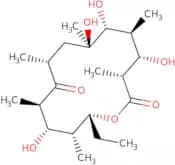
<p>Erythromycin impurity M is a natural, API impurity (impurity standard) that is a metabolite of erythromycin. It has been synthesized as a high purity HPLC standard to meet the requirements of pharmacopoeia and drug development. Erythromycin impurity M is an analytical reference material with CAS number 528-73-2.</p>Formula:C37H67NO13Purity:Min. 95%Molecular weight:733.93 g/mol9-Oxo azithromycin B
<p>9-Oxo azithromycin B is a metabolite of azithromycin. It is an analytical standard for the HPLC analysis of azithromycin and its metabolites. 9-Oxo azithromycin B has been shown to bind to the ribosomes of bacteria, and inhibit protein synthesis. This drug also has antibiotic activity against Mycobacterium avium and Mycobacterium tuberculosis. 9-Oxo azithromycin B can be used in niche research or as an API impurity.br><br>br><br>br></p>Formula:C37H68N2O12Purity:Min. 95%Molecular weight:732.94 g/mol{(5R)-3-[3-Fluoro-4-(4-morpholinyl)phenyl]-2-oxo-1.3-oxazolidin-5-yl}methyl acetate
CAS:<p>This product is a metabolite of the drug product and impurity standard. It has been synthesized as a custom synthesis to meet the needs of research and development, pharmacopoeia, or natural products. This compound is an API impurity that has been characterized by HPLC. The purity of this product is high, with a minimum purity of 98%.</p>Formula:C16H19FN2O5Purity:Min. 95%Color and Shape:Off-White To Yellow SolidMolecular weight:338.33 g/molErythromycin impurity N
CAS:<p>Erythromycin impurity N is a natural metabolite of erythromycin. It is a metabolite of erythromycin that has been identified in the metabolism studies of this drug product. Erythromycin impurity N is an analytical standard for use in pharmaceutical research and development, as well as in the pharmacopoeia. The CAS number for this compound is 527-56-8.</p>Purity:Min. 95%Aztreonam impurity D
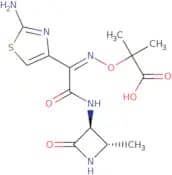
CAS:<p>Aztreonam impurity D is a metabolite of aztreonam. Aztreonam impurity D is an impurity standard for the pharmacopoeia and API industry, as well as for drug development and research. It has been shown that this compound inhibits bacterial growth by binding to DNA-dependent RNA polymerase, thereby preventing transcription and replication. The high frequency of human activity has been shown using a patch-clamp technique on human erythrocytes. This active form is metabolized through a number of metabolic transformations, including hydrolysis by esterases or glucuronidases, oxidation by cytochrome P450 enzymes, reduction by glutathione reductase, or conjugation with glucuronic acid. Aztreonam impurity D also specifically binds to markers expressed at high levels in Mycobacterium tuberculosis strains (e.g., ESX-1 secretion system protein) and inhibits cell growth in culture.</p>Formula:C13H17N5O5SPurity:Min. 95 Area-%Color and Shape:PowderMolecular weight:355.37 g/molTerbinafine dimer impurity dihydrochloride
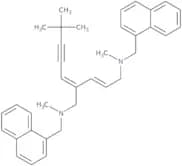
CAS:<p>Terbinafine is an antifungal agent that belongs to the family of medicines. It is used to treat fungal infections of the skin, nails and scalp. Terbinafine can also be used to treat other types of fungal infections, such as tinea corporis (ringworm), tinea cruris (jock itch), tinea pedis (athlete's foot) and tinea capitis (scalp ringworm). Terbinafine dimer impurity dihydrochloride is a by-product of terbinafine hydrochloride that has been shown to have industrial applications as a dispersant or lubricant in industries such as papermaking.</p>Formula:C36H40N2·2HClPurity:Min. 95%Color and Shape:White Off-White PowderMolecular weight:573.64 g/molMinocycline EP Impurity H
CAS:<p>Please enquire for more information about Minocycline EP Impurity H including the price, delivery time and more detailed product information at the technical inquiry form on this page</p>Formula:C23H25N3O7Purity:Min. 95%Molecular weight:455.47 g/molClarithromycin EP Impurity K
CAS:<p>Clarithromycin EP Impurity K is an impurity standard for Clarithromycin in the form of a crystalline white powder. It is a synthetic compound which has been used as a drug product and as an analytical standard. This compound can be synthesized from erythromycin A, but it is not active against bacteria. Clarithromycin EP Impurity K has been shown to have metabolite properties in animals and humans, including metabolism studies with HPLC standards.</p>Formula:C30H51NO8Purity:Min. 95 Area-%Color and Shape:PowderMolecular weight:553.73 g/molCefadroxil dimer impurity
CAS:<p>Cefadroxil is a cephalosporin antibiotic that is used to treat bacterial infections. Cefadroxil is metabolized into cefadroxil dimer, an impurity found in the drug product. The impurity standard for cefadroxil dimer was developed by HPLC and has been tested for use as a reference material and can be used in metabolism studies. This impurity standard has been shown to have a purity of 98%.</p>Formula:C32H32N6O9S2Purity:Min. 95%Molecular weight:708.76 g/mol3-(3-Fluoro-4-(4-morpholinyl)phenyl)-5-(hydroxymethyl)oxazolidin-2-one
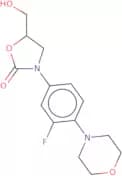
CAS:<p>3-(3-Fluoro-4-(4-morpholinyl)phenyl)-5-(hydroxymethyl)oxazolidin-2-one is a synthetic compound with research and development, impurity standard, custom synthesis, drug product, synthetic, high purity and pharmacopoeia applications. It is an impurity standard for the production of 3-[3-fluoro-4-(4-morpholinyl)phenyl]-5-(hydroxymethyl)oxazolidin-2-one hydrochloride (CAS No. 513068-96-7). This compound has been synthesized in order to study the metabolism of this metabolite. Metabolism studies have indicated that 3-(3-fluoro-4-(4-morpholinyl)phenyl)-5-(hydroxymethyl)oxazolidin-2 one is rapidly metabolized to form 3-[3-[(1S)-1,2,2</p>Formula:C14H17FN2O4Purity:Min. 95%Molecular weight:296.29 g/mol5-((tert-Butylamino)methyl)-3-(3-fluoro-(2-morpholinyl)phenyl)oxazolidin-2-one
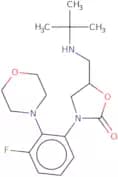
<p>5-((tert-Butylamino)methyl)-3-(3-fluoro-(2-morpholinyl)phenyl)oxazolidin-2-one (5FAMPO) is a metabolite of the drug product, CAS No. 109467-92-6, and has been synthesized for use as an analytical reference standard and impurity standard in drug development studies. 5FAMPO is a synthetic molecule that has not been found in nature, but is structurally similar to natural molecules. 5FAMPO is metabolized by CYP450 enzymes to produce 2-(tert-butylamino)-4'-hydroxyphenylacetic acid (HPA), which can be quantified by HPLC analysis. 5FAMPO is also used as a research and development compound and pharmacopoeia impurity standard.</p>Formula:C18H26FN3O3Purity:Min. 95%Molecular weight:351.42 g/molAmikacin EP impurity G
CAS:<p>Please enquire for more information about Amikacin EP impurity G including the price, delivery time and more detailed product information at the technical inquiry form on this page</p>Formula:C22H43N5O13Purity:Min. 95%Molecular weight:585.61 g/molTacrolimus Impurity 6
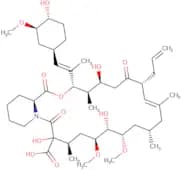
CAS:<p>Tacrolimus Impurity 6 is a product that is custom-synthesized by our company. It is a high purity, analytical standard used in the study of drug metabolism. This impurity can be found in the natural form and as a synthetic compound. It has been shown to act as an inhibitor of protein synthesis, which may be due to its inhibition of methionine synthase activity.</p>Formula:C44H71NO13Purity:Min. 95%Molecular weight:822.03 g/molCefazolin impurity A
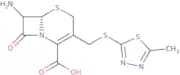
CAS:<p>Cefazolin impurity A is a by-product in the synthesis of Cefazolin, which is a drug product. It has CAS No. 30246-33-4 and is used as an impurity standard for analytical purposes. The Impurity Standard is also known as Metabolite A. Research and Development (R&D) studies are needed to identify the appropriate analytical impurities for this API, which will be reported on Pharmacopoeia's List of Impurities for reference. The high purity and custom synthesis of this API makes it ideal for use in R&D studies, HPLC standards, or niche markets.<br>CAS No.: 30246-33-4<br>Synonyms: Metabolite A<br>Formula: C11H14N2O5S <br>Molecular weight: 289.24 g/mol <br>Appearance: white solid powder</p>Formula:C11H12N4O3S3Purity:Min. 95%Color and Shape:PowderMolecular weight:344.44 g/mol(S)-5-((tert-Butylamino)methyl)-3-(3-fluoro-(4-morpholinyl)phenyl)oxazolidin-2-one
CAS:<p>(S)-5-((tert-Butylamino)methyl)-3-(3-fluoro-(4-morpholinyl)phenyl)oxazolidin-2-one is a drug product with CAS No. 1215006-08-8, which is a metabolite of Fluoxetine. It is an impurity standard for Fluoxetine and has been used as a reference compound in metabolism studies. (S)-5-((tert-Butylamino)methyl)-3-(3-fluoro-(4-morpholinyl)phenyl)oxazolidin-2-one is also an analytical reagent that can be used to calibrate HPLC systems.</p>Formula:C18H26FN3O3Purity:Min. 95%Color and Shape:White To Off-White SolidMolecular weight:351.42 g/molDesethylene Ciprofloxacin hydrochloride
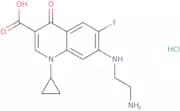
CAS:<p>Desethylene ciprofloxacin hydrochloride is a metabolite of ciprofloxacin that is converted to the active form of the drug. Desethylene ciprofloxacin hydrochloride has a concentration-response relationship, which can be used for in vitro testing of pharmaceutical preparations. The chromatographic evaluation of this metabolite can be used to identify the presence of antibiotics in environmental samples. Desethylene ciprofloxacin hydrochloride is also a substrate for carbonyl reductase and piperazine, which are enzymes that produce an activated form of the metabolite.</p>Formula:C15H16FN3O3·HClPurity:Min. 95%Color and Shape:Off-White Yellow PowderMolecular weight:341.77 g/molN-(((5R)-3-(3-Fluoro-4- (4-morpholinyl)phenyl)-2-oxo- 5-oxazolidinyl)methyl) acetamide
CAS:<p>N-(((5R)-3-(3-Fluoro-4-(4-morpholinyl)phenyl)-2-oxo-5-oxazolidinyl)methyl)acetamide (LFMAPO) is an antibacterial agent that inhibits bacterial growth by binding to the active site of bacterial DNA gyrase. LFMAPO has a molecular weight of 552.2 Da and a log P value of 2.6. It was synthesized from acetamide, 3-fluoroaniline, and 4-(4-morpholinyl)benzaldehyde in 60% yield using techniques such as millimolar stoichiometry, electrophoresis method, binding constants, and molecular modeling study. The drug also has chiral properties with two stereocenters at carbons C1 and C5 that have been shown to be important for the activity of this compound against Gram positive bacteria.</p>Formula:C16H20FN3O4Purity:Min. 95%Color and Shape:PowderMolecular weight:337.35 g/mol4-[4-(4-Nitrophenyl)-1-piperazinyl]phenol
CAS:Controlled Product<p>Applications 4-[4-(4-Nitrophenyl)-1-piperazinyl]phenol is a key intermediate in the synthesis of triazole medicines, such as itraconazole (I937500), which are used in curing deep department fungal infections. Inhibitor of endothelial cell proliferation.<br>References Ke, C. et al.: Adv. Nat. Sci., 2, 26 (2009); Shi, W. et al.: J. Med. Chem., 54, 7363 (2011);<br></p>Formula:C16H17N3O3Color and Shape:NeatMolecular weight:299.322-(Cyanomethylthio)acetic Acid
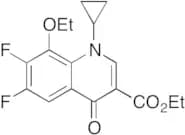
CAS:Formula:C4H5NO2SColor and Shape:Off White SolidMolecular weight:131.151-Cyclopropyl-8-ethoxy-6,7-difluoro-1,4-dihydro-4-oxo-3-quinolinecarboxylic Acid Ethyl Ester
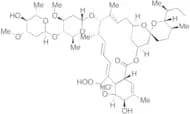
CAS:Controlled Product<p>Applications 1-Cyclopropyl-8-ethoxy-6,7-difluoro-1,4-dihydro-4-oxo-3-quinolinecarboxylic Acid Ethyl Ester is used in the preparation of alkoxyquinolone antibacterial agents. Also an impurity in the synthesis of Moxifloxacin (M745000), a fluorinated quinolone antibacterial.<br>References Sanchez, J. et al.: J. Med. Chem., 38, 4478 (1995); Woodcock, J.M., et al.: Antimicrob. Ag. Chemother., 41, 101 (1997), Stass, H., et al.: Antimicrob. Ag. Chemother., 42, 2060 (1998)<br></p>Formula:C17H17F2NO4Color and Shape:WhiteMolecular weight:337.32Ivermectin 8α-Hydroperoxide (>85%)
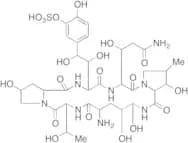
CAS:Formula:C48H74O16Purity:>85%Color and Shape:NeatMolecular weight:907.09FR 179642
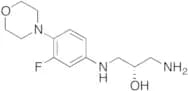
CAS:Controlled Product<p>Applications FR 179642 is an impurity of Micafungin (M342350), a lipopeptide compound that acts as an antifungal agent with activity against Aspergillus and Candida species.<br>References Denning, D., et al.: J. Infection, 53, 337 (2006); Queiroz-Telles, F., et al.: Pediatr. Infect. Dis. J., 27, 820 (2008)<br></p>Formula:C35H52N8O20SColor and Shape:NeatMolecular weight:936.89Desacetyl-N,O-descarbonyl Linezolid (Technical Grade)
CAS:Controlled Product<p>Stability Hygroscopic<br>Applications Desacetyl-N,O-descarbonyl Linezolid is an impurity of Linezolid (L466500); an oxazolidinone antimicrobial that inhibits bacterial mRNA translation.<br>References Brickner, S.J., et al.: J. Med. Chem., 39, 673 (1996); Ford, C.W., et al.: Antimicrob. Agents Chemother., 40, 1508 (1996); Rybak, M.J., et al.: Pharmacotherapy, 18, 456 (1998); Stevens, D.L., et al.: Clin. Infect. Dis., 34, 1481 (2002)<br></p>Formula:C13H20FN3O2Color and Shape:NeatMolecular weight:269.328-Epitacrolimus
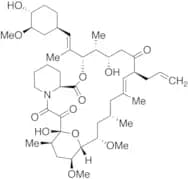
CAS:<p>Applications 8-Epitacrolimus is a new l-pipecolic acid macrolide lactone, an important immunosuppressive drug that blocks T cell proliferation in vitro by inhibiting the generation of several lymphokines, especially IL-2. 8-Epitacrolimus is also an Epimer of Tacrolimus (F370000).<br> Not a dangerous good if item is equal to or less than 1g/ml and there is less than 100g/ml in the package<br>References Skytte, D.M., et al.: J. Nat. Prod.,73, 776 (2010); Rokaw, M.D., et al.: Am. J. Physiol., 271, C194 (1996); Knoll, G.A., and Bell, R.C.: Brit. Med. J., 318, 1104 (1999);<br></p>Formula:C44H69NO12Color and Shape:NeatMolecular weight:804.02Amoxicillin Trimer Sodium Salt (>90%)
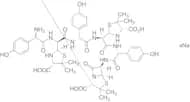
CAS:<p>Stability Hygroscopic, Temperature Sensitive<br>Applications Amoxicillin trimer Trisodium Salt, is an impurity of Amoxicillin (A634235), a β-lactam family antibiotic that is commonly used in conjunction with clavulanic acid (C56370) to the treat bacterial infections.<br>References Gurwith, M., et al.: Antimicrob. Agents Ch., 24, 716 (1983); Kumar, A., et al.: J. Mater. Chem., 20, 10152 (2010);<br></p>Formula:C48H57N9O15S3·x(Na)Purity:>90%Color and Shape:NeatMolecular weight:1096.21 + x(22.99)Chloramphenicol stearate
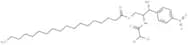
CAS:<p>Chloramphenicol stearate is an antibiotic useful for the therapy of numbers of bacterial infections. This includes an eye ointment to treat conjunctivitis.</p>Formula:C29H46Cl2N2O6Purity:98%Color and Shape:SolidMolecular weight:589.59Caspofungin impurity A
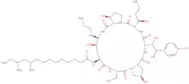
CAS:<p>Caspofungin impurity A is an impurity found in caspofungin, a drug used to treat fungal infections. Caspofungin impurity A has been shown to inhibit bacterial growth and is thought to be responsible for the bactericidal activity of caspofungin.</p>Formula:C51H86N10O15Purity:Min. 95%Color and Shape:PowderMolecular weight:1,079.29 g/molChloramphenicol palmitate
CAS:<p>Chloramphenicol palmitate is a broad-spectrum antibiotic effective against various bacteria and used for bacterial selection in gene studies.</p>Formula:C27H42Cl2N2O6Purity:99.89%Color and Shape:Crystals Very Slightly Sol In WaterMolecular weight:561.54Ceftezole
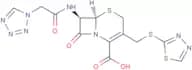
CAS:<p>Ceftezole: alpha-glucosidase inhibitor, anti-diabetic, broad-spectrum antibiotic for gram-positive/negative bacteria.</p>Formula:C13H12N8O4S3Purity:98%Color and Shape:SolidMolecular weight:440.48L-(+)-Ampicillin
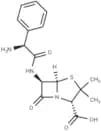
CAS:<p>L-(+)-Ampicillin is an isomer of Ampicillin. Ampicillin is a β-lactam antibiotic used for treating bacterial infections.</p>Formula:C16H19N3O4SPurity:98%Color and Shape:SolidMolecular weight:349.402,5-Anhydro-1,3,4-trideoxy-2-C-(2,4-difluorophenyl)-4-(hydroxymethyl)-1-(1H-1,2,4-triazol-1-yl)-D-threo-pentitol
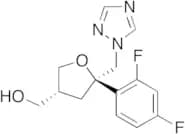
CAS:Controlled Product<p>Impurity Posaconazole Impurity;<br>Applications 2,5-Anhydro-1,3,4-trideoxy-2-C-(2,4-difluorophenyl)-4-(hydroxymethyl)-1-(1H-1,2,4-triazol-1-yl)-D-threo-pentitol is building block to synthesize key intermediates towards synthesis of highly active azole antifungals Sch 51048, Sch 56592 and Sch 45012. It is also an impurity/intermediate for posaconazole (P689600).<br>References Saksena, A., et al.: Tetrahedron Lett., 37, 5657 (1996); Lovey, R., et al.: Tetrahedron Lett., 35, 6047 (1994); Saksena, A., et al.: Tetrahedron Lett., 36, 1787 (1995)<br></p>Formula:C14H15F2N3O2Color and Shape:NeatMolecular weight:295.281,3’’-Di-HABA Kanamycin A Sulfate
CAS:Controlled Product<p>Stability Hygroscopic<br>Applications Kanamycin (K137500) derivative as synthetic byproduct of Amikacin (A578500).<br>References Kawaguchi, H., et al.: J. Antibiotics, 25, 695 (1972), Naito, T., et al.: J. Antibiotics, 26, 297 (1973),<br></p>Formula:C26H50N6O15xH2SO4Color and Shape:NeatMolecular weight:686.71Decarboxy Ciprofloxacin
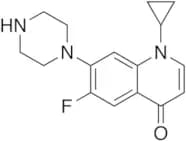
CAS:Controlled Product<p>Impurity Ciprofloxacin Impurity E<br>Applications Ciprofloxacin impurity. Ciprofloxacin Impurity E<br>References Borner, K, et al.: J. Clin. Chem. Clin. Biochem., 24, 325 (1986), Lacroix, P., et al.: J. Pharm. Biomed. Anal., 14, 641 (1996), Barron, D., et al.: Anal. Chim. Acta, 415, 83 (2000,<br></p>Formula:C16H18FN3OColor and Shape:NeatMolecular weight:287.33Dehydroclindamycin Hydrochloride
CAS:Controlled Product<p>Stability Hygroscopic<br>Applications Clindamycin (C580000) impurity in bulk drug.<br>References Zhou, H., et al.: J. Pharma. Biomed. Anal., 41, 1116 (2006),<br></p>Formula:C18H31ClN2O5S·ClHColor and Shape:NeatMolecular weight:459.42814-[4-(4-O-Methoxymethyl-4-hydroxyphenyl)-1-piperazinyl]phenyl]carbamic Acid-d4 Phenyl Ester
CAS:Controlled Product<p>Applications Intermediate in the production of labelled Posaconazole.<br></p>Formula:C25H23D4N3O4Color and Shape:NeatMolecular weight:437.52Ixabepilone- d3
CAS:Controlled ProductFormula:C27H39N2D3O5SColor and Shape:NeatMolecular weight:509.72Ethyl (Z)-[2-amino-4-thiazolyl](methoxyimino)acetate
CAS:Controlled Product<p>Stability Hygroscopic<br>Applications Ethyl (Z)-[2-amino-4-thiazolyl](methoxyimino)acetate is used in the preparation of ceftriaxone-d3 (C245002), which is a labelled antibacterial.<br>References Reiner, R., et al.: J. Antibiot., 33, 783 (1980)<br></p>Formula:C8H11N3O3SColor and Shape:NeatMolecular weight:229.26Linezolid Dimer
CAS:<p>Applications Linezolid Dimer is an impurity of the antibacterial agent Linezolid (L466500).<br></p>Formula:C30H35F2N5O7Color and Shape:NeatMolecular weight:615.62N-Acetyl Cefixime
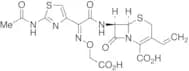
<p>Applications N-Acetyl Cefixime is the N-acetylated analogue and impurity of the third generation cephalosporin antibiotic, Cefixime (C242800).<br></p>Formula:C18H17N5O8S2Color and Shape:NeatMolecular weight:495.49Cefixime Acid, Thiazine Isomer Impurity Sodium Salt (>80%)
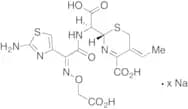
CAS:<p>Stability Very unstable<br>Applications Cefixime Impurity is an impurity of Cefixime (C242800); an orally active third generation cephalosporin antibiotic.<br>References Kamimura, T., et al.: Antimicrob. Agents Chemother., 25, 98 (1984); Yamanaka, H., et al.: J. Antibiot., 38, 1738 (1985); Guay, D.R.P., et al.: Antimicrob. Agents Chemother., 30, 485 (1986)<br></p>Formula:C16H17N5O8S2·x(Na)Purity:>80%Color and Shape:NeatMolecular weight:471.46 + x(22.99)E-Ceftazidime
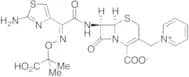
CAS:Controlled Product<p>Applications E-Ceftazidime is an impurity of Ceftazidime Pentahydrate (C244100); which is a third generation cephalosporin antibiotic.<br>References Brodie, A., et al.: Antimicrob. Agents Chemother., 17, 876 (1980); Richards, D.M., et al.: Drugs, 29, 105 (1985); Abounassif, M.A., et al.: Anal. Profiles Drug Subs., 19, 95 (1990)<br></p>Formula:C22H22N6O7S2Color and Shape:NeatMolecular weight:546.58



![{(5R)-3-[3-Fluoro-4-(4-morpholinyl)phenyl]-2-oxo-1.3-oxazolidin-5-yl}methyl acetate](/_next/image/?url=https%3A%2Fstatic.cymitquimica.com%2Fproducts%2F3D%2Fthumb-webp%2FIF58043.webp&w=3840&q=75)



![4-[4-(4-Nitrophenyl)-1-piperazinyl]phenol](/_next/image/?url=https%3A%2Fstatic.cymitquimica.com%2Fproducts%2FTR%2Fthumb-webp%2FN504480.webp&w=3840&q=75)





![4-[4-(4-O-Methoxymethyl-4-hydroxyphenyl)-1-piperazinyl]phenyl]carbamic Acid-d4 Phenyl Ester](/_next/image/?url=https%3A%2Fstatic.cymitquimica.com%2Fproducts%2FTR%2Fthumb-webp%2FM264352.webp&w=3840&q=75)

acetate](/_next/image/?url=https%3A%2Fstatic.cymitquimica.com%2Fproducts%2FTR%2Fthumb-webp%2FE678475.webp&w=3840&q=75)